


Sales and marketing teams aim to scale outbound prospecting and account-based strategies in an increasingly noisy market. The need for accurate and in-depth business data intelligence and prospecting tools continues growing. Top providers like ZoomInfo promise comprehensive firmographic insights and real-time contact record enrichment to support targeting precision and workflow efficiency gains. Is Zoominfo legit? How reliable is the underlying data? What common pain points accompany promised productivity benefits?
As the adoption of sales intelligence solutions accelerates, examining key player ZoomInfo under the lens of legitimacy and reliability brings considerations for high-performing go-to-market teams to the surface.
Is ZoomInfo Legit?
Yes, ZoomInfo is legit. ZoomInfo operates as a publicly traded company (Nasdaq: GTM) and B2B data provider serving sales, marketing, as well as recruiting use cases. In May 2025, the company changed its Nasdaq ticker from ZI to GTM and launched GTM Studio, repositioning itself as a go-to-market intelligence platform rather than a standalone data vendor. It now sells its sales plans as ZoomInfo Professional plus the Copilot Advanced and Copilot Enterprise tiers (formerly SalesOS). Initially founded in 2007 as DiscoverOrg, the company acquired Zoom Information Inc. in 2019 – rebranding under the now widely recognized ZoomInfo banner. The DiscoverOrg name has been fully retired since that merger; there is no standalone DiscoverOrg product or login today.
ZoomInfo has been listed on the Nasdaq since 2020 and invests heavily in compliance with data regulations like GDPR and CCPA, while remaining reasonably transparent regarding its data sourcing and subject rights protocols. Despite some lingering concerns around information practices, ZoomInfo demonstrably adheres to legal standards – making information on more than 122 million company records and 500 million professional profiles accessible to paying subscribers.
ZoomInfo Overview
At its core, ZoomInfo powers sales, marketing, plus recruiting activities by providing deep access to an extensive business database of more than 500 million professional profiles and 122 million company records. This aids in accelerating pipeline generation and closing more deals.
However, there are some clear advantages and disadvantages to weigh if considering adding ZoomInfo to your martech stack:
- Pros: an extensive B2B database drives efficient lead gen; advanced segmentation and intent signals enable targeted outreach scaling; tight CRM integrations simplify workflows.
- Cons: opaque “ask-for-quote” pricing lacks transparency; complexity around setup and UX learning curves causes friction; data accuracy issues occasionally surface despite breadth; expenses stack up fast amid add-on fees.
While most users praise ZoomInfo’s data depth in boosting productivity and win rates, customers’ pockets have bad experience stories and hurdles around stale data, opaque billing, plus uneven customer support. Performing due diligence is advised before buying in.
ZoomInfo Pricing at a Glance
On Tropic’s rate card, ZoomInfo Professional costs roughly $14,995 per year (3 seats with 5,000 bulk credits). Copilot Advanced lists at $29,995 and Copilot Enterprise at $35,995. Extra seats cost $2,500 each, and real invoices commonly land between $30,000 and $60,000 once seats, credits, and add-ons are included. Vendr puts the median contract at $33,500 per year across 1,000+ tracked deals. Exact numbers depend on negotiated terms, since ZoomInfo does not publish list prices and every deal goes through a sales rep.
In May 2026, ZoomInfo said it will begin moving from seat-based packages to a platform fee plus prepaid credits from Q3 2026, so quotes may look different at renewal.
| ZoomInfo | UpLead | |
|---|---|---|
| Starting annual price | $14,995+ | $888+ ($74/month billed annually, Essentials) |
| Pricing model | Custom quote, sales-assisted | Published self-serve plans |
| Free trial | Free trial on request; permanent free tier (ZoomInfo Lite, 10 credits per month) | Available |
Its G2 profile shows a 4.5-star rating across more than 12,800 reviews for all ZoomInfo products, and the company reports over 35,000 customers company-wide. Try UpLead’s B2B database free to compare accuracy and pricing firsthand.
ZoomInfo Use Cases
With more than 500 million professional profiles spanning 122 million company records, ZoomInfo serves many sales, marketing, recruiting, plus research applications – making it a versatile ally for big and small enterprises.
Everyday use cases include:
- Sales teams tapping buyer intent data and direct contacts to hyper-target outreach with personalization
- Marketers employing granular firmographic filtering to segment priority prospects for tailored campaigns
- Recruiters using skills and competencies data to uncover best-fit candidates, especially in tight labor markets
- Financial services companies researching potential clients for highly customized account-based marketing pitches
- Conference organizers identifying and engaging with relevant sponsors or attendees based on industry and job title
- Startups seeking investors by analyzing investment thesis and current portfolio company patterns
- Manufacturers reviewing supplier reliability metrics like years in business, leadership tenure, press mentions, plus more through an analytical lens
Spanning business development, talent acquisition, market/competition analysis, and more, ZoomInfo’s extensive intelligence supports diverse applications – explaining its vast subscriber base of over 35,000 customers, including more than 1,800 accounts spending six figures or more annually.
Where Does ZoomInfo Get Its Data?
The company taps into automated and human-driven data streams across digital and physical sources, aggregating and validating information, then updating company intelligence on an ongoing basis.
Every day, ZoomInfo processes more than 1.5 billion data points, with machine learning ingesting business details from press releases, news mentions, job listings, plus more. This combines with a community-powered contributory network where individuals share information from email signatures and signatures after agreeing to terms.
Supplementing the above, licensed datasets around public companies, mergers & acquisitions, government filings, plus verified social handles enrich accuracy and coverage further. ZoomInfo’s research team then fine-tunes business information for data quality assurance.
Other noteworthy aspects include self-service portals for modifying profiles per data privacy regulations, ethical exclusion policies on gathering personal emails/phone numbers and calendar content, and protocols banning tracking individual browsing histories.
ZoomInfo sustains its intelligence on more than 122 million company records and 500 million professional profiles through a mix of automation, public data mining, community sharing incentives, plus manual verification procedures. All information undergoes continuous refreshing to achieve recency and relevance.
How Reliable is ZoomInfo’s Data?
The company pledges reliable intelligence backed by formal commitments on uptime and accuracy. Specifically, the company lists a 99% platform uptime SLA and offers refunds if this service level isn’t maintained.
Additionally, ZoomInfo promises that over 95% of licensed, up-to-date data remains accurate. Prorated refunds apply if over 5% inaccuracy persists for 30+ days post-notification. Quality scoring models label each contact record with predicted accuracy assessments, reassuring subscribers. ZoomInfo reports a 96% email deliverability rate and more than 300 million verified emails.
Despite occasional reports of outdated entries, ZoomInfo’s research team, customer-sourced feedback, plus automated verification workflows promote ongoing quality checks, leading most industry observers to consider ZoomInfo’s data more reliable than competitors.
These efforts pay off, with 95% of customers ranking ZoomInfo’s data as “high quality.” Still, prudence suggests verifying mission-critical information before acting, given pockets of stale intelligence. ZoomInfo backs its accuracy commitments with continuous enrichment that keeps more than 122 million company records current, which generally translates into reliable data.
ZoomInfo Complaints: Common Criticism
ZoomInfo is a longstanding B2B data solutions leader serving over 35,000 subscribers, and it has fielded its share of criticisms amid meteoric growth. Typically centering around opaque ZoomInfo pricing, complex usability, plus data privacy concerns, common grievances include:
- High Costs & Fees: Despite undisclosed pricing starting around $15,000 yearly for limited users, additional fees often balloon costs, eliciting “bait-and-switch” cries from small/medium businesses expecting lower adoption barriers.
- Steep Learning Curve: While powerful, ZoomInfo’s platform intricacy slows onboarding and requires investments in training employees to derive value from its breadth of commercial data. A significant setup commitment deters some customers.
- Data Accuracy & Privacy Issues: From antiquated business listings to mismatched contacts, data imperfections spark pushback despite reliability rates topping 95%. Separately, individuals protesting without consent face difficulties accessing opt-out processes or securing data removal.
Despite asserting legal compliance and reasonable transparency, ZoomInfo must still confront lingering public skepticism plus lawsuits concerning data practices that critics deem excessively invasive. The Better Business Bureau previously investigated certain non-consensual data-sharing incidents. In addition, multiple lawsuits continue over unauthorized collection and usage of some personal information. While leaders reaffirm avoidance of past pitfalls, wariness persists around downstream usage of accessed insights.
ZoomInfo Alternatives
While ZoomInfo leads the market for sales and marketing intelligence, for some teams, barriers around opaque pricing, privacy concerns, or special use cases open doors for alternatives matching unique needs. As competition mounts with platforms tackling standout ZoomInfo weaknesses around budget limitations or consolidated feature sets, comparison shopping intensifies.
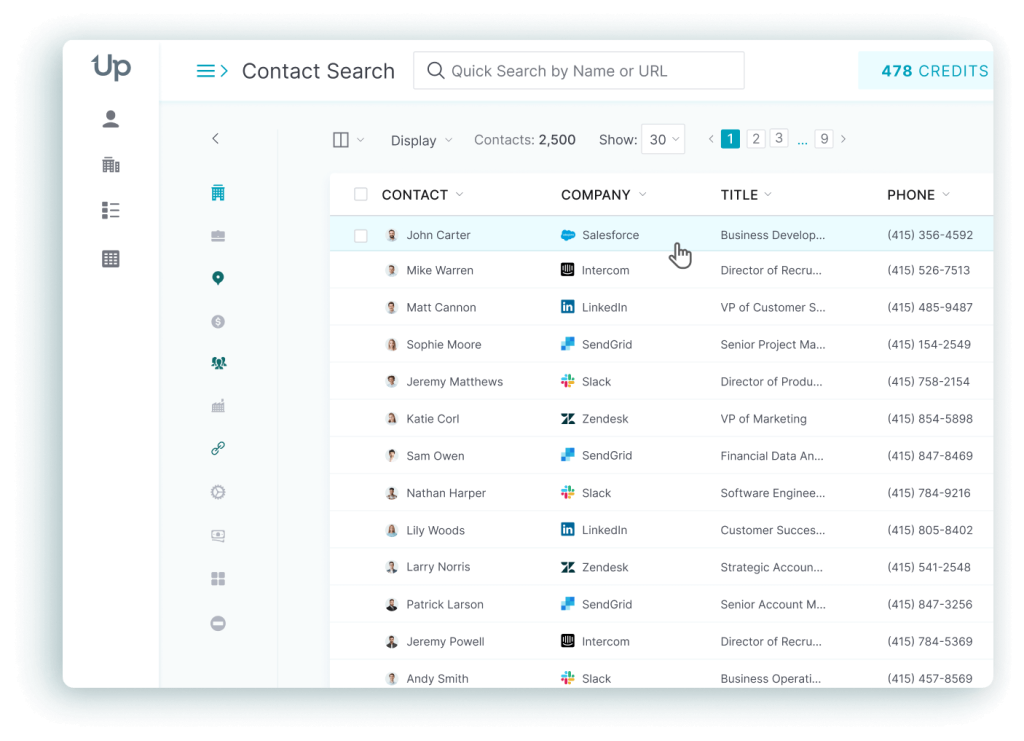
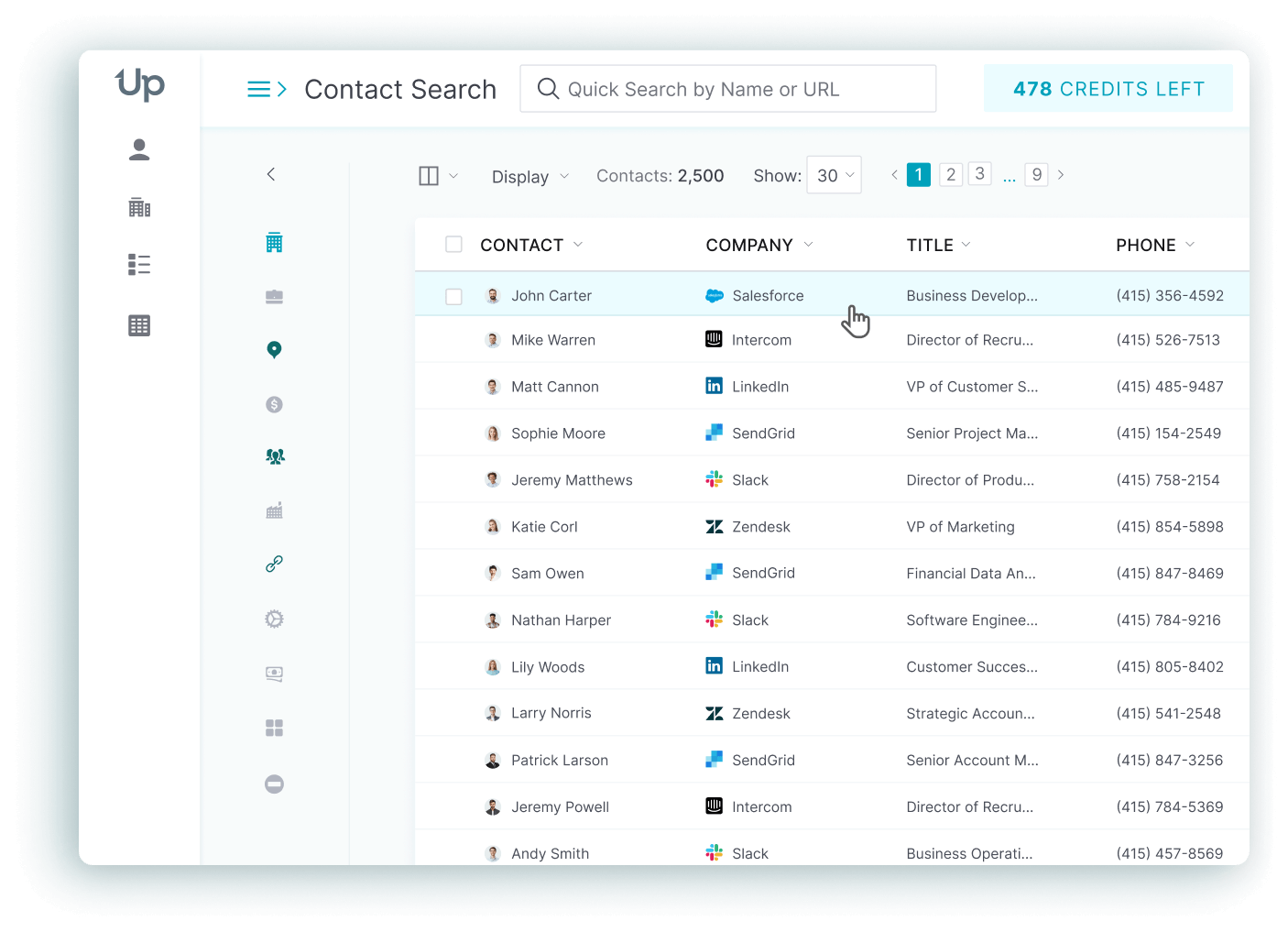
UpLead
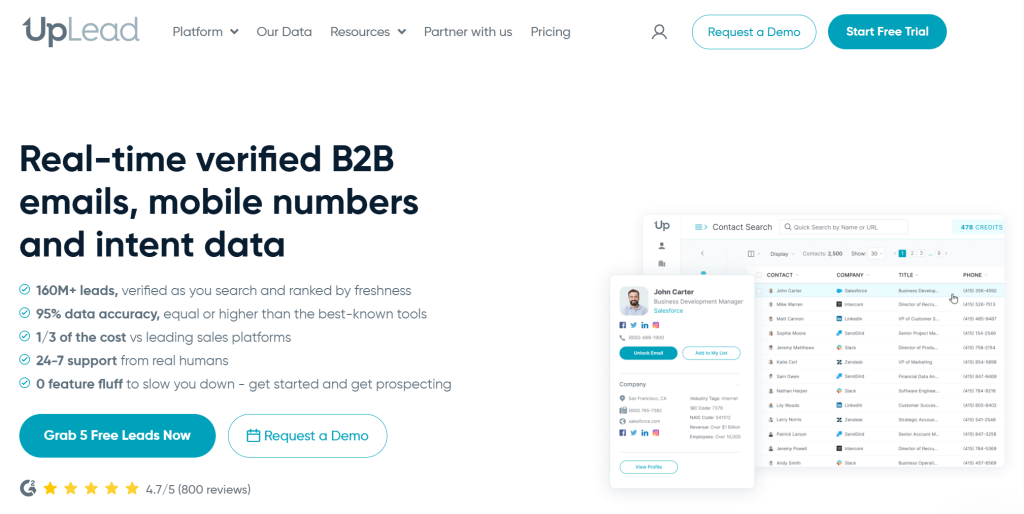
UpLead is a B2B contact provider that offers real-time access to over 200 million verified B2B contact profiles. UpLead lets small and mid-sized businesses scale lead research on a budget. Features like email verification, advanced search filters, plus guaranteed 95% data accuracy power targeted prospecting, while a free trial option allows testing the intuitive contact database firsthand. For affordable yet reliable business intel with no strings attached, UpLead provides immense appeal for resource-conscious sales organizations. Try it free today and find the prospect’s contact information with one of the top-tier sales tools on the market.
Lusha

Lusha caters to sales, marketing, plus recruiting needs by consolidating contact data with buyer insights to accelerate revenue growth. Above the standard quality guarantee, Lusha’s ISO 27701 certification confirms compliance with the industry’s toughest data privacy and security protocols for peace of mind. Lusha offers a free plan and self-serve paid plans starting at $49.90 per month. Its simplicity and speed of deployment set it apart, making enriched contact records actionable within minutes, not weeks.
Apollo.io
With an end-to-end suite bundling lead scoring, predictive analytics, personalization, plus sales acceleration tools, Apollo.io consolidates previously disjointed capabilities required for systematic revenue growth. This all-in-one command center gives sales organizations the intelligence and orchestration needed to capitalize on targeted accounts. Apollo offers a free plan with 900 credits per year plus free trials of its paid plans, which start at $49 per user per month billed annually, and its rich feature set aligns well for growth-focused teams seeking an integrated stack to progress deals predictably from lead through close.
FAQs About If ZoomInfo is Legit
Below is a breakdown of some of the most common questions about ZoomInfo.
While occasional inaccuracies surface, ZoomInfo pledges 95% minimum accuracy, with engineering plus research staff dedicated to quality checks. Customer opinion splits between high praise and citing periodic outdated entries needing corrections – suggesting verifying mission-critical applications before acting. However, among competitors, ZoomInfo leads in reliability metrics overall.
Common detractors cite clunky interfaces slowing onboarding productivity, opaque pricing eliciting sticker shock post-purchase for budget-limited teams, and individuals discovering profiles without consent and then struggling to opt out fully. While enhancements continue, limitations persist.
Its data comes from a mesh of sources, including web domains, SEC filings, job postings, licensed public datasets, plus anonymized business email signatures of ZoomInfo Lite users who consent to terms of use. This amalgamation of digital signals creates vast coverage yet raises questions around permissionless usage for some individuals now listed – despite formal privacy protocol alignment in areas like GDPR and CCPA compliance intended to honor personal rights. Those wanting complete profile removal can submit requests through ZoomInfo’s Privacy Center portal for case-by-case assessment.
Visit ZoomInfo’s Privacy Request page and verify your identity through email confirmation prompts. After submitting the request for full profile deletion, you will receive notifications from ZoomInfo’s trust and safety team confirming receipt of your removal demand and outlining the next steps. Note that basic information confirmation is required strictly for identity validation, enabling the honoring of opt-out preferences.
The company operates as a full-fledged B2B intelligence platform, not merely a web scraping crawler. Automated crawlers help ingest online data from domains, job boards, press releases, plus more continuously – significant additional enrichment like licensed public records, contributory networks sharing intel, and manual research merges to enable ZoomInfo’s breadth of commercial insights on more than 122 million companies. So rather than basic web scraping, validated information sourcing diversity powers ZoomInfo’s comprehensiveness – providing contacts, intent signals, technographic, plus competitive intelligence for sales and marketing requirements well beyond basic crawling functions. While ZoomInfo does engage in web scraping to collect data, it operates as a comprehensive data provider, offering a platform with business intelligence, not just a web crawling service.
What You Need to Remember About ZoomInfo’s Legitimacy
Ultimately, ZoomInfo’s extensive company and contact database presents undeniable value in informing sales and marketing targeting – but thorough vetting remains vital before buying in. Between formal accuracy assurances meeting or exceeding competitors and self-service data correction options, dependability scores high if verifying information sourcing diversity. Always validate price transparency expectations with contacts upfront to avoid budget overruns.
For individuals discovering their information listed unexpectedly, channels exist for fully opting out, though access barriers persist. Still, as the leading go-to-market intelligence platform in a growing market, ZoomInfo appears committed to improving its handling of public data pressures, giving subscribers the context required to engage high-potential accounts precisely when needs align.