


Many marketing teams use “demand generation” and “lead generation” interchangeably. This leads to confused strategies, wasted budget on low-quality leads, and friction between sales and marketing. Focusing only on lead gen fills your pipeline with unqualified contacts who never convert, frustrating sales. Focusing only on demand gen creates buzz but fails to capture value, leaving you with no measurable ROI. This guide provides a definitive breakdown of the difference between demand generation and lead generation. You’ll get a side-by-side comparison, learn how they work together to create a powerful revenue engine, and discover the key strategies and metrics for each.
What Is Demand Generation?
Demand generation is a marketing approach that increases your business’s visibility and creates awareness through strategies that generate broad interest without necessarily capturing contact information. It grows your audience and educates the market while building brand affinity across a wide audience.
What Is B2B Demand Generation?
B2B demand generation is the process of generating awareness and building your audience within the B2B community. Rather than focusing on strategies that target individual consumers, B2B demand generation targets other businesses. Companies can create tailored content that generates engagement with other companies and drives website traffic.
What Is Lead Generation?
Lead generation is the process of identifying contacts with the intent of converting them into paying customers. It involves capturing expressed interest through tactics that collect contact information from prospects who have shown clear buying signals. Remember, not everyone interested in your business is a quality prospect that will convert into a paying customer. Lead generation strategies help identify top prospects for conversion.
What Is Lead Generation in B2B?
B2B lead generation involves identifying businesses as potential customers with the intent to convert them into paying customers. These tactics involve directly reaching out to prospects or implementing strategies that attract prospects who may be ready to make a purchase. Outbound lead generation strategies require direct contact with potential clients, typically from a sales team. Think of cold call campaigns or direct mail. Inbound lead generation strategies create organic engagement with your business—search engine optimization (SEO) being a common, effective example.
Demand Generation vs. Lead Generation: A Side-by-Side Comparison
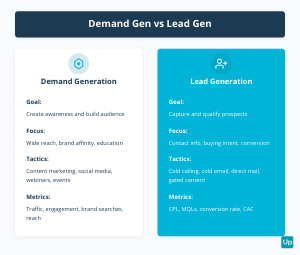
Understanding the core differences between demand generation and lead generation is essential for building an effective B2B marketing strategy. The table below breaks down how these two approaches differ across key dimensions.
Demand generation casts a wide net to create interest, while lead generation focuses on capturing and qualifying that interest for your sales team.
How Do Demand Generation and Lead Generation Work Together?
Demand generation and lead generation work together as complementary stages in a single customer acquisition funnel. Demand generation fills the top of the funnel by creating awareness among a large audience. Lead generation operates in the middle and bottom of the funnel to capture the interest created and convert it into qualified leads.
Think of it this way: demand generation creates the crowd, and lead generation collects contact information from the most interested people in that crowd. Without demand generation, your lead generation efforts will struggle because there is no awareness or trust. Without lead generation, your demand generation creates buzz but fails to convert that buzz into measurable business outcomes.
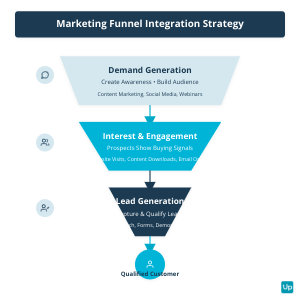
Companies with strong alignment between these two functions achieve up to 208% more revenue from marketing efforts. The average B2B buyer interacts with a brand 36 times before purchasing, which means you need both broad awareness touchpoints (demand gen) and targeted conversion mechanisms (lead gen) to guide prospects through the entire journey.
What Are Common Demand Generation Strategies?
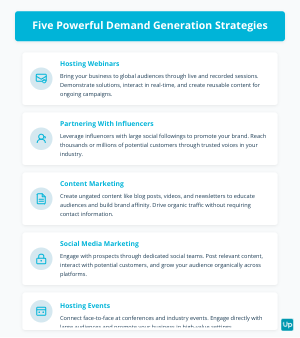
Common demand generation strategies include hosting webinars, partnering with influencers, content marketing, social media marketing, and hosting events. These tactics grow your audience base through organic, meaningful engagement. Creating demand for your product or service is vital because it makes converting prospects into paying customers easier.
Hosting Webinars
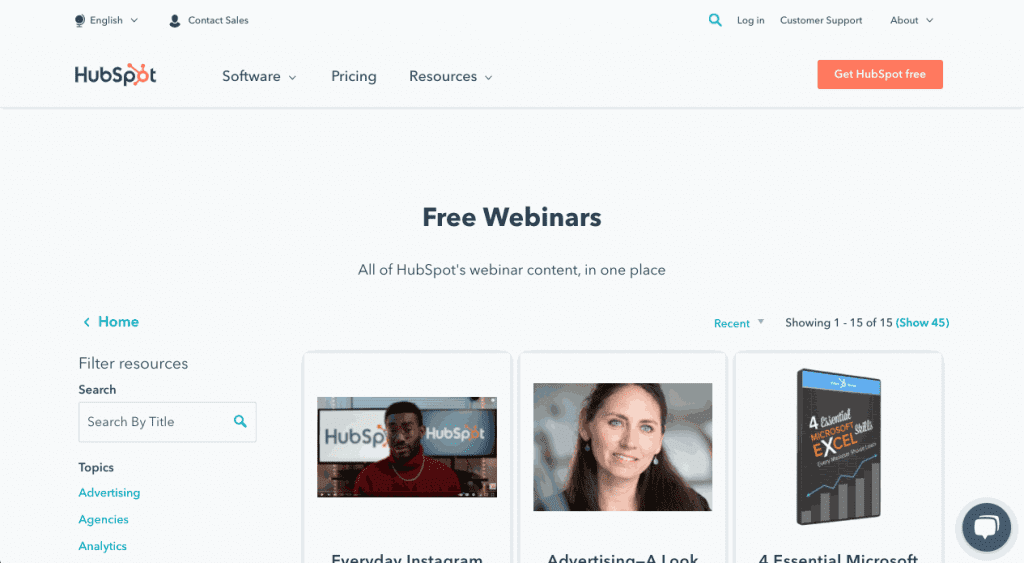
Webinars bring your business to new audiences around the world. A webinar not only promotes your brand and generates interest in your business; it can also demonstrate exactly how your product or service can be a solution for potential business customers. Webinars are low-investment, high-return pieces of content that you can leverage repeatedly. Hosting a recorded live webinar allows you to interact with your audience in two ways: in real-time and by using the recorded content on your site, in emails, and as part of your marketing campaigns. HubSpot’s free webinars are an excellent example of demand generation in action.
Partnering With Influencers
Partnering with influencers with thousands or millions of fans on social media platforms is an effective way to promote your brand, product, or service. Influencers are becoming a focal point for business marketing efforts. With both consumers and business customers active on many social media platforms, these partnerships can drive significant awareness. American Express partners with Instagram influencers with its Amex Ambassadors campaign. You can check out the in-depth case study here.
Content Marketing
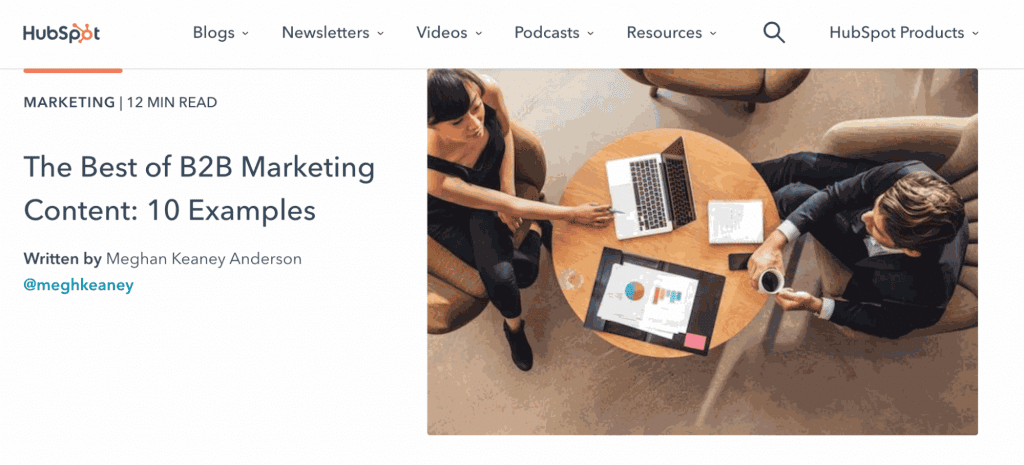
Content marketing is a classic demand generation tactic with proven success. This primarily involves ungated content like blog posts, social media videos, and newsletters designed to educate the widest possible audience and build brand affinity without asking for contact information. Content drives organic traffic to your website—consumer and B2B customers engage with content in many forms. Creating relevant, easily accessible content is crucial for driving organic website growth. Check out some top examples of B2B content marketing here.
Social Media Marketing
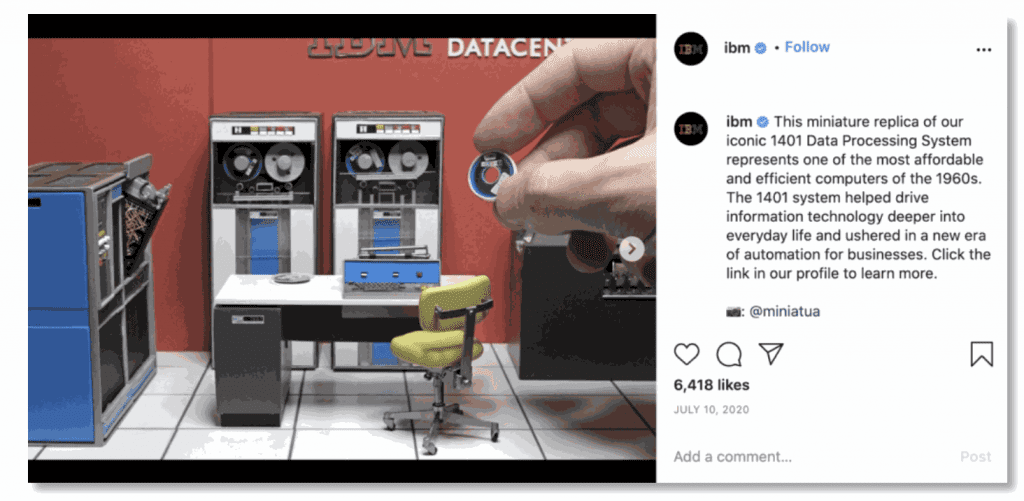
You can harness the power of social media to generate demand for your business. Countless businesses have dedicated social media teams who run accounts, interact with potential customers, and engage with other businesses. Like content marketing, social media marketing generates organic engagement and grows your audience. Relevant posts, videos, and other interactive forms of social media content are simple yet effective ways to boost engagement and grow your audience base. IBM flexes social media marketing to showcase the company’s history while connecting with current and potential customers. Here’s a fantastic list of B2B social media marketing examples.
Hosting Events
In-person demand generation can be powerful. While online interactions may dominate demand generation, in-person events remain high-value tools. Conferences are high-volume, interactive events that typically involve many businesses within a given industry. Getting in front of a broader audience allows you to promote your company and engage with potential business customers.
What Are Top Lead Generation Strategies?
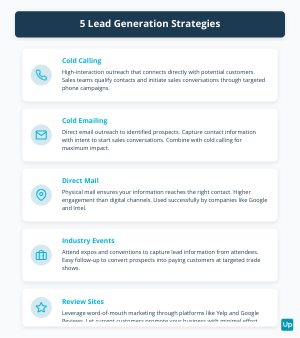
Top lead generation strategies include cold calling, cold emailing, direct mail, industry events, and review sites. These strategies help you identify high-quality leads and convert them into paying customers after demand generation has boosted interest in your business.
Cold Calling
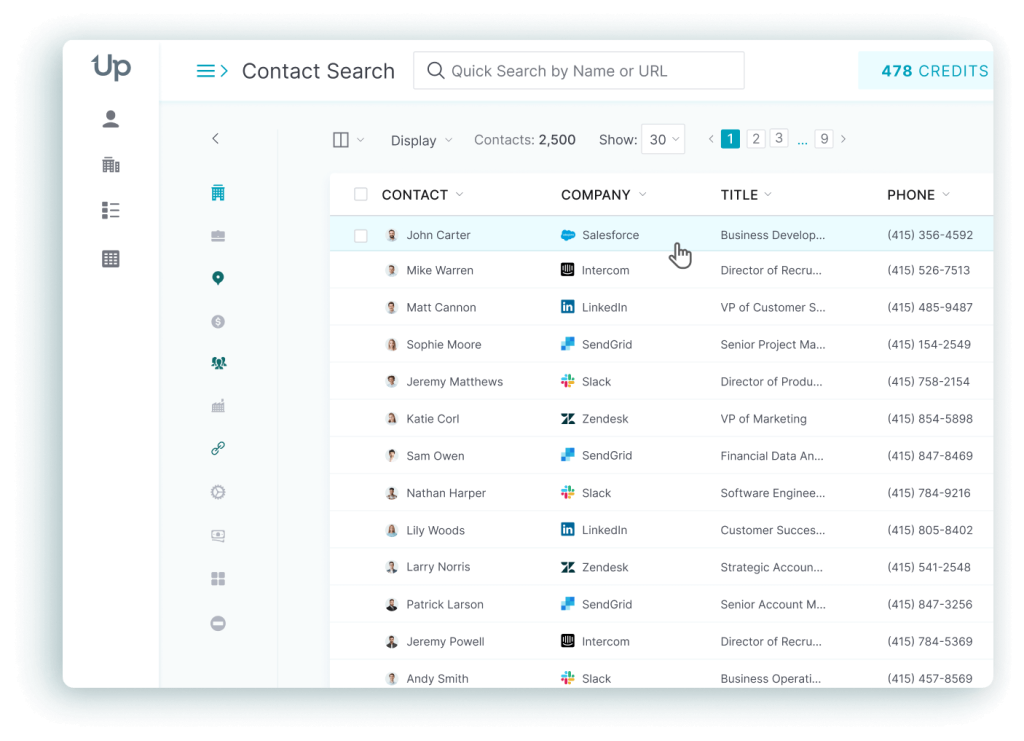
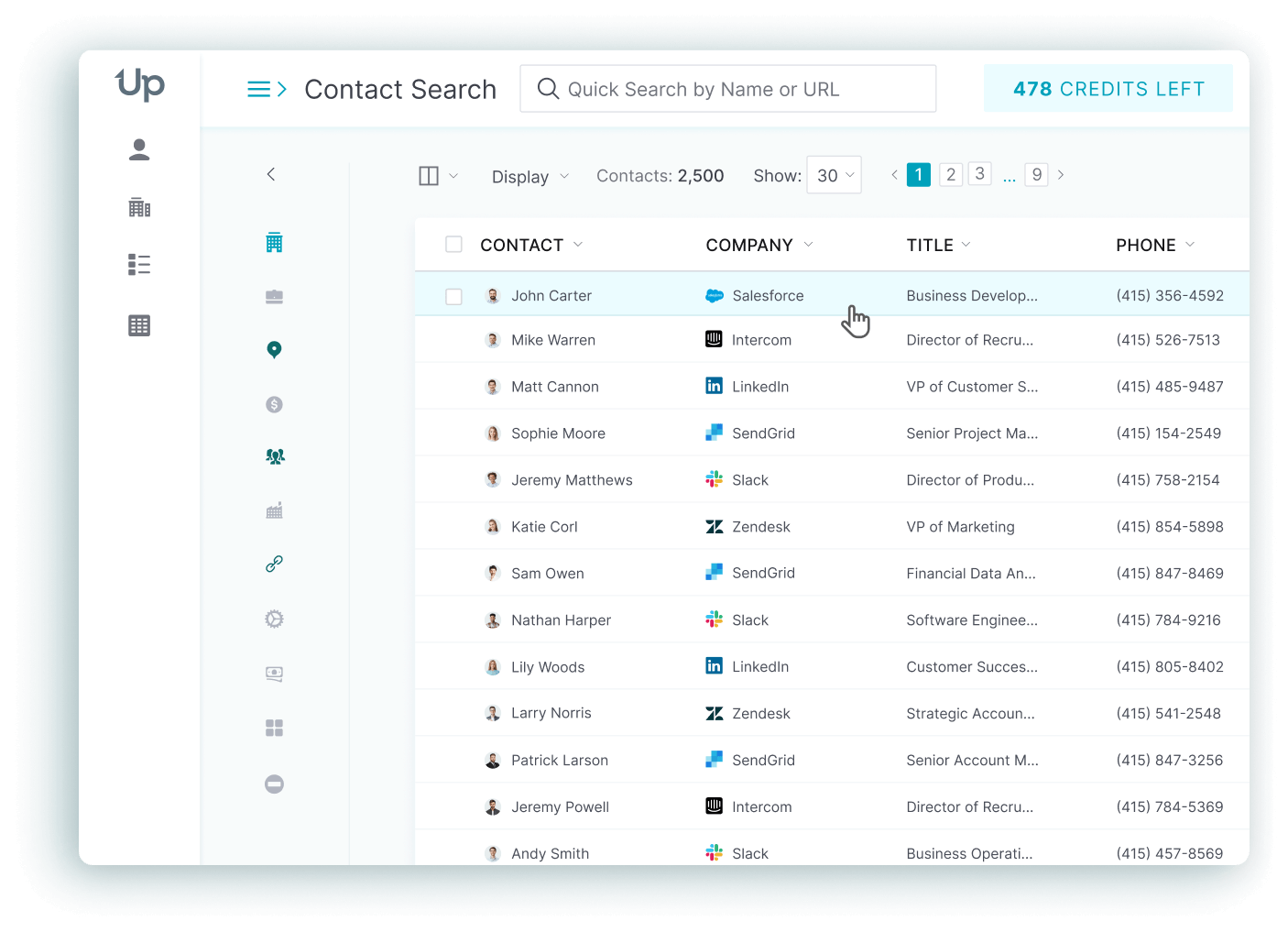
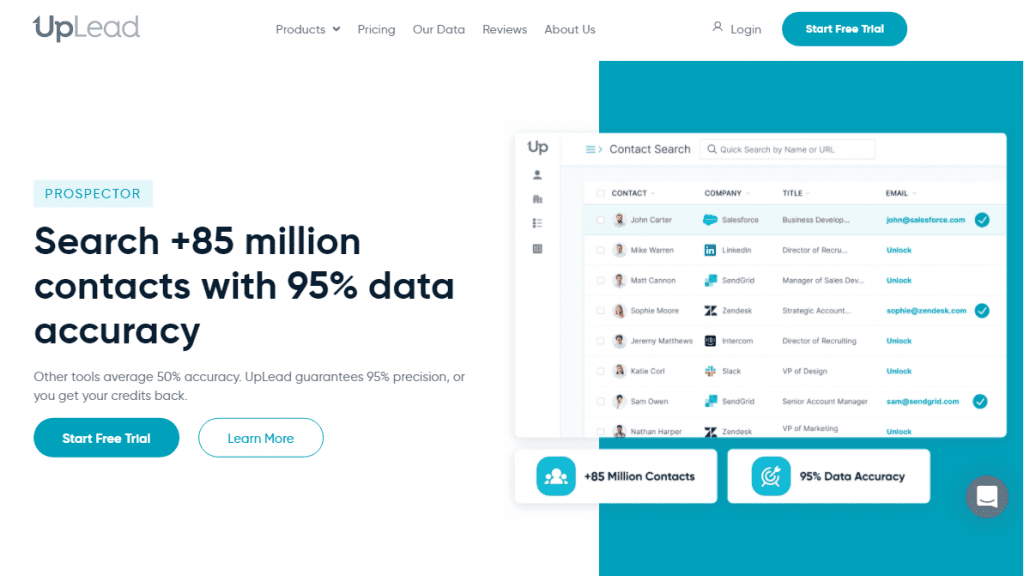
Cold call campaigns are effective, high-interaction efforts that connect your business with potential business customers. Usually driven by a central sales team, cold call campaigns involve calling specific contacts to qualify them and potentially convert them to paying customers. These interactions are dubbed “cold calls” because the contact isn’t expecting the phone call. The sales team identified these contacts as potential customers, as they had not previously provided their information or requested a call. To help your next cold call campaign, check out UpLead’s prospector tool. With a 95% data accuracy guarantee, you’ll know you have the right contact information to start your campaign.

Cold Emailing
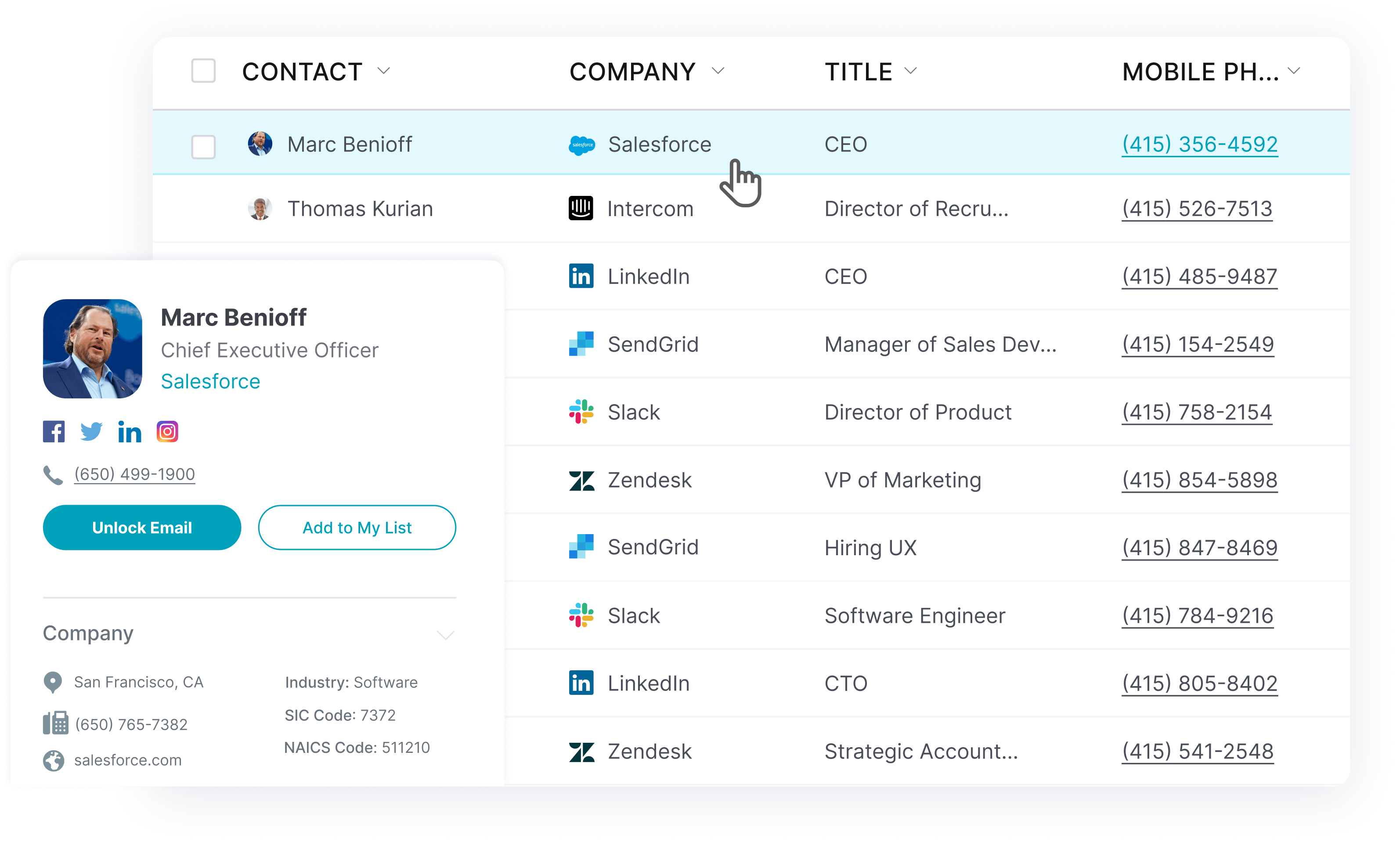
Similar to cold calls, cold emails involve reaching out to potential business customers via email. Rather than potential customers contacting your business, your sales team identifies prospects and makes contact via email. This is a classic lead generation tactic because it captures contact information with the intent of starting a sales conversation. These campaigns can prove successful, and a combination of cold calling and emails can boost your lead generation success. UpLead has two industry-leading email tools: the email finder and email verifier tools use real-time verification to ensure that you have the right email addresses for your contacts.
Direct Mail
Direct mail is a simple, effective way to ensure your information gets to the right contact. It’s easy to delete an email or send a call to voicemail. With direct mail, there’s a higher chance that your contact receives and engages with your material. Top companies like Google and Intel use direct mail to streamline business growth. You can check out these examples and more here.
Industry Events
Hosting an event is a great way to generate demand for your business, and attending industry events is another great way to boost your lead generation ideas. Expos and conventions are events designed to attract potential leads to your organization. It’s easy to capture lead information from attendees and follow up to convert them into paying customers. Trade shows can attract customers worldwide.
Review Sites
Leveraging review sites is a powerful lead generation strategy. Word-of-mouth marketing is one of the most powerful tactics out there. Potential customers trust current customers the most, so it’s important to allow your existing customers’ voices to be heard. Whether you implement a review platform on your own website or add your business to external review sites like Yelp and Google Reviews, letting your current customers promote your business is a free, high-impact lead generation tactic that takes minimal effort to implement.
What Are the Key Metrics for Demand and Lead Generation?
The key metrics for demand and lead generation include website traffic, social engagement, and brand search volume for demand generation, while lead generation focuses on cost per lead, MQL to SQL conversion rate, and customer acquisition cost. Measuring the success of demand generation and lead generation requires tracking different key performance indicators. Demand generation metrics focus on influence and awareness, while lead generation metrics focus on capture and conversion efficiency.
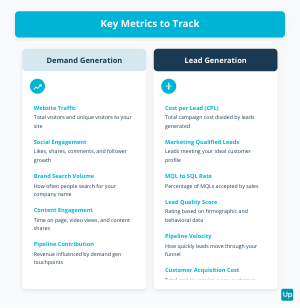
Demand Generation Metrics
- Website Traffic: Total visitors and unique visitors to your site
- Social Media Engagement: Likes, shares, comments, and follower growth
- Brand Search Volume: How often people search for your company name
- Content Engagement: Time on page, video views, and content shares
- Pipeline Contribution: Revenue influenced by demand generation touchpoints
Lead Generation Metrics
- Cost per Lead (CPL): Total campaign cost divided by number of leads generated
- Marketing Qualified Leads (MQLs): Leads that meet your ideal customer profile criteria
- MQL to SQL Conversion Rate: Percentage of MQLs accepted by sales as sales-qualified leads
- Lead Quality Score: Rating based on firmographic and behavioral data
- Pipeline Velocity: How quickly leads move through your funnel
- Customer Acquisition Cost (CAC): Total cost to acquire a new customer
Tracking the right KPIs ensures your budget delivers real ROI and allows you to optimize both strategies for maximum impact.
What Is the Role of Sales and Marketing Alignment?
Sales and marketing alignment is the foundation for successful demand generation and lead generation because it ensures both teams work toward shared revenue goals with clear lead definitions and handoff processes. Without alignment on lead definitions and handoff processes, both strategies fail. Misalignment leads to wasted spend, with marketing generating leads that sales never follows up on, or sales rejecting leads that marketing spent budget to acquire.
Key elements of successful alignment include shared definitions of a qualified lead (MQL and SQL criteria), a clear Service Level Agreement (SLA) for lead follow-up timeframes, and shared revenue-focused goals instead of separate team goals. When marketing is measured on “leads generated” and sales is measured on “deals closed,” the two teams optimize for different outcomes. Companies with strong sales and marketing alignment achieve up to 208% more revenue from marketing efforts.
Establish regular meetings between sales and marketing to review lead quality, conversion rates, and feedback. Use a shared CRM system to track the entire customer journey from first touch to closed deal. This transparency ensures both teams understand what’s working and can adjust strategies together.
Which Is Better for Your Business: Demand Generation or Lead Generation?
Both demand generation and lead generation are better for your business when used together because they maximize your audience and customer base. When used together, they’ll generate additional interest in your business and act as an important step toward converting the right contacts into paying customers. For example, demand generation may come in the form of extensive content marketing, but that content marketing may also involve lead capture forms or other methods to obtain contact information, which would fall into the lead generation category.
What Are Advanced Concepts in Demand and Lead Generation?
Advanced concepts in demand and lead generation include demand capture and account-based marketing. As B2B marketing evolves, new concepts have emerged that sit at the intersection of demand generation and lead generation. Understanding these advanced strategies can give your business a competitive edge.
What Is Demand Capture?
Demand capture is the set of tactics focused on capturing existing intent from buyers already in the market. Unlike demand generation, which creates new awareness, demand capture targets prospects who are searching for solutions. Examples include pay-per-click advertising on high-intent keywords, appearing on software review sites like G2 or Capterra, and retargeting campaigns. Demand capture is a subset of lead generation that focuses on converting existing demand rather than creating it.
What Is Account-Based Marketing?
Account-Based Marketing (ABM) is a targeted B2B strategy that treats an entire company as a single market. Rather than casting a wide net with demand generation or capturing individual leads, ABM focuses demand generation and lead generation efforts on a specific list of high-value accounts. Marketing and sales collaborate to create personalized campaigns for each target account, often involving multiple stakeholders within the same organization. ABM is effective for enterprise sales with long sales cycles and high contract values.
Want To Improve Your Demand Generation and Lead Generation Efforts? Try UpLead
Now that you have the top methods for demand generation and lead generation, it’s time to lean on industry-leading tools to help your business grow. Let’s take a look at how UpLead can help.
How UpLead Powers High-Intent Lead Generation
UpLead is one of the top lead providers available. With intuitive platforms and world-class data accuracy, you’ll work with the best market tools. After creating demand with our blog content (demand generation), we use our own Prospector tool with Intent Data to identify companies researching our space (demand capture), then find verified contacts to build our outbound campaign lists (lead generation). UpLead has a world-class prospector tool that guarantees 95% data accuracy. Gone are the days of guessing contact information or manually researching email addresses and phone numbers. Spend less time manually compiling information and more time making meaningful connections with potential customers.
UpLead as a Demand Generation Tool
Not only can UpLead be used as a powerful lead generation tool—you can also lean on UpLead for demand generation. While most lead generation businesses focus on just that—lead generation—UpLead takes it to the next level. With UpLead’s demand generation community, you can connect with thousands of businesses that have the potential to become high-quality leads.
Frequently Asked Questions About Demand Generation vs. Lead Generation
Do you still have questions? Let’s look at some frequently asked questions about demand generation vs. lead generation.
Demand generation is focused on increasing brand and business awareness by casting a wide net and getting your business name in front of as many people as possible. Lead generation focuses on capturing contact information from prospects showing buying intent and qualifying them for sales conversations. The key difference is that demand generation creates interest, while lead generation captures and converts that interest.
Outbound demand generation creates outbound content or communication to promote your business and raise brand awareness. Unlike outbound lead generation, outbound demand generation isn’t targeting potential contacts with the intent of beginning a sales conversation—it’s simply to drive traffic and engagement with your business. All of the demand generation strategies above can be effective tactics in this regard.
Inbound marketing is a lead generation strategy that is designed to capture leads by attracting them to your business in a passive way. Ideally, both inbound and outbound lead generation efforts should be used to maximize your business growth. Here are some lead generation books to learn more.
Key demand generation metrics include website traffic, social media engagement, brand search volume, content engagement (time on page, video views), and pipeline contribution. These metrics focus on influence and awareness rather than direct conversion.
Key lead generation metrics include cost per lead (CPL), marketing qualified leads (MQLs), MQL to SQL conversion rate, lead quality score, pipeline velocity, and customer acquisition cost (CAC). These metrics focus on capture efficiency and conversion.
Remember This About Demand Generation vs. Lead Generation
Demand generation and lead generation should go hand in hand when you’re trying to grow your business. Focusing on audience engagement and targeted lead generation can raise brand awareness and improve your overall sales numbers. By understanding the distinct roles each plays in your funnel, tracking the right metrics, and ensuring sales and marketing alignment, you’ll build a powerful revenue engine that delivers qualified leads and closed deals.