


No matter what industry your business is in, lead generation strategies are always a hot topic of conversation. After all, how can a business grow without consistent high quality leads? With so many lead generation ideas, we’ve compiled a comprehensive list of 26 proven strategies and one exciting bonus method with immense potential!
Quick Links:
- How Can We Increase Lead Generation?
- 26 Must-Try B2B Lead Generation Ideas
- Enhance Your Lead Generation Ideas With UpLead
- Common Questions About Lead Generation Ideas
- Key Takeaways
How Can We Increase Lead Generation?
Effective lead generation starts with understanding where to meet your target audience. Does your target customer base interact online? Are B2B events and conferences the right platform to reach your potential customers? Identifying your target audience and understanding how to meet them where they are is the first step in increasing lead generation.
To help you determine the right lead generation strategy, let’s take a look at our 26 must-try B2B lead generation ideas. Read our article about B2B Lead generation here.
26 Must-Try B2B Lead Generation Ideas
To boost your lead generation efforts and grow your business, check out our top B2B lead generation strategies to try today.
Build a cold calling list with UpLead (and reach out to your new contacts)
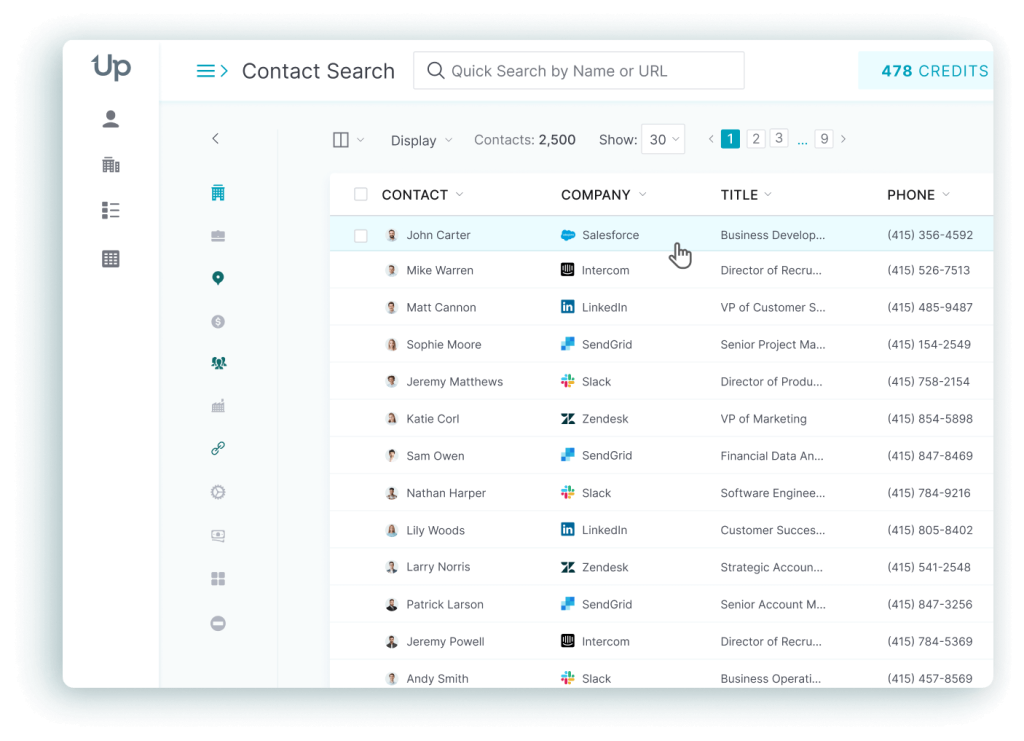
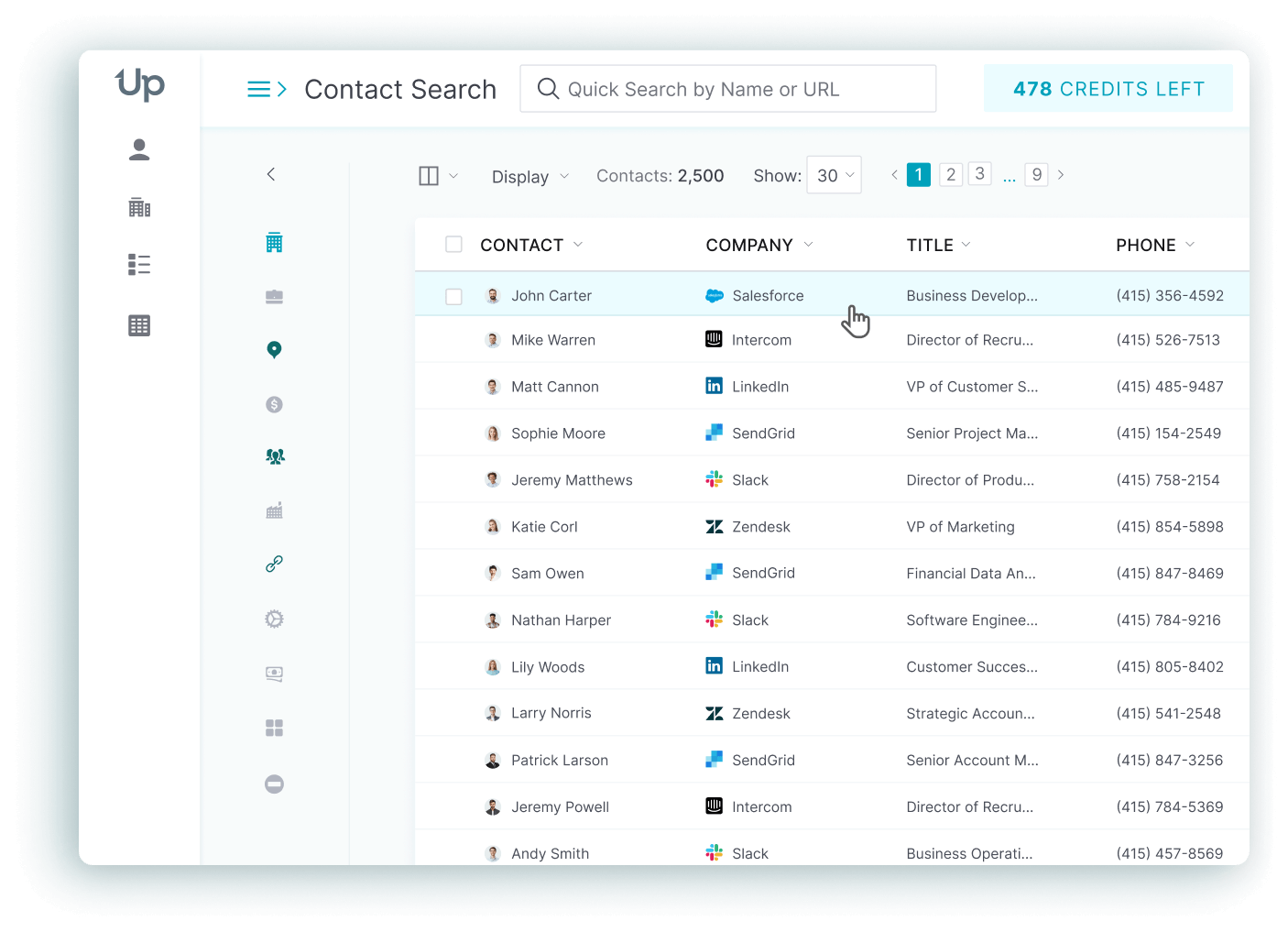
Building a cold call list is a quick, effective way to kickstart a successful lead generation campaign. What better way to build your list than with an industry-leading B2B lead generation partner? With UpLead, you’ll have all the tools you need to drive an impactful cold call campaign.
UpLead has tons of tools and features to leverage, allowing you to launch a campaign in no time. With 95% data accuracy, a verified email database, and a streamlined, intuitive prospecting tool, UpLead is equipped to help your business grow.
In my 20+ years of cold calling—from sleeping in my mortgage company office making 200 calls a day to building UpLead into a $30M+ business—I’ve learned one truth: your list quality determines everything. A bloated, unverified list will tank your connect rates and waste hours. At UpLead, we built real-time verification into every contact unlock because I lived through the pain of calling dead numbers for weeks.
Here’s my framework for building a cold call list that actually converts:
1. Start with Intent + Technographics – Filter companies actively researching your category and using complementary tools (e.g., Salesforce users searching for sales analytics).
2. Prioritize Mobile Numbers – Generic switchboard lines get you 8-10% connect rates. Verified mobile numbers? I’ve seen reps hit 25-35%. That’s the difference between 20 conversations and 70 in the same time block.
3. Segment by Persona – C-level cares about strategic impact. Managers care about hitting quota this quarter. Build separate lists so your messaging lands.
4. Verify in Real-Time – Most platforms verify monthly. UpLead verifies the second you unlock a contact. That’s why our bounce rates stay under 2%.
This system has generated millions in pipeline across three businesses. The key is treating your list like the single point of failure it is—because if the data’s bad, nothing else matters.
Do buyers still accept meetings from cold outreach?
Buyers still take meetings from cold outreach: 82% say they accept meetings at least sometimes when sellers reach out. While connection rates vary by list quality and timing, data-informed scheduling and concise “sell-the-meeting” frameworks (not discovery) improve outcomes. Gong’s analyses emphasize higher talk-to-listen ratios on successful cold calls and locking next steps before hanging up.
Entity–Attribute–Value (EAV):
- B2B buyers — meeting acceptance with outbound sellers — 82%.
- Successful cold calls — talk-to-listen ratio — higher talk share performs better (sell the meeting).
Practical Application: You should optimize for mid-week calling and coach reps to book the next meeting on-call, then confirm by calendar invite to protect show rates.
I’ve made thousands of cold calls across 15 years, and here’s what I learned: buyers don’t hang up because you called them—they hang up because you sound like every other rep. Early in my career at Sears, I’d rush through a rehearsed pitch and wonder why people disconnected within seconds. The breakthrough came when I started treating calls like real conversations: I slowed down, asked permission to continue, and actually listened to their answers. My connect-to-meeting rate tripled in a month.
Here’s exactly how I handle the “I’m not interested” objection:
First, I pause for a beat—resisting the urge to jump in defensively. Then I say: “Totally fair. Most people I call aren’t interested when we first speak. If it’s okay, could I take 30 seconds to tell you why I reached out, and you can decide if it’s relevant?”
The pause is critical. It drops my vocal tone and signals I’m not flustered. The “30 seconds” creates a low-stakes commitment. And ending with “you can decide” puts them back in control.
I’ve used variations of this line thousands of times, and it keeps the conversation going about 60-70% of the time. The real goal isn’t to close a deal on the spot—it’s to earn permission to have a conversation.
Run a personalized email campaign
Personalized email campaigns are another simple yet effective way to generate leads. Every business uses email, but finding accurate, verified email addresses is challenging. Without a verified email database, you’re left guessing your key contacts’ email addresses, meaning there’s no guarantee your emails will reach their target.
SaaS or other service-based companies use B2B email campaigns. Emails offering project management tools and training, software packages, and training seminars are common examples of direct email campaigns that business contacts see every day.
If businesses receive similar emails almost daily, how can you make your email campaign stand out? It all goes back to personalization. Crafting a personalized email with relevant insights about the business you’re reaching out to is a great way to make an impression and help your email stand out among the crowd.
In 2012, I launched a cold email campaign that I was convinced would be a home run. I’d spent three days perfecting the subject line, fine-tuned the copy, and scheduled it to hit inboxes at just the right time. But within minutes, I was staring at a 47% bounce rate on my screen. Nearly half of the email addresses on that list were dead, outdated, or flat-out wrong.
It didn’t matter how good my messaging was. The campaign was dead on arrival because the list sucked.
That moment taught me: lead gen isn’t broken because of outreach tactics—it’s broken because of bad data. That’s exactly why I built UpLead around real-time email verification. Every contact you unlock is verified at that moment, not weeks earlier. No stale lists. No blind trust. Our bounce rates consistently stay under 2% because we verify on-demand.
Here’s the email template that generated our first $1M in pipeline:
Subject: Hi [First Name] [First Name],
I was checking out your LinkedIn profile and thought this might be valuable.
We built a tool called UpLead—it’s like ZoomInfo, but with real-time email verification and without the bloated price tag.
Are you open to trying it out at no cost?
— Will Cannon
Founder & CEO, UpLead
Why this works: Casual subject line (feels personal), straight-to-the-point intro (no fluff), clear value prop, and a low-friction CTA (free trial, not a demo push).
Why does data decay make verification essential for lead generation?
B2B contact databases decay around 2.1% per month (around 22.5% per year), eroding deliverability and tanking reply rates unless you verify and refresh records. Meanwhile, poor data quality costs organizations at least $12.9M per year on average, highlighting the ROI of proactive verification and enrichment.
Entity–Attribute–Value (EAV):
- B2B databases — monthly decay rate — 2.1%; annualized — around 22.5%.
- Poor data quality — average organizational cost — $12.9M/year.
Decayed emails lift bounce rates, hurt sender reputation, and reduce inbox placement, all upstream of response. Quarterly verification (plus domain authentication and list hygiene) protects pipelines and keeps CPL stable as volumes scale.
Practical Application: You should schedule quarterly verification for all cold outreach lists, enforce hard-bounce suppression, and enrich missing firmographics before sequencing to preserve deliverability and ROI.
I learned this lesson the hard way during my mortgage company days. We’d buy lists from various providers, and I’d spend hours calling numbers that didn’t work. At one point, we were literally sleeping in our office because we couldn’t afford to go home—and still, 60% of our calling time was wasted on dead numbers.
We eventually shipped our lists to a call center in the Philippines just to verify which numbers actually worked. We’d start with 10,000 contacts and end up with maybe 4,000 usable ones. It took weeks and cost a fortune.
That frustration is exactly why I built UpLead around one core principle: give sales teams verified, mobile-direct dials instantly, without the hoops I had to jump through. At UpLead, we verify every email in real-time at the moment you unlock it—no stale databases, no guessing. That’s why our customers see bounce rates under 2% and protect their sender reputation from day one.
What compliance rules apply to cold email?
CAN-SPAM requires accurate sender info, non-deceptive subject lines, a physical address, and a clear opt-out honored within 10 business days. Under GDPR/UK GDPR, direct marketing may rely on legitimate interests, but people have an absolute right to object, and you must stop when they do.
Entity–Attribute–Value (EAV):
- CAN-SPAM — opt-out honoring window — ≤10 business days; requirements — accurate headers, truthful subject, postal address.
- GDPR (UK) — lawful basis — consent or legitimate interests; right to object — absolute for direct marketing.
Practical Application: You should include a visible unsubscribe, your postal address, and maintain a suppression list; in the UK/EU, document your LI assessment and honor opt-outs right away.
Send out direct mail
When people hear about direct mail lead generation campaigns, B2C may be the first thing that comes to mind. However, B2B direct mail campaigns can be just as successful. Direct mail is an effective way to get your information in front of decision-makers.
With business addresses being public information (or at least much easier to find than contact information for individuals), all you need are names and street addresses to start your direct mail campaign.
Implement account-based marketing
Rather than reaching out to a wide audience and attempting to move them all through the sales funnel, account-based marketing (ABM) focuses on a smaller number of key target accounts. It allows for effective personalization from the beginning of the campaign. The campaign is streamlined and more efficient, all while targeting accounts with a higher conversion potential than general outbound lead generation efforts.
Get active on LinkedIn
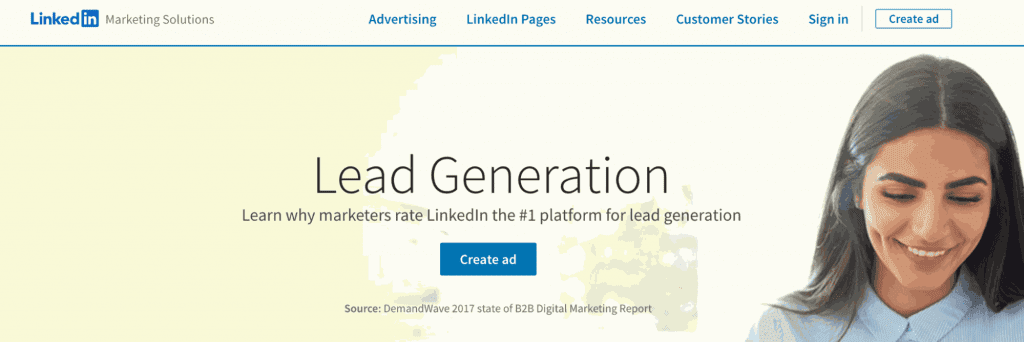
LinkedIn is a powerful networking platform and can be as effective as a lead generation tool. Connecting and interacting with key contacts is a free, easy way to get started. Engage with others’ content, post relevant articles and updates, and introduce your business to potential customers in an organic way.
LinkedIn lets you take your lead generation a step further by creating specific lead generation forms to tie to your engaging content. These lead generation forms can be customized and tied into your LinkedIn content. Just as your website lead capture forms will help you capture names, emails, and phone numbers, you can build a lead generation form to capture lead information right on LinkedIn.
Furthermore, you can also embed your LinkedIn feed on your website to provide visitors with latest news and route them to your LinkedIn page or profiles.
When I first started posting on LinkedIn, I thought it would be easy. I’d share updates about UpLead, maybe drop a stat here or there, and people would care. They didn’t. 33 impressions. Maybe 2 likes. Most of the time it was crickets.
Here’s the truth: LinkedIn is no longer just a resume site. It’s a distribution engine where deals get sourced, careers get built, and founders raise money. For me, LinkedIn growth wasn’t about vanity metrics—it was about turning attention into demos and sign-ups for UpLead.
Once I figured out how to crack the algorithm and write content people actually wanted to read, my reach exploded. In less than 90 days, I went from 33 impressions per post to over 1.7 million impressions. The best part? It’s a repeatable system.
Here’s the ONE change that skyrocketed my impressions overnight:
I changed my headline from “CEO at UpLead” to:
CEO @ UpLead • Bootstrapped to $30M+ in Sales • Sharing Cold Email & Sales Systems That Actually Work
I made this change at 7pm, logged off for the day, and woke up to an OLD post that went from nothing to 100k impressions. This HOCKEY STICK of impressions came solely from my headline change.
Why it works: Your headline is your billboard. Every comment you make, every post you publish—people click back to see who you are. If that billboard doesn’t instantly answer “why should I follow you?” you’re dead in the water.
Use this format:
{Title} @ {Company} • {Something remarkable you’ve done} • {What you share/the value you give}
Change your headline right now. If it works, give me a shout out on LinkedIn.
How do LinkedIn Lead Gen Forms compare to landing pages?
The conversion rate for LinkedIn Lead Gen Forms is about 13%, while typical landing pages convert around 4%, so LinkedIn forms convert at around 3× the rate of sending traffic to an external page.
Entity–Attribute–Value (EAV):
- LinkedIn Lead Gen Forms — average conversion rate — 13%.
- Landing pages (general) — average conversion rate reference — 4.02% (benchmark referenced by LinkedIn from Unbounce).
LinkedIn’s pre-filled, native forms reduce form friction, improve data quality (company/title fields), and lower cost per lead (CPL) because fewer users bounce during the handoff to a website. Use forms for top and mid-funnel offers (checklists, webinars), and route high-intent prospects to your site only when you need richer qualification.
Practical Application: You should test Lead Gen Forms vs. landing pages on the same audience, compare CPL and lead quality, and keep pre-filled fields limited to essentials to preserve the 13% baseline.
Provide free trials and consultations
It’s a good idea to let your product or service do the talking regarding lead generation. Free trials and consultations are an effective way to introduce your business to potential customers. They let potential customers understand first-hand how your product or service can solve their problems, meaning a higher chance of conversion.
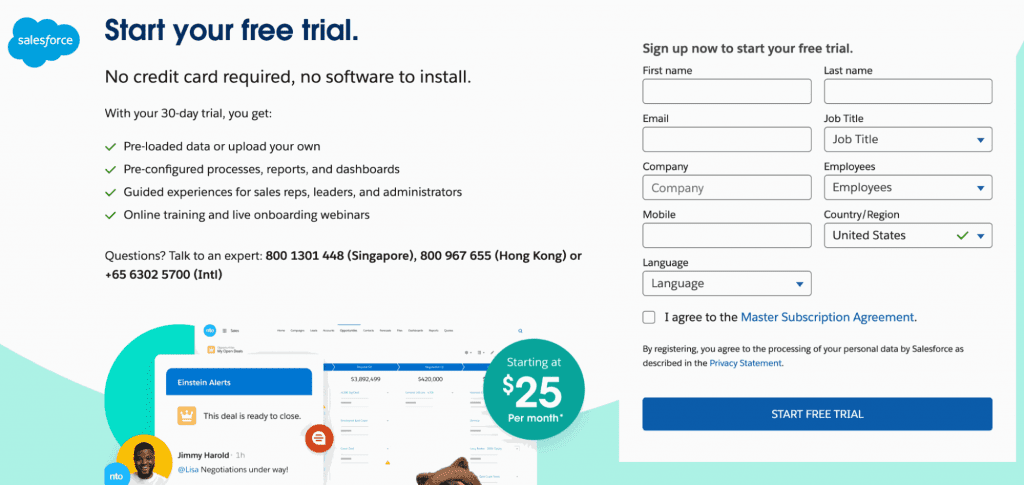
Salesforce, for example, offers a 30-day free trial, allowing businesses to test out their CRM platform with their own data. The trial doesn’t require a credit card either, making it a free way to try their product without hassles.
How do product-qualified leads (PQLs) improve trial conversion?
A Product-Qualified Lead (PQL) is a user who triggers buying intent through in-product behavior, and PQLs often convert 15 to 30%, far higher than traditional MQLs.
Entity–Attribute–Value (EAV):
- PQLs — definition — usage-driven buying intent; trial→customer conversion — 15 to 30%.
Map activation events (e.g., first integration, 3 seats added) and route sales-assist when those signals appear. Align pricing and onboarding to shorten time-to-value and improve upgrade rate.
Practical Application: You should instrument 2 to 3 “PQL triggers” in the free trial and alert reps in real time for sales-assist outreach.
Attend events (both online and off)
Virtual and in-person industry events are excellent ways to connect with potential local leads/customers. Targeted events are ideal for connecting with a high volume of potential customers that have a greater chance of converting to paying customers. After all, the attendees wouldn’t be at the event if they weren’t at least interested in the topic.
While attending these events can be fruitful, being an active participant is even better. Bonus points if you can take part as a guest speaker!
Organize and offer a free course
Like a free trial, a free course provides value to potential customers before making a purchase. Your course can highlight your product or service, create engagement with potential customers, and show how your business can be a solution for other businesses.
While promoting and sending a course online is easier, organizing an in-person class may be worthwhile. Generating an event of your own and hosting a course creates face-to-face contact with potential customers while providing valuable content.
How do webinars convert from registration to attendance?
The average conversion rate from webinar registration to attendance is around 57%, based on 2024 usage data analyzed in ON24’s 2025 Benchmarks.
Entity–Attribute–Value (EAV):
- Webinars — reg→attend conversion — 57% (ON24 platform data).
Attendance rises when you offer on-demand access, send calendar holds at registration, and add reminders 24 hours and 15 minutes pre-event. Momentum continues post-event: content hubs powered by webinar assets saw +37% “contact us” and +44% demo requests year-over-year in 2024.
Practical Application: You should set 57% as your attendance KPI and convert attendees with a timed CTA (e.g., demo within 48 hours) supported by an on-demand replay sequence.
Create gated content
Want to streamline contact data collection without having to do manual research? Creating gated content allows you to collect data while providing value to potential customers. Whereas free trials may not always require contact information (we recommend that they do), gated content is only provided in exchange for information that will help you reach out to the potential customer.
Requiring a simple email address or a phone number to unlock additional content helps you build your contact list in exchange for valuable content, additional free features, or a free trial.
What conversion rates do exit-intent popups achieve?
The average conversion rate for website popups is around 4.65%, confirming that well-timed exit-intent prompts still capture measurable leads without hurting UX.
Entity–Attribute–Value (EAV):
- Website popups — average conversion rate (2025, 1B displays) — 4.65%.
Performance improves when the offer is micro-commitment (e.g., checklist, template) and the creative uses one clear CTA. Start with exit-intent on blog/educational pages, then A/B test delay timing (e.g., 7 to 10 seconds vs. scroll-based), headline clarity, and form length. Keep the popup from firing for recent subscribers to protect UX.
Practical Application: You should A/B test copy and triggers against a 4 to 5% target and only request name + work email at first to maintain conversion lift.
Conduct an industry-specific study
Business customers love statistics; the more data you can provide on your business, product, or service, the better. Unique data-driven stories are valuable for potential B2B customers. Running a study may be a larger undertaking than some other lead generation strategies, but they’re often worth it.
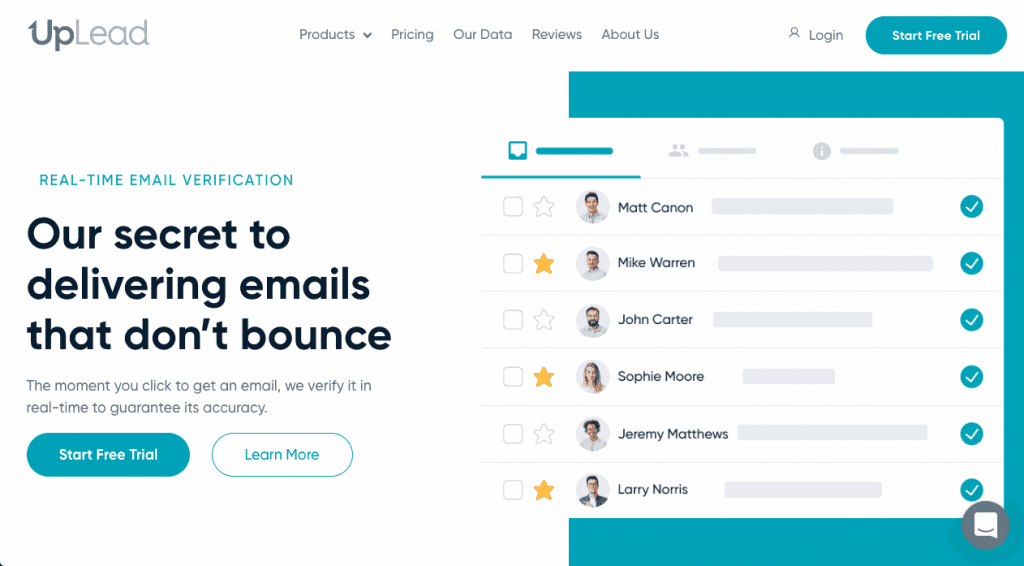
Building the study and distributing it to your prospect list goes one step further than a typical cold call or cold email campaign. Combine your efforts with UpLead’s email verification and prospector tools, and you’ll be set up for success!
Host a Meetup
Hosting a meetup of potential business customers brings your leads to you. Whether you’re hosting a course, networking event, or product demonstration, a face-to-face meetup is always a good addition to your lead generation strategy. Face-to-face interactions allow your business to build trust and develop strong relationships much faster than interactions that take place online.
Create and share online industry-related quizzes
Online quizzes aren’t just popular for discovering personality traits and which fictional character you are; they can also be practical lead generation tools. An “outcome quiz” used in a B2B context helps move prospective customers through the sales process.
These quizzes help prospects understand which of your products or services can solve their problems. By entering their specific business information, what they may be looking for, and where they are in the buying process, they’ll receive an ‘outcome’ that leads them to one of your solutions.
Write a guest post on a blog (and plug your business, if possible)
Guest posts build direct links to your business’ website, and if you can guest post on a website with many visitors, it can lead to traffic on your site. Creating a high quality post doesn’t require a major investment of time or money.
Connecting with businesses that may have similar target audiences is the first step in writing a guest post. Sites that allow guest posts have strict rules and guidelines around what you can and cannot post, so be sure to play by the rules. Plug your business if allowed, and make sure the site allows backlinks to your business website so you can drive traffic there.
Engage on social media
Everyone knows the importance of social media, and if your business hasn’t joined the social media bandwagon, you’re missing out on countless high quality leads. B2B customers engage on social media, making it a popular platform for lead generation and genuine engagement.
Interact with other businesses or potential customers in comments, answer questions on your pages, and engage with other content on social media platforms. Social media can be seen as both an outbound lead generation strategy if you’re contacting prospective customers and an inbound lead generation strategy by fostering genuine engagement and organic traffic to your page.
Create an optimized Google My Business profile
A Google My Business profile allows your business to be seen in search engine results, making it a must-have for all companies. Fortunately, it doesn’t take long to set up a business profile. As we’ll talk about in our next point, testimonials and reviews are important for word-of-mouth marketing, and a Google My Business profile hosts customer reviews.
Why do photos and reviews on Google Business Profile increase leads?
Photos on a Business Profile drive +42% more directions requests and +35% more website clicks, according to Google’s help community guidance.
Entity–Attribute–Value (EAV):
- Business profiles with photos — directions requests — +42%; website clicks — +35%.
Reviews reinforce social proof that buyers trust during vendor research. BrightLocal’s 2025 survey shows 42% of consumers trust reviews as much as personal recommendations, down from 79% in 2020, which underscores the need for credible, named reviews and active responses.
Practical Application: You should add current photos, enable Q&A, and implement a review program requesting named feedback after success milestones; track click-through and direction requests in Insights.
Highlight testimonials on your website and social platforms
Prospective customers trust current customers over everyone else, so it’s important to highlight testimonials on your website and social media. Satisfied customers can be some of your biggest advocates, and word-of-mouth marketing is some of the most effective free advertising your business can leverage. Regarding lead generation strategies, highlighting testimonials can have a return and requires zero financial investment.
Host a contest or giveaway
Generate excitement around your brand with a contest or a giveaway. Everyone loves free things, and B2B customers are no different. Contests and giveaways can be a simple way to generate a high volume of quality leads. An easy, effective way to pull in prospects is to center the contest or giveaway around engagement.
A common giveaway example is often seen on social media; participants are entered by sharing, liking, commenting, or engaging with specific content. This makes the content more popular on the platform, meaning more potential customers see it. There’s no risk for the participants and minimal investment from the business.
Start a podcast (or guest host on someone else’s)
Podcasts have grown in popularity over the last few years, and it’s easy to see why. This unique audio medium creates engagement with dedicated listeners, allowing for long-term growth and customer loyalty.
Like providing free courses or free trials, podcasts generate a lot of value for potential and existing customers. They allow you to highlight your products, services, issues relevant to your industry, and so much more.
Focus on optimizing your website for relevant keywords (and create a killer SEO strategy)
Now is the time if you haven’t been focusing on search engine optimization (SEO). SEO is the practice of improving your website and its content to appear as high as possible in search engine results (most important, Google search results).
This is done by creating higher quality content, using targeted keywords, and making it easier for Google to analyze and understand your website through various web development techniques.
The first page of Google search results can get as high as 90% of the clickthrough traffic rate, meaning if your website doesn’t rank on the first two pages of Google for your target keywords and phrases, chances are you’re not getting a lot of traffic from Google searches.
Use retargeting
Retargeting customizes advertisements online based on a potential customer’s browsing history. Cookies are used to identify search history and visited web pages, and retargeting strategies allow you to target relevant advertisements based on where your potential customers have been online.
Let’s say your company has established a Google Ads campaign, and a potential customer visits your website. Cookies track where they have been, and since they visited your website, they may see an advertisement for your business later on Google. This simple explanation of retargeting at work is a powerful lead generation strategy your business can implement today.
How much can retargeting lift conversions?
Retargeting boosts conversions by re-engaging visitors familiar with your brand; Criteo data shows app retargeting can lift conversion rates by around 38% and improve retention/visit frequency.
Entity–Attribute–Value (EAV):
- App retargeting — conversion lift — around 38%; retention increase — around 30%; products browsed per user — +224%.
Practical Application: You should cap frequency, align creative with the last viewed category, and exclude converters to keep ROAS efficient.
Build an app
While it’s much easier said than done, building an app is an impactful lead generation strategy. Everyone has a smartphone; you can be sure your B2B prospects use their phones daily. Building a clean, streamlined, free application can funnel high quality leads to your business while providing value and utility.
It may be a good idea to offer a free version of your product or service through the app or use the app as a “price” for gated content. For example, leads can download the app to unlock a free trial or additional valuable content.
Send influencers your products or services to try
Social media platforms play a huge role in our lives, and consumers and businesses now have an active presence on social media. In fact, business accounts can be just as popular and engaging as some of the social media’s biggest names.
TikTok is the home of today’s influencers, and it isn’t uncommon for major brands to send free products to influencers. Some influencers may be happy to promote your products if they receive them for free. While TikTok is a consumer-based platform, it isn’t uncommon to see businesses interacting with other businesses.
Hire an influencer
Many businesses hire influencers to sponsor or promote their products and services as an alternative to providing free products. This is because providing free products doesn’t always guarantee a positive review. Hiring an influencer is a sure way to get your product or service in front of a wider audience and helps ensure it’s portrayed in the positive light it deserves.
Create a monthly newsletter
Another impactful inbound lead generation strategy, a newsletter, is a practical way to generate high quality leads and provide value to your existing customers. However, it takes time to build content for newsletters and even longer for your newsletter to gain popularity.
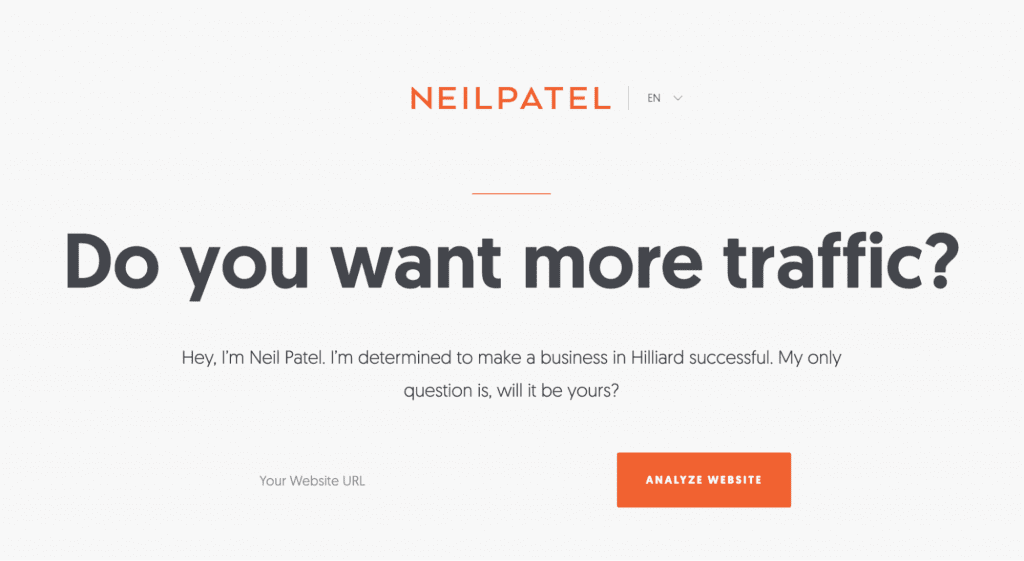
That being said, having a simple email capture field on your website to sign up for a newsletter is a great way to streamline the lead generation process. Neil Patel, a leading SEO specialist, has a massive newsletter following and uses the newsletter to create value for existing customers and generate leads through new signups.
Create eye-catching infographics
In today’s online world, visuals are key. Short, effective infographics are powerful tools for lead generation. The goal is for others to share and distribute your infographic online, so be sure to post your infographic to social media platforms and on your own website.
Infographics should be striking and present key information about your business or product to potential customers. Check out some top examples of infographics here.
Publish case studies
Case studies aren’t just effective for internal benchmarking and improvements but also as a lead generation strategy. In-depth case studies show how you’ve impacted your customers’ businesses. You’re building trust with potential customers by providing real-world numbers and statistics.
Much like review sites, case studies are a great way to bring existing customers into the lead generation strategy. Case studies vary in depth, detail, and length. Check out this short but impactful case study about The Line, a small boutique that used content marketing for sales and revenue growth.
BONUS: Check out the Metaverse
With the rise of the metaverse, it is possible to use it to your business’s advantage. While the program is still in its infancy, the metaverse concept is to blend our real and virtual lives. The lead generation strategies that can come from the metaverse are unknown, but that’s what makes it so exciting. Virtual meetings with key contacts around the world, new ways to connect, and virtual work environments are just a few of the many possibilities that come with the metaverse.
Enhance Your Lead Generation Ideas With UpLead
With so many lead generation strategies, the sky’s the limit for your business. As you can see, both inbound and outbound strategies can impact the growth of your business.
UpLead’s tools and features can help your business launch high-impact lead generation campaigns. From an industry-leading prospector tool to on-demand email address verification, everything you need to start identifying qualified leads is at your fingertips.
I didn’t build UpLead because I wanted to start a data company. I built it because I was tired of wasting time, money, and energy on bad data that killed my outbound campaigns. For 10 years, I ran a lead gen agency. We used every tool, bought every list, scraped every website. And still, we’d watch campaigns fail—not because of bad messaging, but because the list sucked from the start.
That’s why I built UpLead around one principle: Lead gen doesn’t need to suck if you get the list right.
I didn’t have a huge sales team. I didn’t have a massive marketing budget. I just had:
- Ultra-targeted lists with high-intent signals
- Every contact verified in real-time
- Personalized outreach based on segmentation
- Consistent follow-up
That process took UpLead from $0 to over $30 million in sales. No hacks. No shortcuts. Just precision and persistence.
You can either keep relying on bloated databases and hoping for results, or you can take control and build lead lists that win. The choice is yours.
Common Questions About Lead Generation Ideas
Here are some of the most common questions about lead generation and how you can use the above strategies to grow your business.
To summarize, lead generation activities involve contacting potential customers to qualify them and convert them into paying customers. No matter the size of your business or sales team, there are plenty of tools and strategies that you can use to generate high quality leads.
The best B2B lead generation ideas are the ones that meet your target customers where they are. While it’s easy to generalize and say that an email campaign is one of the best outbound lead generation campaigns, your target audience may not make emails a priority and might prefer to hear about new products and services in a different way. It’s possible that a cold call campaign or an in-person event may be the right strategy for your target audience.
With the above strategies in mind, selecting the right lead generation method for your unique company is important for a successful campaign. Every business is different, so take the time to understand your target customers before deciding which lead generation idea to use.
Lead Generation Ideas: Key Takeaways
In summary, there are countless B2B lead generation strategies, but it’s important to understand your target market before committing time and energy to a particular method. Fortunately, UpLead is here to help with lead generation tools and resources to launch a successful lead generation campaign.