


This article will cover everything you need to know about cold calling vs. cold emailing. After reading, you’ll know which to use. More specifically, we’ll talk about the following:
- The basics of cold calling and cold emailing
- How do you decide between cold calling and cold emailing
- Essential tools for cold outreach
- Frequently asked questions
Let’s get started.
Cold Calling vs. Cold Emailing: The Basics
This section will define and cover the basics of cold calling and emailing. We’ll address when to use them and their pros and cons.
What is Cold Calling
Cold calling is a sales telemarketing strategy that uses telephonic communication to sell products and services to targeted prospects. These prospects have never interacted with the business calling on the telephone, and that’s why it’s called “cold.”
Cold calling is conducted over the phone. However, salespeople who go door-to-door can also do it in person. Cold calling is also referred to as “outbound calling.”
Cold calling has progressed over the years and has become more efficient thanks to technological advancements. Sales autodialers allow you to schedule and automate calls to save time and effort.
In my 15+ years of cold calling across three different businesses (Sears, my mortgage company, and now UpLead) I’ve seen how this channel has evolved. When I was living in my mortgage company office making 200+ calls per day, we didn’t have parallel dialers or verified mobile numbers. We’d send lists to the Philippines just to verify which numbers worked. We’d start with 10,000 contacts and end up with maybe 4,000 usable ones. It took weeks and cost a fortune.
That frustration is why I built UpLead around one core principle: give sales teams verified, mobile-direct dials without the hoops I had to jump through. Today at UpLead, cold calling drives a significant share of our $30M+ in revenue (not as our only channel, but as a powerful complement to email and LinkedIn outreach).

When to Use Cold Calling
When It’s a Personal Matter: Cold calling is ideal for discussing a personal matter with a prospect. Communicating over the phone lets you modulate the tone of your voice to match theirs.
When You Need an Immediate Response: If you need a quick response, consider using cold calling as an outreach method. A phone call is immediate, and your targeted prospects will either pick up or they won’t. You don’t have to worry about a spam folder.
When You Want to Uncover Roadblocks and Objections: Since calling on the phone is immediate and personal, cold calling is ideal for finding information about prospects. You can identify their roadblocks and objections to your products or services.
Pros & Cons of Cold Calling
Cold calling has pros and cons. The top ones are listed below.
Pros
- Reach new customers: If someone isn’t aware of your brand and its products and services, it’s doubtful they’ll ever become customers. Cold calling reaches out to these people who need your solution but don’t know it yet.
- Fast response times: Cold calling has shorter response times than other channels, such as email. You need one call to pitch a product or service to a prospect. With a phone call, you get feedback straight away. Here are the best times for cold calling.
- More personal: Cold calling allows you to connect with your prospects. You can hear your prospect’s tone of voice and adjust your approach on the go. This isn’t possible with other forms of communication.
- Uncovers roadblocks and objections quickly: A sales representative can discover why a prospect hesitates to purchase your product or services. Salespeople use cold calling scripts to navigate through hops and nurture the client quickly.
- Great training for sales reps: If you sell an expensive product or service, you’ll meet the prospect in person to close the deal. Cold calling trains your sales representatives for this moment.
Cons
- Low success rate: Cold calling has a low success rate compared to referrals and leads. Some experts have suggested that success rates can be as low as 2%.
- FTC regulations: Several laws and regulations limit cold calling.
- It can be annoying: People find cold callers intrusive, which is why FTC regulations and the Do Not Call List exist.
- Could damage your brand: There is a negative stigma surrounding cold calling, and your brand might be damaged if your prospects are irritated and inconvenienced.
- Requires skilled salespeople: Cold calling isn’t easy; you need sales reps who are qualified and experienced. It is difficult to sell your brand and its products and services to cold prospects.
What is Cold Emailing?
Cold emailing is an email marketing strategy that uses email messaging to reach targeted prospects. Emails are sent to individuals without prior contact with the brand but fit certain parameters. The emails are personalized, and I hope to sell to a single individual.
Many businesses send cold emails to significant effect. Like any outreach strategy, a careful approach is necessary for a positive return on investment. Cold emailing can be sent in large bulk amounts. However, this runs the risk of flagging spam filters.
Cold emailing is the email equivalent of cold calling. They have some inherent differences, which we’ll discuss later.
When I launched UpLead in 2017, I had no funding, no brand, and no marketing budget. My competitors raised millions from VCs and hired teams of SDRs. I was alone with a laptop, a Gmail account, and cold email. That was enough. I hit $50K MRR before spending $1 on ads. We scaled to $7M+ in 3 years, bootstrapped. Today, UpLead has done $30M+ in total sales and cold email is still the backbone.
I’ve sent over 100 million cold emails across my career. Most of them were ignored. But a handful (just a few emails) drove $30M+ in revenue and built UpLead into what it is today. Cold email works, but only if your foundation is solid: data quality, deliverability setup, and a disciplined follow-up system.
When to Use Cold Emailing
When You’re Conducting Outreach at Scale: Cold emailing is ideal for conducting outreach at scale. Email service providers can send emails to many people at once.
When You Want to Be Less Intrusive: Compared to cold calling, cold emailing is far less intrusive. You can email them; it doesn’t have to be read or responded to right away. Your prospects can decide when they want to open the email. However, you need to use great subject lines for cold emails to work.
When You Want Prospects to Share Your Cold Email: Email messaging provides several great features, such as forwarding. Your prospects can forward your cold emails and share them with others, increasing the organic reach of your outreach campaign.
Pros & Cons of Cold Emailing
Cold emailing has its pros and cons. We’ve listed the top ones below.
Pros
- Cheap and time-efficient: Email service providers make it possible to send emails to many people. Bulk-sending features streamline your cold emailing workflow, saving you time, effort and money.
- More informative: An email allows adding attachments and links to strengthen a sales pitch. You can provide additional information about your brand and its products and services.
- Less intrusive: Unlike other outreach methods, sending a cold email is far less annoying. An email is sent to an inbox where the recipient can decide whether to read it.
- Easy to forward: Emails are forwarded to other people. Your targeted prospects may share your cold email with others, expanding your reach.
- Easy to automate and track: Cold emailing doesn’t require expensive technology to track and analyze performance. Email service providers have standard automation and analytics features.
Cons
- No immediate response: Unlike cold calling, cold emailing requires you to wait until you get an answer from your prospects.
- Unseen emails: Due to several factors, such as sender score and spam filters, not all cold emails reach your target prospects’ inboxes.
- Rules and regulations: Several rules and regulations restrict cold emailing. The CAN-SPAM Act provides standard guidelines for commercial emails in the US. The General Data Protection Regulation (GDPR) protects European user data, influencing international business.
- Lots of competition: Since sending cold emails at mass is easy, there’s a lot of competition for your prospects’ attention. Their inboxes will be full of businesses competing with each other.
- Hard to get feedback: You must wait for your cold emails to be read and responded to, making it difficult to receive feedback. Unlike cold calling, it’ll take some time to discover your prospects’ roadblocks and objections.
What are the current response and connection rates for cold email vs. cold calling?
The current response rate for cold email is ~8.5% on average, while cold calling requires ~18 dials to reach one buyer and yields ~1 in 59 answered calls converting to an appointment or referral in field studies. (Backlinko)
Benchmarks show cold outreach performance varies by channel mechanics and timing. Email response averages ~8.5% across large-scale outreach datasets, with follow-up sequences lifting replies (e.g., +65.8% with at least one follow-up). Calls, meanwhile, are constrained by connection rate and time-of-day: historical and refreshed telephony analyses indicate morning windows (8–11 a.m. recipient’s local time) deliver the highest connection likelihood. Once connected, live conversations can move prospects faster toward meetings, but connects are the bottleneck. (Backlinko)
For planning, interpret these numbers at the sequence level: email scales broadly (thousands of sends with deliverability controls), whereas calling concentrates impact into fewer but richer interactions. Teams selling complex or high-ACV solutions should weight calling more within mixed sequences to maximize meeting conversion after a connect, while scalable prospecting should emphasize email volume tempered by deliverability, list hygiene and reply-focused copy. (Validity)
Practical Application: Use email for scalable top-of-funnel reply generation and calling for accelerated qualification once intent surfaces; test morning calling blocks and add 2–3 email follow-ups to lift total replies.
| Metric (Entity) | Attribute | Value | Source |
|---|---|---|---|
| Cold email | Average response rate | 8.5% | Backlinko |
| Cold email | Reply lift from ≥1 follow-up | +65.8% | Backlinko/YouGov coverage |
| Cold calling | Dials needed per connect | 18 dials/connect | Gartner |
| Cold calling | Appointment/referral per answered call | 1 in 59 | Baylor (Keller Center) |
| Cold calling | Best connect window | 8–11 a.m. | Revenue.io |
In my experience, those numbers match what we’ve seen at UpLead. When we started layering in cold calling alongside our cold email campaigns, reply rates nearly doubled. Same list, same copy (the only difference was familiarity). We’d view their LinkedIn profile, like a post, comment once, and then send the email a few days later. By the time our name showed up in the inbox, they recognized it.
Here’s what our internal data showed across one quarter of outbound campaigns:
- No pre-outreach: 500 emails → 47 replies (9.4%) → 12 meetings
- With pre-outreach: 500 emails → 87 replies (17.4%) → 28 meetings
That’s 2x the replies and 2.3x the meetings with the same effort. The lesson? Cold email and cold calling aren’t competing channels (they’re force multipliers when used together).
How to Decide Between Cold Calling vs. Cold Emailing
Cold calling and cold emailing are both effective outreach strategies. Which one you decide to use will depend on several reasons. We’ve covered four of them below.
Reason You’re Reaching Out
What’s the reason you’re reaching out for the first time? Are you trying to schedule a meeting? Maybe you want information or a referral. You must figure out what you need. Then, you can classify it as either “weak” or “strong.”
This will help you determine if you should email or use the phone.
A solid reason to reach out includes conference calls, product trials, meetings and more. You’re asking prospects to make a big commitment. On the other hand, weak reasons are simple requests for information from your prospects. Think of referrals or asking for feedback.
After determining whether your reason for outreach is strong or weak, you should be able to decide. Strong reasons require a strong close, so you should use the telephone. You’re asking more of the prospect; your sales reps must use their skills to close.
Closing a deal is much easier over the phone. A skilled salesperson can get prospects to say yes and deal with roadblocks and objections as they happen.
Now, if your reason is weak, use email. You’ll save your prospect’s time and avoid inconveniencing them. They can respond to your demand with a couple of sentences.
What’s fascinating is that a lot of salespeople do things backward. If they want to schedule a meeting, they’ll send an email. They’ll make an inconvenient phone call if they have a simple question or request.
They do this because they fear rejection. It’s far easier to ask for a big commitment through email, even if it’s less effective. You should avoid letting fear influence you to do the same.
Early in my career at Sears, I made this mistake. I’d send emails asking for meetings because it felt safer than picking up the phone. The problem? My close rate was terrible. The moment I started treating big asks (like demos and trials) as phone conversations, my connect-to-meeting rate tripled in a month. The phone forces you to have a real conversation, and that’s where deals move forward.
Day and Time
The day of the week and the hour influence how successful cold calling and cold emailing are. The best days of the week to call are Tuesday, Wednesday and Thursday. Below are some research studies to support this claim.
CallHippo’s 30-week study tracked over 15,800 call attempts and found that Wednesday had the most conversations. In second place was Thursday, and then Tuesday in third place.
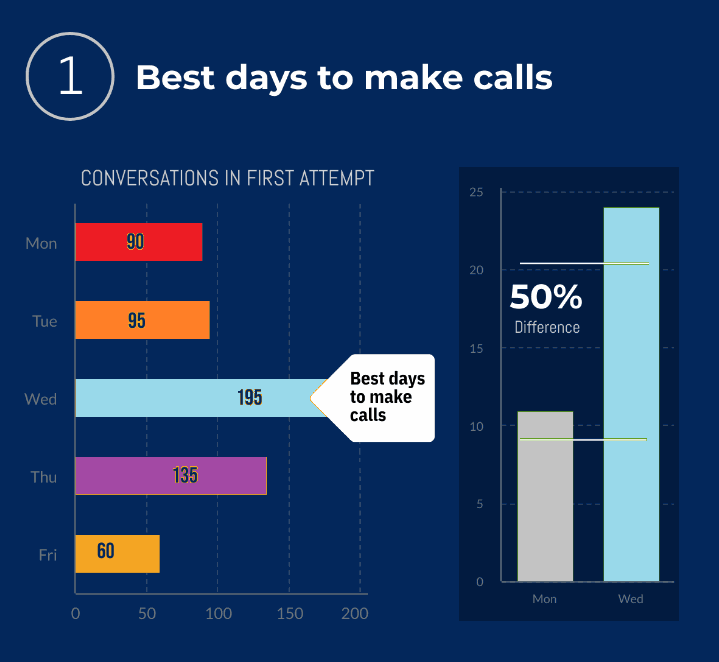
Image Source: CallHippo
Yesware conducted a study into the matter. It looked at 25,000+ calls and showed Tuesday and Thursday to have the most calls that lasted over five minutes. InsightSquared’s research determined Tuesday to have the best connect rate, which was 10%.
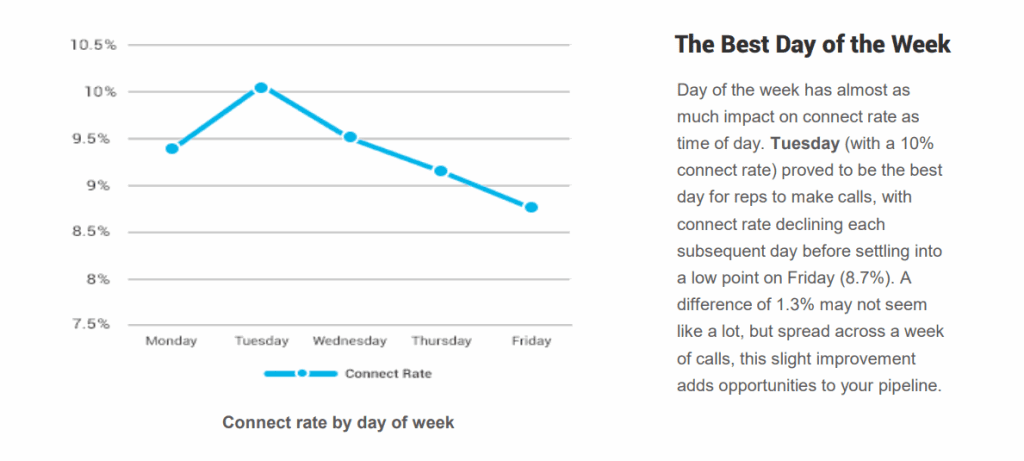
Image Source: InsightSquared
Lastly, InsideSales did a three-year study of over 100,000 call attempts. The results showed Thursday as the best-performing day of the week, and Wednesday was a close second.
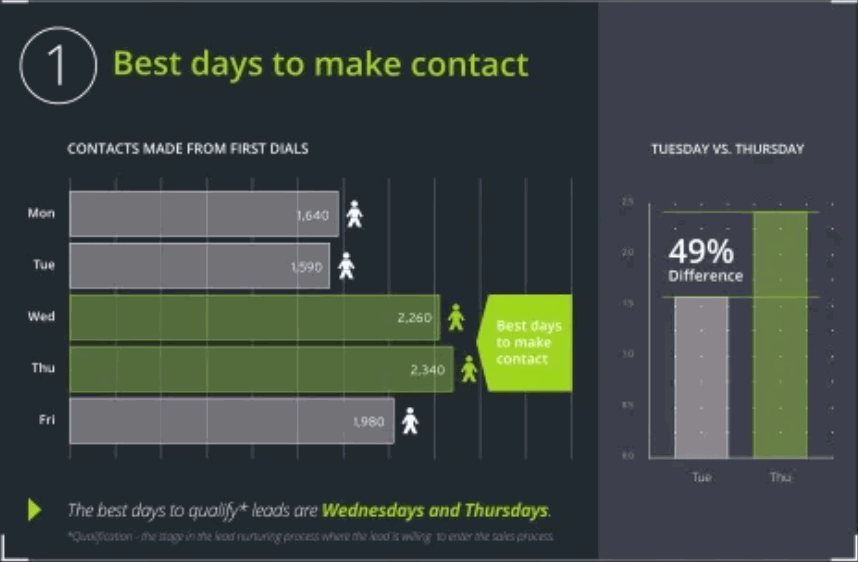
Image Source: InsideSales
If you summarize the results of all four studies, it looks like this:
- Wednesday for CallHippo
- Tuesday and Thursday for Yesware
- Tuesday for InsightSquared
- Thursday for InsideSales
The results are conclusive: Tuesday, Wednesday and Thursday are the best days to call. Monday and Friday are too early and late in the working week, and the weekend is a no-go.
Regarding the hour of the day, it appears there are two ideal time windows to call. These are the late morning (10 AM to 12 PM) and late afternoon (2 PM to 5 PM). Research studies back this up. We’ve listed four of them below.
A CallHippo study found 4 PM to 5 PM as the best time to call, and 11 AM to 12 PM came second.
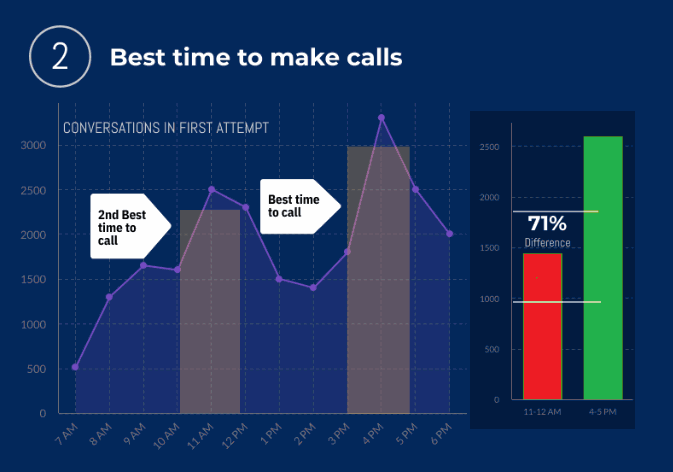
Image Source: CallHippo
Another study from InsightSquared found similar results. From 10 AM to 11 AM, the strongest connect rate remained strong until 4 PM. 10 AM to 4 PM was the time InsightSquared suggested was the best time to call. However, avoid lunchtime.
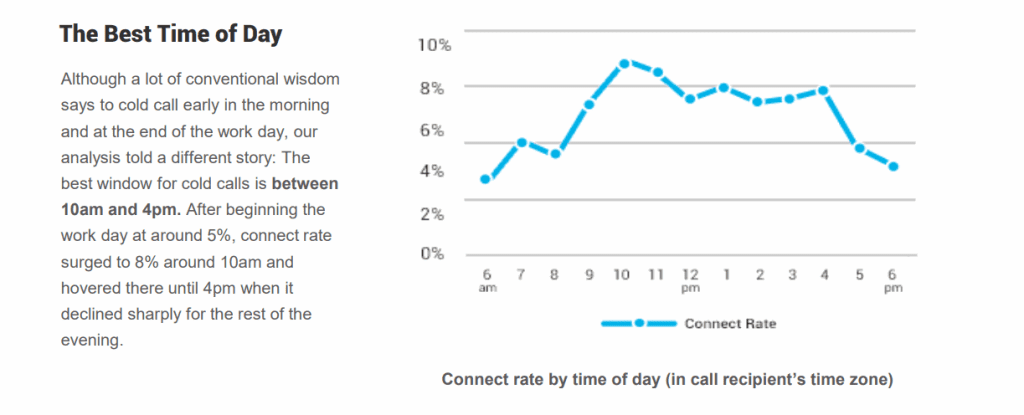
Image Source: InsightSquared
InsideSales’ three-year study found that 4 PM to 5 PM was the best time to call, followed by 8 AM.
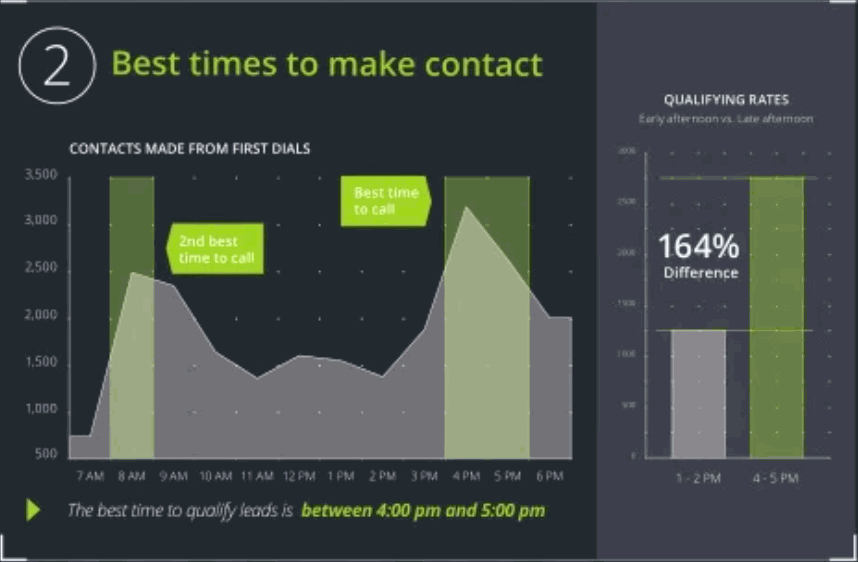
Image Source: InsideSales
Revenue.io’s study found 4 PM to 5 PM to have the best connect rates. 3 PM and 4 PM were second, and 5 PM to 6 PM was third.
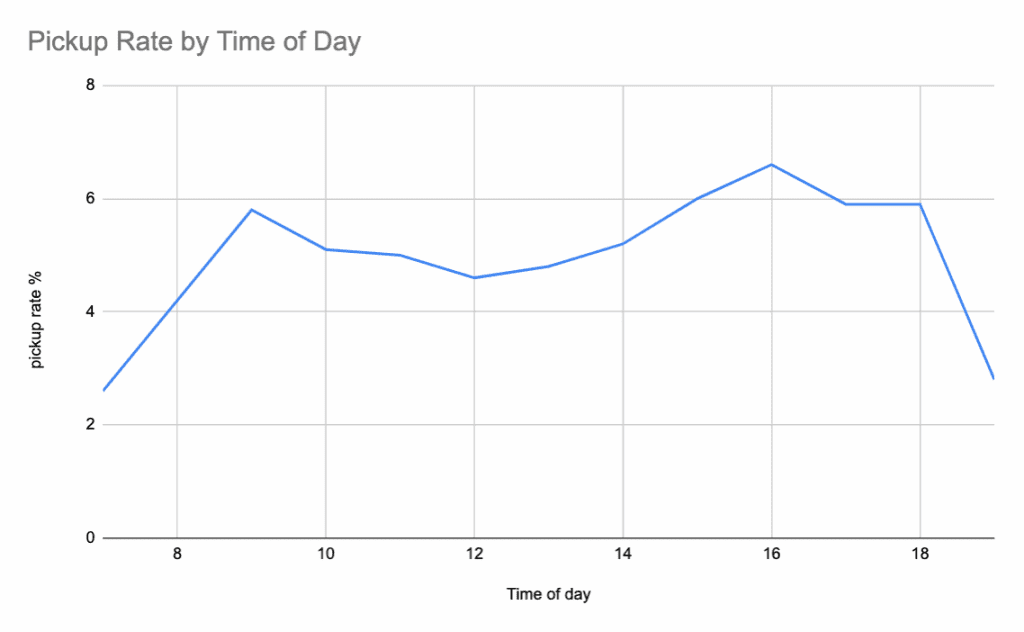
Image Source: Revenue.io
If you add all these four studies together, it looks like this:
- 4 PM to 5 PM for CallHippo
- 10 AM to 11 AM for InsightSquared
- 4 PM to 5 PM for InsideSales
- 4 PM to 5 PM for Revenue.io
The results confirm that the late morning and late afternoon periods have the best connect rates, making these the best times to call during the day.
When it comes to email, the results are similar. a HubSpot survey of over 300 email marketers found these time windows to be the best to send an email:
- 9 AM to 12 PM
- 12 PM to 3 PM
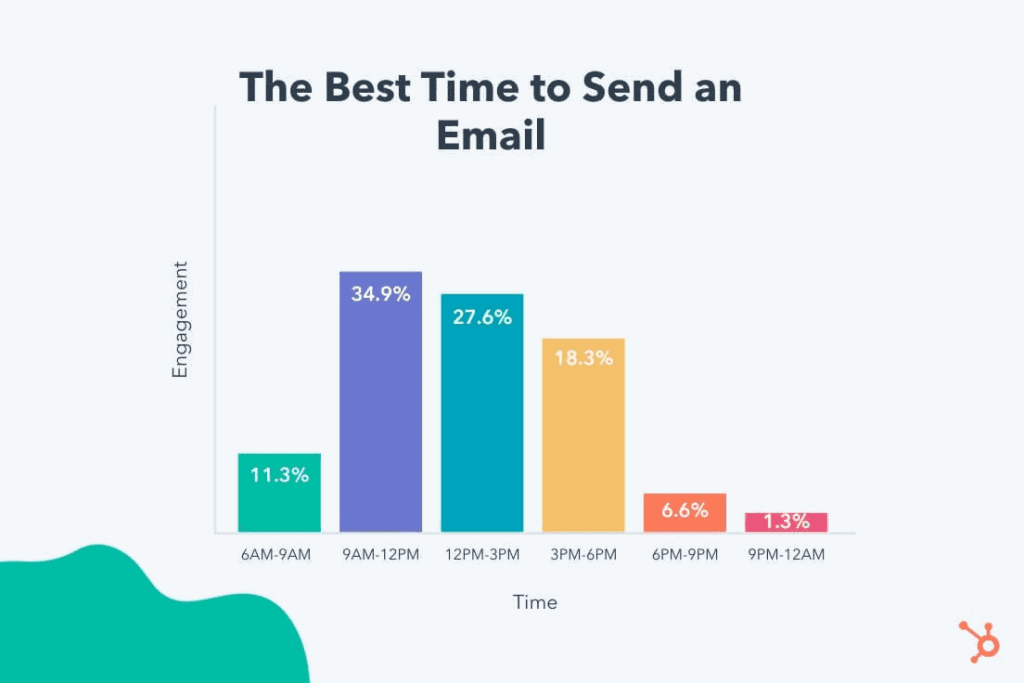
Image Source: HubSpot
The survey also looked at the best days of the week to send an email. The results showed the highest engagement on Monday, Tuesday and Wednesday.
This is a lot of data, but what does it mean for cold calling and emailing? Avoid the weekend and before and after working hours. Also, avoid lunchtime. Each prospect is unique, so experiment and find your best time to do outreach.
Buyer Persona
Your buyer personas can influence the ideal method of communication. Specific buyers will prefer email over phone calls. It depends on several factors, including their age, their employment, the industry they work in and more.
Zoomers and millennials prefer to communicate by email. If your cold outreach prospect is younger, consider this into the equation. Employees in customer-facing roles tend to favor the telephone as a large part of their job revolves around making and taking calls.
If they work in an internal position, email is their preference. The industry can also play a factor. Traditional industries, such as manufacturing or construction, like phone calls.
Prospect Level
How high or low your prospect is within the hierarchy of their company matters. The higher they are, the more likely your call will be answered. It might not be them, as it could be an assistant. Either way, they’re more likely to respond to phone calls than lower employees.
We’d recommend using cold calling for management level and up. Leadership, c-suite and heads of departments also tend to have more experience on the phone. This means that sales calls won’t intimidate them as much. They’ll be more relaxed and able to respond.
The lower-ranking employees tend to be away from the office more. They’re traveling, so a communication channel like email would be ideal.
Which buyers respond better to cold email vs. cold calling?
Buyers respond better to cold email when they need to circulate information across a committee quickly, and they respond better to cold calling when a live, time-bounded conversation can accelerate qualification during high-connect windows. (Revenue.io)
Executives and technical evaluators often prefer asynchronous first contact that can be forwarded internally; this favors email to reduce calendar friction and document value. Where requirements clarification or risk unpacking is essential (enterprise, regulated categories), calls move faster once you detect engagement. Because connects are scarce (requiring ~18 dials on average), throttle voice attempts to signal-rich leads (email replies/clicks, high-intent pages). Morning call blocks (8–11 a.m. recipient time) remain your best shot at catching decision-makers between meetings. (Gartner)
Practical Application: Map channel by buying job: email for problem identification/solution exploration docs and call for requirements building/supplier selection momentum once intent is visible.
When should you combine cold email and cold calling in one sequence?
You should combine cold email and cold calling when your goal is to warm a contact with scalable emails and then convert intent with a live conversation during the highest-probability calling windows. (Revenue.io)
Use email first to establish relevance and earn a reply or micro-engagement (opens, clicks, brief text responses). This reduces friction for a later call and improves the likelihood of a connect during 8–11 a.m. calling blocks. For complex B2B purchases with multiple stakeholders, email threads help distribute information across the buying committee, while the call clarifies requirements and validates urgency. Gartner’s finding that it takes ~18 dials to connect underscores why you should prioritize calls after any positive signal (reply, click, web visit) to maximize return on limited voice attempts. (Revenue.io)
A practical “email → call → email” cadence (spanning 7–10 business days) lets you (1) open with a value-dense email, (2) call in the next morning block with a specific reference (“following up on X”), and (3) follow with a short recap email that contains a one-click calendar link. Keep voicemails under 20 seconds and use email for detail to protect deliverability and avoid lengthy call monologues. (Validity)
Practical Application: Gate calling to high-intent signals captured by your email platform, then schedule call blocks in morning windows and recap in writing for committee sharing.
At UpLead, we run this kind of sequence. We’ll send a short, personalized email referencing something specific about the prospect’s company (often pulled from our intent data showing they’re researching lead gen tools). If they open or click, we call within 24 hours during the 8–11 a.m. window in their time zone. After the call, we send a recap email with a calendar link and any resources we promised. This “email → call → email” loop has delivered our highest meeting-to-close rates.
What legal and deliverability rules affect cold email and cold calling in 2025?
The rules that affect cold outreach in 2025 are CAN-SPAM for commercial email, TSR/TCPA + Do-Not-Call for sales calls in the U.S., and UK GDPR/PECR for UK B2B email (and each sets concrete requirements on consent, identification, timing and opt-out). (Federal Trade Commission)
For email, CAN-SPAM requires accurate headers, non-deceptive subject lines, a working unsubscribe mechanism and a physical postal address in every message. Violations carry enforcement risk across the FTC and FCC. In the UK, B2B email operates under PECR with opt-out and UK GDPR obligations if personal data is processed; legitimate interests may apply with proper balancing and documentation. (Federal Trade Commission)
For calls, the Telemarketing Sales Rule (TSR) and TCPA restrict calling outside 8 a.m.–9 p.m. local time, require honoring the National Do Not Call Registry and prohibit certain autodialer uses without consent. Courts and regulators continue to enforce DNC rules; penalties and injunctions remain active risks for non-compliance. Maintain scrubbed lists (updated within 31 days) and document consent/relationship exemptions. (Federal Trade Commission)
Deliverability also constrains email outcomes. Industry benchmarks show inbox placement fluctuates with sender reputation and engagement, with broad reports in 2025 noting declines in inbox placement vs. 2024 and ongoing phishing noise that tightens spam filters. Align SPF/DKIM/DMARC, prune inactive contacts and prioritize reply-worthy messages to sustain inbox placement. (Validity)
Practical Application: Add a Compliance & Deliverability SOP to sequences: verify DNC status before dialing, lock call windows, include postal address + one-click unsubscribe in every email and authenticate domains (SPF/DKIM/DMARC).
How much does cold email vs. cold calling cost per qualified response?
Cold email yields a lower cost per reply than cold calling because emails scale with minimal marginal labor, while calls are bound by connect rates and time per dial; using BLS wage data and widely cited activity benchmarks, a conservative worked example puts email replies at ~$8–$15 and call-sourced meetings at ~$40–$90 under standard SDR productivity. (Bureau of Labor Statistics)
Worked Example:
- Labor proxy: Median wage for U.S. B2B sales reps ($66,780/year ≈ $32/hr). (Bureau of Labor Statistics)
- Calling capacity: If it takes ~18 dials per connect and average 83-second live calls (plus ringing/notes), a realistic 20–30 dials/hr yields 0.7–1.2 connects/hr. If 1 in 59 answered calls produces an appointment/referral, that’s about ~1 meeting per 6–8 connect-hours. At $32/hr, labor cost per meeting ≈ $192–$256 before software/telephony. Teams with tighter targeting will beat this; parallel/power dialers can improve dials/hr but introduce compliance considerations. (Gartner)
- Email capacity: At ~8.5% reply and automation handling volume, a sender generating 200 targeted emails expects ~17 replies (with follow-ups raising replies ~+65.8%). Even allocating 2 hours of human time for research/QA per 200-send wave, labor cost is ~$64, or ~$3.76 per reply; add tools/list costs and you land in the $8–$15 per reply band for compliant programs. (Backlinko)
Practical Application: Treat these as order-of-magnitude planning numbers: reserve calling for high-ACV or late-stage prospects; use email for broad top-of-funnel and trigger calls from positive signals to compress the call-to-meeting path.
| Entity | Attribute | Value | Source |
|---|---|---|---|
| Sales rep labor | Median hourly cost | ~$32/hr | BLS |
| Calling | Dials per connect | ~18 | Gartner |
| Calling | Appointment per answered call | 1 in 59 | Baylor |
| Avg reply rate | ~8.5% | Backlinko | |
| Reply lift from follow-ups | +65.8% | Backlinko/YouGov |
Essential Tools for Cold Outreach
To conduct cold outreach, you’ll need some tools. We’ve listed three must-have tools below.
B2B Database
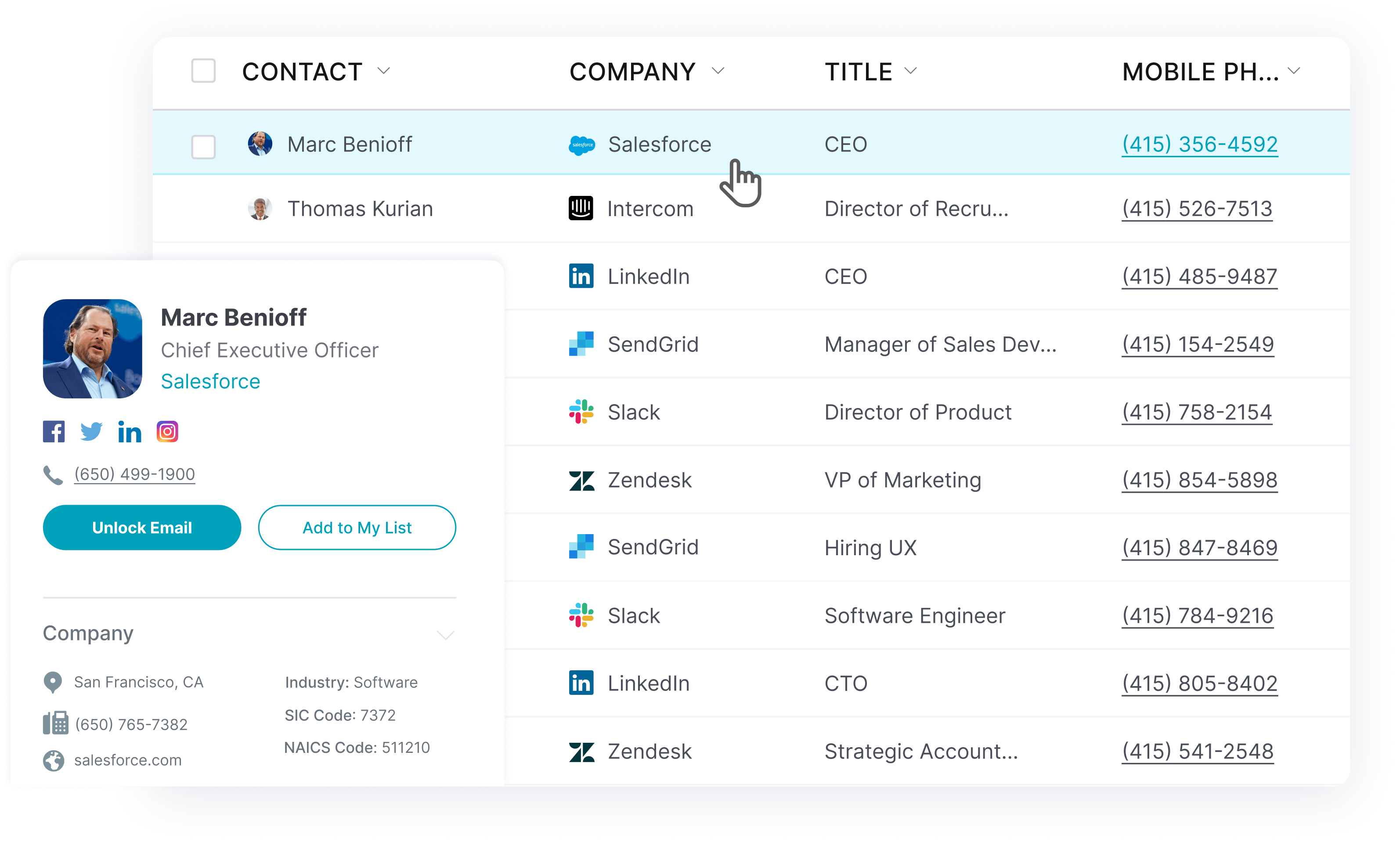
A B2B database is a cloud-based software that helps you uncover business email addresses, direct dials and mobile numbers. It’s a tool you must have if doing cold outreach.
The best B2B database on the market today is UpLead. It has one of the best databases, with over 200 million B2B email addresses from over 200+ countries. It has 16+ million company profiles and has a 95% data accuracy guarantee.
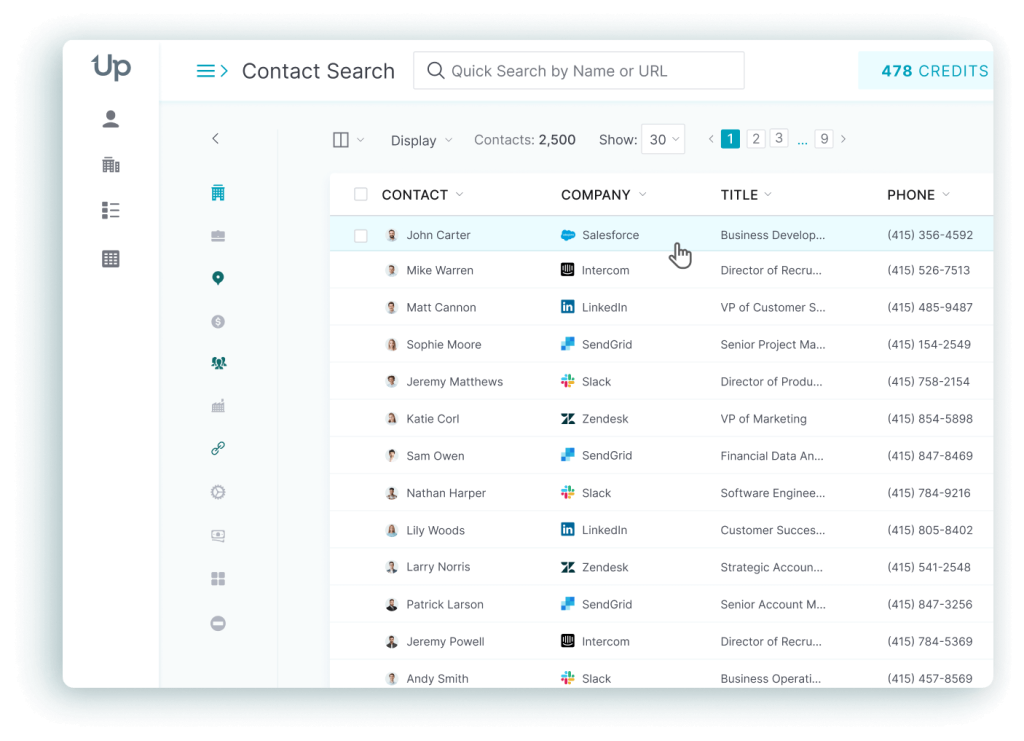
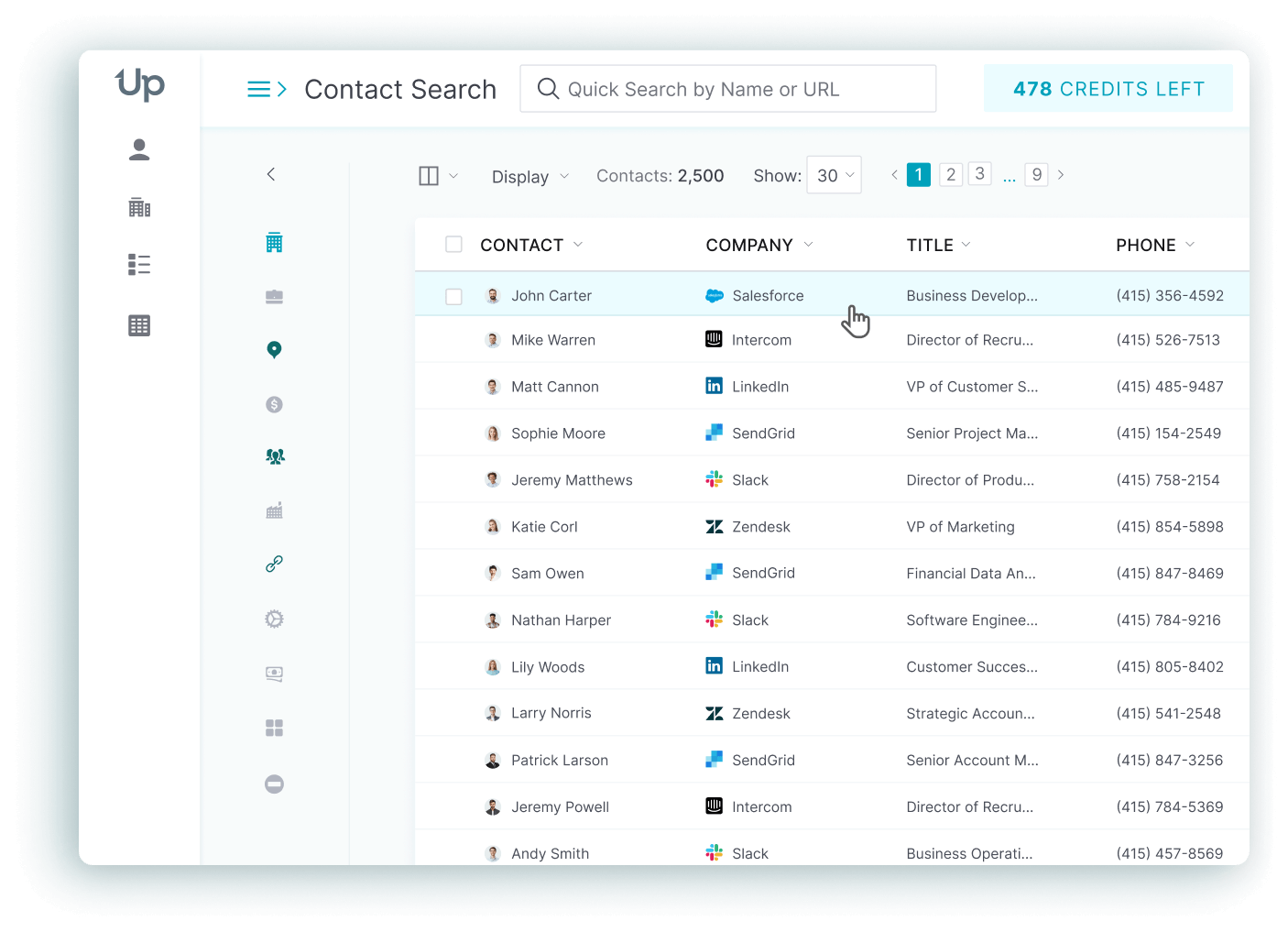
UpLead has many capable features that simplify finding your prospects’ contact information. Search filters, firmographic data and technology tracking allow you to sift through the database. You can find business email addresses, mobile numbers and direct dials.
I built UpLead because I spent over a decade running a marketing agency and living with bad data. We’d buy lists from every provider on the market, and the quality was brutal. Wrong numbers, outdated contacts, incomplete info. Our reps wasted hours on dead dials. We even shipped our phone number lists to a call center in the Philippines just to verify which ones worked. We’d start with 10,000 contacts and end up with 4,000 usable ones. It took weeks, cost a fortune, and killed momentum.
That frustration is why we built UpLead with quality first: 95% data accuracy, real-time email verification, mobile direct dials, and buyer intent signals so you’re calling when companies are researching. Our internal analysis of 50,000+ cold calls showed that using verified mobile numbers instead of switchboard numbers increased connect rates from 8% to 22%. The difference was more dramatic when we combined mobile numbers with local presence dialing (some of our reps hit 30%+ connect rates in their best territories).
Email Provider
An email service provider (ESP) is necessary for those who want to run effective cold email outreach. Thanks to special features, these platforms allow you to conduct email marketing.
For instance, you can use the bulk send functionality to email an extensive list of prospects. Analytics allow you to track the performance of your cold email campaigns, and you can use this information to optimize your approach.
Other valuable features include automation, audience segmentation and list management. Some popular email service providers include:
- Mailchimp
- Aweber
- Constant Contact
- GetResponse
- ConvertKit
When I launched UpLead, I didn’t have a fancy email platform. I used Gmail and Outreach.io to send our first million cold emails. The key wasn’t the tool (it was the system). We tested subject lines, kept emails under 100 words, and included a clear, low-friction CTA. One of our earliest emails was just three sentences and brought in our first $1M+ in revenue. The lesson? Your email provider matters, but your process matters more.
Business Number
If you intend to cold call, you’ll need a dedicated business number that you can use to reach prospects. You want to separate your private mobile number from your work-related telephone number. A business number allows you to do that.
Business phone numbers come with software provider platforms that give you advanced functionality. For instance, analytics features allow you to track the performance of your cold phone calls.
At UpLead, we use a parallel dialer (Salesfinity) to manage our calling infrastructure. We rotate multiple numbers to avoid spam flags, use local presence dialing to match the prospect’s area code, and limit each number to ~75 calls per day. This setup has been critical to maintaining high connect rates as we’ve scaled. One of our reps was stuck at a 10% connect rate. Once we switched her to Salesfinity, used local presence in her top territories, and rotated her numbers, she jumped to 22% connects (without changing a single word of her script).
FAQs About Cold Calls vs. Cold Emails
Determining if you should cold call or email first depends on whom you’re targeting with your cold outreach campaign. Calling is more personal and is ideal if you need an immediate response. It’s more suited to things that require a big commitment, such as meetings and product trials. Cold emailing is better for minor issues, like referrals or asking to leave feedback. However, it all depends on who your prospects are and their industry.
Calling is better if you want an immediate response. However, emails allow you to add more information with attachments and links. Both are viable outreach methods and should be considered. The prospect you’re targeting will largely determine which to use.
If you’re contacting your prospect with a minor issue, emailing you would be ideal. Calling their phone might inconvenience them, especially if it’s not urgent and not a significant concern.
What You Need to Remember About Cold Calling vs. Cold Emailing
Cold calling and cold email are two capable outreach methods. With them, you can target prospects who have never interacted with your brand. This article covered everything you need to know about cold calling and cold emailing.
We looked at the basics of both outreach strategies, providing pros and cons. We also addressed deciding between the two and the three must-have tools. With this information, you should be able to discover which outreach method is ideal for your needs.
After 15+ years of using both channels to build three businesses (including a $30M+ company) here’s what I’ve learned: cold calling and cold email aren’t competing strategies. They’re force multipliers. Email scales your reach and warms prospects. Calling accelerates qualification and closes deals. The best results come when you combine them: email first to establish relevance, call during high-connect windows to move the conversation forward, and follow up in writing to keep momentum. That’s the system that took me from sleeping in my office to running UpLead, and it’s the same system you can use to build whatever you’re building.