


What is ZoomInfo?
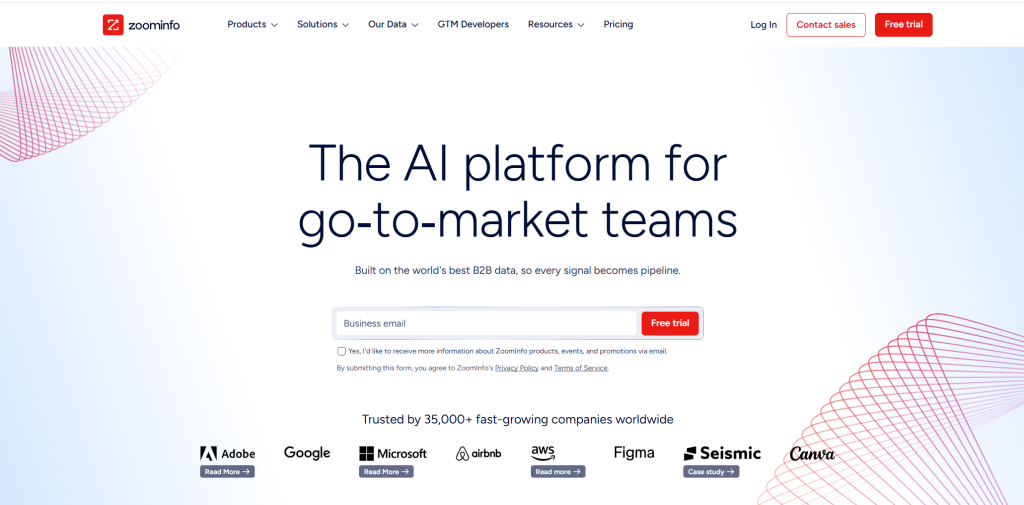
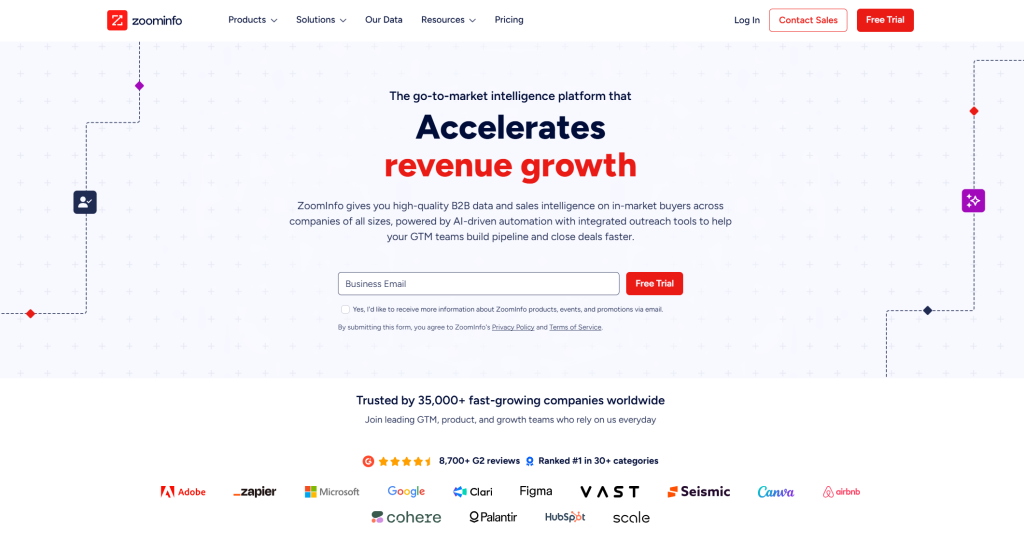
ZoomInfo is a B2B data intelligence and go-to-market (GTM) platform, a go-to-market platform trusted by over 35,000 companies. It gives sales, marketing and recruiting teams access to an extensive database of over 320 million professional contacts and 100 million company profiles, with AI-driven insights, buyer intent signals, verified phone numbers, email addresses and business contact data all in one place.
Originally founded as DiscoverOrg in 2007 by Henry Schuck and Kirk Brown, the company acquired its competitor Zoom Information, Inc. in February 2019 and rebranded as ZoomInfo. The GTM pivot stuck. It’s been listed on Nasdaq since 2020 (now under the ticker GTM), reported $1.21 billion in revenue for 2024, and maintains an active LinkedIn company page.
Source: ZoomInfo
What is ZoomInfo Used For?
(Source: ZoomInfo)
ZoomInfo is used for sales prospecting, marketing outreach and lead generation above all else. Sales professionals and marketing professionals use it to find key decision makers at target accounts, pull verified phone numbers and contact details, and it’s the fastest way to filter by industry, company size, revenue, job title and technology stack. The goal is always to generate quality leads and drive sales and marketing efforts more efficiently. That’s the core use case, and it’s what most B2B sales and marketing teams are paying for.
Beyond basic prospecting, teams use ZoomInfo for account-based marketing (ABM): targeting a defined list of companies rather than broad demographics. ZoomInfo’s intent data shows which companies are actively researching topics related to your product, so sales teams can track buying signals and prioritize high-value accounts and reach out before a competitor is even aware of the opportunity. That’s a real edge over a static contact list. Marketing strategies built around high-value accounts and intent signals tend to drive a better pipeline than broad outreach. Recruiting teams use the same database too, just looking for candidates instead of buyers.
How Does ZoomInfo Work?
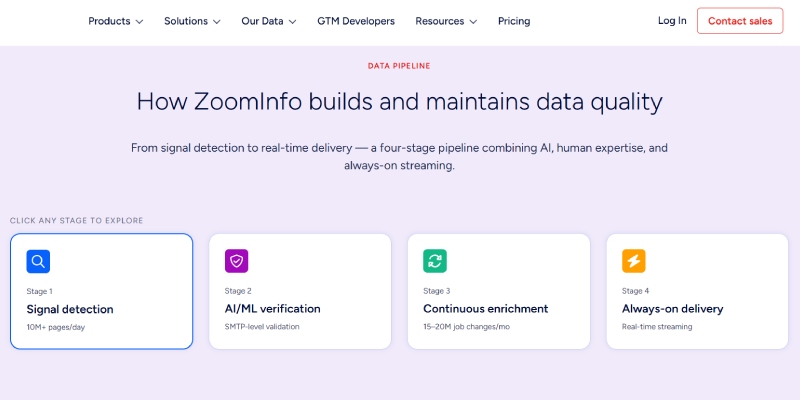
ZoomInfo maintains a comprehensive database of over 320 million professional contacts and 100 million company profiles, built from continuous data collection and real time data verification. The platform runs automated web crawlers across public websites, business directories and company filings, then supplements that with contributions from its Community Edition: users who share their email contacts in exchange for free access. Data partnerships and manual research fill in the gaps. The result is up-to-date information across a very large contact set. You’re getting data from every angle.
Once the data is collected, machine learning models clean and verify it, flagging outdated records, confirming email addresses and cross-referencing entries across sources. You access all of it through ZoomInfo’s advanced search filters, where you can filter by over 300 data points including industry, revenue, headcount, technology stack and buying intent signals. A sales representative can build a targeted list in minutes. Most teams don’t build lists manually. That’s what the integrations are for. The platform integrates directly with CRM systems and marketing automation tools, and automates workflows that push verified contact data into your existing sales workflows.
What Are the Main Features of ZoomInfo?
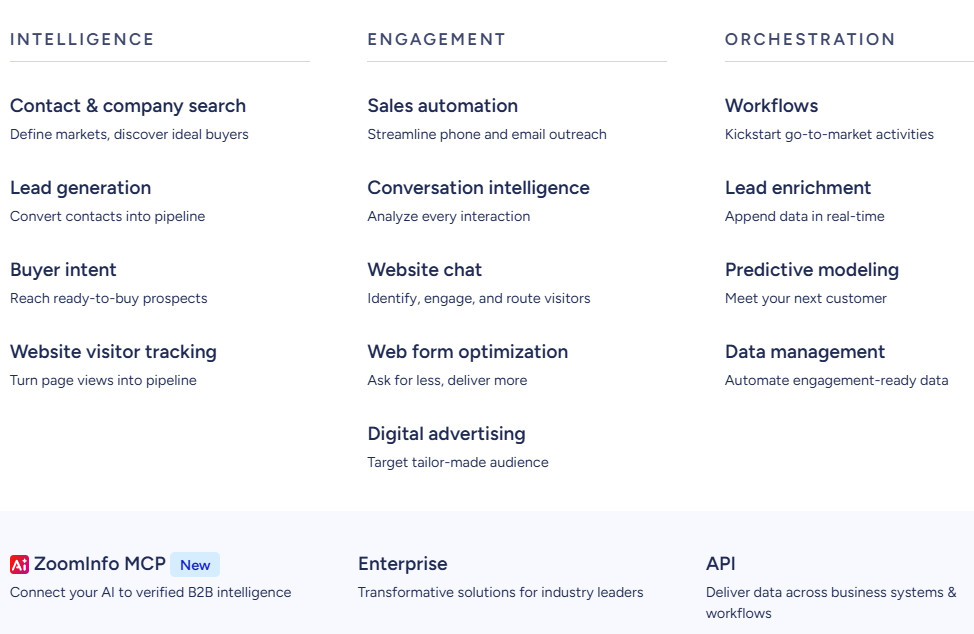
ZoomInfo’s feature set covers the full sales and marketing workflow. As a sales intelligence platform, it’s built to leverage artificial intelligence, turning raw data into actionable insights your team can act on. Here’s what’s included:
- Contact and company search: Filter 320M+ contacts by industry, company size, revenue, job title, technology stack and over 300 other criteria to build targeted prospect lists.
- ZoomInfo Copilot: An AI-powered selling layer that aggregates company data, CRM records and real-time buying signals to surface the accounts most likely to convert. It prioritizes your pipeline and drafts outreach recommendations automatically.
- Buyer intent signals: Shows which companies are actively searching for products like yours, so you can reach out before a competitor does. Pulled from millions of web activity signals across third-party sites.
- ZoomInfo Scoops: Tracks company events: leadership changes, funding rounds, office expansions and new hires, which often signal a buying window.
- Conversation intelligence (Chorus.ai): Records, transcribes, and analyzes sales calls and meetings. Surfaces coaching opportunities and tracks deal risk across your pipeline.
- ReachOut browser extension: Pulls verified contact data while you’re browsing LinkedIn or any company website. One click to add a contact to your CRM with enriched data attached.
- Website visitor tracking: Identifies companies visiting your website and routes them to the right sales rep, even if they haven’t filled out a form.
- Sales automation: Sequences for calls and emails built directly into the platform. Connect with prospects faster without switching between tools.
- Website chat: Engages and qualifies site visitors in real time, routing high-intent visitors directly to sales.
- Web form optimization: Auto-fills and shortens your lead capture forms using ZoomInfo’s data, reducing friction without losing contact quality.
- Digital advertising: Uses ZoomInfo’s B2B audience data to target ads to specific companies and job titles across ad networks.
- Lead enrichment: Automatically updates CRM records with fresh ZoomInfo data, so your database stays accurate without manual entry.
- Predictive modeling: Scores accounts based on fit and intent to help sales and marketing teams prioritize the highest-value opportunities.
- Data management (OperationsOS): Cleans, deduplicates, and enriches data across your CRM and marketing platforms. Keeps your revenue tech stack running on accurate data.
(Source: ZoomInfo)
Who Is ZoomInfo For?
ZoomInfo is built for B2B revenue teams at mid-market and enterprise companies, specifically sales and marketing professionals who are responsible for revenue growth. It works best when you’re selling to other businesses and need accurate contact data at scale, yet it’s overkill for most B2C use cases.
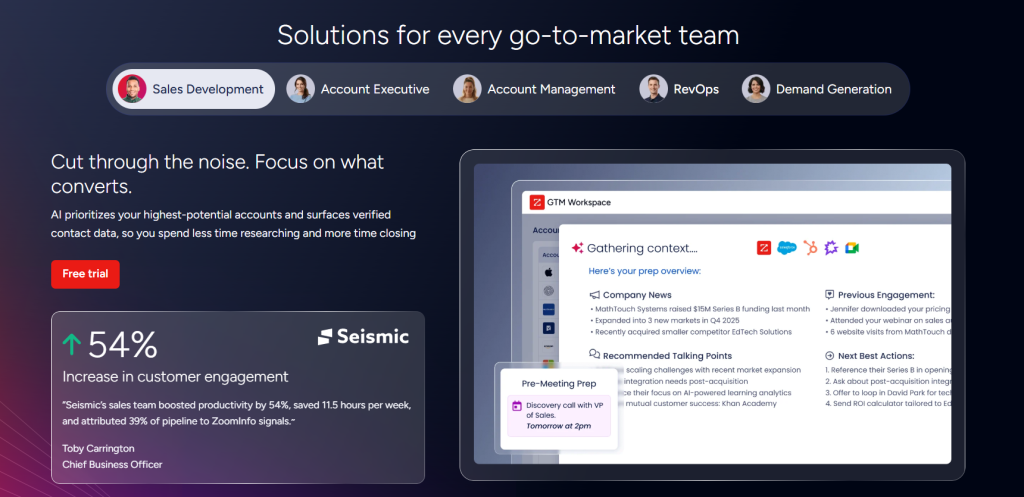
Sales teams (SDRs and AEs) use it to build prospect lists, find direct-dial numbers for key decision makers and time outreach around intent signals and company events. Marketing professionals use it to align their sales and marketing strategies around high-value accounts, run ABM campaigns, and feed qualified leads into their automation platforms. Recruiters use TalentOS to source candidates by job title, skills and location. It’s a solid fit for that workflow. Revenue operations teams use OperationsOS to maintain data quality and keep customer relationship management (CRM) data clean and enriched. It’s one of the more underrated use cases.
ZoomInfo is less suited for B2C companies, solo freelancers or small teams with tight budgets. There’s also a steep learning curve. Technology adoption takes time, and complex integration workflows with existing tools can slow things down. The contract minimums are high enough that it’s a good fit for teams with a defined outbound process and clear ideal customers to target, though smaller teams sometimes start with Community Edition to test the data before committing to a full contract.
Source: ZoomInfo
What Products Does ZoomInfo Offer?
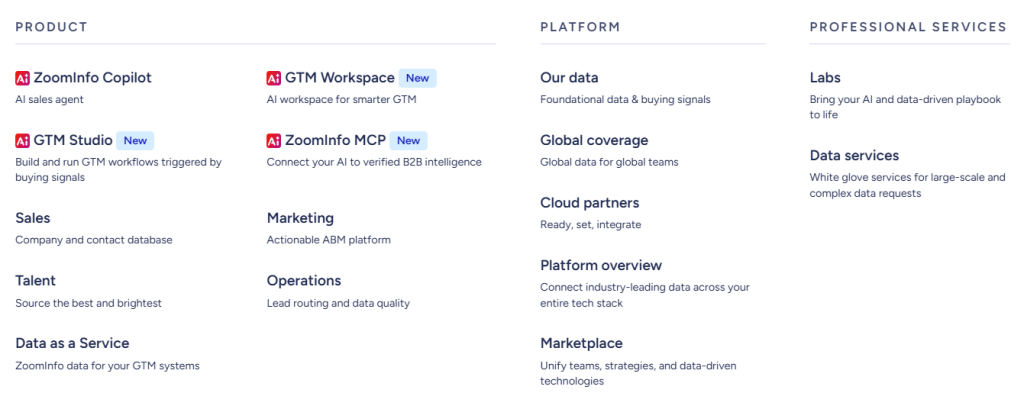
ZoomInfo Technologies offers its platform as four product lines (SalesOS, MarketingOS, TalentOS and OperationsOS) plus two cross-cutting products: ZoomInfo Copilot and Data as a Service (DaaS). Each product line is sold separately with its own tier of features and credits. There’s no single bundle.
- SalesOS: The core sales intelligence product. Contact and company search, buyer intent signals, sales automation sequences, Scoops, and the ReachOut browser extension for prospecting directly from LinkedIn.
- MarketingOS: Data-driven marketing tools including ABM targeting, digital advertising to B2B audiences, website visitor identification, web form optimization, and lead enrichment for marketing automation platforms.
- TalentOS: Recruiting intelligence. Search 320M+ professional profiles by job title, skills, location and employment history to source candidates and shorten time-to-hire.
- OperationsOS: Data management and orchestration. Automatically cleans, deduplicates, and enriches CRM and marketing data to keep your revenue tech stack running on accurate records.
- ZoomInfo Copilot: An AI layer that runs across SalesOS and MarketingOS. Aggregates company data, CRM records, and buying signals to surface the accounts most likely to convert and draft recommended outreach. Think of it as an AI sales assistant that’s built right into the platform.
- Data as a Service (DaaS): Direct access to ZoomInfo’s B2B database through a custom data feed or API. Built for companies that want the data without the full platform. A good example, to power their own internal tools or analytics systems.
(Source: ZoomInfo)
ZoomInfo Plans and Pricing
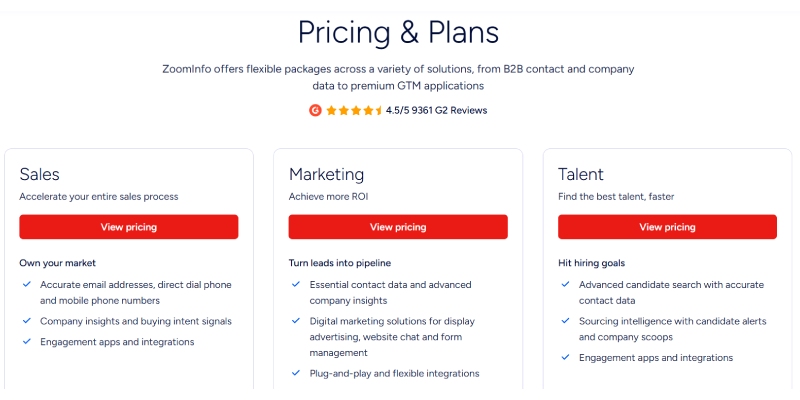
ZoomInfo doesn’t publish official pricing plans. All contracts are negotiated, which means you won’t see a posted price page. A Vendr analysis of 200+ real ZoomInfo contracts puts the median deal at around $54,000/year. Reported starting figures from publicly available data suggest that the SalesOS Professional tier starts at around $14,995/year for up to 3 users. Actual pricing, though, varies significantly based on the number of users, credits, data coverage and add-ons.
- Community Edition (Lite): Free access to the database with up to 10 contact downloads per month. In exchange, users contribute their business email contacts to help keep ZoomInfo’s database current.
- Professional (reported ~$14,995/year): 5,000 annual bulk credits, basic database access, up to 3 users. Additional users cost extra. Typically the entry point for small outbound teams.
- Advanced (reported ~$24,995/year): 10,000 annual bulk credits, 1,000 monthly user credits, geographic data and deeper account insights.
- Elite (reported ~$39,995/year): Everything in Advanced plus real-time intent signals and advanced sales tools. Designed for enterprise teams running high-volume outbound.
Add-ons carry their own annual costs on top of the base plan: Worldwide Data ($9,995/year), Intent Data ($9,000–$20,000/year), FormComplete ($7,500/year) and Enrich ($15,000/year). These numbers are reported figures; your actual contract price will depend on your team size, use case and negotiation. You’ll almost certainly pay more than the published starting figure, but you’ll also likely negotiate it down. See our detailed ZoomInfo pricing breakdown for a full comparison.
How Does ZoomInfo Get Its Data?
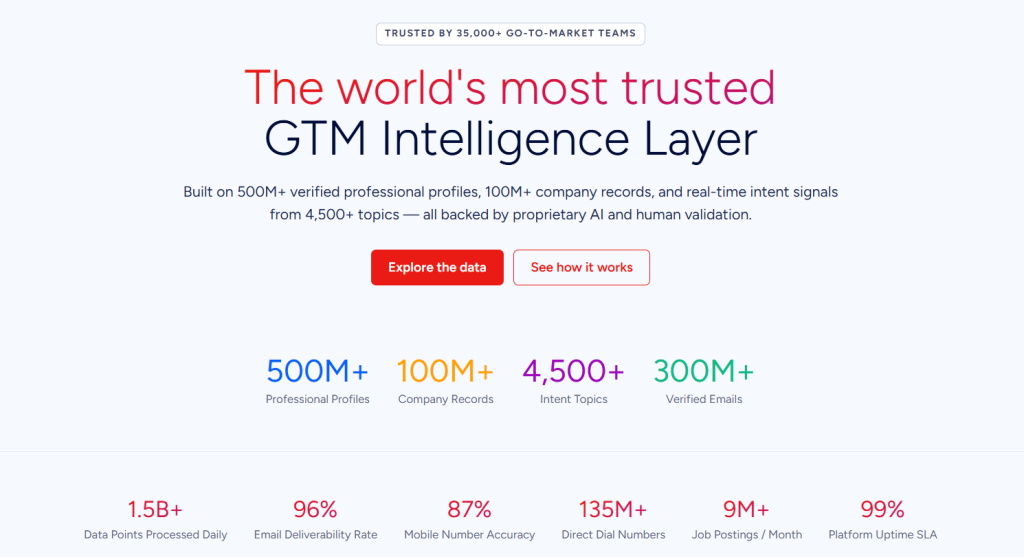
ZoomInfo’s database is built from six main sources: automated web crawling across public websites and business directories, company filings and financial data from annual reports, third-party data partnerships, user contributions through the ZoomInfo Community Edition, manual research by a dedicated data team and AI/ML models that verify and cross-reference everything. The crawlers capture contact information directly from public sources and build detailed company profiles in the process. It’s automated at scale. That’s a lot of sources. That’s the point.
The Community Edition is worth understanding: it’s ZoomInfo’s free tier with a catch. When someone signs up for ZoomInfo’s free tier, ZoomInfo reads the contact cards in their inbox to extract professional data. That’s the exchange: free access in return for contributing to the database. It’s controversial, but it’s also why ZoomInfo’s coverage is as deep as it is. That contributory model, combined with web crawling and partnerships, is how ZoomInfo has kept 320 million+ records relatively current without verifying every contact by hand. The AI layer then flags outdated entries, catches duplicates and fills in missing fields across the database.
Source: ZoomInfo
What Integrations Does ZoomInfo Offer?
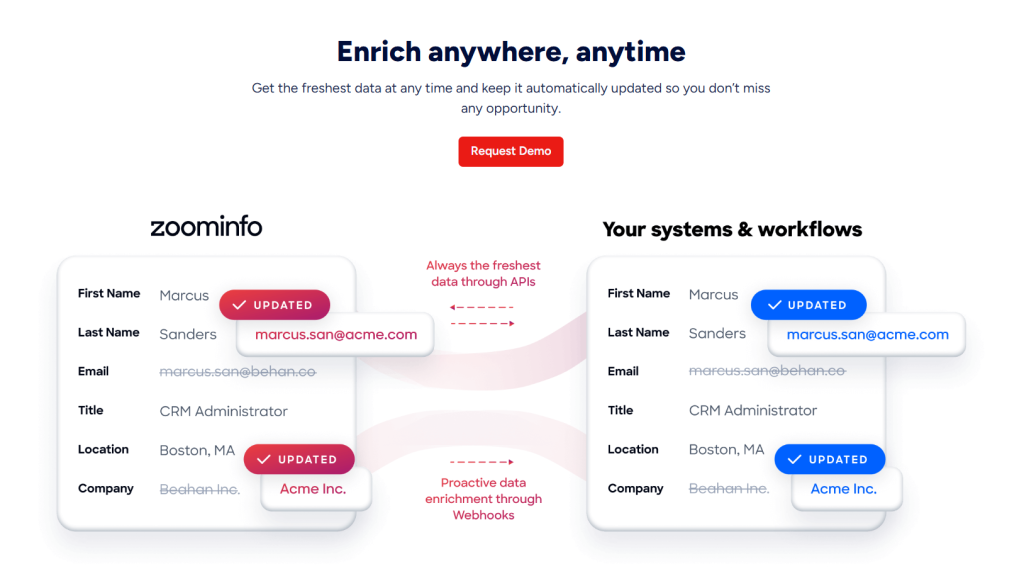
ZoomInfo connects to CRM platforms, marketing automation tools, sales engagement platforms and custom data workflows through its app marketplace and API, one of the most integrated connection layers in the B2B stack. The idea is to eliminate manual data entry and give sales efforts access to real-time insights while reps are actively working accounts.
You’ll find native integrations with Salesforce, HubSpot, Marketo, Outreach, Salesloft, Microsoft Dynamics and dozens of other revenue tools in ZoomInfo’s app marketplace. Most sync contact data and enrichment automatically. When a lead enters your CRM, ZoomInfo fills in the firmographic and technographic fields automatically. You won’t need to look them up manually. You can also set up workflow triggers so intent signals or Scoops alerts automatically create tasks or sequences for your reps. Teams in professional services, technology and financial services tend to get the most out of these automated flows. When reps can pull market insights and research accounts without switching tools, their sales processes move faster and their outreach’s grounded in current market trends.
The API gives you direct programmatic access to ZoomInfo’s database. It’s used by teams that want to enrich leads in real time as they come through a web form, build custom internal tools on top of ZoomInfo data, or sync enriched records into proprietary systems that aren’t covered by the app marketplace. The API is available on the Advanced and Elite plan tiers, not on the Professional tier.
(Source: ZoomInfo)
Is ZoomInfo Legal and GDPR-Compliant?
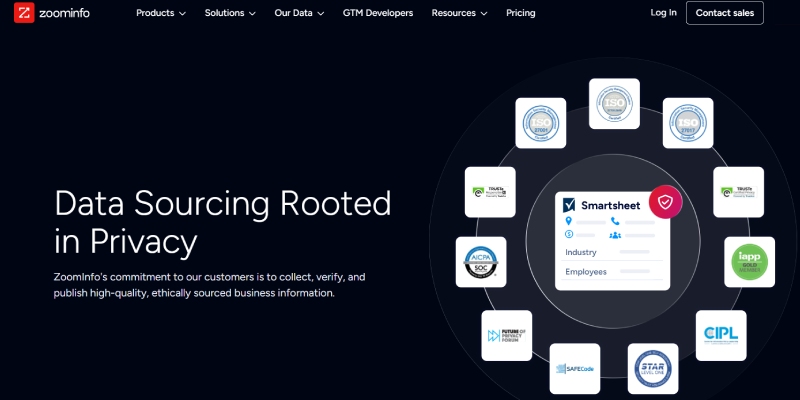
ZoomInfo’s a legitimate, publicly traded company ($1.21 billion revenue in 2024) that collects business professional data. In the US, its data collection practices are flat-out legal. The company processes professional contact information under a legitimate interest basis, focusing on business-related data such as job titles, company affiliations and work email addresses.
For CCPA compliance, ZoomInfo’s opt-out page is at privacyrequest.zoominfo.com, where individuals can request the removal of their information from the database.
GDPR’s more nuanced. ZoomInfo can be used in Europe, but European B2B data is licensed separately through regional “Data Passports” rather than being included in the standard subscription. If you’re using ZoomInfo for European contacts, you’re still responsible for your own GDPR compliance. Some users on G2 and Reddit have flagged GDPR compliance concerns, so if European data’s a core use case, review your legal position carefully.
ZoomInfo’s faced multiple lawsuits over its data collection practices. None have resulted in the company being shut down or its data collection being ruled broadly illegal in the US, but the legal history is worth knowing before you commit to a contract.
ZoomInfo Alternatives
The main ZoomInfo alternatives are UpLead, Apollo, Cognism, Lusha and LeadIQ. Each covers a different trade-off depending on your budget, geography and how much data depth your sales and marketing efforts require.
UpLead
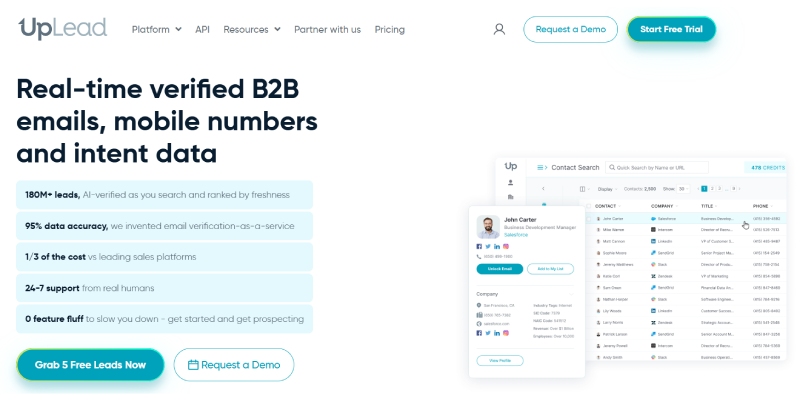
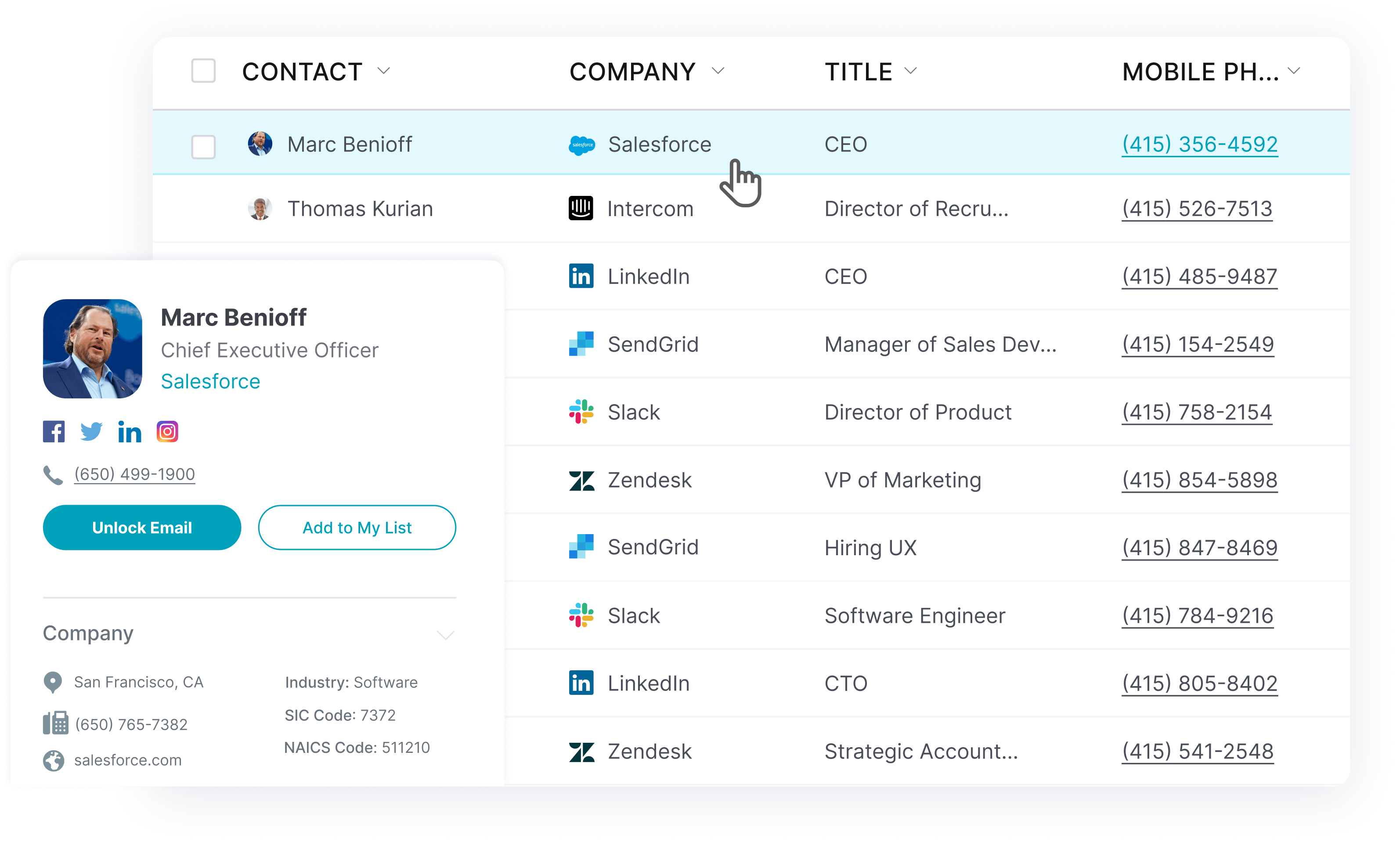
UpLead offers the same core functionality as ZoomInfo: contact and company search, verified email addresses, direct-dial numbers, technographic filters and CRM integrations. However, it’s at a fraction of the price. The Essential plan starts at $99/month, compared to ZoomInfo’s reported minimum of around $14,995/year. UpLead’s free trial gives you 5 leads right away with no credit card required, and its data accuracy rate runs above 95% (email-verified at point of export).
If you want a more affordable and reliable tool, UpLead is the better choice. Period. Grab 5 free leads today.
For a detailed breakdown, check this UpLead vs. ZoomInfo article.

Apollo
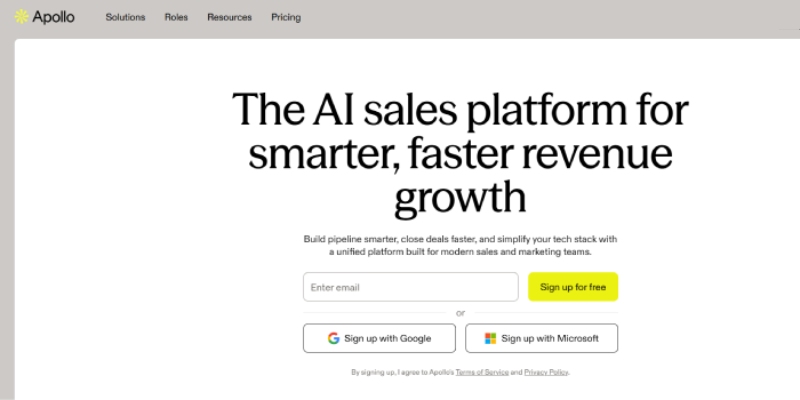
Apollo is a sales intelligence and engagement platform with a generous free tier and lower paid plan costs than ZoomInfo. It’s strong on email outreach sequencing and often the first choice for smaller outbound teams that need cadence management built into the same tool as the contact database. The trade-off is depth: Apollo’s coverage is solid but thinner on verified direct dials. Data coverage skews heavily toward US companies, and international contact depth’s thinner than ZoomInfo. If a team’s selling globally, they’ll usually supplement with a second tool.
Cognism
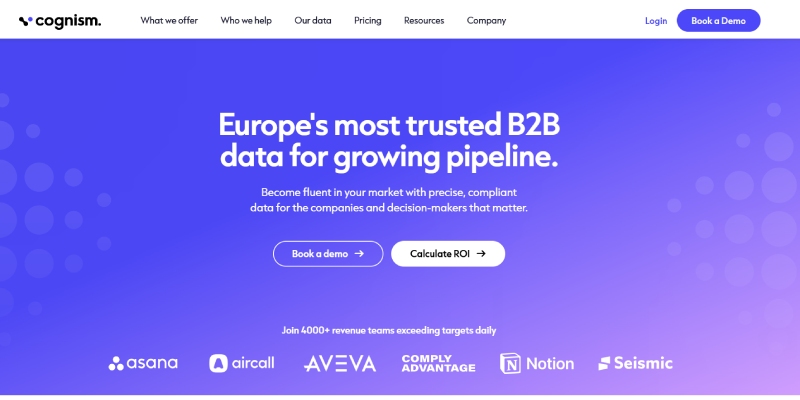
Cognism’s the go-to ZoomInfo alternative for teams selling into Europe. It includes built-in GDPR compliance, Do Not Call (DNC) list screening across 15 countries and strong coverage of European B2B contacts. European data is included in the standard subscription, not a paid add-on. Pricing is contract-based like ZoomInfo, but it’s often the better fit for European-focused revenue teams.
Lusha
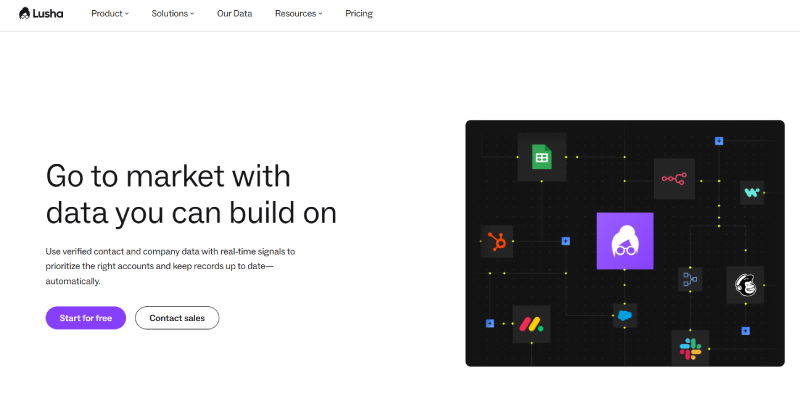
Lusha is a lightweight B2B contact tool with a freemium model and per-seat pricing. It’s built for smaller teams that need direct-dial numbers and email addresses without committing to an enterprise contract. The browser extension works well for pulling contact data from LinkedIn profiles. Company intelligence depth and intent data coverage aren’t as broad as ZoomInfo’s.
LeadIQ
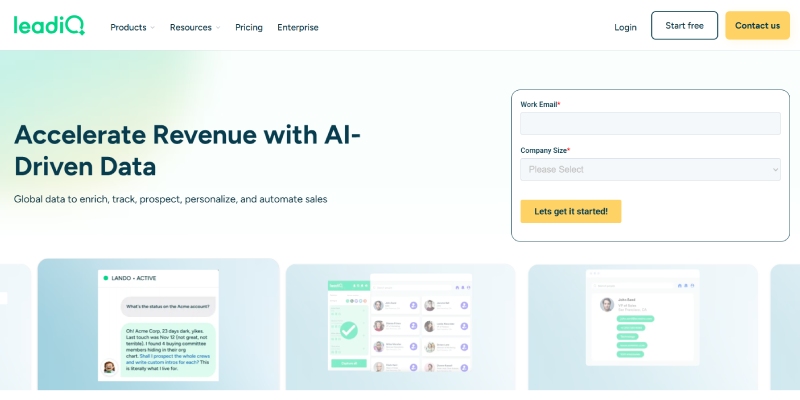
LeadIQ focuses on streamlining prospecting on LinkedIn via a browser extension, with direct CRM sync to Salesforce and HubSpot. It’s designed for SDR teams that live in Sales Navigator and want a faster path from LinkedIn profile to CRM record. It’s easier to onboard than ZoomInfo and more affordable, but the total database is smaller and there’s no intent data layer.
FAQ: What Is ZoomInfo?
Here are the answers to the most common questions about ZoomInfo.
ZoomInfo is worth it for B2B sales and marketing teams that run high-volume outbound and need accurate, verified contact data at scale. It’s overkill for small teams or any company that doesn’t do direct B2B prospecting.
ZoomInfo doesn’t publish official prices. Reported starting figures put the Professional plan at around $14,995/year for up to 3 users and 5,000 credits, Advanced at $24,995/year, and Elite at $39,995/year. A Vendr analysis of real ZoomInfo contracts puts the median deal at $54,000/year. Your actual price depends on team size, product tier, and add-ons.
ZoomInfo is a legal US company that collects business professional data. In the US, its practices are lawful. For European data, it uses regional Data Passports, and users must handle their own GDPR compliance. You can opt out at privacyrequest.zoominfo.com.
ZoomInfo’s accuracy is generally high for US contacts, but it varies. Automated and manual updates keep the database fairly current, though direct dials and email addresses do go stale between updates. For US-based B2B contacts, it’s among the most comprehensive sources available.
ZoomInfo Inc. is a legitimate company. It’s publicly traded on Nasdaq (ticker: GTM), reported $1.21 billion in revenue for 2024, and is used by over 35,000 companies. It’s faced lawsuits over data collection practices, but it remains one of the largest B2B data platforms in the market.
ZoomInfo is a B2B data platform that gives sales, marketing, and recruiting teams access to verified contact information, company profiles, and buyer intent signals to help them find and connect with potential customers.
To use ZoomInfo, search for target companies or contacts using the platform’s filters (industry, company size, job title, revenue and technology stack). Export the contacts you want, sync them to your CRM, and use ZoomInfo’s outreach tools or your own sales engagement platform to run your outbound campaigns.
ZoomInfo collects professional information from publicly available sources: company websites, LinkedIn profiles, business directories, press releases, and SEC filings. It also gets data from users of its Community Edition, who share their business contact books in exchange for free access. To have your information removed, submit a request at privacyrequest.zoominfo.com.