

Black Friday → 40% OFF Annual Plans

Outbound Lead Generation: Strategies, Metrics and Tools

Will Cannon
Last updated on December 18, 2025
Table of Contents
    Add a header to begin generating the table of contents

    Your sales pipeline shouldn’t depend on hope. Yet 61% of marketers say generating quality leads is their top challenge. Waiting for prospects to find you leaves revenue on the table and makes forecasting nearly impossible. Meanwhile, your competitors are reaching your ideal customers first with targeted, value-driven messages.

    This definitive guide provides your complete playbook for proactive growth in 2025. You’ll discover 10 actionable outbound strategies, a step-by-step implementation process, and the tools and metrics you need to build a predictable lead generation engine. Each strategy is designed to give you control over your pipeline and help you dominate your market.

    Let’s get started.

    Quick Links:

    1. What Is Outbound Lead Generation?
    2. What Is the Difference Between Outbound and Inbound Lead Generation?
    3. How to Integrate Inbound and Outbound for Maximum Impact
    4. 10 Key Outbound Lead Generation Strategies That Drive Results
    5. A 6-Step Outbound Lead Generation Process That Works
    6. What Are the Key Metrics to Measure Outbound Success?
    7. How to Scale Your Outbound Lead Generation Program
    8. What Is the True Cost of Outbound Lead Generation?
    9. 10+ Essential Outbound Lead Generation Tools for 2025
    10. 7 Common Outbound Lead Generation Mistakes to Avoid
    11. Emerging Trends in Outbound Lead Generation for 2025 and Beyond
    12. Outbound Lead Generation Examples & Mini Case Studies
    13. FAQ About Outbound Lead Generation

    What Is Outbound Lead Generation?

    Outbound lead generation is a proactive marketing approach where you reach out directly to your target audience to introduce your solutions and gauge their interest. Inbound vs outbound lead generation refers to the difference between attracting leads who come to you (inbound) through methods like content marketing, versus reaching out to potential leads directly (outbound) through channels such as cold emailing and cold calling.

    This strategic outreach is a planned, systematic process of initiating contact with well-researched prospects to offer value, build relationships and solve problems. Outbound lead generation tactics, such as cold calling, cold emailing, and using CRMs, are the specific methods used in proactive outreach. Brand marketing is often integrated into outbound campaigns, including paid ads and promotional efforts, to build awareness and generate leads. Targeted outreach, where you focus on prospects that match your Ideal Customer Profile (ICP), is crucial for maximizing the effectiveness of outbound lead generation. Outbound and inbound lead generation work together to fulfill all parts of the sales funnel, targeting audiences through both active and passive marketing strategies. By combining inbound and outbound tactics, businesses can create a comprehensive lead generation strategy that attracts and engages prospects throughout the sales funnel.

    What Is the Difference Between Outbound and Inbound Lead Generation?

    The main difference between inbound and outbound lead generation is the approach. Inbound is passive while outbound is active. Inbound lead generation strategies focus on attracting potential customers to your business through content marketing, SEO, and the use of social media channels to build brand awareness and engage prospects.

    Outbound lead generation, on the other hand, involves an outbound marketing team that proactively reaches out to potential customers using traditional marketing strategies such as email campaigns and paid advertising. The main outbound sales activities include cold calling, emailing, and direct outreach. B2B outbound strategies are especially important for businesses targeting other companies, as they rely on direct outreach methods to generate leads.

    Similarities Between Outbound and Inbound Lead Generation

    Inbound and outbound lead generation share several key characteristics.

    Both require detailed knowledge of the target audience and a solid understanding of their customer journey. They both focus on nurturing leads and fostering client relationships. Both approaches benefit from providing valuable content, which attracts and engages prospects while establishing authority and trust. Additionally, content marketing serves as a strategy that supports both inbound and outbound lead generation by building brand visibility and driving engagement across multiple channels. Finally, they both feature a strong call to action.

    Differences Between Outbound and Inbound Lead Generation

    With inbound marketing, the strategy revolves around the potential customer discovering your company organically. It focuses on nurturing the lead along their customer journey so they take action and make the first contact.

    In contrast, outbound lead generation focuses on actively reaching out to the target audience. Outbound strategies often involve targeting prospects based on their job title, which helps personalize outreach and improve engagement. Sales teams look for potential customers through phone calls, emails, events and social media, tailoring outbound messaging to address the prospect’s needs for a specific product or service. They then focus on the decision-maker and try to schedule a meeting for a demo or consultation.

    Outbound vs Inbound Lead Generation

    Outbound vs Inbound Lead Generation

    Which Approach Is Better?

    Although inbound lead generation can take longer to yield results, the generated leads are usually highly qualified and motivated to move forward. On the other hand, outbound lead generation is faster. However, the leads generated with it may be less educated about your products or services and therefore less inclined to make an immediate purchase. When comparing inbound vs outbound lead, inbound leads often have higher conversion rates and better lead quality, while outbound leads can increase volume quickly but may require more nurturing to convert.

    Inbound lead generation is a passive approach for stronger hot leads. Outbound lead generation is an active approach for immediate cold leads.

    How to Integrate Inbound and Outbound for Maximum Impact

    Viewing inbound and outbound lead generation as separate or competing strategies is a missed opportunity. The most successful companies create a powerful synergy by integrating inbound and outbound tactics as complementary strategies, combining them to form a comprehensive and effective marketing plan that attracts and actively engages potential leads throughout the sales funnel.

    This approach leverages the brand-building pull of inbound and the proactive push of outbound to maximize reach, improve lead quality and accelerate the sales cycle. Here are actionable methods for integrating your strategies:

    Amplify Inbound Content with Outbound Promotion

    Your high-value inbound assets like webinars, whitepapers, in-depth blog posts and case studies should not wait passively to be discovered. Use outbound tactics to actively promote them.

    Run targeted paid ad campaigns on LinkedIn or Google to drive traffic to a webinar registration page. Additionally, share your content in relevant Facebook and LinkedIn groups to reach targeted leads and engage with specific communities. Your sales development team can also use these assets in their cold outreach. A cold email is much warmer when it offers a relevant, valuable resource like a new industry report instead of just asking for a meeting. This positions your outbound team as helpful advisors rather than just sellers.

    Retarget Inbound Engagement with Outbound Sequences

    The reality is that 98% of website visitors don’t convert on their first visit. This is where integration becomes critical.

    When a prospect interacts with your inbound marketing by downloading an ebook, visiting your pricing page or attending a webinar but doesn’t convert, trigger an outbound sequence. Use retargeting ads on social media platforms and search engines to keep your brand top-of-mind.

    More powerfully, enroll these warm leads into a personalized email sequence from a sales representative. The email can reference the content they engaged with (for example, “I saw you downloaded our guide on X…”) and offer the next logical step like a tailored demo or a brief call to discuss their specific challenges. This seamless transition from passive engagement to personal connection dramatically increases conversion rates.

    Create a Sales and Marketing Feedback Loop

    True integration requires deep alignment between sales and marketing teams. Outbound sales teams are on the front lines, gathering invaluable intelligence about customer pain points, objections and language directly from conversations.

    This feedback should be systematically relayed to the marketing team to inform the creation of more relevant and effective inbound content like blog posts and FAQs. In return, marketing provides sales with lead intelligence from inbound activities such as which pages a lead visited or what content they downloaded, allowing sales reps to personalize their outbound outreach and have more contextual, effective conversations.

    Nurture Leads Across the Full Funnel

    A hybrid model guides prospects seamlessly from initial awareness to final purchase. Outbound can be used to introduce the brand and spark initial interest. As leads engage, inbound content nurtures them by providing relevant information and building trust.

    For inbound leads who are not yet sales-ready (like a newsletter subscriber), a combination of continued inbound content and low-pressure outbound check-ins from a sales rep can effectively guide them through the consideration stage without being overly aggressive.

    10 Key Outbound Lead Generation Strategies That Drive Results

    Here are the most effective outbound lead generation strategies to implement in 2025:

    Outbound lead generation services offer comprehensive, multi-channel outreach and prospecting solutions. These services go beyond simple list provision by providing strategic prospect targeting, personalized campaigns, and automation to support outbound sales efforts.

    Cold Email Campaigns

    Cold email campaigns are among the most cost-effective outbound lead generation efforts available to marketers today.

    While cold outreach is a numbers game with an average email response rate between 5 and 8.5%, the real revenue is unlocked through systematic lead nurturing. Companies that master this process generate 50% more sales-ready leads at a 33% lower cost. Nurtured leads also make purchases that are 47% larger than their non-nurtured counterparts.

    All you need to get started is a list of qualified email leads and an email marketing tool. With users checking their emails several times daily, email remains a very effective way to reach customers. Even when emails don’t get opened, they can convey most of the title and the first sentence, making it a versatile outbound tool.

    Cold Calling

    Although cold calling may not have the best reputation, it can still be highly effective when done right.

    A well-timed cold call can still be effective, but relying on it as a standalone strategy is outdated. Research from RAIN Group shows it takes an average of 8 touchpoints just to secure an initial meeting with a prospect. Success in today’s market is found in a multi-channel approach.

    Integrating channels like email, social media and phone calls isn’t just about reaching prospects. It’s about improving efficiency and results. Multichannel campaigns have been shown to reduce the cost per lead by 31% and can lift purchase rates by as much as 287% compared to single-channel efforts.

    To avoid simply being a telemarketer, cold calling should rely on high-quality leads who perfectly fit your user persona and be paired with a strategic cold-calling outreach strategy.

    Social Selling

    Social selling is the process of leveraging your social media presence to reach out to potential leads.

    Sales reps connect with leads on platforms like LinkedIn to build relationships, nurture prospects, and establish their personal brands, which helps generate leads and foster trust.

    Through social selling, companies can actively reach out to their potential audience, develop and nurture a connection and engage them with the right marketing strategies. Social selling can also happen offline through fairs and networking events where leads can hear a more personal pitch, making them more likely to purchase.

    Account-Based Marketing (ABM)

    Account-Based Marketing (ABM) is a strategic B2B growth strategy where marketing and sales teams collaborate to target a specific set of high-value accounts with personalized campaigns.

    In an outbound context, ABM flips the traditional lead generation model from a wide-net approach to a highly focused one. Instead of generating a large volume of individual leads and qualifying them, outbound ABM proactively identifies and engages best-fit companies that match an Ideal Customer Profile (ICP), treating each account as a “market of one.” Targeted outreach is crucial in this process, as it ensures that efforts are concentrated on engaging the right accounts with tailored messaging and offers.

    The core of outbound ABM is to combine the proactive nature of outbound sales (cold emails, calls, social outreach) with the deep personalization and strategic coordination of ABM.

    Video Prospecting

    Video prospecting is a sales technique where sales representatives use personalized video messages to engage potential customers as a fundamental part of their outreach strategy.

    Instead of traditional text-based emails or cold calls, reps send short, tailored videos via email, LinkedIn or other sales engagement platforms to capture attention, build trust and establish a human connection. Sales teams using video in their email outreach have seen up to a 16% increase in open rates and a 26% increase in replies.

    Content Syndication

    Content syndication is a B2B marketing strategy where you republish your content on third-party websites, platforms and networks to reach a wider audience beyond your own channels.

    In an outbound lead generation context, it’s a proactive method of distributing valuable, often gated, content (like whitepapers, ebooks or webinars) to platforms where your target audience is already active. When a user on the third-party site wants to access your content, they fill out a form providing their contact details, which generates a new lead for your business.

    PPC Advertising

    In an outbound context, Pay-Per-Click (PPC) advertising is a strategy that moves beyond broad keyword targeting to proactively reach specific, high-value business accounts and decision-makers. As part of outbound lead generation strategies, advertising campaigns are used to target and engage these prospects through paid efforts. To maximize results, it is essential to manage paid advertising campaigns on platforms like LinkedIn and Google, ensuring that ad spend is directed toward the most relevant audiences.

    Instead of casting a wide net, this approach uses the advanced targeting capabilities of platforms like LinkedIn Ads and Google Ads to focus ad spend on a pre-defined list of companies or individuals who fit an ideal customer profile.

    Personal Branding

    Personal branding for salespeople is an outbound strategy focused on building a professional identity to establish credibility, trust and visibility with potential buyers, primarily on platforms like LinkedIn.

    Instead of cold outreach, it warms up the sales process by positioning the salesperson as a trusted industry expert. Research shows that 78% of salespeople using social selling outperform their peers who don’t, and 92% of B2B buyers are more likely to engage with a sales professional who is a known industry thought leader. Companies with consistent social selling processes are 40% more likely to hit revenue goals.

    Partner and Affiliate Referrals

    Partner and affiliate referrals are an outbound strategy where a business incentivizes third parties such as existing customers, industry influencers or complementary businesses to generate leads and sales.

    This is highly effective in a B2B context, with 84% of B2B sales starting with a referral and referred leads being up to 4x more likely to buy. Since referrals rely on the user’s network, they are often more likely to purchase than any other lead. Referral systems are built around empowering customers to become brand ambassadors and having them reach out to potential buyers, making them an extremely cost-effective marketing campaign.

    Direct Mail

    Direct mail is when salespeople use traditional mail to send correspondence to their target audiences to pitch their solutions.

    Although a somewhat forgotten and overlooked outbound lead generation technique, direct mail can still be more effective than PPC ads and even email marketing. Direct mail can yield better results with non-tech-savvy demographics since it relies on receiving a physical object.

    A 6-Step Outbound Lead Generation Process That Works

    Here’s how to generate leads through outbound outreach, step by step. For outbound lead generation success, it’s essential to follow a proven process that adapts to evolving digital strategies.

    Six Step Outbound Lead Generation Process

    Six Step Outbound Lead Generation Process

    Define the Ideal Target Audience

    Outbound marketing often fails because efforts are not sufficiently targeted. Outbound outreach can be counterproductive when this happens, giving your brand a bad reputation. To maximize conversion rates, it’s crucial to focus on the right prospects—those who are most likely to engage and benefit from your offering.

    Avoid negative press by developing detailed user personas through data-driven decisions. A clear ICP ensures that as you increase volume, you’re targeting prospects who are most likely to convert and helps solve the core business pain point of an unpredictable pipeline by creating consistency and visibility in your lead flow.

    Test your data and perfectly define your user persona to ensure accuracy. The better you can define them, the better you’ll be able to solve their pain points.

    Pick the Right Outbound Channels

    Your user personas can define the best channels to reach leads.

    When it comes to social media, you should focus on building a profile on your targeted buyers’ favorite platforms. Locate your ideal users’ communities and focus on the channels with the most targeted users.

    Build Your Contact Lists

    Now that you have your user personas and know the best channel to reach them, it’s time to build your lead lists.

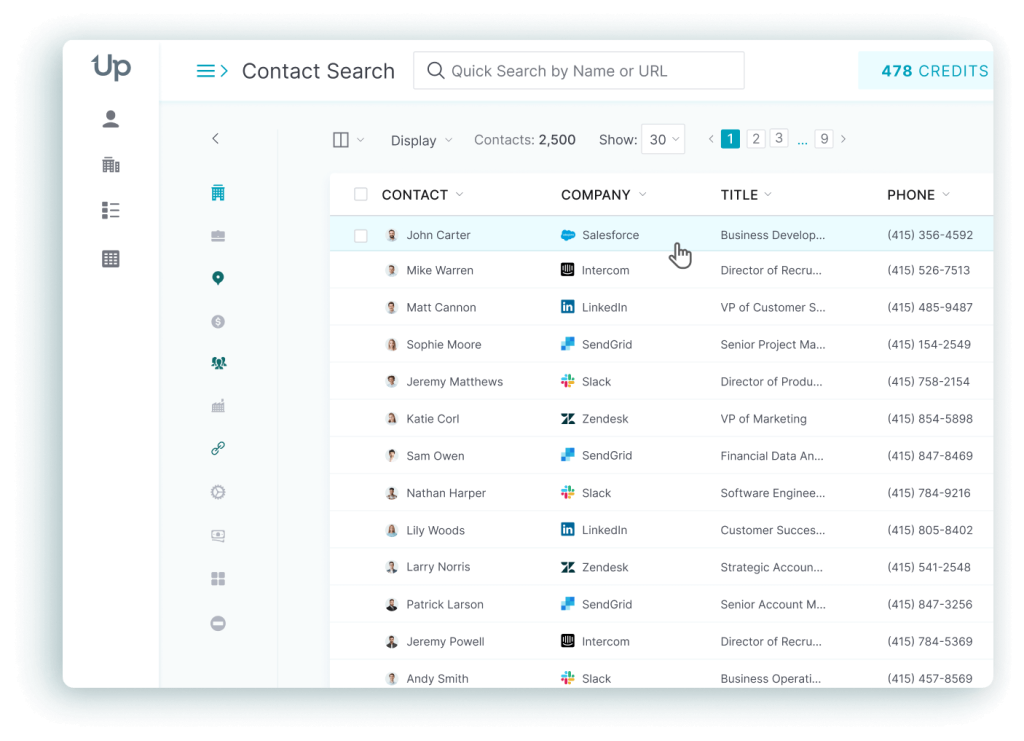
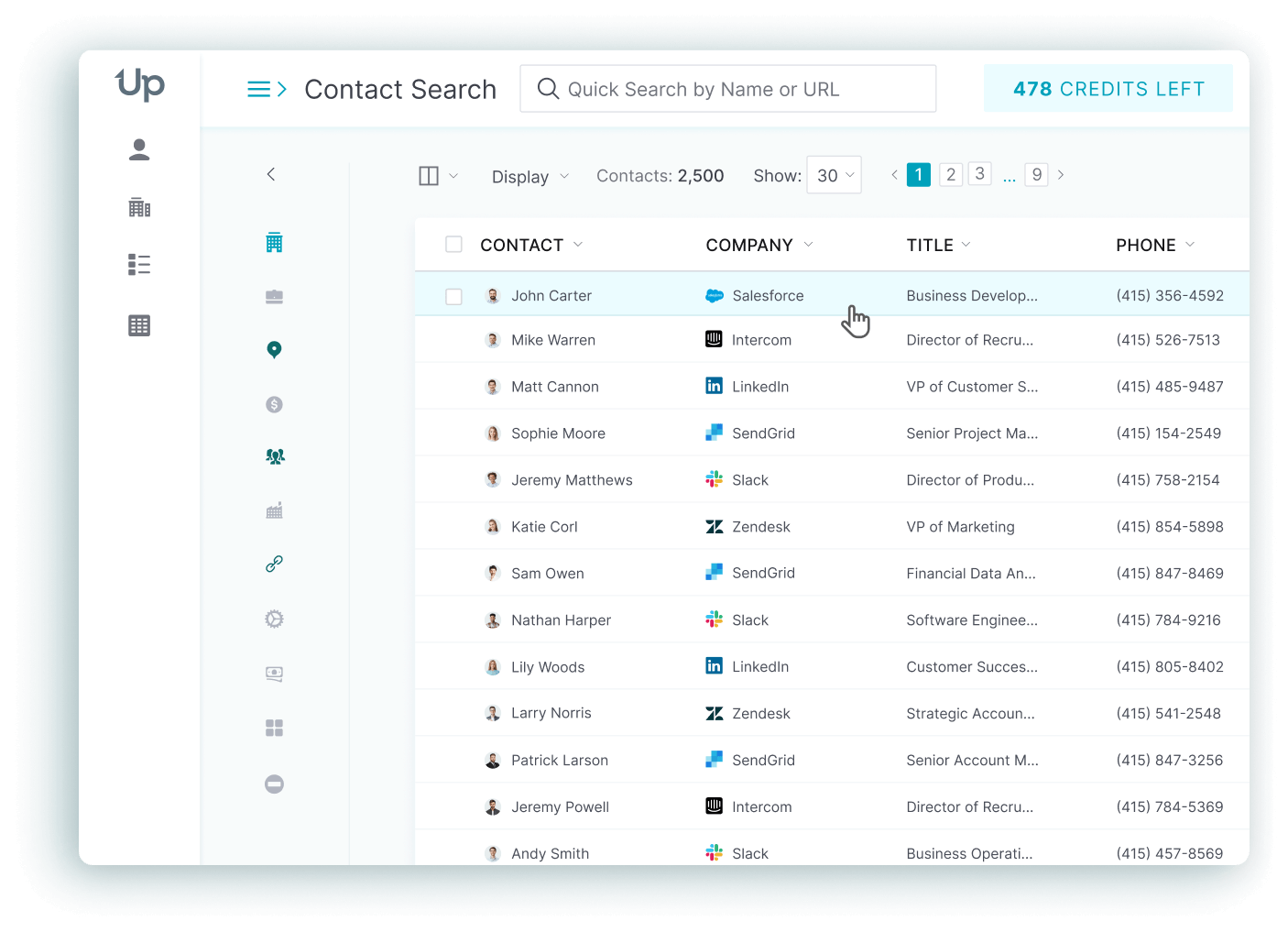
    Although there are many ways to build lists, the fastest way is through lead generation tools like UpLead.

    UpLead allows you to input your user persona’s information to find as many leads as you need. Once you’ve selected your leads, their email addresses are validated in real-time right before you download them to ensure deliverability.

    Then all you need to do is place the lead lists in the right outbound marketing campaigns.

    Learn more about UpLead today.

    Start Your 7-Day Free UpLead Trial

    Lead generation doesn’t have to be all that painful. With UpLead, you can easily connect with high-quality prospects and leads to grow your company.

    Trusted by

    Start Your Campaigns

    Once you’ve generated your leads, it’s time to start your outbound marketing campaigns. Campaign marketers play a key role in executing these outbound campaigns across various channels, such as email, print, and broadcast advertising, to generate outbound leads.

    Ensure you’re successful by making your campaigns as personal and relevant as possible, providing value and featuring a strong call to action. Stand out by favoring novel ways to reach your customers and rely on segmentation to know exactly how to present your solution to their pain points.

    Qualify Leads and Schedule Meetings

    Now that your campaigns are working, you need to focus on qualifying your leads. This will help you segment your new leads further, sending the hottest leads to the sales team while engaging colder leads through long-term marketing campaigns.

    Once your leads are qualified, you can improve your conversions by focusing on scheduling meetings rather than going for the sale. By scheduling a meeting, your salespeople can ensure the lead is qualified and can educate the lead on what to expect and how your solution can help them.

    Close the Deal

    Finally, close the deal with receptive outbound leads. Make sure you close as many deals as possible by making it easy for leads to convert. Engage the leads who don’t convert with re-engagement marketing campaigns to ensure all qualified leads get a chance to purchase.

    What Are the Key Metrics to Measure Outbound Success?

    The key metrics to measure outbound success are activity metrics, effectiveness metrics and business impact metrics.

    To effectively manage and scale an outbound lead generation program, you must track the right Key Performance Indicators (KPIs). Relying on vanity metrics like “emails sent” can be misleading. A successful strategy requires a balanced scorecard that measures not just effort but also effectiveness and real business impact. Grouping your KPIs into these three categories provides a comprehensive view of your outbound engine’s health from top-of-funnel activity to bottom-line revenue.

    Key Metrics for Outbound Success

    Key Metrics for Outbound Success

    Activity Metrics (Measuring Effort)

    Activity metrics are leading indicators that measure the raw output and effort of your sales development team. They are the foundation of the funnel and help diagnose whether the volume of work is sufficient.

    Total Outreach Activities: This is the total number of calls, emails and social media messages your team sends over a specific period. It’s a baseline for productivity.

    Contact Rate (or Connect Rate): This measures the percentage of outreach attempts that result in a live conversation. It helps assess the quality of your contact data and the effectiveness of your timing.

    Formula: (Number of Conversations / Total Outreach Activities) x 100

    Effectiveness Metrics (Measuring Quality and Progress)

    Effectiveness metrics evaluate how well your team’s activities translate into meaningful pipeline progression. High activity with low effectiveness indicates a problem with messaging, targeting or process.

    Appointment Setting Rate: This is the percentage of conversations that result in a qualified meeting or demo being booked. It’s a primary indicator of an SDR’s ability to generate interest and articulate value.

    Formula: (Number of Appointments Set / Number of Conversations) x 100

    Lead-to-Opportunity Conversion Rate: This tracks the percentage of leads that are accepted by the sales team and converted into qualified sales opportunities. It’s a crucial measure of lead quality.

    Formula: (Number of Qualified Opportunities / Total Leads) x 100

    Sales Cycle Length: This measures the average time from the first contact with a lead to closing the deal. A shorter sales cycle for outbound-sourced leads indicates an efficient process and high-quality targeting.

    Formula: Total Days to Close All Deals / Number of Deals Closed

    Business Impact Metrics (Measuring Financial Results)

    These are the bottom-line metrics that tie outbound efforts directly to revenue and profitability, proving the ROI of the program.

    Cost Per Lead (CPL): This calculates the cost to generate a single lead through your outbound efforts.

    Formula: Total Sales and Marketing Costs / Number of Leads Generated

    Customer Acquisition Cost (CAC): This is the total cost to acquire a new paying customer. It includes SDR salaries, commissions, tools and all other related expenses.

    Formula: Total Outbound Sales and Marketing Costs / Number of New Customers Acquired

    Customer Lifetime Value (CLV or LTV): This metric projects the total revenue a business can expect from a single customer over the entire duration of their relationship.

    Formula: Average Purchase Value x Average Purchase Frequency x Average Customer Lifespan

    CLV-to-CAC Ratio: This is the most critical metric for long-term sustainability. It compares the value of a customer to the cost of acquiring them. A healthy ratio is typically considered to be 3:1 or higher (the customer’s value is at least three times the cost to acquire them).

    Formula: CLV / CAC

    Win Rate: This measures the percentage of qualified opportunities that are successfully closed as new business, indicating the ultimate effectiveness of the leads generated.

    Formula: (Deals Won / Total Opportunities) x 100

    How to Scale Your Outbound Lead Generation Program

    Once you’ve mastered the basics of outbound lead generation, the next challenge is scaling your program without losing effectiveness. Here’s a four-step framework for sustainable growth:

    Step 1: Standardize the Process

    Before scaling, you must have a proven and repeatable process. This starts with a data-driven Ideal Customer Profile (ICP) based on your most successful customers. A clear ICP ensures that as you increase volume, you’re targeting prospects who are most likely to convert.

    Create a sales playbook that documents every part of your successful outreach process. This playbook should include your ICP definition, buyer personas, value propositions, messaging for different channels (email, LinkedIn, calls), objection handling and qualification criteria (like what defines a Sales Qualified Lead). This ensures consistency as new team members are onboarded.

    Establish key metrics by moving beyond vanity metrics like emails sent. Focus on performance indicators that measure real progress such as meetings booked, lead-to-opportunity conversion rates and pipeline value generated. This allows you to measure what works and optimize your strategy with data.

    Step 2: Build the Right Tech Stack

    A scalable tech stack is not about having the most tools but the right ones that integrate seamlessly. The core components include:

    CRM (Customer Relationship Management): A central hub for all prospect data and interactions (like HubSpot or Salesforce).

    Sales Engagement Platform: To automate and manage multi-channel outreach sequences (like Reply.io, Outreach or Salesloft).

    Data and Enrichment Tools: To build targeted lists and enrich prospect data for personalization (like ZoomInfo, Apollo.io or Clay).

    Use automation to handle repetitive tasks like data entry, follow-ups and CRM updates. This frees up your Sales Development Representatives (SDRs) to focus on high-value activities like personalization and having quality conversations.

    Step 3: Protect Deliverability at Scale

    A common failure point when scaling is a drop in email deliverability. Sending high volumes of email without proper precautions will damage your domain reputation and cause your messages to land in spam folders.

    Domain Authentication: Ensure SPF, DKIM and DMARC records are correctly set up for all sending domains. This is non-negotiable and proves your emails are legitimate.

    Domain/IP Warm-Up: Never send high volumes from a new domain or IP address immediately. Gradually increase the number of emails sent over several weeks to build a positive sender reputation with providers like Google and Outlook.

    List Hygiene: Continuously clean your email lists to remove invalid addresses and unengaged contacts. A high bounce rate is a major red flag to email providers. Implement a sunset policy to remove subscribers who haven’t engaged in 90 to 180 days.

    Monitor Your Reputation: Use tools like Google Postmaster Tools and SenderScore.org to monitor your domain health, spam complaint rates and IP reputation.

    Step 4: Hire and Train Your Team

    As you scale, you may need to specialize roles. An outbound sales team typically consists of Sales Development Representatives (SDRs), Business Development Representatives (BDRs), Market Development Representatives (MDRs), and Account Executives (AEs), each playing a key part in proactive outbound lead generation through methods like cold calling and emailing, and guiding prospects through the sales funnel. A common structure involves SDRs who focus on top-of-funnel lead generation and qualification and Account Executives (AEs) who focus on closing deals. For larger teams, consider promoting a top-performing SDR to a Team Lead role to help with coaching and management.

    Don’t let new hires shadow and learn by osmosis. Create a structured onboarding program that covers the company mission, product knowledge, the sales playbook and tool usage. This reduces ramp-up time and ensures consistency.

    Scaling is not a one-time setup. Implement a rhythm of continuous coaching including regular one-on-ones, call reviews and skill development sessions. This helps maintain performance, adapt to market changes and improve team morale and retention.

    What Is the True Cost of Outbound Lead Generation?

    The true cost of outbound lead generation in the US is a fully loaded figure that extends beyond salaries. It is comprised of four main components:

    Personnel Costs

    The base salary for a Sales Development Representative (SDR) in the US for 2025 averages between $50,000 and $60,000. With on-target earnings (OTE) including commission, the total compensation is typically $75,000 to $85,000.

    However, the fully loaded cost, which includes benefits, payroll taxes (adding 25 to 30%), recruiting, training and management overhead, brings the total annual cost per SDR to between $110,000 and $160,000. Management overhead alone can add $15,000 to $18,750 per SDR per year.

    Tools and Technology Costs

    An effective SDR requires a tech stack. This includes a CRM seat (like Salesforce or HubSpot), a sales engagement platform (like Salesloft, Outreach or Apollo.io) and data providers (like ZoomInfo or LinkedIn Sales Navigator).

    The annual cost for this tech stack typically runs from $3,000 to $8,000+ per SDR. For example, sales outreach tools can range from approximately $49 to over $100 per user per month.

    Data Acquisition Costs

    Purchasing high-quality, targeted contact lists is another expense. Costs can range from $300 to $600 per thousand contacts depending on the specificity and source. Some sources quote bulk data for as low as $0.12 to $0.15 per contact, but this is typically for less-targeted cold data.

    Agency Fees (as an Alternative)

    Companies can outsource this function to a B2B lead generation agency. Pricing models vary:

    Monthly Retainer: This is the most common model. Fees typically range from $4,000 to $15,000 per month for a dedicated resource or team. Mid-tier agencies often charge between $5,000 and $12,000 per month.

    Pay-per-Appointment (CPA): In this model, clients pay for each qualified meeting booked. Rates commonly fall between $150 and $500 per appointment but can exceed $1,000 for high-value enterprise targets.

    Cost-per-Lead (CPL): Less common for high-quality outbound, but agencies may charge between $50 and $500 per qualified lead, with B2B averages around $198.

    10+ Essential Outbound Lead Generation Tools for 2025

    Here are the essential tools and services for outbound lead generation in 2025:

    All-in-One Sales Platforms

    Apollo.io

    Apollo.io is an all-in-one sales platform combining a B2B database with sales engagement tools. It is positioned for startups, SMBs and budget-conscious teams.

    It features a B2B database with over 275 million contacts and 73 million companies. Users can filter leads using over 65 attributes including intent data, website visitor tracking and job changes. The platform’s data is particularly strong for US-focused prospecting.

    Users can create automated, multi-step outreach campaigns involving emails, calls and LinkedIn tasks. A built-in VoIP dialer allows for making, receiving and recording calls directly within the platform. An AI writing assistant helps craft personalized emails based on buyer signals.

    Apollo uses a per-user pricing model with discounts for annual billing. The Free Plan includes basic features, unlimited email credits, 60 mobile credits per year and 120 export credits per year. The Basic Plan starts at $49 per user per month (annual) or $59 per user per month (monthly). The Professional Plan starts at $79 per user per month (annual) or $99 per user per month (monthly). The Organization Plan starts at $119 per user per month (annual) or $149 per user per month (monthly).

    Sales Intelligence and Data Enrichment Tools

    UpLead

    With UpLead you can easily find the right leads to contact through cold emailing.

    If you want to build accurate B2B email lists as fast as possible, you can’t go wrong with UpLead.

    Backed by a 95% data accuracy guarantee and a credit-back policy, UpLead helps you quickly generate all the email lists you need, verifying them in real-time to ensure deliverability. That way, you can focus on running your outbound marketing campaigns instead of capturing leads.

    UpLead can also help you learn more about your leads through vibrant profiles. These profiles flesh out the leads with technographics, buyer intent data and CRM integrations, making it easier to tailor your message to them. It’s positioned as a strong choice for SMBs and mid-market companies, offering a more accessible and transparently-priced tool focused on high-quality lead data.

    Try UpLead today and see if it’s a good fit for you.

    Start Your 7-Day Free UpLead Trial

    Lead generation doesn’t have to be all that painful. With UpLead, you can easily connect with high-quality prospects and leads to grow your company.

    Trusted by

    Cognism

    Cognism is a premium sales intelligence platform with a strong focus on data accuracy and compliance, particularly for the US and EMEA markets.

    Its standout feature is Diamond Data, which are phone-verified mobile numbers. An independent study showed Diamond Data has an 87% connection rate. The verification process involves a research team manually calling the numbers to ensure the correct person answers.

    Cognism provides buyer intent data through a partnership with Bombora. The platform is fully GDPR and CCPA compliant. It is registered as a data broker in California, scrubs its database against global Do Not Call (DNC) lists and notifies data subjects of their inclusion in the database.

    Cognism does not publish its pricing. Pricing is quote-based and requires an annual contract consisting of a platform fee plus per-user licenses. Industry reports from late 2025 estimate annual costs for a small team can range from approximately $22,500 for a Grow package to over $37,000 for an Elevate package which includes more advanced intelligence features.

    Hunter.io

    Hunter.io is a company specializing in email-centric lead generation. Its core features include an Email Finder, Domain Search, Email Verifier and a cold email campaign tool.

    It positions itself as a focused tool for finding and verifying professional email addresses, making it ideal for users whose primary need is email outreach. This contrasts with all-in-one platforms like Apollo.io which offer a broader suite of sales intelligence tools including phone numbers and advanced sales automation.

    Hunter offers a free plan with 25 searches and 50 verifications per month. Paid plans for its all-in-one offering are Starter at $49 per month (500 credits), Growth at $149 per month (5,000 credits) and Scale at $299 per month (25,000 credits), with annual billing offering a discount. One credit equals one email find or two email verifications.

    A benchmark test conducted by Hunter.io showed its Email Verifier achieved 70% overall accuracy. The platform gives each email a confidence score to help users gauge validity. It integrates with major CRMs like Salesforce and HubSpot and offers a Google Sheets add-on and an API.

    6sense

    6sense is a B2B revenue intelligence platform that uses AI and predictive analytics to uncover buyer intent from the dark funnel, a term it popularized referring to buyer research and activity that is hard to track with traditional attribution software such as activity on third-party sites, social networks and other untracked channels.

    It works by capturing billions of anonymous buying signals across the web (including keyword searches, competitor website visits and content consumption) and matching this activity to specific company accounts using its proprietary company graph and data from partners like G2 and Bombora.

    The platform’s AI then scores accounts based on their position in the buying journey (like Awareness, Consideration or Decision), allowing sales and marketing teams to prioritize accounts that are actively in-market but have not yet made direct contact.

    Key features include account prioritization dashboards, AI-driven next-best-action recommendations, sales alerts for spiking account activity and integrations with CRMs (like Salesforce, HubSpot or Microsoft Dynamics) and sales engagement platforms (like Outreach or Salesloft) to push these insights directly into seller workflows.

    Pricing is not public and is customized based on company size, number of users and features selected. Secondary sources indicate that annual contracts typically start around $25,000 to $60,000 and can exceed $100,000 to $300,000 for enterprise plans. The model is often credit-based where credits are used to unlock contact and company data. A free plan is available offering 50 credits per month for basic buyer discovery and contact data.

    Sales Engagement and Outreach Platforms

    Mailshake

    Mailshake is a great platform to send cold emails pulled from multiple sources.

    Mailshake is an email platform fully optimized for cold emails. With Mailshake, you can upload your leads through your social media and Gmail accounts. Then you can quickly develop cold emailing campaigns that comply with anti-spam regulations to target those cold leads.

    This platform also features multiple native integrations that easily nurture leads, allowing marketers to follow up with the right leads at the best time. It’s positioned as a top choice for SMBs due to its user-friendly interface, straightforward automation and all-in-one approach to email, phone and social outreach.

    Pricing is structured in three tiers: Starter at $29 per user per month (1,500 email sends per month), Email Outreach at $59 per user per month (unlimited sends) and Sales Engagement at $99 per user per month (adds a phone dialer and social selling).

    Outreach.io

    Outreach.io is a leading sales engagement and AI revenue workflow platform primarily targeting large and enterprise-level sales teams.

    Outreach does not publish its pricing publicly. Pricing is quote-based and requires an annual contract. Industry estimates place the starting cost at approximately $100 to $150 per user per month. Additional one-time fees for implementation and onboarding can range from $1,000 to $8,000+, and premium support costs extra.

    It features advanced multi-channel sequences (email, call, LinkedIn) with deep automation rules. It provides tools for pipeline management, deal health insights and sales forecasting. Features include SSO, granular user and content controls, data retention policies and SOC 2 compliance designed for enterprise needs. It is known for deep and robust integration with major CRMs, especially Salesforce.

    Outreach Kaia is an AI assistant that joins live calls (voice and video) to provide real-time transcriptions. During a call, Kaia automatically surfaces relevant information such as competitor details, pricing info or objection handling talking points. It automatically generates meeting summaries, identifies action items and provides analytics for manager coaching. It uses machine learning to classify prospect replies by intent (like positive, objection or referral).

    Smartlead.ai

    Smartlead.ai is a cold email automation tool focused on maximizing deliverability and scaling outreach.

    All plans include unlimited email accounts and automated AI-powered warm-ups to build and maintain sender reputation. This feature uses human-like AI conversations, smart replies and automatically rescues emails from spam folders.

    The platform uses dynamic IP rotation, unique IP servers for each campaign and a smart-adjusting algorithm to protect sender reputation and ensure high inbox placement. It also includes tools like a blacklist checker, SPF and DMARC checkers and deliverability testing.

    Smartlead features AI for personalizing emails, automating follow-up sequences and a master inbox to manage all replies in one place. The Basic Plan is $39 per month for 2,000 active leads and 6,000 emails per month. The Pro Plan is $94 per month for 30,000 active leads and 150,000 emails per month.

    Smartlead positions itself by focusing on unlimited scalability (mailboxes and warm-ups) within a single subscription, aiming to be a cost-effective solution for high-volume outreach while maintaining high deliverability.

    Reply.io

    Reply.io is a multi-channel sales engagement platform that uses AI to automate and scale outreach.

    Users can create automated sequences that combine emails, LinkedIn interactions (profile views, connection requests, messages), phone calls, SMS and WhatsApp messages. The platform includes Jason AI, a sales assistant that helps generate personalized emails and sequences. It also features AI for sorting interested leads and can handle tasks like lead qualification and response tracking. An AI SDR plan is available to act as a 24/7 digital sales development representative.

    Reply.io offers a Chrome Extension to find verified emails on LinkedIn and Sales Navigator which can be added directly to outreach sequences. It also provides access to a B2B database with search credits depending on the plan.

    Reply.io offers several plans. A free plan is available. Paid plans include Email Volume starting at $59 per user per month (billed annually) for 1,000 contacts and unlimited mailboxes. The Multichannel plan starts at $99 per user per month (billed annually) for unlimited contacts and includes email, LinkedIn, calls and SMS automation. An Agency plan starts at $166 per month. All plans include unlimited email warm-up.

    Reply.io positions itself as a comprehensive sales engagement platform for sales teams to generate leads and grow revenue by automating tasks across multiple channels. It emphasizes saving time (up to 10 hours per week) and increasing engagement through its combined multi-channel and AI capabilities.

    Specialized Tools

    LinkedIn Sales Navigator

    LinkedIn Sales Navigator

    LinkedIn Sales Navigator is a great tool to enhance your social selling approach. With it, you can use LinkedIn as a database, filtering users by their job positions, locations and other LinkedIn profile information.

    LinkedIn Sales Navigator is an active premium subscription service from LinkedIn with three main plans: Core ($99.99 per month), Advanced ($159.99 per month) and Advanced Plus (custom pricing starting at approximately $1,600 per user per year).

    Its primary function is for sales intelligence using advanced search filters, lead recommendations and real-time alerts to find and research prospects. While it includes InMail for direct messaging, it is not an automated mass-outreach platform but a tool for targeted, relationship-driven prospecting.

    Although not necessarily as powerful as other tools and Chrome extensions, the Sales Navigator is still useful to anyone using LinkedIn lead gen as a primary outbound channel.

    Aircall

    Aircall is a cloud-based phone system built around cold calling.

    Aircall is a cloud-based phone system built around cold calling.

    This tool streamlines your outbound lead generation strategy by connecting to your CRMs and other tools to get access to your leads’ phone numbers and develop the right documentation. The platform is also optimized for remote workers, making it perfect for multiple sales teams across the world.

    US pricing structure includes Essentials ($30 per user per month, annual) and Professional ($50 per user per month, annual), with a typical three-user minimum. Key features include the Power Dialer, call coaching (monitoring and whispering) and extensive CRM integrations (Salesforce, HubSpot, etc.). It’s positioned as a tool that unifies call activities with a team’s CRM to improve productivity and data tracking for sales and support functions.

    7 Common Outbound Lead Generation Mistakes to Avoid

    Here are the most common and costly outbound lead generation mistakes and how to fix them:

    Targeting Is Too Broad (Poor ICP Definition)

    The Mistake: Many companies cast a net that is far too wide, trying to sell to everyone. This leads to generic messaging that doesn’t address specific pain points, resulting in low engagement, wasted resources and high costs per lead. If targeting is misaligned, you reach out to people who don’t need or care about your product.

    How to Fix It: Refine your Ideal Customer Profile (ICP) by analyzing your best current customers. Identify key attributes like company size, industry, revenue and the specific triggers that led them to buy. Use this data-driven ICP to build focused lead lists, ensuring your outreach is directed at prospects with the highest conversion potential.

    Lack of Personalization and Relevance

    The Mistake: Sending generic, one-size-fits-all emails that only use a FirstName merge tag is no longer effective. This approach feels automated, fails to build trust and doesn’t provide a compelling reason for the prospect to engage. It signals that you haven’t done your research.

    How to Fix It: Go beyond basic personalization. Mention a recent company milestone (like a funding round), reference a specific piece of content they published or tie your solution to a challenge unique to their industry or role. This level of relevance shows you’ve done your homework and can increase reply rates significantly.

    No Follow-Up Strategy

    The Mistake: A significant number of salespeople give up after just one attempt. However, data shows that up to 80% of sales require at least five follow-ups. Giving up too early means leaving the majority of potential opportunities on the table as many prospects simply miss the first email or intend to reply later and forget.

    How to Fix It: Implement a structured, multi-channel follow-up sequence. Plan for five to seven touches across email and social media (like LinkedIn). Each follow-up should add new value or offer a different perspective rather than just repeating the initial message. Automate the sequence to ensure consistency.

    Weak or Unclear Call-to-Action (CTA)

    The Mistake: Using vague and passive CTAs like “Let me know your thoughts” or “Are you interested?” creates friction and puts the cognitive load on the prospect. An unclear next step leads to stalled conversations and inaction.

    How to Fix It: Your CTA should be specific, low-friction and easy to act on. Instead of asking for a 30-minute meeting, propose a micro-ask like “Would you be open to me sending over a one-page case study?” or “Is it okay to send the quick explainer video?” This makes it easy for the prospect to say yes and moves the conversation forward.

    Ignoring the Technical Foundations (Deliverability)

    The Mistake: Many teams focus entirely on copy and lists, ignoring technical email setup. Without proper domain authentication (SPF, DKIM, DMARC), emails are likely to land in the spam folder. High bounce rates from unverified lists and sudden spikes in sending volume can damage your sender reputation, making all outreach efforts invisible.

    How to Fix It: Authenticate your sending domain properly. Use an email verification tool to clean your lists and keep your bounce rate below 2%. Warm up new email accounts by gradually increasing sending volume over at least two weeks. Avoid using excessive links or images which can trigger spam filters.

    Pitching the Product Instead of Solving a Problem

    The Mistake: Leading with a product-focused pitch that lists features and benefits alienates prospects. Buyers are interested in solving their problems, not learning about your product’s specifications in the first interaction.

    How to Fix It: Frame your outreach around the prospect’s pain points. Start by asking intelligent questions to understand their challenges and goals. Only after you’ve established context and demonstrated an understanding of their needs should you position your solution as the answer.

    This shift from interruptive marketing to strategic outreach is a move from a product-centric to a customer-centric approach. Use value-led language focusing on benefits like saving time, eliminating risk or creating a competitive advantage rather than just listing product features.

    Failing to Test and Optimize

    The Mistake: Running the same outreach campaigns without testing different approaches or analyzing what works. This leads to stagnation and missed opportunities for improvement.

    How to Fix It: Continuously A/B test your subject lines, email copy, CTAs and sending times. Track your key metrics and use the data to refine your approach. Small improvements in open rates and reply rates can compound into significant gains over time.

    Emerging Trends in Outbound Lead Generation for 2025 and Beyond

    Here are the key trends shaping outbound lead generation for 2025 and beyond:

    AI-Powered Hyper-Personalization and Automation

    Artificial intelligence is no longer a futuristic concept but a core component of modern outbound strategies. By 2025, it’s predicted that 30% of outbound marketing messages will be generated by AI, a significant increase from previous years.

    More than half (54%) of sales teams are already using AI to personalize outbound emails and 45% use it for account research. This goes beyond mail-merge personalization. AI analyzes vast datasets to inform hyper-personalized outreach based on real-time company news, social interactions and buyer intent signals which can increase conversion rates by up to 40%.

    The goal is to move away from high-volume, generic emails toward creating relevant, timely messages that resonate with a prospect’s specific pain points.

    Multi-Channel and Omnichannel Engagement

    Relying on a single channel like email is no longer effective. In 2025, successful outreach involves a coordinated, multi-channel approach that meets buyers on their preferred platforms including LinkedIn, virtual events and direct messaging apps.

    Buyers now use an average of 10+ channels during their purchasing journey. A hybrid sales model blending digital interactions with traditional methods is becoming standard. This requires orchestrating touchpoints across channels such as a LinkedIn connection request followed by an insightful email and social media engagement.

    On average, it now takes 4.81 touches to get a response from a prospect, making a persistent, multi-channel sequence crucial.

    The Rise of Video Prospecting

    Video messaging is a rapidly growing trend for cutting through inbox noise. The majority of sales professionals report that video emails outperform text-only emails.

    Short-form videos (under 60 seconds) are particularly effective with 65% of viewers watching them to the end. Nearly 70% of customer success reps have adopted video messaging and 84% of marketers say video has directly helped increase sales.

    Using video for product demos, personalized introductions and follow-ups creates a more human and engaging connection with prospects.

    Community-Led and Nearbound Selling

    There is a strategic shift towards leveraging communities and partnerships for growth. Community-Led Growth (CLG) focuses on building a space where customers and prospects can connect, share knowledge and solve problems, turning them into advocates.

    This strategy builds trust and generates warm, highly qualified leads that are further down the sales funnel. A related concept, nearbound or partner-led selling, involves using existing networks and collaborating with influencers or complementary brands to tap into new customer bases and gain trusted introductions.

    Outbound Lead Generation Examples & Mini Case Studies

    Here are real-world examples of successful outbound lead generation campaigns:

    Fiasco Marketing Agency’s Cold Email Campaign

    Company: Fiasco, an award-winning marketing agency.

    Problem: Without a dedicated sales department, the agency was only booking three to four meetings per month, relying solely on referrals. They needed to proactively generate new client meetings.

    Outbound Strategy: They partnered with an outreach specialist, Eleva, to run a targeted cold email campaign. The strategy focused on carefully selecting key elements of their value proposition to attract the attention of ideal potential clients.

    Result: In just two months, the cold email campaign generated an average of 42 meetings (a total of 44 meetings were set). This led to a 55% increase in their sales pipeline and a 67% ROI with an overall open rate of 43%.

    Snowflake’s Account-Based Marketing for Hyper-Personalization

    Company: Snowflake, a cloud data platform.

    Problem: After its IPO, Snowflake needed to scale its outreach to over 2,000 top-tier accounts without losing the effectiveness of a one-to-one personalized approach.

    Outbound Strategy: They implemented a hyper-personalized ABM strategy that deeply aligned their sales and marketing teams. This involved creating comprehensive audience profiles and scaling a one-to-one experience across the large set of target accounts.

    Result: The ABM campaign led to a 75% increase in meetings booked by Sales Development Reps (SDRs) and a 3x increase in the meeting rate for the most highly-aligned accounts.

    B2B Service Provider’s Automated LinkedIn Outreach

    Company: A B2B services provider.

    Problem: The company’s manual outreach on LinkedIn was time-consuming and inefficient, limiting their lead generation capacity.

    Outbound Strategy: They implemented an automated system that mimicked human interaction patterns to conduct outreach on LinkedIn. The system identified leads based on specific criteria, sent customized connection requests and followed up with tailored messages, all while avoiding LinkedIn’s automation detection.

    Result: This strategy saved the team 25 hours of manual work per week and increased lead generation by 40%. The connection acceptance rate reached 55% and direct messages achieved a 19% reply rate.

    FAQ About Outbound Lead Generation

    Here are the answers to common questions about outbound lead generation:

    What is outbound lead generation?

    Outbound lead generation is a proactive marketing approach where you reach out directly to your target audience to introduce your solutions. It involves cold emailing, cold calling and other direct contact methods to engage potential customers. This strategic outreach is a planned, systematic process of initiating contact with well-researched prospects to offer value, build relationships and solve problems.

    What are the best outbound lead generation strategies?

    The best outbound lead generation strategies are the ones that best fit your user persona. To develop a great strategy, use your user persona to figure out their pain points and the right channels to engage them. Then tailor your pitch to your user persona to ensure you’re giving as much value as possible upfront. Focus on building your customer relationship first before trying to convert the lead. Key strategies include cold email campaigns, cold calling, social selling, Account-Based Marketing, video prospecting and partner referrals.

    Which is better: inbound or outbound?

    Although inbound marketing can produce better-qualified leads through long-lasting efforts, outbound lead generation can produce faster results through more immediate efforts. The best approach is to integrate both strategies to leverage the brand-building pull of inbound and the proactive push of outbound to maximize reach, improve lead quality and accelerate the sales cycle.

    How much does outbound lead generation cost?

    The true cost of outbound lead generation includes personnel costs (a fully loaded SDR costs between $110,000 and $160,000 annually), tools and technology costs ($3,000 to $8,000+ per SDR per year), data acquisition costs ($300 to $600 per thousand contacts) and agency fees if outsourcing (monthly retainers typically range from $4,000 to $15,000 per month, or pay-per-appointment models at $150 to $500 per meeting).

    What metrics should I track for outbound lead generation?

    Track activity metrics (total outreach activities and contact rate), effectiveness metrics (appointment setting rate, lead-to-opportunity conversion rate and sales cycle length) and business impact metrics (Cost Per Lead, Customer Acquisition Cost, Customer Lifetime Value, CLV-to-CAC ratio and win rate). A healthy CLV-to-CAC ratio is typically 3:1 or higher.

    Wrapping Up

    As we’ve seen, outbound lead generation can be extremely effective when done right. To help ensure the success of your marketing campaigns, target the right audience through the best outbound strategies.

    If you want leads now, use tools like UpLead to generate as many high-quality leads as you need.

    Learn more about UpLead today.

    Start Your 7-Day Free UpLead Trial

    Lead generation doesn’t have to be all that painful. With UpLead, you can easily connect with high-quality prospects and leads to grow your company.

    Trusted by
    Strategic & Tactical Sales Advice: Straight to Your Inbox.
    Join 20,000 sales leaders receiving practical & in-depth content. No fluff, just the best sales how-to guides.
    I agree to receive emails from UpLead, and can unsubscribe at any time.
    Share on Social Media!
    Facebook
    Twitter
    LinkedIn
    Related Articles

    Best InsideView Competitors & Alternatives 2025

    Read Article

    Best Kaspr Competitors & Alternatives 2025

    You know that moment when your perfectly crafted cold email bounces back ...
    Read Article

    14 Best Clearbit Competitors & Alternatives 2025

    You need accurate contact data to hit your growth targets, but market-leading ...
    Read Article

    see uplead in action

    Get in Touch with Our Sales Team

    see uplead in action

    Get in Touch with Our Sales Team

    Take your B2B sales to the next level!

    Scroll to Top
    Stop Paying for Leads That Bounce.
    Get instant access to clean, verified leads your sales team actually wants. Start for free or book a demo today.