

You meet most new contacts online. A short, clear introduction email sets the tone for the relationship.
This article will show you the best practices when introducing yourself, offer a few examples, and provide a few templates to get you started.
Want leads who are already researching your solution? Use UpLead intent data: try it free.
How to Introduce Yourself in an Email: 5 Best Practices You Should Follow
Follow these five basics when you introduce yourself by email.
1. Connect through people
You may not be able to use your connections all the time. Sometimes, you’ll have no way to introduce yourself without referrals. But, if you have connections, make sure you use them.
If you plan to introduce two people, ask both for permission first, then keep the intro brief and focused on why the connection helps them.
When mentioning you know people in common, you’ll introduce yourself with a deeper level of mutual connection. After all, if they know someone, and that someone knows you, you can’t be that much of a stranger.
Before writing the email, find out if you have someone in common on LinkedIn or if you know someone in their company, even if that person isn’t introducing you.

2. Write an irresistible email subject line
The right subject line is critical. 69% of people mark emails as spam based on the subject line alone.
To avoid this, your subject line must be clear. You should pique their curiosity to get them to open the email. Make the subject line personal and approachable without sounding like a salesman.
Instead of generic lines, use clear, professional options that get opens:
- “Introduction — [Your Name], [Your Role] at [Company]”
- “Hello from [Company] — quick intro”
- “Connecting via [mutual contact]”
You can also use your connections in the subject line or add something personal, such as how you found them or what you can do for them.
3. Nail the opener
If you have already succeeded at getting your lead to click on your subject line, you need to get them to engage with you. Your first line is crucial if you want them to read the whole email.
Open with a direct greeting and a line that orients the reader: who you are, why you’re writing, and the context or mutual link.
Tailor the opening line to the reader. If you’re emailing someone in a formal industry, address them by name in the first line, such as “Dear Mr. [their name]”, making sure you’re using the right job title. In a less formal setting, you can get away with skipping the job title and replacing “Dear” with “Hello” or “Hi” and then using their first name only.
Personalize the opener so the receiver understands that you know who they are and that you want them to read the email.
The opener is equally important. If you use something like “I’m X, and I’m reaching you via email because…” or “I know you don’t know me but…” they may not even continue reading.
Instead, continue with who they are. Tell them something like, “I noticed you [perform this specific task at your company] or “Have you ever thought about [solving the problem your product solves]?”
Personalize everything and make it about them. These strategies will ensure they keep reading.
4. Explain why you are reaching out
As soon as introductions are out of the way, get to why you’re writing the email. Let them know how you got their contact information and why you’re reaching out. You should explain these issues using as few words as possible.
Aim for 50–125 words. Put the ask in line one or two.
Make your explanation as relevant to the reader as possible. You want your readers to feel like you’re reaching out to them and to them alone, not like they’re part of this massive effort, even if they are.
If you’re in the EU/UK, ensure a lawful basis for contact and follow ePrivacy/PECR rules before sending unsolicited email. Keep intros relevant, identify yourself, and offer an easy opt-out.
5. Include a CTA
Finally, end with a call to action for the reader. Make it as brief and specific as possible. It can be a request for a time to give them a call or the best time to get together for a meeting.
How to Introduce Yourself in an Email: 7+ Great Examples
Here are some examples of email introductions and what you can learn from them:
1. How to introduce yourself to clients you don’t know
Subject: Introduction — [Your Name], [Your Role] at [Company]
Dear [Client Name],
My name is [Your Name], and I’m a [Your Role] at [Company]. I came across your profile on [Platform] and noticed your work in [specific area].
I’d love to discuss how we can help [solve specific problem]. Are you available for a brief call on Tuesday between 10:00–12:00 or Thursday between 14:00–16:00?
Best regards,
[Your Name]
Learn from it:
This email is simple and gets to the point. There’s no fluff or long introductions. Instead, it dedicates half of the content to the most important thing: the call to action.
Make sure you’re using your words carefully and that each section is as long as it is important.
Don’t waste time talking about yourself. There’ll be enough time to do so once you get a reply. Instead, spend that time personalizing the letter and getting the reader to follow through.
2. How to introduce yourself to new clients
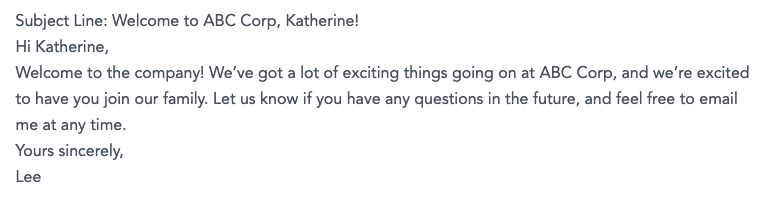
This example is effective at introducing a new client to the person who will be in charge of them.
Notice the casual and warm tone that makes the introduction more personal and friendly. The writer addresses the client by name and treats her with care.
This is a great way to start a relationship with a client.
Learn from it:
Once the client has made their purchase, the first email they receive will set the tone for all future interactions. The first email needs to let the client know who their point of contact is and how they’ll be treated. It needs to reaffirm its purchase.
When writing this email, set the right expectations. Make sure it reflects your company’s values. Add some personality to it. This is the start of your relationship with your new client. So make it count.
3. How to introduce yourself to solve an issue
Subject: Solution for [specific problem]
Hi [Name],
I’m [Your Name] from [Company]. I noticed [specific issue they’re facing] and wanted to reach out.
We’ve helped companies like [similar company] solve this by [brief solution]. I’d be happy to share how we can help you too.
Can we schedule a quick 15-minute call this week?
Best,
[Your Name]
Learn from it:
If a client already has an issue and is already looking for a way to solve it, you can get away with writing more information. However, remember that the extra text should be as valuable to the reader as possible. Keep it brief and focused on solving their problem. Be sure to identify yourself as the right person to solve it.
4. How to write a new sales rep introduction email
Subject: Your new point of contact at [Company]
Hi [Client Name],
I’m [Your Name], and I’ll be your new sales representative at [Company]. I’m taking over from [Previous Rep], who has moved to [new role/department].
I’ve reviewed your account and am excited to continue supporting your goals. I’d love to schedule a brief intro call to discuss your current needs and how we can help.
Are you available next week?
Best regards,
[Your Name]
Learn from it:
When introducing a new sales rep, you’re changing the dynamic your client expects.
People don’t usually like change, so you’ll need to make the change as smooth as possible. Start with clear subject lines and let your clients know why they’ll be dealing with a new sales rep, and focus on the benefits that this will provide.
5. How to introduce yourself to a new team
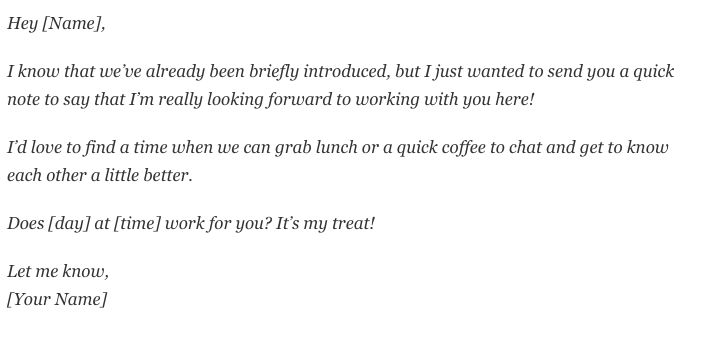
This introductory email to a new team by The Muse shows you how to introduce yourself to the team you’ll be working with. It’s short and friendly and sets up a CTA to get to know each other.
Learn from it:
Chances are you’ll be spending most of your day with the people you work with, so you need to start on the right foot. Send them an email introducing yourself (even if you’ve already been briefly introduced), and show them you want to get to know them.
6. How to introduce a team to a new employee

Introducing a team to a new employee is equally important, especially when you’re the one in charge of that team. A clear welcome email for the new employee can bridge the gap between both parties and kick-start employee engagement.
The email spends most of the text letting people know who the new team member is. The email uses the company to frame the introduction, starting with reminding employees of how successful the company is, and finishing with the company’s open house.
This is a great example of how to introduce a new member to the team, even in a busy and professional environment.
Learn from it:
Unlike most other examples, the amount of text and tone aren’t nearly as important. You don’t need to convince the readers to click and read the whole email. It’s part of their day-to-day routine.
Use this to your advantage by packing as much information about the new member as they need. Focus on the positives and use the chance to remind them of other daily activities.
7. How to sell yourself in an email
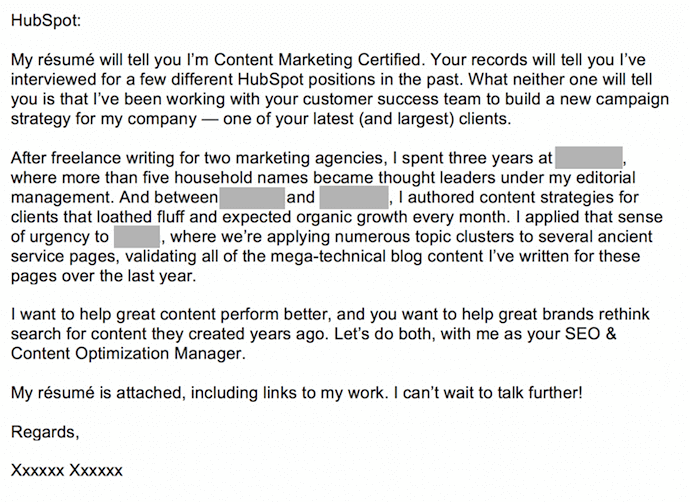
HubSpot features this cover letter as a strong example.
The email grabs the reader’s attention by implying it has information that can’t be found anywhere else. It quickly establishes a connection by highlighting all the facts that make the sender and the company a perfect match.
Lastly, it shows off all the relevant data without appearing pretentious. The author achieves this by stating the facts and letting them speak for themselves. There is no, “I’m the BEST at X” or “This is why you NEED me”. It simply states facts and ends with affirming the aim of helping the company achieve its goals.
Learn from it:
In the digital age, learning how to sell yourself in a job application is even more important than selling yourself in person.
Once you’ve crafted the best subject lines, grab the reader’s attention with a clear tone, and let them know that what they’re about to read can’t be found anywhere else. This can add considerable interest. Then, finish with a simple call to action to get a better chance at a reply.
8. Cold email introduction
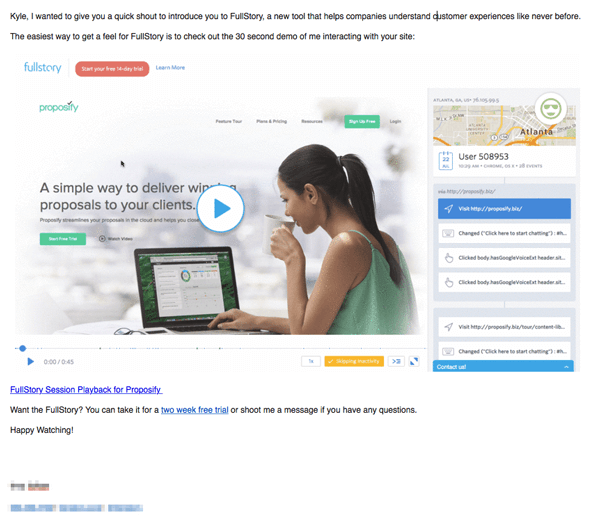
This content-rich cold email featured in Proposify introduced a solution the client didn’t even know they needed.
As you can see, the email shows a new look for Proposify that’s simply better. It doesn’t say what the writer can do for the reader. Instead, it shows him.
The email doesn’t propose vague, “good” results or simply “more” revenue. Rather, it focuses on very tangible improvements.
By showcasing a new design made exclusively for the potential client, the writer shows that they care enough about the company to make a demo. It showcases potential benefits.
All without a word.
Personalized assets (short demo, mock-up, or video) raise relevance and reduce friction.
Learn from it:
When it comes to sales, like in showbusiness, you should “show, not tell”. Invest time in finding out how to solve your lead’s problems, and then show them that solution.
If you lead with the benefits, your leads will want to know how to get them.
Writing personalized cold emails can take time, so ensure you verify them before you start writing them. Lastly, send your cold emails at the right moment to improve your chances of a reply.
Here are some great cold email templates that get your recipient a response.
5 Introduction Email Templates You Can Use for Free
Here are five free email introduction templates to get you started:
1. Basic introduction template
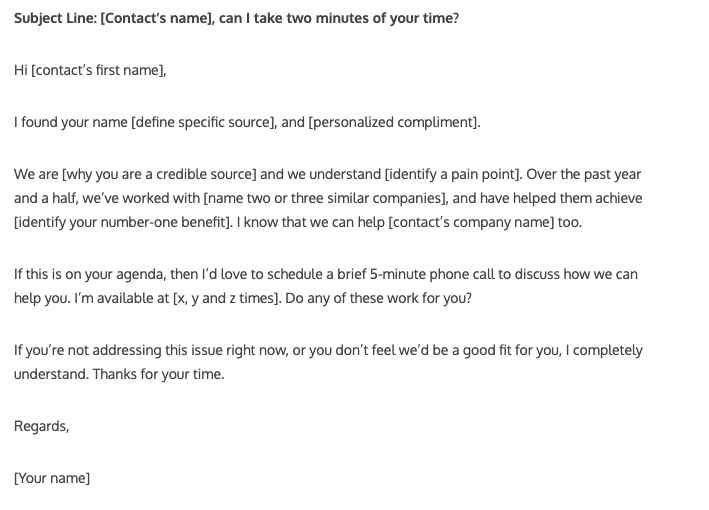
This template achieves a very simple goal: introducing you to someone who knows nothing about you.
It’s great when you want to get straight to the point, and it focuses on solving a client’s problem to get them to reply.
And, whether or not they reply, don’t forget to nail the follow-up email too.

2. Introducing two people
Subject: Connecting [Person A] and [Person B]
Hi [Person A] and [Person B],
I wanted to introduce you both. [Person A] is [brief context], and [Person B] is [brief context].
I think you’d both benefit from connecting about [specific topic or opportunity]. [Person A], [Person B] has experience in [relevant area]. [Person B], [Person A] is working on [relevant project].
I’ll step back now and let you two take it from here.
Best,
[Your Name]
Introducing two people can be tricky.
You need to give two people enough information about the other in as little time as possible. When you’re introducing someone, you’re talking about something you’re not as knowledgeable to talk about as the person you’re introducing.
This template does a great job of getting a conversation started, so both parties can get to know each other.
3. Introducing someone to a new point of contact
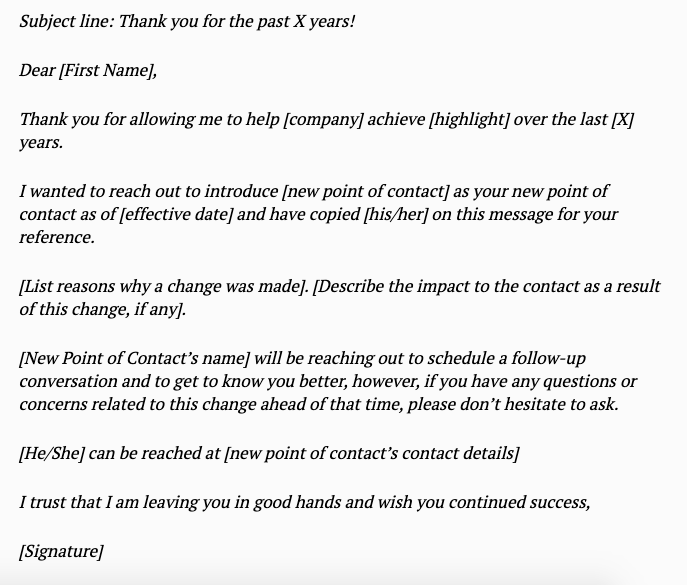
This introduction email template from an existing point of contact is a great way to let clients know who they’ll be dealing with in the future.
As we’ve mentioned before, clients don’t like change. Using this template will help them get up to speed about why the change is happening and who will take care of them from then on.
4. Company Introduction Email Template
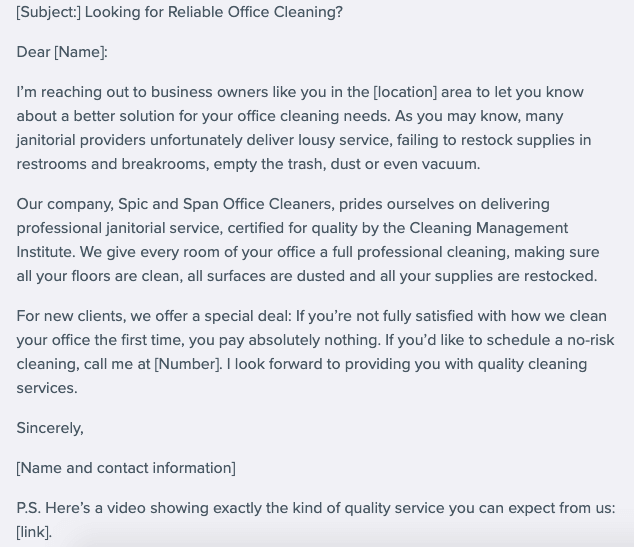
If you’re looking for a cold email introduction, this template has everything you need.
With it, you can focus on the pain points you can solve for a customer. It even ends up with a limited offer to get the lead to reply. Remember to use the right cold email tools and add as much visual content as needed.
To avoid wasting your time writing cold emails, focus on finding the right leads from the start.
Write intros that get deals
A clear introduction makes replies more likely. End with one simple next step and a professional sign-off.
Use these email introductions to present yourself online. Don’t forget to make your introductions more about them than about you. Include a CTA as a next step, and write an irresistible cold email subject line.
If you follow these guidelines, your email introductions will be as effective as they can be.
Want to find hot leads searching for a service like yours? Now, they’re the ones worth reaching out to. Use the intent data of UpLead. Try it free here.