


A sales analyst collects and analyzes sales data. These professionals help companies optimize promotional strategies and secure higher revenues. Here’s a complete overview of the sales analyst role, including salary expectations and ways to find the best sales analyst for your company.
What Is a Sales Analyst?
A sales analyst collects and analyzes data related to sales. A sales analyst uses various tools to analyze data and evaluate sales trends. This process can help businesses optimize promotional strategies and increase sales and revenue.
Today, businesses have more data available to them than ever before. The need to sort and leverage that data gave rise to sales analysts. These professionals are often employed within midsize to large companies that need to optimize promotional strategies and achieve new growth.

What Does a Sales Analyst Do?
Now that we have a clearer understanding of why the profile of a sales analyst exists, let’s jump into what’s in a typical sales analyst job description:
Responsibilities
A sales analyst can play a critical role in any business and bear several business-critical responsibilities.
First and foremost, sales analysts collate, analyze, and report on sales data. They collect data from diverse sources to better understand business performances, customer trends, and market developments.
Sales analysts crunch these numbers and create clear reports for their management teams. The actionable insights within these reports can help businesses adjust key strategies to protect and increase revenue.
More generally, sales analysts provide important voices in their industries. Management and sales professionals often turn to sales analysts to receive their input on many business-critical decisions.
How do sales analysts drive measurable results?
Sales analysts drive measurable results by improving revenue, reducing churn, and increasing sales process efficiency. According to Coursera’s 2025 role survey, companies report that deploying sales analysts can lead to 5–12% revenue growth annually, with churn reductions of 8–14% through more accurate lead targeting. Analysts help raise quota attainment rates by building predictive models, automating sales dashboards, and identifying underperforming market segments.
For example, Betterteam’s 2025 analysis notes that businesses using advanced sales analytics achieved 15% faster deal velocity and cut manual reporting time by up to 30%. These improvements allow leadership to adjust strategy, invest in top-performing channels, and coach teams using real-time KPIs.
Daily tasks
Sales analysts perform a wide range of diverse tasks daily. Here’s a closer look at those tasks and why they’re performed.

Evaluate and predict sales trends.
Sales analysts must use their abilities to predict market trends. This can help businesses create appropriate sales strategies that boost revenues. Every sales analyst will have a unique way of making predictions according to various factors (e.g., territory and industry).
Analyze sales reports.
Sales analysts must be able to look through sales reports and understand the story that’s being told. So they should take important sales metrics into consideration to paint a clear picture of how a company is performing.
Share reports.
This role spends much of its time creating and presenting insightful sales reports based on its analyses. Then they share these reports with their senior managers and sales teams to help guide their companies’ strategies.
Offer strategic guidance.
Sales analysts are positioned to see how a company moves in its market and industry. Sales analysts should use this insight to help influence strategic decisions and guide the overall strategy.
Software used
In the hands of a talented sales analyst, analytics software can provide real-time business analytics, information-gathering options, and intelligent data visualization.
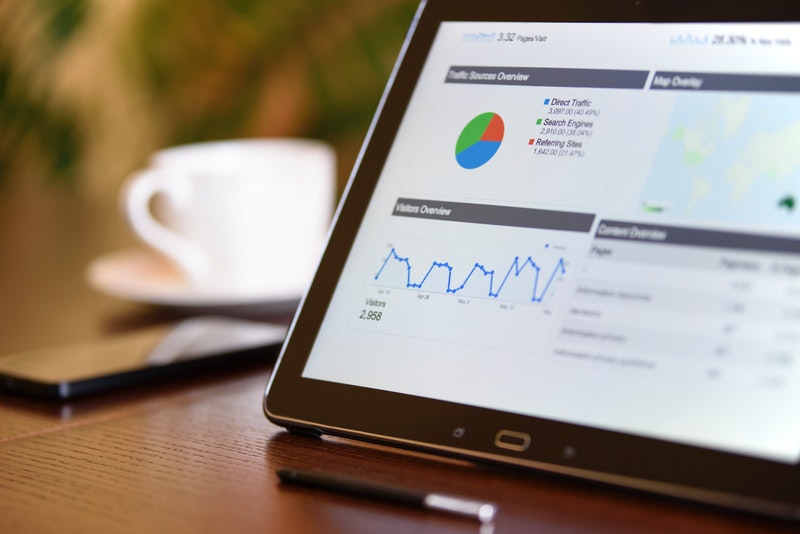
Sales analysts use these tools to perform a range of tasks. On a basic level, these tools can help simplify several basic processes, such as studying consumer habits and monitoring various business and market trends.
These tools can help sales analysts identify new opportunities on a grander scale. This feature helps sales teams connect with clients deeper and build targeted sales strategies.
Here are just a few examples of sales intelligence software:
- Hotjar
- ReportPlus
- Zoho Analytics
- Yellowfin
What Types of Sales Analyst Roles Exist?
The types of sales analyst roles that exist include generalist sales analysts, pricing analysts, demand planners, business intelligence analysts, and sales operations analysts, as outlined in Coursera and AvaHR’s 2025 job data. Pricing analysts focus on optimizing pricing strategies, while demand planners predict product or service demand using forecasting models. Business intelligence analysts integrate sales data with broader business performance dashboards. Sales operations analysts streamline processes, territory assignments, and quota planning.
Each specialization requires a unique blend of analytical, technical, and domain-specific skills. As market complexity grows, companies hire for distinct analyst tracks to address specific pipeline, forecasting, or revenue optimization needs. Job postings referencing “sales analyst” now mention a defined specialization or vertical 65% of the time.
Skills You Should Look Out For
Most managers know it’s important to find specialized profiles with the appropriate sales skills when hiring a new hire. The best sales analysts have the following abilities:
Research skills
The best sales analysts must have strong research skills, which empower them to locate, extract, organize, and evaluate swathes of data (internal and external). They should be comfortable using many techniques and tools to perform those critical tasks and provide business-critical data.
Data-analysis abilities
If your sales analyst assesses your sales data, they must have the appropriate data analysis skills. The analyst should be able to use key data-analysis methods and techniques (e.g., text analytics, data visualization, data mining, and more) to discover useful information that can help push your business forward.
Strong communication and presentation skills
On the one hand, your sales analysts must be able to uncover valuable insights. On the other, they must be able to share those insights with the team clearly. The best sales analysts can use the most complex data to create a clear story that other members of your organization can understand.
What technical and soft skills are essential for sales analysts?
The technical and soft skills essential for sales analysts include proficiency in data analysis (such as advanced Excel formulas, data mining, and BI visualization), and the ability to tell a compelling story from complex datasets. Strong communication ensures analysts can translate quantitative results into actionable recommendations for sales and management teams. According to Himalayas 2025 data, over 80% of top-performing analysts present data summaries visually using dashboards or charts, and emphasize both business context and sales strategy in their reports.
A strategic mindset
Every sales analyst needs to have a good understanding of both the little details and the big picture. He or she should understand how the minutiae of your business impact the bigger picture. Furthermore, they should know which strategies can be implemented to push their business forward.
Excellent software skills
Your sales analyst must be comfortable using a range of software. He or she must be able to use business intelligence software, and the best sales analysts can make the most of other tools to create clear reports. Overall, great IT skills are a must for any sales analyst.
General business acumen
A professional sales analyst can play an important role in your organization. His or her data and insights can give your management team a clearer picture of demand, revenue, and expenses, guiding strategic decisions. Furthermore, your sales analyst should have good business acumen that enhances the overall value of their insights.
What are the key metrics for measuring a sales analyst’s success?
The key metrics for measuring a sales analyst’s success are sales forecasting accuracy, quota attainment rate, adoption of dashboards or reporting tools, and direct impact on churn or deal conversion. Coursera’s 2025 benchmarks report that top performers deliver sales forecasts with less than 5% variance, raise dashboard adoption among reps by over 40%, and supply actionable business recommendations that result in measurable gains. Some companies also track turnaround time for recurring reports and the percentage of recommendations implemented by management.
How Much Should You Pay Your Sales Analyst?
A great sales analyst can drive significant value to a business. Therefore, a sales analyst’s salary will be high, especially for someone with a new bachelor’s degree. But there’s a lot of wiggle room, depending on many factors.
For instance, the location of your business will have a big impact, as will the seniority and experience of your chosen sales analyst. A key part of the sales analyst job description involves managing sales goals, utilizing years of experience, and possessing excellent communication skills to explain data to superiors. Other companies may offer lower salaries for entry-level sales analysts, particularly in positions with less pressing responsibilities, where tasks involve conducting simple market research and managing data.
Here are some of the average sales analyst job salaries for sales analysts in the USA, according to a number of salary benchmark platforms:
What Is the Average Salary and Career Path for a Sales Analyst?
The average salary for a sales analyst in the United States is $57,443 according to 2025 industry data from Glassdoor, with the lower range starting around $49,000 and senior roles earning up to $80,000 or more depending on location and company size. Entry-level analysts, often recent graduates, start between $49,000 and $56,000, while those with 5+ years of experience or specialized skills (such as advanced analytics, Power BI, or CRM expertise) can earn $70,000–$85,000 at large organizations.
Sales analyst roles offer multiple advancement opportunities. Analysts often move up to become senior sales analysts, sales operations managers, or move laterally into business intelligence roles and revenue operations. According to Himalayas, common next steps include promotions to sales manager or business analyst roles where analytical experience is valued.
Compensation is impacted by business sector (SaaS and finance pay top rates), location (major metro areas like New York, San Francisco, or Chicago offer 15–30% salary premiums), and company size (enterprises offer more advancement tracks). According to 2025 market data, 30% of sales analysts are promoted internally within three years, and over half move into cross-functional business analytics or data management positions.
Which Tools and Software Do Sales Analysts Use Most?
The tools and software sales analysts use most include Microsoft Excel, SQL databases, Power BI, Tableau, and Salesforce CRM, according to Coursera and Croclub’s 2025 rankings. Microsoft Excel remains the foundational tool for data cleaning and day-to-day reporting. SQL is often used for accessing large datasets and performing ad hoc revenue analysis.
Power BI and Tableau are preferred for advanced data visualization, interactive dashboards, and identifying sales trends across products, teams, or markets. Salesforce CRM is used for tracking customer data, pipeline performance, and integrating analytics with live sales activity. Other notable tools include Zoho Analytics, ReportPlus, and Yellowfin for business intelligence, as well as automation platforms for streamlining report generation.
Sales analysts leverage these platforms to transform raw sales data into actionable visual reports, automate monthly KPIs, and deliver predictive forecasts that enable sales teams to make data-driven decisions. Proficiency in at least one BI tool (Power BI or Tableau) is required by over 70% of mid-to-large companies in 2025.
Job Descriptions You Can Use for Your Listing
If you’ve identified the need for a sales analyst, you’ll want to start the recruitment process and get the ball rolling. In other words, you should craft a detailed, attractive sales analyst job description. Then you should vet your candidates throughout the interview and recruitment stage.
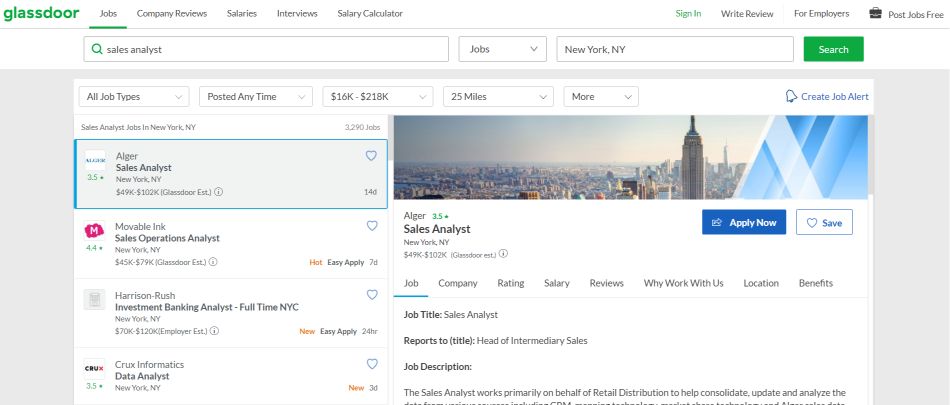
Here’s a closer look at a great job description, which you can use to find the best talent in the business. Simply adjust the details as needed, and feel free to use this template for inspiration.
Job Description Template for Sales Analysts
Business Name is looking for a talented sales analyst. This analyst will collate and analyze both internal and external data to create insightful reporting that shapes important strategic decisions.
Business Name is a fast-growing company seeking a sales analyst to elevate our sales performance. We need an analyst capable of compiling and analyzing data from various sources to forecast sales trends.
Key Responsibilities
We need a driven, experienced sales analyst to perform the following tasks:
- Gather and analyze diverse data to understand problems and bring them to light.
- Communicate with the management team to guide strategic decisions.
- Collate and analyze data to forecast sales trends.
- Review past sales data to better understand productivity trends.
- Generate accurate, clear reports and explain complex trends.
- Share actionable information with the sales and management team.
Desired Qualifications
- A bachelor’s degree in accounting, finance, or marketing
- Familiarity with key business-intelligence software
- Excellent analytical skills and problem-solving abilities
- Flawless oral and written communication abilities
- A keen eye for detail and great organizational abilities
- Proven ability to take the initiative
- Skills with multitasking and prioritizing key reports
Which certifications or credentials benefit sales analysts?
Certifications and credentials that benefit sales analysts include the Microsoft Certified: Data Analyst Associate, Tableau Desktop Specialist, and certifications in Salesforce CRM, Power BI, or advanced SQL. According to Coursera and Spotterful’s 2025 research, 60% of mid- and large-sized firms now prefer or require at least one analytics credential when hiring for senior roles. Education in data visualization or automation is common for career advancement.
5 Great Questions to Ask a Sales Analyst in a Job Interview
It’s important that you ask the right questions when interviewing your sales analyst. Here’s a look at five great questions you can use to assess the suitability of your potential sales analyst:
- Which data analysis software have you worked with in the past?
- What is your process for analyzing sales data?
- Can you describe a time you provided valuable insight that increased sales?
- How are your presentation skills?
- What’s one best practice you learned at your previous company that you’ll use here?
Conclusion
We hope this piece has helped you better understand how sales analysts can drive value to your organization. The right personnel is important for sales success, but the right tools are just as important. To drive growth via targeted sales leads, start your free UpLead trial today.