


Account-based marketing (ABM) and demand generation take divergent approaches to fueling B2B growth. This guide unpacks the key differences and shows you how to combine both strategies into a powerful revenue engine that delivers predictable pipeline and measurable ROI.
The reality? Most B2B revenue leaders face constant pressure to deliver results but feel torn between two paths: casting a wide net with demand generation or spearfishing high-value accounts with ABM. Choosing the wrong focus leads to wasted budget, frustrated sales teams and marketing efforts that fail to prove ROI.
This guide moves beyond the “versus” debate. You’ll get a clear comparison, but more importantly, you’ll discover how to build an integrated growth engine by combining both strategies. We’ll show you when to use each approach, how to allocate budget and how AI is making hybrid models more effective than ever.
📌 Whether you choose ABM, demand gen or a combination of both, you can use UpLead to identify leads with laser precision. Try UpLead and get 5 free validated B2B emails first!
ABM vs Demand Generation: What Is Account-Based Marketing?
Account-based marketing is a targeted B2B strategy that treats individual high-value accounts as “markets of one.” Rather than marketing to a broad audience, ABM focuses efforts on a select group of key accounts that offer the highest revenue potential. This sets the stage for the account based marketing vs demand generation comparison that follows.
This approach requires tight alignment between sales and marketing teams to customize campaigns and content for each target account. ABM typically aims for larger, enterprise-level deals and supports enterprise sales, where the investment in personalization pays off through higher contract values and longer customer relationships.
Success depends on thorough research to deeply understand each account’s specific goals and pain points. Marketing and sales then personalize messaging to address unique needs and preferences, with personalized messaging being a key differentiator of ABM. When executed well, this tailored lead generation strategy makes a significant impact on revenue growth from strategic accounts by supporting the sales process for high-value accounts.
What Is Demand Generation?
Demand generation is a broad marketing strategy to fuel business growth by creating awareness, generating interest, and engaging prospects across entire market segments. Rather than pitching products, it attracts potential buyers by solving their pain points through educational content and multi-channel outreach, using specific demand generation tactics such as content marketing, events, SEO, social media, and paid advertising.
The approach nurtures relationships over time through useful content and engagement across multiple touchpoints. Demand gen guides prospects through the buyer’s journey and customer journey, from initial awareness to post-purchase support, ensuring that marketing efforts are aligned with each stage of the decision-making process.
The goals include generating quality leads, with a primary objective to generate leads, nurturing opportunities, and building a healthy pipeline. Tight collaboration between marketing and sales accelerates momentum. Executed effectively, demand generation resonates by crafting targeted messages and experiences that speak to broader audience segments.
What Does the ABM vs. Demand Generation Comparison Show?
Account-based marketing and demand generation serve different purposes in a B2B growth strategy. This quick comparison shows how abm and demand gen differ across the most important dimensions.

ABM versus Demand Generation Strategy Comparison
| Aspect | Account-Based Marketing | Demand Generation |
|---|---|---|
| Primary Goal | Revenue from specific target accounts | Broad lead volume and brand awareness |
| Targeting Approach | Account-centric (specific companies), targeted strategy | Lead-centric (individuals in segments) |
| Funnel Model | Flipped/Inverted funnel | Traditional wide-to-narrow funnel |
| Key Metrics | Account engagement, pipeline velocity, deal size | Cost per lead, MQL volume, conversion rate |
| Sales & Marketing Alignment | Tightly integrated from day one | Linear handoff from marketing to sales |
| Content Strategy | Hyper-personalized for each account | Broad, persona-based content |
This table highlights the core differences in marketing vs demand generation. ABM concentrates resources on best-fit accounts with personalized outreach using a targeted strategy, while demand gen casts a wide net to capture volume through broader campaigns. The account-based marketing vs demand approach demonstrates how each strategy contrasts yet can complement each other within a comprehensive marketing plan.
What Do ABM and Demand Generation Have in Common?
While ABM and demand generation employ different approaches, they share fundamental goals and common ground that make them complementary rather than competing strategies.
Both strategies ultimately aim to drive revenue growth, acquire new customers and foster long-term customer loyalty. They are both data-driven, relying on customer research to inform targeting decisions. Demand generation creates broader buyer personas for market segments, while ABM develops highly detailed profiles for specific target accounts.
The content and research from demand generation can serve as a foundation for more personalized ABM content. Both strategies require collaboration between sales and marketing teams to be successful. In demand generation, this is often a linear handoff, whereas ABM demands a much tighter, collaborative partnership from the very beginning to identify accounts and develop strategy.
Many businesses use a hybrid approach, using demand generation’s wide net to build awareness and identify potential high-value accounts, which are then targeted with a focused ABM strategy. By combining both strategies, marketing teams can effectively engage both broad audiences and specific high-value accounts, maximizing their overall marketing impact. This integrated model recognizes that both strategies play vital roles in a balanced revenue engine.
How Do ABM and Demand Generation Differ?
Account-based marketing and demand generation take very different approaches to B2B marketing. The discussion of account based marketing vs demand is essential for understanding how these strategies differ in targeting, tactics, and outcomes. Understanding these distinctions helps you determine the right strategy for your business goals.
What is the difference in funnel approach?
The funnel model represents perhaps the most fundamental difference between these strategies. Demand generation follows the traditional marketing funnel, also known as the sales funnel, starting wide at the top with awareness campaigns that reach large audiences. It then narrows through interest, consideration and conversion stages as prospects move toward a purchase decision.
ABM flips this model entirely. It starts narrow by identifying specific high-value accounts, then expands outreach to engage multiple stakeholders within those accounts. The goal is to penetrate the account deeply rather than filter down from a large pool. This inverted approach means ABM begins with the most qualified targets and works to expand engagement within them.
What is the difference in target focus?
ABM and demand generation define their targets very differently. Account-based marketing precisely selects a small group of high-value, specific accounts to focus on. Depending on company size, this might be 15 accounts or hundreds, but it represents less than 1% of the total addressable market. These accounts are hand-picked based on fit, revenue potential and strategic value.
Demand generation takes the opposite approach, marketing broadly to entire segments across a market instead of individual companies. The focus is on generating as many qualified leads as possible from these segments.
More than 70% of B2B organizations have ABM programs. At the same time, 87% of marketers state that ABM delivers a higher ROI than other marketing strategies. The sharply contrasting approaches highlight core differences. ABM concentrates resources on best-fit accounts, while demand gen casts a wide net to capture volume. In a hybrid approach, demand generation can identify a pool of potential leads, and then ABM is used to target specific accounts within that pool for personalized outreach.
What is the difference in sales and marketing alignment?
Collaboration between sales and marketing varies significantly between these strategies. Tight alignment is mandatory for ABM since both teams must intimately understand target accounts to coordinate effective one-to-one outreach. Sales and marketing work together from day one to select accounts, develop messaging and orchestrate campaigns.
Companies that connect these functions can increase company revenue by up to three times. On the other hand, demand generation often follows a traditional model where marketing produces broad awareness and passes off leads with limited context.
ABM necessitates a shared understanding of account needs and coordinated outreach between functions. Demand gen typically lacks that interlock, passing leads in lieu of strategic sales alignment.
What is the difference in key metrics and ROI?
The key performance indicators used to gauge success differ significantly between the strategies. Account-based marketing focuses on a small number of vital accounts, so it tracks engagement within those targets and the customer revenue they generate, including both new customer revenue and revenue from existing accounts.
ABM KPIs: Measuring Account Quality and Revenue Impact
- Account Engagement: Measures the level and quality of interactions from target accounts including website visits, content downloads, email open rates and sales meetings
- Marketing Qualified Accounts (MQAs): The number of target accounts that have reached sufficient engagement to be considered ready for sales outreach
- Account Coverage: The percentage of key contacts and decision-makers within a target account list that marketing has successfully reached
- Pipeline Velocity / Sales Velocity: Measures how quickly target accounts move through the sales pipeline from initial engagement to closed deal
- Average Deal Size: Tracks the average revenue generated from closed deals within the target account list
- Customer Lifetime Value (CLV): The total revenue a company can expect from a single account over the entire relationship duration
- Expansion Revenue Metrics: Includes upsells, cross-sells, and retention rates that indicate revenue growth from existing accounts
- Customer Revenue & New Customer Revenue: Tracks revenue generated from both new and existing customers as a result of ABM efforts
According to a 2024 Forrester report, nearly a third of companies using ABM see deal sizes increase by 21% to 50%. Furthermore, ABM can improve customer retention rates by up to 36%, with 85% of marketers finding it critical for expanding existing client relationships. These outcomes are strong indicators of a successful campaign.
Demand generation casts a wider net, so teams watch macro metrics like total lead volume, cost per lead and conversion rates through their pipeline. Demand generation metrics typically include leads generated, cost per lead, sales cycle length, and other KPIs that help optimize marketing effectiveness and ROI.
Demand Generation KPIs: Measuring Funnel Volume and Efficiency
- Website Traffic & Unique Visitors: Measures the overall reach of top-of-funnel content and brand awareness campaigns
- Marketing Qualified Leads (MQLs) Volume: The total number of leads generated that meet predefined criteria of marketing engagement
- Sales Qualified Leads (SQLs) Volume: The number of MQLs that the sales team has accepted as having legitimate potential
- Lead-to-Opportunity Conversion Rate: The percentage of leads that progress to become a qualified sales opportunity
- Cost Per Lead (CPL): The total cost of a marketing campaign divided by the number of leads generated
- Customer Acquisition Cost (CAC): The total sales and marketing cost required to acquire a new customer
According to 2025 benchmarks, B2B cost per lead is highly dependent on context. While a lead from content marketing might cost around $92, the average CPL for a competitive industry like Legal Services is $650, and for a channel like SEO, it is $206.
What is the difference in content and messaging strategy?
Content created for each strategy varies considerably. ABM dictates tailoring messages and assets specifically to resonate with individual accounts. 92% of B2B marketers consider highly customized content essential for ABM’s success.
Demand generation takes a broader approach to content by speaking to industry trends and themes that appeal to wider segments. Recent 2024 data shows that the average B2B buyer still consumes between 3 to 5 pieces of content before speaking with a salesperson, with 71% of buyers using multiple content assets in their decision process.
The contrast shows how ABM delivers highly tailored outreach while demand gen uses broad targeting to resonate with larger audiences. ABM drives greater engagement through relevance while demand gen opts for volume through persona-based campaigns.
What is the difference in technology stack?
The technology approach differs significantly between these strategies. Account-based marketing relies on specialized platforms and intent data to identify specific high-value accounts and buying signals.
ABM Platforms:
- 6sense: An AI-driven platform known for its predictive analytics capabilities and ability to uncover anonymous buying signals from the “Dark Funnel”
- Demandbase One: A comprehensive, end-to-end ABM solution that unifies data, advertising, personalization and measurement with AI-powered fit and intent modeling
- RollWorks: A division of NextRoll, this platform is praised for its user-friendliness and strong integration with HubSpot and Salesforce
- Terminus: Focuses on full-funnel, multi-channel ABM, integrating email, social media and digital ads to engage target accounts
- HubSpot ABM: Integrated directly into the HubSpot CRM, these tools are accessible for small to mid-sized businesses looking for a user-friendly, all-in-one solution
Global ABM spending is expected to reach over $1.6 billion by 2027.
Demand generation instead leans on expansive CRM and marketing automation systems designed to handle large volumes of data and outreach.
Demand Generation Software:
- HubSpot Marketing Hub: A widely-used all-in-one platform that combines marketing automation, a robust CRM, content management and analytics
- Adobe Marketo Engage: A powerful and highly scalable marketing automation platform favored by enterprise-level organizations with complex workflows
- Salesforce Pardot: As a Salesforce product, it offers seamless integration with the Salesforce CRM
- ZoomInfo SalesOS: A B2B data and intelligence platform used to build target audiences, enrich lead data and gather contact information for outreach campaigns
- Semrush/Ahrefs: SEO and content marketing platforms used to drive top-of-funnel inbound traffic through keyword research, competitor analysis and site audits
Two-thirds of successful B2B marketers adopt marketing automation to nourish broad lead follow-up.
What is the difference in scalability and resources?
Scalability varies enormously between these approaches. Account-based marketing is incredibly labor-intensive to craft customized campaigns for a select group of accounts, so it’s nearly impossible to scale without significant resources. Most organizations manage between 15-100 target accounts per quarter.
Compare that to demand generation focused on automation and volume, where 80% of marketers easily scale lead gen efforts through technology with marginal added effort. Technology platforms and automation tools allow businesses to scale their demand gen efforts efficiently, reaching larger audiences without a proportional increase in resources. This makes demand gen more accessible for businesses with limited marketing resources.
What Should You Choose: ABM or Demand Gen?
The best approach depends on your specific business goals, target market and resources. Each strategy has strengths in different scenarios.

Choosing Between ABM and Demand Generation
Choose ABM when:
- You have a small, well-defined target account list
- Your product requires a major investment from customers
- Your industry has few major players (e.g., Aerospace)
- You can fund highly personalized marketing
- Your sales cycle length tends to be extensive and complex
The proof? Companies running successful account-based marketing strategies see a 90% or higher engagement rate with their targeted accounts. This demonstrates how ABM can focus efforts around vital target organizations.
Choose demand generation when:
- You’re targeting a broader segment
- Your product has varied use cases and technographic makeup
- You have a smaller marketing budget
- Volume lead generation is the goal
- You aim to increase overall brand awareness
A common demand generation tactic is to write blog posts that generate awareness and engage a broader audience at different stages of the sales funnel.
Case in point: 53% of marketing teams devote over half their budgets trying to produce as many raw leads as possible.
Many find a blended model works best, combining ABM for key accounts and demand generation strategies for the general market. This hybrid approach recognizes that both strategies play vital roles in a balanced revenue engine.
How Can You Combine ABM and Demand Generation in a Hybrid Strategy?
The modern best practice is not an “either/or” choice but an integrated system using the “Double Funnel” model. This model advocates for using demand generation and ABM concurrently to maximize both reach and precision.
Position demand generation as the broad-reach strategy that builds brand awareness, educates the market and creates a large pool of initial interest. It’s the “air cover” that fills the top of the funnel. Present ABM as the focused strategy that targets specific, high-value accounts identified from the broader demand gen pool or pre-selected lists. It’s the “spear” used to engage entire buying committees within these key accounts with hyper-personalized content and outreach.
What is the Double Funnel Model?
The Double Funnel Model operates two parallel funnels. One is the traditional, volume-oriented demand generation funnel that captures Marketing-Qualified Leads (MQLs). The second is the quality-oriented ABM funnel focused on Marketing-Qualified Accounts (MQAs).
The two funnels work together in several ways. Demand gen can pre-qualify future ABM lists by identifying companies showing buying signals. Insights from ABM can refine demand gen targeting by revealing what messaging resonates with high-value accounts.
A hybrid model leads to greater efficiency and ROI by aligning sales and marketing teams around shared goals, improving pipeline velocity by focusing sales on the best-fit accounts and ensuring no opportunities are missed by maintaining both a wide net and a targeted approach.
How Should You Allocate Budget in a Hybrid Model?
There’s no single magic number for budget allocation, but you can follow proven frameworks based on company maturity.

Budget Allocation by Company Growth Stage
For early-stage companies, a common split is 80-90% for demand generation and 10-20% for brand and ABM efforts. For scaling companies, the ratio shifts toward a 50-60% demand generation and 40-50% brand and ABM split. Mature companies often favor brand and ABM, allocating closer to a 60/40 split.
The logic is that early-stage companies must first build broad market awareness and fill the top of the funnel, which is the strength of demand generation. As a company matures and has a more established brand and a clearer understanding of its ideal high-value accounts, it can invest more in targeted ABM strategies that yield higher ROI per account.
Demand generation budgets are typically spread across multiple channels to maximize reach, while ABM budgets concentrate resources on fewer, high-value accounts. This strategic allocation ensures you’re investing in both pipeline volume and deal quality.
Campaign Planning for ABM and Demand Generation
Effective campaign planning is the foundation of successful account based marketing and demand generation strategies. For ABM, campaign planning starts with pinpointing specific high-value target accounts that align with your business objectives. Sales and marketing teams collaborate closely to research these accounts, uncover their unique pain points, and develop highly personalized marketing efforts. This might include crafting tailored content, deploying targeted ads, and orchestrating one-on-one interactions with key decision-makers to ensure every touchpoint is relevant and impactful.
In contrast, demand generation campaign planning is designed to create broad awareness and attract a wider pool of potential customers. Marketing teams focus on building comprehensive marketing strategies that leverage content marketing, social media promotion, and email marketing campaigns to engage a broader audience. The goal is to generate interest and nurture leads at scale, using demand generation strategies that appeal to the needs and interests of a larger market segment.
Regardless of approach, aligning sales and marketing teams and leveraging data-driven insights are critical. By analyzing marketing data and campaign performance, businesses can refine their tactics, optimize resource allocation, and maximize the effectiveness of both ABM and demand generation efforts. This strategic planning ensures that every campaign—whether highly targeted or broadly cast—drives measurable results and supports overall sales and marketing goals.
How Can You Get Started With Your Strategy?
Both ABM and demand generation can drive success but take different approaches from the start. Here’s how to launch each strategy, along with proven tactics.
What are the essential tactics for Account-Based Marketing?
Here are 3 tactics you can use to get started with Account-Based Marketing:
Identify and prioritize target accounts
- Conduct in-depth research to understand target accounts, identify key contacts and determine where they are in the buyer’s journey
- Leverage analytics and potential customers’ data to select high-value accounts fitting your ideal customer profile that have the most sales potential
- Collaborate cross-functionally with sales to align priorities by deal size, projected revenue growth and conversion potential. Develop consensus between marketing and sales on the highest value accounts to focus ABM efforts for the biggest impact
- 19% of companies using ABM have reported more than 30% revenue growth
Launch a 1-to-few campaign
- Target a small group of 5-15 accounts that share similar attributes (e.g., industry, challenges). Create semi-personalized content, such as an industry-specific webinar or a whitepaper on a shared challenge like navigating regulatory shifts
- 56% say customized content is essential for ABM
Orchestrate a multi-touch cadence
- Engage high-value accounts across multiple channels in a structured sequence. A cadence could involve 15 touches over three weeks, combining personalized emails, phone calls and LinkedIn engagement. For example, LiveRamp used a multi-touch strategy of personalized display ads, emails, SDR outreach and direct mail to achieve a 33% conversion rate from cold leads to meetings
- With a multi-channel strategy, over 50% of companies have reported almost always hitting their financial targets
What are the essential tactics for demand generation?
Here are 3 tactics you can use to get started with demand gen:
Build a pillar page and topic cluster
- Create a comprehensive central page (pillar) on a broad topic relevant to your audience, like “Organic Gardening for Urban Spaces.” Then, develop multiple, in-depth articles (clusters) on related subtopics (“easiest plant to grow outdoors,” “small outdoor plants for beginners”) that all link back to the pillar page. This strategy establishes topical authority with search engines and users
- 70% of B2B buyers consume 3-5 assets before sales talks
Implement lead nurturing email sequences
- Segment email lists based on user behavior and create automated, tailored email sequences to keep your solution top-of-mind as prospects move toward a purchase decision. Map out buyer journeys and set up automated demand gen campaigns to guide them from awareness through consideration
- 80% of demand-gen sales and marketing teams gain more leads through automation
Host webinars with thought leaders
- Engage audiences by hosting webinars that solve specific challenges. Improve SEO visibility with technical and content-focused best practices to increase organic traffic. Run highly targeted PPC campaigns across channels such as Google and LinkedIn to reach aligned potential buyers with campaign messages focused on their key needs and interests
- Organic and paid search make up 80% of trackable website visits
Implementing these proven tactics for both strategies will generate more pipeline and higher conversion rates.
Common Challenges in ABM and Demand Generation
While both ABM and demand generation offer powerful ways to drive growth, marketing teams often encounter unique challenges with each approach. In account based marketing, one of the biggest hurdles is accurately identifying and prioritizing high value accounts that are most likely to convert. Even after selection, creating personalized content that truly resonates with each account’s decision-makers can be resource-intensive and complex. Additionally, ABM demands close collaboration between sales and marketing teams, and misalignment can lead to missed opportunities or inconsistent messaging.
Demand generation, on the other hand, frequently struggles with generating high-quality leads from a broad audience. Marketing efforts may attract a large volume of prospects, but converting these into qualified leads and ultimately customers can be difficult. Another common challenge is measuring the true impact of demand generation strategies, as it can be hard to attribute revenue directly to specific campaigns or channels.
To overcome these obstacles, marketing teams must invest in robust data analysis, foster strong sales and marketing alignment, and continuously refine their demand generation strategies and ABM tactics. By proactively addressing these challenges, businesses can improve the effectiveness of their marketing efforts and drive better results from both ABM and demand generation initiatives.
Best Practices for ABM and Demand Generation
To maximize the impact of ABM and demand generation, marketing teams should adopt proven best practices tailored to each strategy. For account based marketing, success starts with developing a deep understanding of your target accounts—knowing their business objectives, challenges, and decision-making processes. Creating personalized content and messaging that speaks directly to these needs is essential, as is engaging accounts across multiple channels to ensure consistent, relevant touchpoints. Measuring campaign performance using metrics like engagement rates, conversion rates, and revenue generated helps teams refine their approach and demonstrate ROI.
For demand generation, best practices center on producing high-quality, relevant content that addresses the interests and pain points of your target audience. Amplifying this content through social media, paid ads, and other digital channels extends your reach and drives more qualified leads into the funnel. Leveraging data and analytics to track demand generation marketing performance allows teams to optimize campaigns, improve lead quality, and enhance customer acquisition efforts.
Ultimately, the most successful marketing teams are those that continuously learn from their results, adapt their demand generation strategies and ABM campaigns, and maintain a strong focus on both the needs of their target accounts and the broader market. This commitment to ongoing improvement ensures that both ABM and demand generation efforts contribute to long-term revenue growth and customer loyalty.
What Is AI’s Impact on ABM and Demand Generation?
Artificial Intelligence is reshaping both ABM and demand generation, shifting strategies from reactive to predictive. For 2025 and beyond, AI’s impact is centered on four key areas.
Predictive account and lead selection
AI and machine learning analyze vast datasets (including historical CRM data, firmographics and real-time intent signals) to power predictive analytics. This allows marketing and sales teams to move beyond static Ideal Customer Profiles (ICPs) and instead use predictive scoring to identify and prioritize accounts or leads that are most likely to engage or make a purchase. This ensures resources are focused on the highest-potential targets.
Generative AI for personalization at scale
Generative AI automates and scales the creation of personalized content, including emails, ad copy and website experiences. This capability is crucial for ABM, where it allows marketers to tailor messaging to the specific needs and pain points of multiple decision-makers within a target account, making 1-to-1 outreach possible across hundreds of accounts simultaneously.
AI-driven scoring and intent data analysis
AI-powered platforms analyze “digital footprints” such as web searches, content downloads and webinar attendance to identify real-time buying signals. This intent data reveals when an account is actively researching a solution. This data feeds into dynamic lead and account scoring models that continuously adapt to buyer behavior, providing far more accuracy than traditional, rule-based scoring.
Automated campaign optimization
AI automates the orchestration and optimization of multi-channel campaigns. It can determine the most effective channels and timing for outreach, manage ad bidding to maximize ROI and dynamically adjust campaign tactics based on real-time prospect engagement data. This allows for “always-on,” predictive campaigns that get smarter over time.
The overarching theme is that AI acts as a “co-pilot” for marketers, automating data-heavy and repetitive tasks. This frees up human marketers to focus on higher-level strategy, creativity and relationship-building.
How Does UpLead Power Both ABM and Demand Generation?
UpLead arms B2B marketers with data-driven solutions to power both targeted ABM and broad demand generation programs.
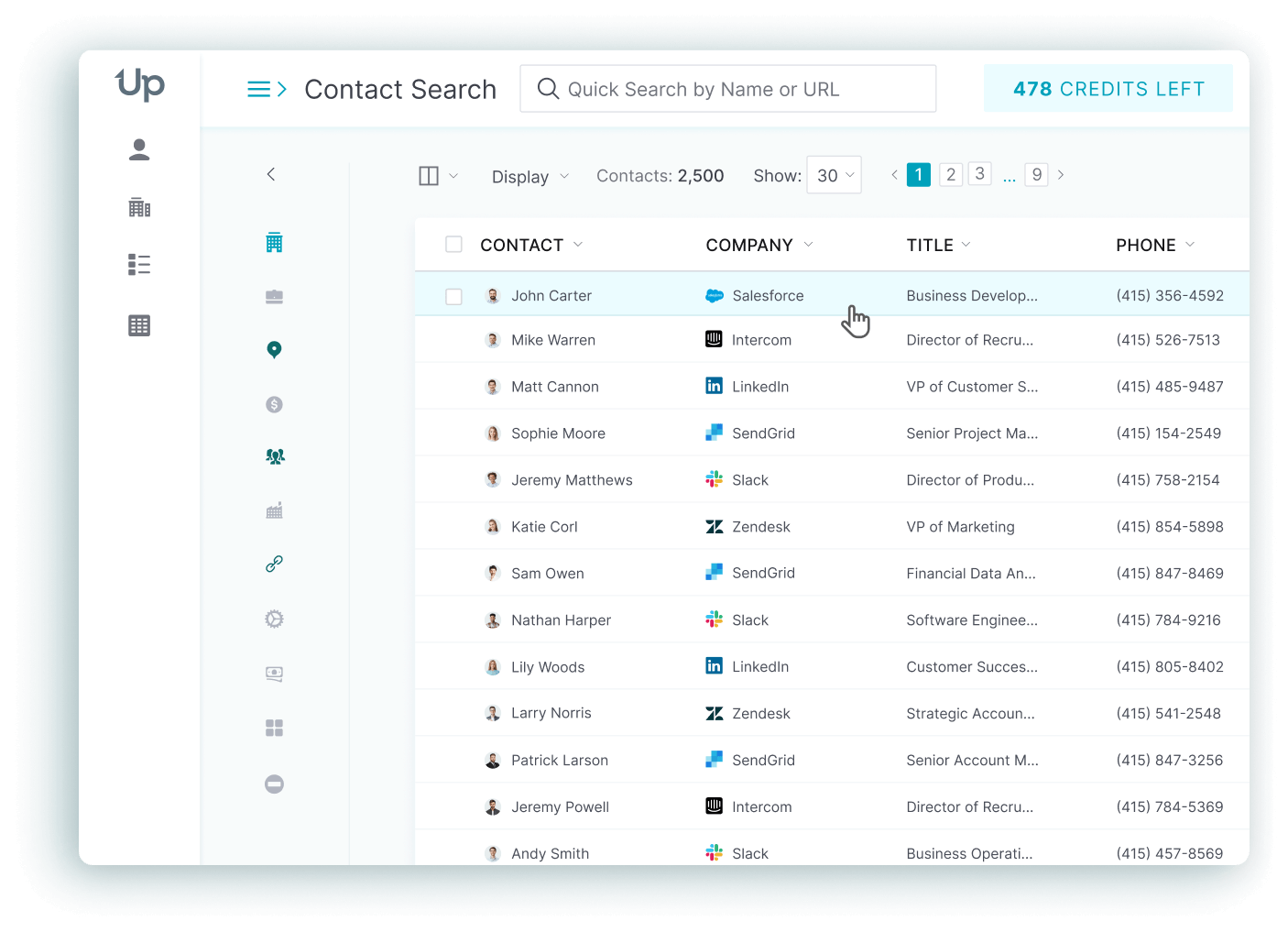
For ABM, UpLead identifies high-value accounts using 50+ filters and provides enriched profiles with technologies used, contact details of key decision-makers and more. This fuels precise outreach to the accounts that matter most.
Tap into UpLead’s database of over 160 million business contacts for demand generation. Build targeted lists, verify emails in real-time and integrate with CRMs to drive scalable lead management.
Whether you need accurate data to create tailored plans for strategic accounts or quality leads to drive broad awareness and pipeline, UpLead’s 95% accurate B2B database guarantees the credible information to set ABM, demand generation and overall marketing efforts up for success.
📌 Try UpLead and get 5 free validated B2B emails first!
Conclusion and Future Outlook
Account based marketing and demand generation represent two powerful, yet distinct, marketing strategies that can be leveraged independently or together to achieve business objectives. By understanding the key differences between ABM and demand generation—such as their approaches to targeting, marketing efforts, and success metrics—businesses can craft marketing strategies that align with their unique goals, whether that means focusing on specific high value accounts or building broad awareness across a wider market.
Looking ahead, the importance of both ABM and demand generation will only grow as companies seek more effective ways to drive customer acquisition and revenue growth. The integration of advanced technologies like marketing automation and artificial intelligence will further enhance the ability to deliver personalized content, measure success metrics, and gain a deep understanding of both specific high value accounts and broader audiences.
By staying agile, embracing innovation, and continuously refining their marketing efforts, businesses can ensure their account based marketing ABM and demand generation strategies remain effective in an ever-evolving landscape. Whether your focus is on targeted outreach or broad awareness, combining the strengths of both approaches will position your organization for sustained marketing success and long-term growth.
Frequently Asked Questions
Here are some of the most frequently asked questions about ABM vs demand generation.
Is account-based marketing suitable for small businesses?
Yes, small companies can still benefit from an ABM approach. Start by identifying and focusing marketing efforts on your most valued target accounts, even if limited in number. This focused strategy can drive better returns than broader efforts.
Can demand generation work for niche markets?
Definitely. Tailoring content to the specific needs of niche markets tends to resonate better with those target audiences than generic messaging. Leaning into that specialty can unlock demand.
Does account-based marketing require a large budget?
Not always. While money can be a barrier for some, you can kick off ABM with a limited pilot program first. Then, scale it up gradually as you see positive returns from the initial seed effort.
Is demand generation only about online marketing?
No. Omnichannel strategies that combine digital tactics like email with traditional direct mail and phone outreach are the most effective. The key is orchestrating a nurturing sequence using different formats to repeatedly engage key targets.
Is demand generation the same as lead generation?
No, they are different but related. Demand generation is a top-of-funnel strategy focused on creating broad awareness, interest and brand authority in the market. It aims to educate an audience and build intrigue without necessarily capturing contact information immediately. Lead generation is the subsequent, bottom-of-funnel process of converting that interest into actionable leads by capturing contact details from prospects who have shown intent, for example, by registering for a demo or downloading a gated asset. Essentially, demand generation creates the pool of interested prospects that lead generation then converts.
Is ABM a type of inbound or outbound marketing?
Account-Based Marketing is best described as a hybrid strategy that utilizes both inbound and outbound tactics. It is not strictly one or the other. It uses outbound principles by proactively targeting a pre-selected list of high-value accounts. However, it employs inbound principles by using personalized, high-value content to engage and attract members of the buying committee within those target accounts, rather than using interruptive methods alone. The core of ABM is the hyper-personalization and alignment of sales and marketing efforts on a specific account, treating it as a “market of one.”
What is the role of team structure in ABM vs. demand generation?
Team structures differ significantly to support the distinct goals of each strategy. Demand generation teams are often structured by function or funnel stage, with specialized roles like content marketers, SEO specialists, paid acquisition managers and email marketing specialists working to attract a wide audience. The focus is on generating a high volume of leads to fill the top of the funnel. ABM teams, in contrast, are typically cross-functional “pods” or squads aligned to specific target accounts. These teams require tight alignment between marketing and sales, often including a demand gen manager, an ABM manager, sales representatives and content creators who collaborate to create and execute highly personalized campaigns for a select few high-value accounts.