

Cognism vs Lusha at a glance
Both tools sell B2B contact data for outbound sales, but they start from different ends of the market. Cognism is a London-headquartered platform built around phone-verified mobile numbers and European coverage, sold through a sales-assisted, quote-based process. Lusha is a self-serve platform with published credit pricing and a Chrome extension; AI connectors (MCP, ChatGPT, Claude) layer on top of its core lookup tool.
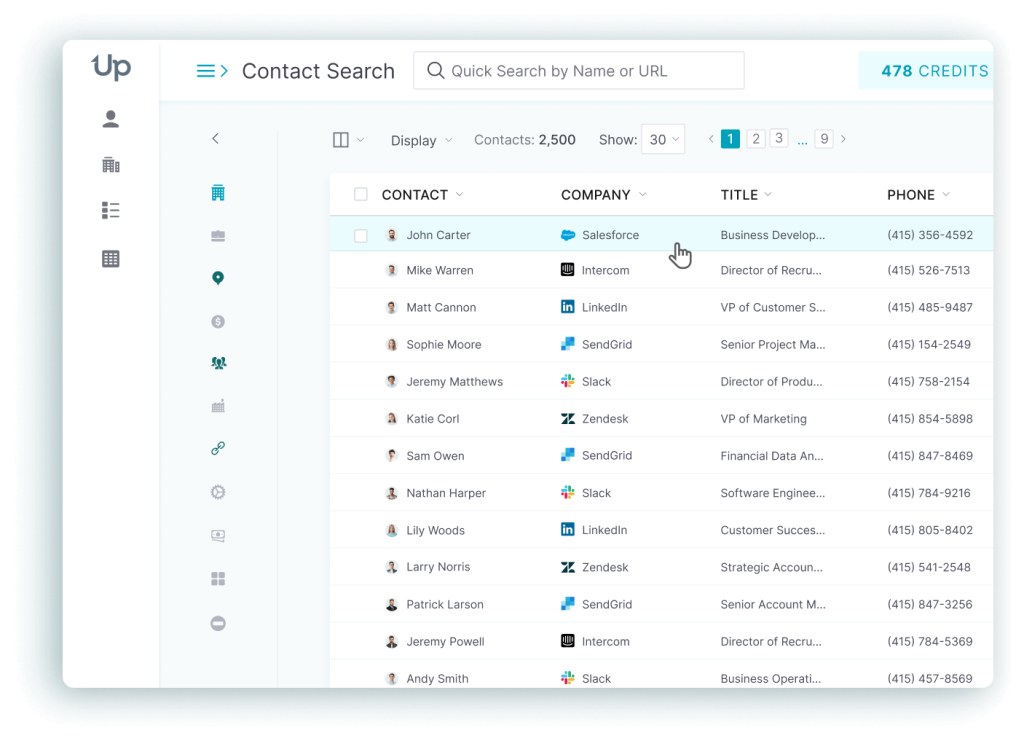
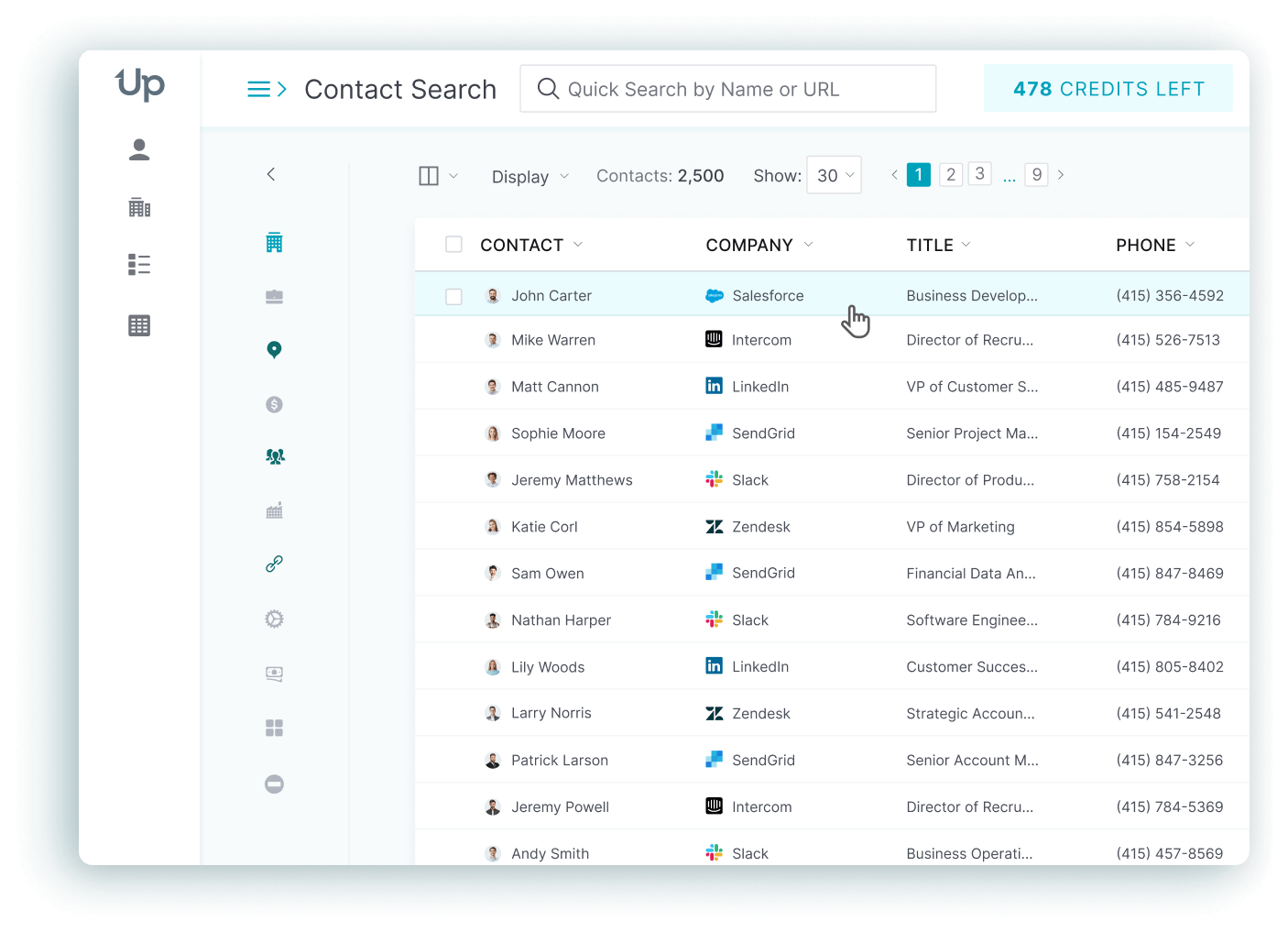
UpLead is a different kind of tool: a searchable B2B contact database you build lists from with filters, rather than a LinkedIn-profile lookup extension or a quote-only enterprise deal, so it is worth a line in this table even though it is not the direct alternative to either tool.
| Cognism | Lusha | UpLead | |
|---|---|---|---|
| Starting paid price | Not published; sales-assisted quote (G2 lists a “Basic” plan from $1,000 per feature, per month, as provided by Cognism) | $49.90/mo, or $37.45/mo billed annually (Starter) | $99/mo, or $74/mo billed annually (Essentials) |
| Free plan | No recurring free plan; demo and sales conversation only | Yes, 40 credits/month | 7-day trial, 5 credits (not a recurring free plan) |
| Data compliance | GDPR and CCPA adherent, ISO 27001, SOC 2 Type II, Diamond Data® manually verified mobiles | GDPR and UK GDPR (third-party audited), ISO 27001, ISO 27018, ISO 27701, SOC 2 Type II, TRUSTe Enterprise Privacy Seal | n/a |
| G2 rating | 4.5/5 (1,385 reviews) | 4.3/5 (1,688 reviews) | n/a |
| Best for | Europe-heavy outbound teams that want phone-verified mobiles and accept a sales-led quote | Self-serve teams that want transparent credit pricing and AI-tool connectors | Teams that want to build lists from search filters instead of one profile at a time |
What Cognism and Lusha actually do
Cognism describes itself as “the leading provider of European B2B data and sales intelligence,” built to help sales teams find and engage decision-makers faster. Its core asset is Diamond Data®, a pool of mobile numbers verified through manual research rather than automated matching alone. Cognism layers that with intent signals: hiring activity, job changes, funding announcements among them. It plugs into CRMs and sales engagement tools such as HubSpot and Microsoft Dynamics 365, and is sold through a sales conversation rather than a self-checkout page.
Lusha runs on two layers that work together. Lusha Search gives on-demand verified contact and company data: direct dials with over 90% accuracy plus business emails verified 95-98% across regions, alongside firmographics, technographics, buying signals (7 million new signals processed every week). Lusha Deep Intel uses a team’s ICP and CRM history to prioritize accounts. Both layers are reachable through the Lusha Workspace and a Chrome extension. An API plus MCP/ChatGPT/Claude connectors sit on top. Lusha reports more than 280,000 revenue teams as customers; Google and Zendesk are among them. Its database spans over 300 million business contacts across North America/EMEA/APAC/LATAM combined.
Cognism pricing
Cognism does not publish prices on its own site. Its pricing page states plainly: “Cognism pricing is tailored based on the product you need, your team setup and how you plan to use the platform.” Sales Prospecting is sold in Standard and Pro packages. CRM Enrichment and Data-as-a-Service are priced separately by subscription structure and usage; every figure is set during a sales conversation rather than shown upfront.
The one public data point comes from G2’s own pricing listing, submitted by Cognism, which shows a “Basic” plan starting at $1,000 per feature, per month, a per-feature structure rather than a flat per-seat rate. That absence of self-serve pricing is also a recurring theme in Cognism’s own G2 reviews: one reviewer who rated the product 5/5 overall still noted that “the pricing plans for smaller companies or startups can be relatively high,” and suggested more flexible payment options would make the platform more accessible to a broader range of buyers.
Lusha pricing
Lusha publishes its pricing in full, with a credit-based structure across five tiers (figures from Lusha’s own pricing page):
Credits are not spent evenly across record types. One G2 reviewer flagged this directly: revealing a phone number can cost up to 5 credits compared with 1 credit for an email address, which makes building large cold-calling lists more expensive per contact than building an email list on the same plan.
Data compliance and GDPR
The two tools position themselves differently on compliance, and that split is the main reason a buyer would pick one over the other for an EU-facing team.
On its compliance page, Cognism states that its “data collection and processing practices adhere to GDPR and CCPA guidelines.” It backs that with ISO 27001 and SOC 2 Type II certification, and says it notifies business contacts of their inclusion in its database within GDPR timeframes, and regularly scrubs its data against 16 major Do Not Call and TPS (Telephone Preference Service) lists, a detail aimed specifically at outbound phone prospecting in markets with strict cold-calling rules. Its Diamond Data® mobile numbers go through additional manual verification on top of that compliance layer, which is the main argument for picking Cognism when a team’s list is EU-heavy and phone-first.
Lusha’s compliance page states it was independently audited for GDPR and UK GDPR compliance. It holds ISO 27001/27018/27701 certification plus SOC 2 Type II and TrustArc’s TRUSTe Enterprise Privacy Seal. Lusha describes itself as the first B2B sales intelligence platform to hold accredited ISO 27701 certification, a standard specifically for privacy information management rather than general information security. Lusha’s page is also more explicit about disclosure: it names what data it collects, why it collects that data, plus how the data is stored.
In practice, both vendors are GDPR compliant on paper with real third-party certifications behind the claim, not just a badge. Cognism’s angle is built around its London headquarters and DNC-list scrubbing for phone outreach; Lusha’s angle is a broader certification stack (three separate ISO standards plus a dedicated privacy-management certification) that is not specific to any one region. Neither page publishes an independent compliance audit report for a buyer to read directly, so a procurement team that needs to verify a specific claim should request the underlying certificate or audit letter from the vendor rather than relying on the marketing page alone.
Features compared
Both tools overlap on basic contact lookup but diverge on five concrete points: phone verification method, self-serve access, AI connectors, intent signals, and regional focus.
Cognism pros and cons
Lusha pros and cons
Which should you choose: Cognism or Lusha?
Frequently asked questions
Lusha is the only one of the two with a published price: its paid tiers start at $49.90 a month ($37.45 a month billed annually) for the Starter plan. Cognism does not publish pricing at all; the only public figure is a “Basic” plan listed on G2, submitted by Cognism, starting at $1,000 per feature per month, which is a different pricing structure entirely. A direct dollar-for-dollar comparison is not possible without requesting a Cognism quote.
A genuine recurring free plan exists on Lusha’s side: 40 credits a month, no credit card required, according to its own pricing page. Cognism does not offer a self-serve free plan; its only no-cost option is a demo or interactive product tour, not an account you can use for ongoing prospecting.
Yes, according to Cognism’s own compliance page, which states its data collection and processing adhere to GDPR and CCPA guidelines, backed by ISO 27001 and SOC 2 Type II certification.
Yes, according to Lusha’s own compliance page, which states the GDPR and UK GDPR claim was independently third-party audited rather than self-certified, backed by ISO 27001/27018/27701 and SOC 2 Type II certification.
Cognism is a sales-led platform built around manually verified European mobile numbers and sold through a custom quote, with no public pricing. Lusha is a self-serve platform with published credit pricing starting from a free plan, a larger reported contact database (300 million-plus contacts), and built-in connectors for AI tools such as ChatGPT and Claude.
Yes. Lusha’s free plan is available without entering a credit card, based on its own pricing page. Cognism does not offer an equivalent self-serve signup; accessing the platform at any tier starts with a sales conversation.
A 4.3/5 rating across 1,688 G2 reviews is a large enough sample to treat Lusha as a reliable signal rather than a handful of outlier scores. Reviewers do flag thinner, less consistent phone-number coverage for smaller or niche-market companies outside Lusha’s core segments, so reliability varies by how niche the target company list is, not uniformly across every search.