

Sales engagement platforms coordinate every outbound touch a seller makes inside repeatable sequences, then log the result back to the CRM automatically. This guide explains what the category covers and how it differs from a CRM and from adjacent tools like sales enablement software and sales intelligence platforms such as UpLead. It then compares nine of today’s market leaders on price and channel support, plus the one caveat buyers should know before they sign.
What is a sales engagement platform?
A sales engagement platform is software that coordinates a seller’s outreach across channels like email and phone, plus SMS, inside repeatable sequences, then automatically logs that activity back to the CRM. The category sits between two other layers. On one side is the CRM. It stores the account record and tracks deal stages. On the other are the individual channel tools a rep would otherwise operate separately, like an email client or a dialer.
Most sales engagement platforms share four building blocks. Multi-channel sequencing, also called cadences, schedules the next touch automatically. Activity capture writes every call and email reply back to the CRM without manual entry. Task prioritization tells a rep who to contact next. Reporting shows which sequences and messages produce replies and meetings. Outreach and Salesloft build their whole product around sequencing, while Salesforce Sales Engagement and HubSpot Sales Hub instead add the same mechanics directly inside a CRM teams already use.
Sales engagement platform vs. CRM vs. sales enablement vs. sales intelligence
Four adjacent software categories get confused with each other, and the confusion costs buyers real money when they purchase the wrong one. A CRM is the system of record. It stores accounts and contacts and tracks deal stages, and nothing happens automatically unless something else acts on that data. A sales engagement platform is the execution layer: it decides what a rep does next, then sends or schedules the touch and writes the result back to the CRM. Sales enablement software is the content and training layer. It manages playbooks and coaching material, teaching reps how to sell well rather than automating the act of reaching out. Sales intelligence software is the data and enrichment layer. It finds and verifies the contact details a seller or a sequence needs before any outreach can start.
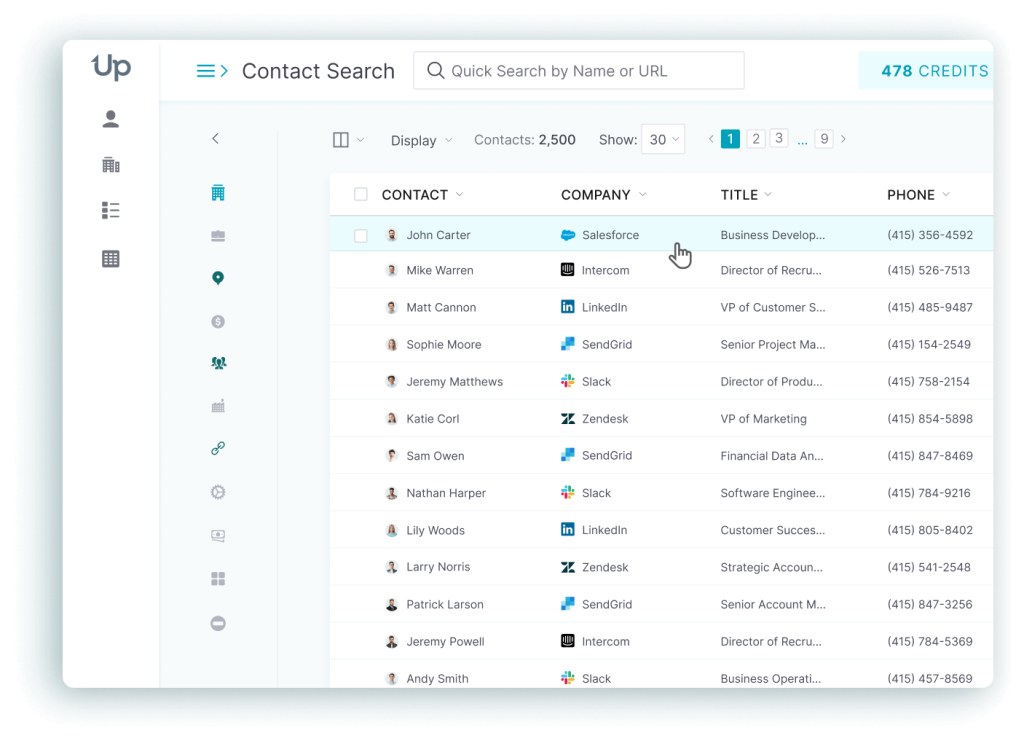
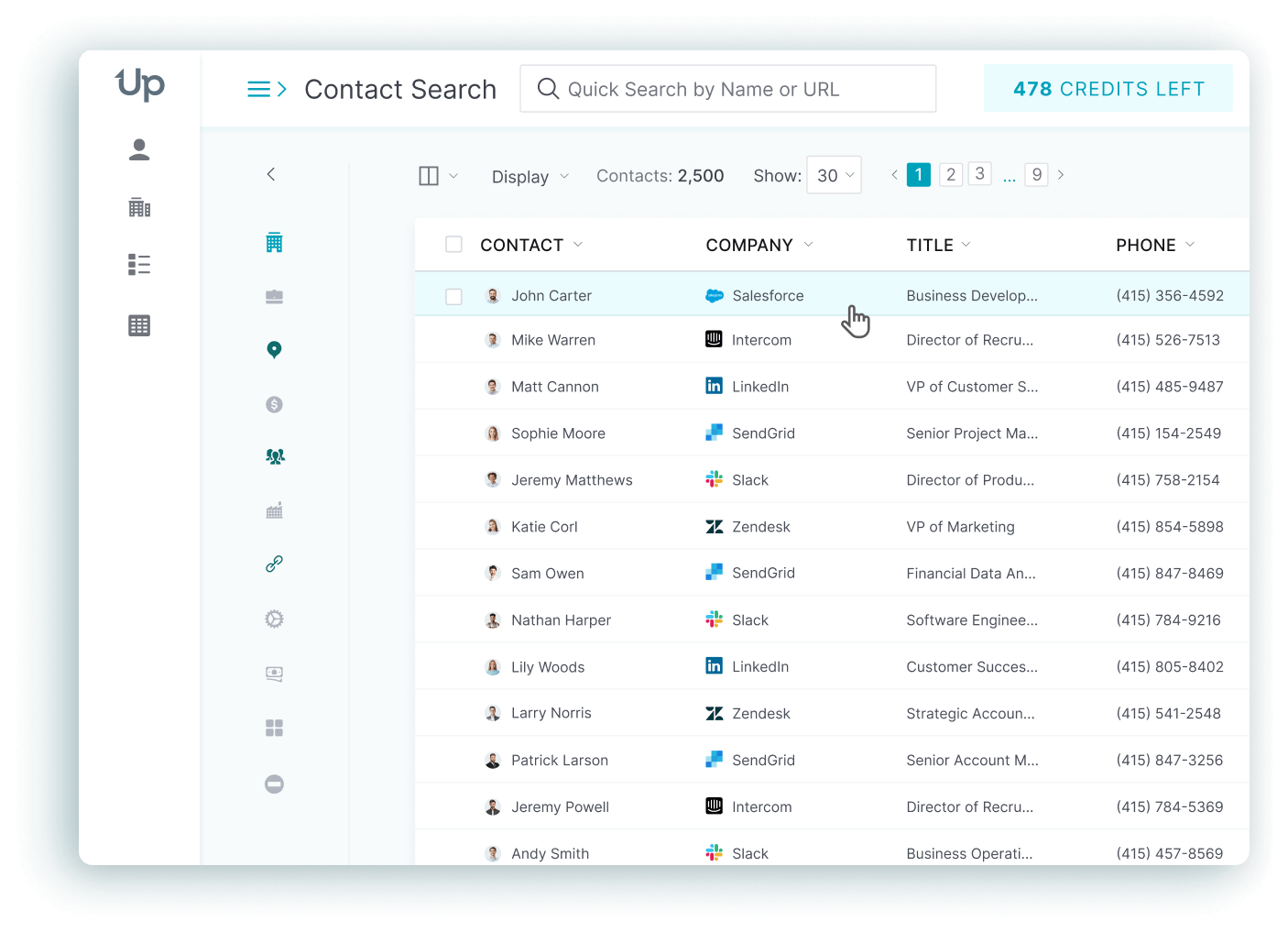
UpLead, unlike every platform compared below, sits in the sales intelligence layer. Its database verifies more than 200 million B2B contacts in real time against a stated 95%-plus accuracy guarantee, and a seller can export that data into a CRM or into one of the sales engagement platforms compared below; it doesn’t run sequences or log call activity itself. A team that already owns a verified contact list still needs one of the platforms below to actually execute and track the outreach.
Sales engagement platforms compared
Published pricing is rare in this category; four of the nine platforms below only sell through a quote-based sales process. The table lists the channel focus, the lowest publicly confirmed entry price, and the one caveat worth knowing before a demo call.
| Platform | Best for | Primary channels | Entry price | Buying caveat |
|---|---|---|---|---|
| Outreach | Large, process-governed sales teams | Email, voice, SMS, calendar | Quote-based; seat + AI-credit pricing | No published price; cost scales with AI-credit usage |
| Salesloft | Enterprise coaching and revenue orchestration | Email, calls, social steps, meetings | Quote-based; no self-serve pricing page | Must talk to sales even to see a price range |
| HubSpot Sales Hub | CRM and engagement layer in one product | Email, calling, meetings, sequences | $90/seat/mo (annual), Professional | $1,500 one-time onboarding fee; needs Professional+ |
| Salesforce Sales Engagement | Salesforce-native teams | Email, calls, meetings, cadences | $50/user/mo add-on (annual) | Needs a compatible Sales Cloud edition underneath |
| Apollo | Data and engagement in one subscription | Email, calls, social tasks | Free tier; $49/seat/mo (annual) Basic | Credit limits apply even on paid tiers |
| ZoomInfo (Engage) | Activating ZoomInfo’s own contact data | Email, calls, Salesflows | Quote-based | Built to complement, not replace, Outreach/Salesloft |
| Gong (Engage) | AI conversation intelligence driving engagement | Email, calls, meetings | Quote-based; per-user + platform fee | Price depends on total licensed users company-wide |
| Instantly | Scaled cold-email operations | Email first; CRM add-on for calls/SMS | $47/mo, Growth plan | Caps at 5,000 emails and 1,000 contacts/month |
| lemlist | Personalized email and LinkedIn outreach | Email, LinkedIn, SMS, WhatsApp add-on | $55/mo (annual), Email plan | LinkedIn/SMS need the $87/mo Multichannel plan |
Source: each vendor’s own pricing page, checked November 2026.
The best sales engagement platforms for 2026
Outreach
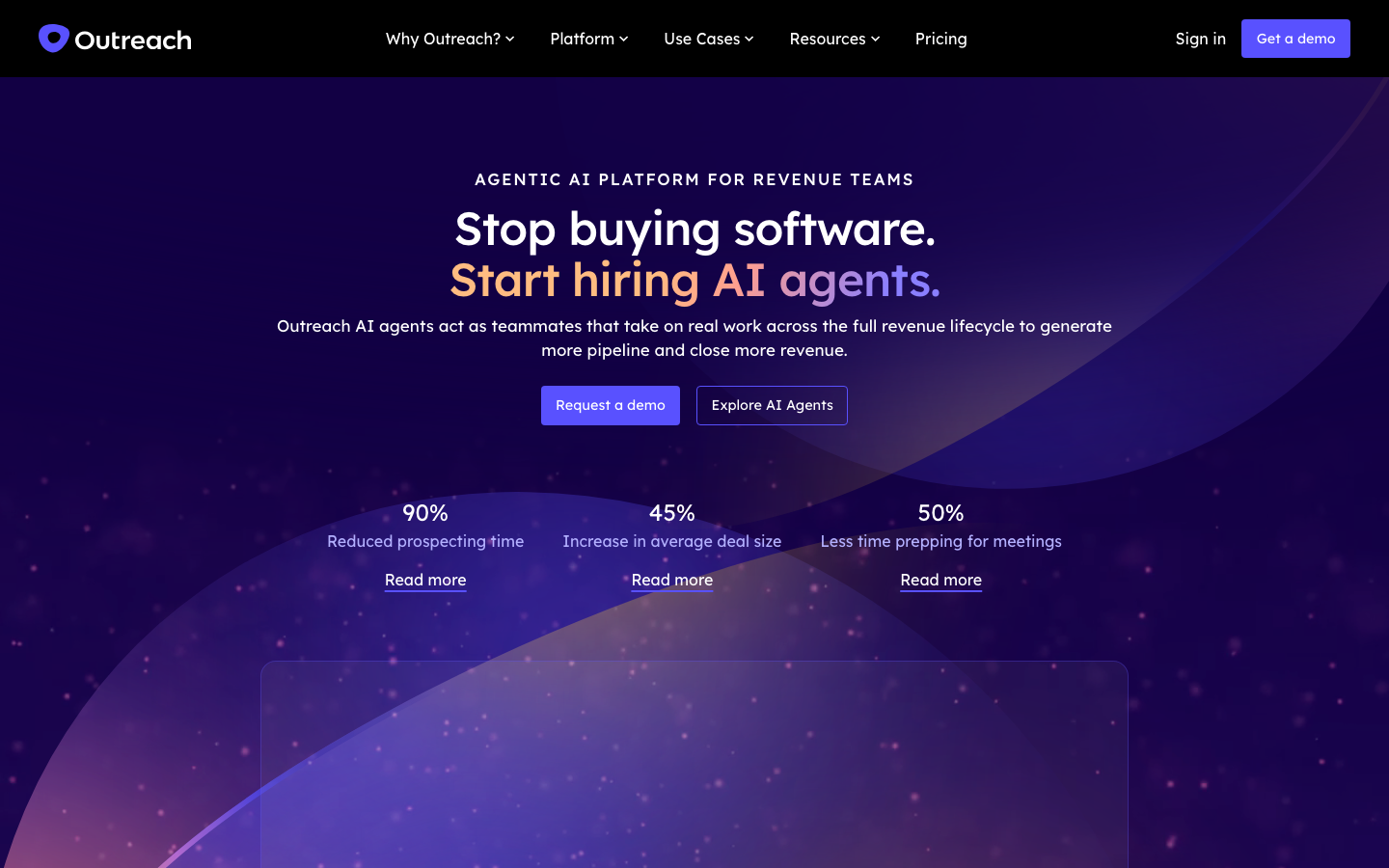
Outreach is best for large sales organizations that need governed, enterprise-wide sequencing rather than a lightweight self-serve tool, with heavy automation and manager visibility built in. The platform runs sequences and calendar scheduling across multiple outreach channels from one workspace. Its current packaging bundles seat access with a consumption-based AI-credit model. Research and personalization draw on that credit pool. So do conversation analysis and forecasting, which is why cost scales with usage rather than seats alone.
No seat price is published. Outreach’s own pricing page directs every buyer to request a custom quote and pick from four packages: Essentials, Core, Amplify Plus, or Amplify Pro. Each one grants a different AI-credit allowance, from 10,000 up to 100,000 credits, rather than a flat seat price.
Here is the catch: a buyer can’t estimate total cost from the website alone. Both seat count and projected AI-credit usage affect price, so budget planning is harder here than on a flat per-seat plan.
Salesloft
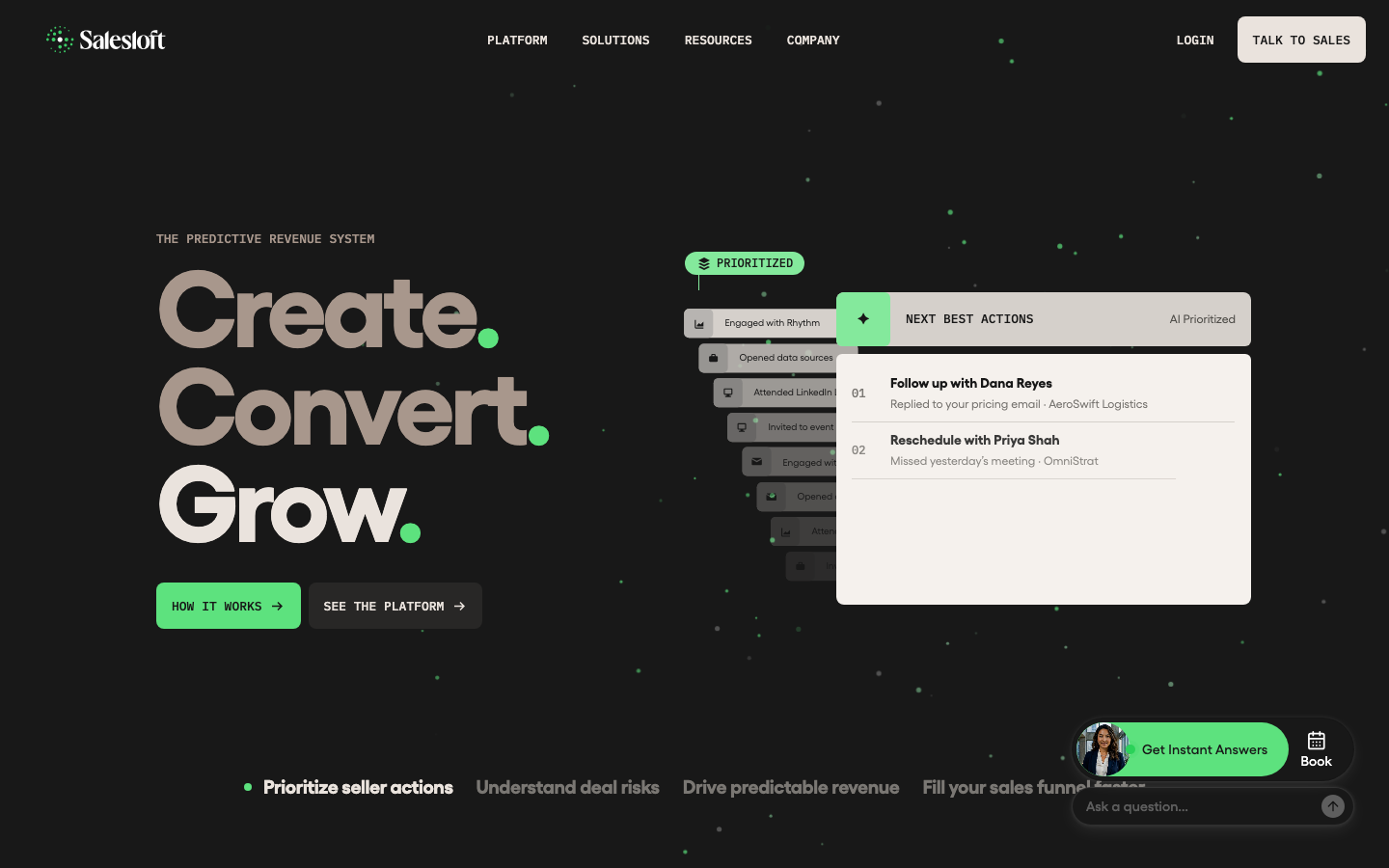
Salesloft is best for enterprise teams that want cadences and conversation intelligence unified with coaching in one revenue platform. Its product spans call and email tracking plus deal management and forecasting, with AI-assisted coaching tools layered on top to standardize how an entire revenue team executes outreach.
Salesloft publishes no self-serve pricing information at all, unlike most of the platforms below; its pricing page routes directly to a “talk to sales” form. There is no free tier and no published starting price.
Buyers can’t see even a price range before talking to a sales rep. That’s a heavier evaluation commitment than any other platform in this comparison asks for.
HubSpot Sales Hub
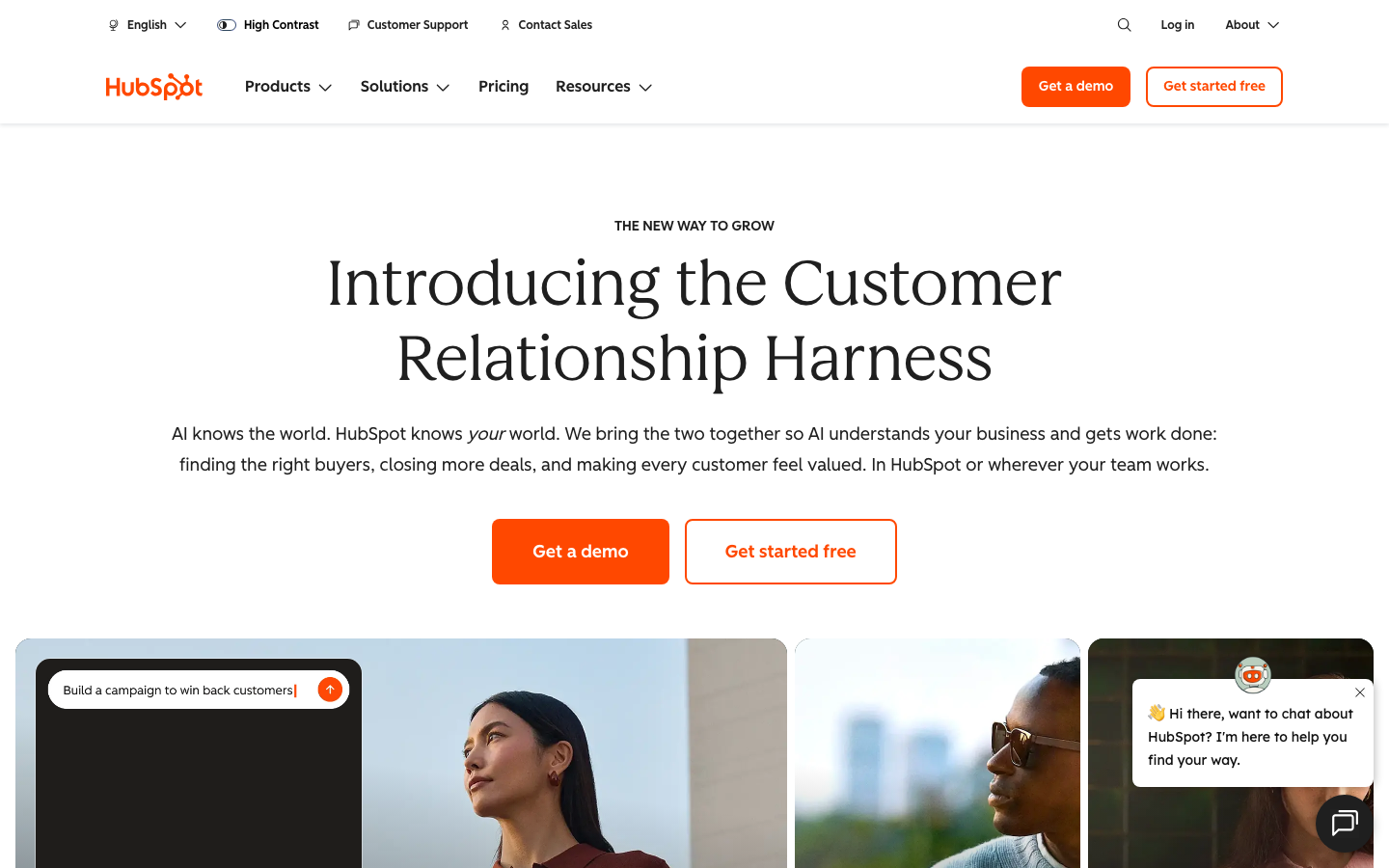
HubSpot Sales Hub is best for teams that want the CRM and the sales engagement layer to be the same product. Its free tier supports up to two users with basic tools. Sequencing and deeper automation only start on the Professional tier, along with an AI credit allowance.
Professional pricing is $90/seat/month billed annually (or $100/seat/month paid monthly), including 3,000 HubSpot Credits that power AI features such as the Prospecting Agent. A one-time $1,500 Professional Onboarding fee applies on top of the seat price. Enterprise starts at $150/seat/month with a one-time $3,500 onboarding fee.
One detail is easy to miss: the advertised seat price leaves out the mandatory one-time onboarding fee. Sequencing itself is also absent from the free and Starter tiers.
Salesforce Sales Engagement
Salesforce Sales Engagement is best for teams already standardized on Salesforce Sales Cloud. It adds cadences, Einstein Activity Capture (automatic email and calendar logging), and a Buyer Assistant tool directly inside the CRM a Salesforce-native team already uses.
Salesforce’s own pricing page lists Sales Engagement at $50 USD per user per month, billed annually, as an add-on; some Sales Cloud editions already include it.
Sales Engagement is an add-on, not a standalone product. A buyer also needs a compatible Sales Cloud edition underneath it, and that adds to total cost.
Apollo
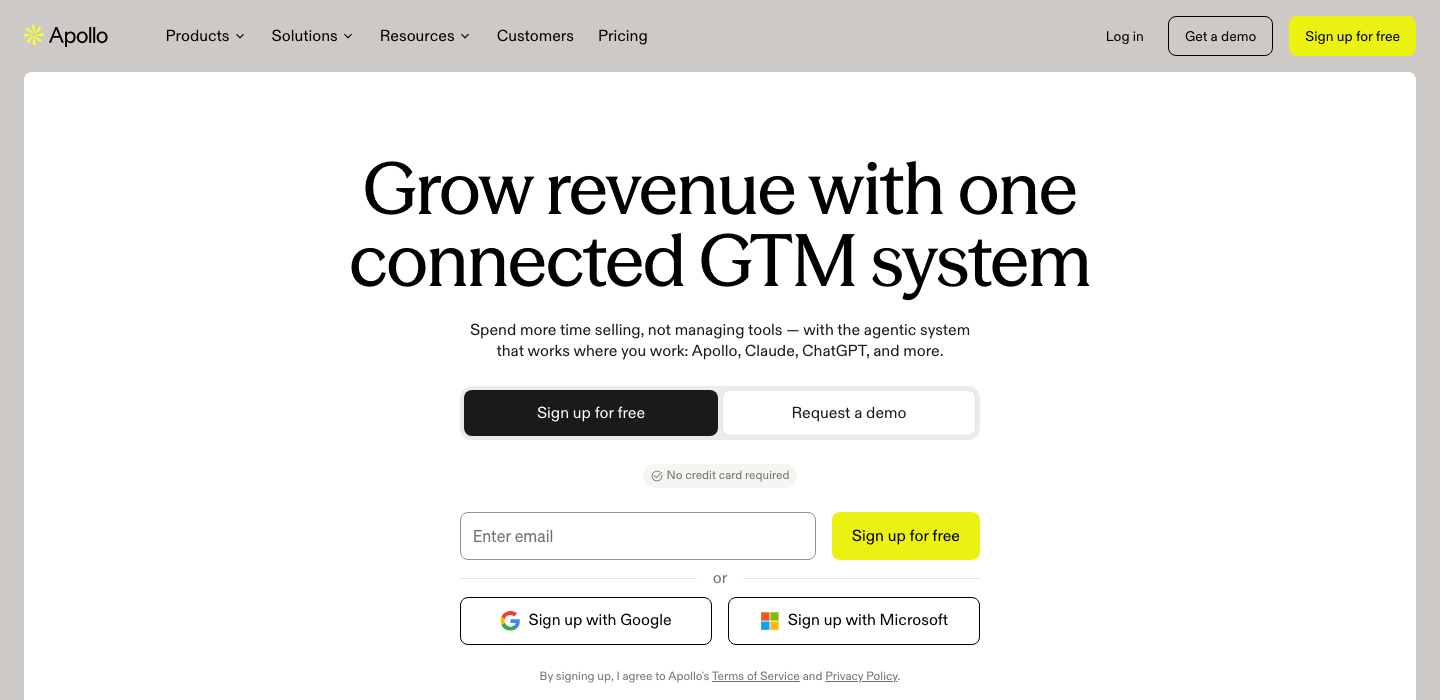
Apollo is best for teams that want B2B contact data and self-serve sales engagement in one subscription rather than buying a data platform and an engagement platform separately. Apollo’s platform combines a 240-million-contact database with sequencing and social-task automation, plus calling built in.
Apollo publishes a Free tier ($0, 900 credits per seat per year) and a Basic tier at $49 per seat per month billed annually (30,000 credits per seat per year). Higher tiers add deliverability tooling and waterfall enrichment, with a dialer included.
Credits govern how much of the platform’s data and AI features a seat can actually use each year. For a data-heavy workflow, the advertised seat price alone understates real cost.
ZoomInfo (Engage workflows)
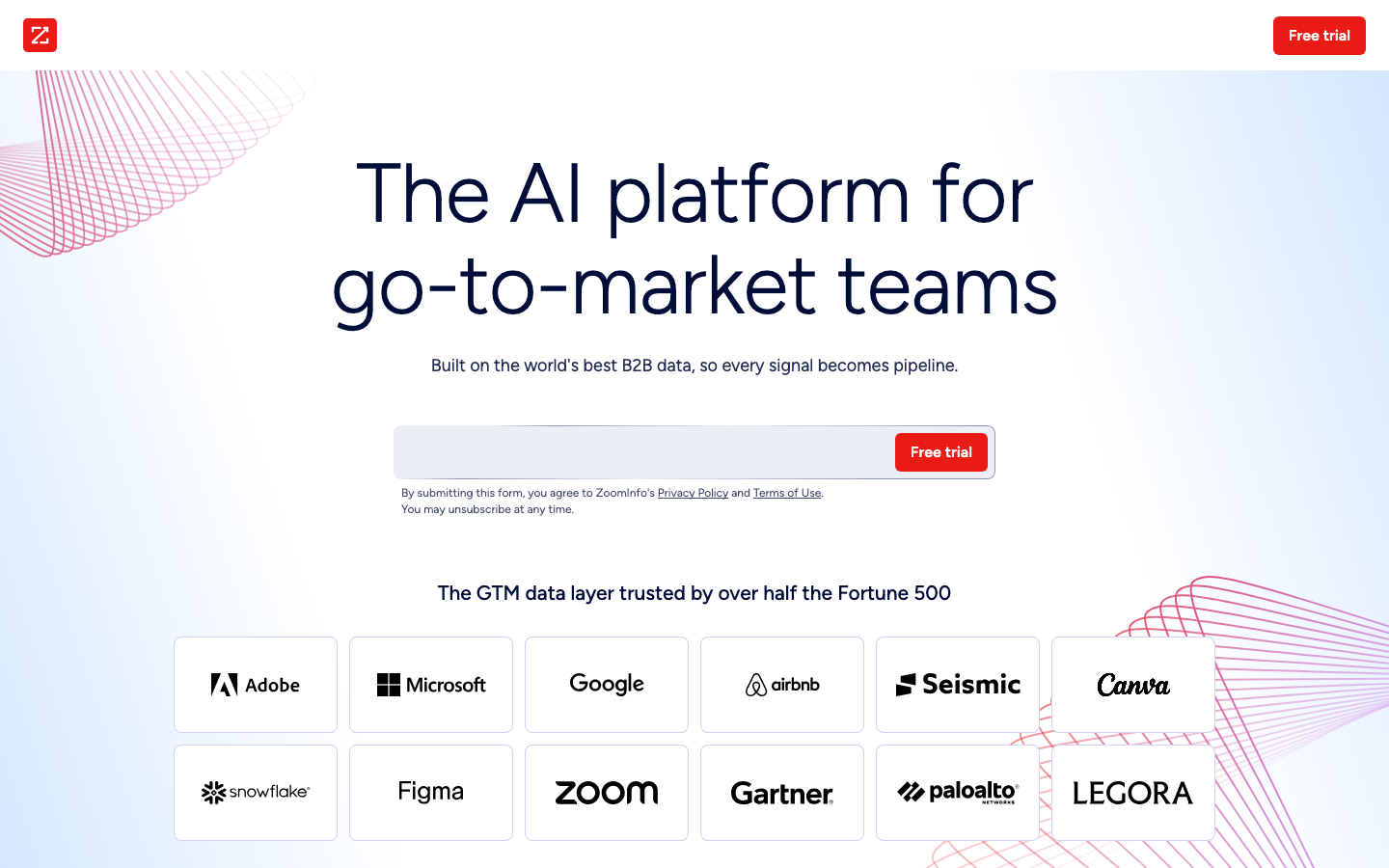
ZoomInfo is best for teams that already buy ZoomInfo’s contact and intent data and want to activate it without exporting to a separate platform. Its Engage workflows sit on top of ZoomInfo’s data product rather than existing as an independent sales engagement platform.
ZoomInfo’s pricing page doesn’t publish seat prices for any tier; every plan routes to a “Get Pricing” request form. ZoomInfo carries a 4.5-out-of-5 rating across more than 12,800 G2 reviews.
ZoomInfo’s own Copilot Advanced plan description explicitly supports exporting contacts “to Outreach or Salesloft.” That signals ZoomInfo positions Engage as a complement to those platforms for some buyers, not a full replacement.
Gong (Engage)
Gong is best for revenue teams that want AI-driven conversation intelligence to actively drive engagement decisions, not just automate sequences. Gong Engage uses signals captured from recorded calls and emails, plus meeting data, to personalize outreach and automate follow-ups. It sits alongside two separate Gong products: Enable handles coaching, and Forecast handles pipeline prediction.
Gong prices per user with an additional platform fee based on total supported users; no flat seat price is published. Gong reports a 4.8 rating on both G2 and Gartner Peer Insights and a 9.2 score on TrustRadius.
Pricing depends on total licensed users company-wide, not just engagement-module seats. That makes cost harder to estimate from the website than on a flat per-seat plan.
Instantly
Instantly is best for teams running scaled cold-email operations who need deliverability tooling, like warmup and inbox rotation, more than multichannel breadth. The platform centers on email sending and deliverability. Calling and SMS arrive only on higher tiers, alongside a built-in CRM.
Instantly’s Growth plan is $47/month. It covers unlimited email accounts and warmup, plus a cap of 1,000 uploaded contacts and 5,000 emails per month. Hypergrowth moves to $107/month (25,000 contacts, 125,000 emails). Light Speed tops out at $358/month (100,000 contacts, 500,000 emails).
The entry-level Growth plan’s contact and email caps, 1,000 contacts and 5,000 emails monthly, are easy to outgrow on anything beyond a small pilot campaign.
lemlist
lemlist is best for teams that want personalized multichannel outreach across email and LinkedIn, without signing a large enterprise contract. Its Email plan covers unlimited users and 50,000 emails per month. The Multichannel plan layers on LinkedIn automation plus SMS, with a built-in dialer included. A WhatsApp add-on is also available on that tier.
The Email plan is $55/month billed annually ($69 billed monthly). Multichannel is $87/month billed annually ($109 billed monthly). An Enterprise tier is quote-based and adds SSO/SAML and a dedicated account manager.
LinkedIn and SMS automation are the features that distinguish lemlist from a pure email tool, and neither is included on the entry-level Email plan.
Key features to look for in a sales engagement platform
How to choose a sales engagement platform
Three things, without question, decide the right platform: which channel carries most of a team’s pipeline, what CRM is already in place, and how much budget transparency the buying process allows.
How much does a sales engagement platform cost?
Published entry prices in this category run from $47 a month at Instantly to $90 a seat a month at HubSpot Sales Hub Professional. Four of the nine platforms compared here (Outreach, Salesloft, ZoomInfo, Gong) don’t publish a seat price at all and require a sales conversation before quoting one. Salesforce Sales Engagement is the one platform here with a single, simple published number: $50 per user per month, billed annually, as a Sales Cloud add-on.
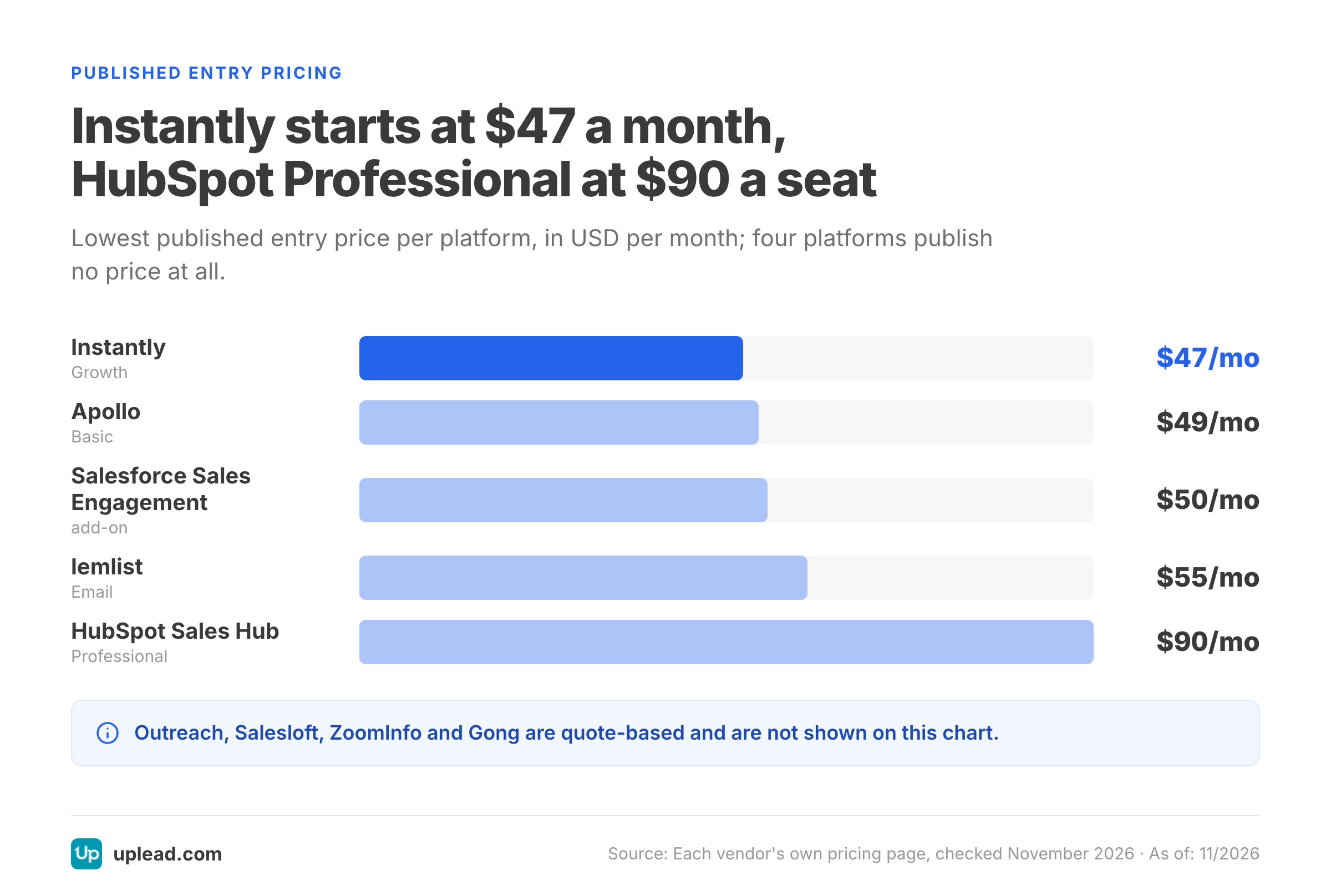
Three cost drivers sit beyond the base seat price. First, a required underlying CRM license: Salesforce Sales Engagement needs a compatible Sales Cloud edition, and HubSpot’s sequencing needs Professional or higher. Second, one-time onboarding fees, which HubSpot charges at $1,500 for Professional and $3,500 for Enterprise. Third, usage-based consumption: Outreach’s AI credits, Apollo’s annual credit allowance, or Instantly’s monthly email and contact caps, depending on the vendor. A buyer who compares two platforms on seat price alone, without checking these three factors, will underestimate total first-year cost.
Frequently asked questions
No, a sales engagement platform is not, outright, a replacement for a CRM, because it depends on the CRM as the underlying system of record for accounts and deals. Salesforce Sales Engagement and HubSpot Sales Hub, two platforms in this comparison, are sold as modules inside a CRM for exactly that reason: the two systems are meant to work together, not substitute for each other.
It depends on how deep the CRM’s built-in sequencing goes. A CRM’s native sequence feature can be enough for a small team running simple, single-channel outreach, yet it rarely stays enough once outreach spans several channels. Teams running true multichannel cadences need advanced branching and full activity capture, with dedicated deliverability tooling on top. Once they do, they typically outgrow that built-in sequencing and move to a dedicated platform.
Sales engagement software automates and tracks the act of reaching out to prospects, whereas sales enablement software manages the content and coaching material that helps reps sell more effectively. The two are complementary. Enablement software prepares a rep with the right message and skills; engagement software executes and tracks the outreach itself.
Instantly has the lowest published entry price in this comparison, at $47 a month on its Growth plan, though that plan caps at 5,000 emails and 1,000 uploaded contacts monthly. Among platforms that charge per seat rather than a flat team price, Apollo’s Basic tier at $49 per seat per month billed annually is, flat-out, the lowest published figure.
Yes, a sales engagement platform can be worth it for a small team, provided the team picks a self-serve tier rather than an enterprise one. Apollo’s Free plan and Instantly’s $47-a-month Growth plan, both compared above, are built for exactly that budget and seat count, while enterprise-oriented platforms like Outreach and Salesloft assume a dedicated RevOps function a small team usually does not have yet.
Implementation time depends mainly on whether the platform is self-serve or sales-led. Self-serve platforms with a published price and a free trial, such as Apollo or Instantly, let a small team start sending sequences within the trial period itself. Quote-based enterprise platforms, including Outreach, Salesloft, and ZoomInfo, add a sales and procurement cycle before onboarding even starts, so budget weeks rather than days for those.
No, UpLead is a sales intelligence and contact-data platform, not a sales engagement platform, and it doesn’t run sequences or log call activity. In practice, a team exports its UpLead-verified contact list straight into whichever platform from this comparison it already runs, since UpLead’s own job ends at delivering a clean, accurate list.