


If you’re an attorney, one number should keep you up at night: 75% of small and solo law firms rate acquiring new clients as a moderate or significant challenge. That’s not just a statistic. It’s the difference between hitting your revenue goals and wondering where next month’s retainer will come from.
The feast-or-famine cycle is real. One month you’re turning away cases. The next, you’re scrambling to fill your pipeline. Meanwhile, you’re burning hours on marketing tactics that don’t convert and watching 60% of potential clients slip away because your follow-up is too slow.
This guide gives you the solution. We’ll break down the 13 best legal lead generation companies you can use for immediate results, plus 6 proven strategies to build your own sustainable client pipeline. By the end, you’ll know how to take control of your firm’s growth and break the feast-or-famine cycle.
Let’s get started.
What Are Legal Leads?
Legal leads are contact records for individuals or businesses that show intent to hire an attorney. At minimum, a lead includes a name and contact information. High-quality legal leads also include demographic data, case details, and urgency indicators that let you tailor your outreach.
Since legal clients often generate lifetime value through repeat business and referrals, quality leads can be expensive. Multiple tools help you generate legal leads at lower prices, though they often sacrifice data accuracy or exclusivity in exchange for cost savings.
What Are the Different Types of Legal Leads?
Legal leads come in several formats. Each has distinct advantages.
Form-fill leads are generated when potential clients complete a contact form on a website. These leads include basic information like name, phone number, email, and case details. They’re the most common type and cost less than live transfers.
Live call transfers connect you with a prospect who’s seeking legal help right now. These leads convert at higher rates because you speak with the person while their intent is strongest, but they cost more.
Mass tort leads are specialized leads for large-scale litigation like defective products or pharmaceutical cases. These leads can cost $1,300 to $3,000 each because they often represent high-value cases. Providers like Best Case Leads offer signed retainer programs where they handle intake and deliver complete client packages.
What Is the Difference Between Exclusive and Shared Leads?
Exclusive leads are sold to only one law firm. You own the opportunity. This means higher conversion rates because you’re not competing with other attorneys. Exclusive leads cost more, often 2 to 3 times the price of shared leads.
Shared leads are sold to multiple firms, usually 2 to 5 attorneys. They’re cheaper but require faster follow-up. The first firm to respond often wins the case. If you have a strong intake process and can respond within minutes, shared leads can deliver solid ROI.
The 13 Best Legal Lead Generation Companies to Buy Leads in 2026
Here are the best legal lead generation companies you can use for immediate results. Each is a proven legal lead generation company that delivers attorney leads through buying, pay per lead, or marketing models:
UpLead
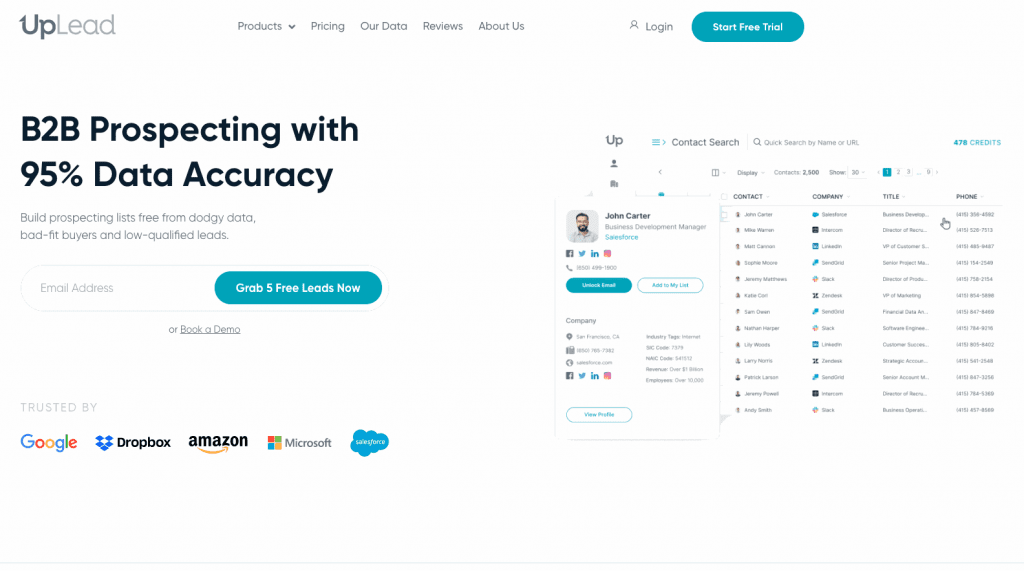
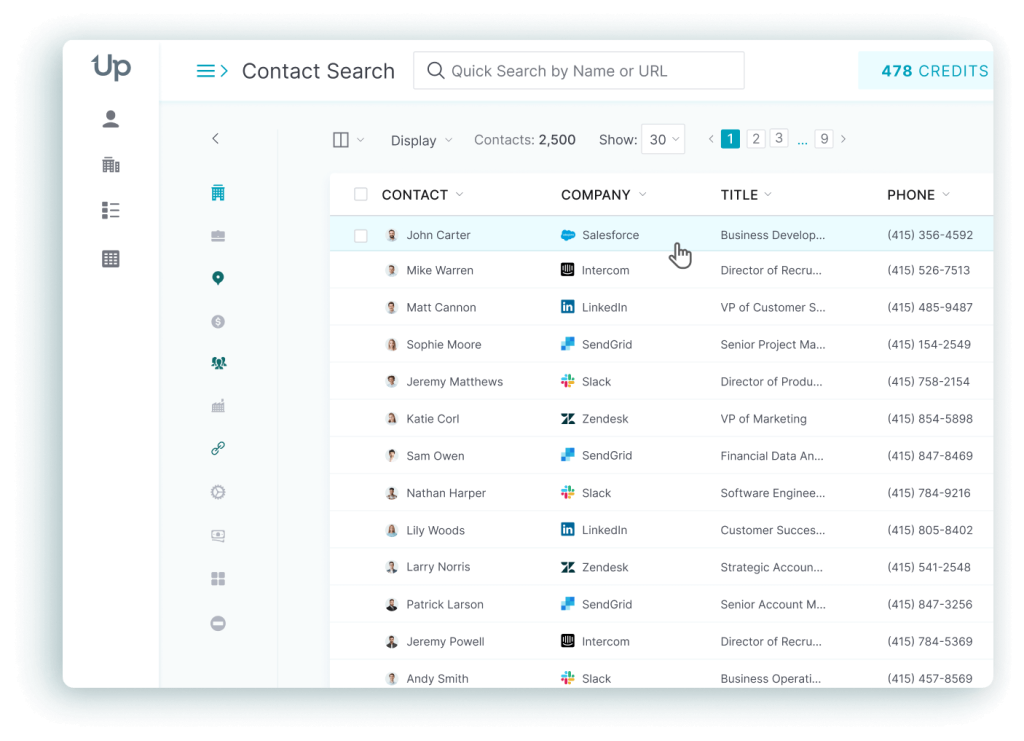
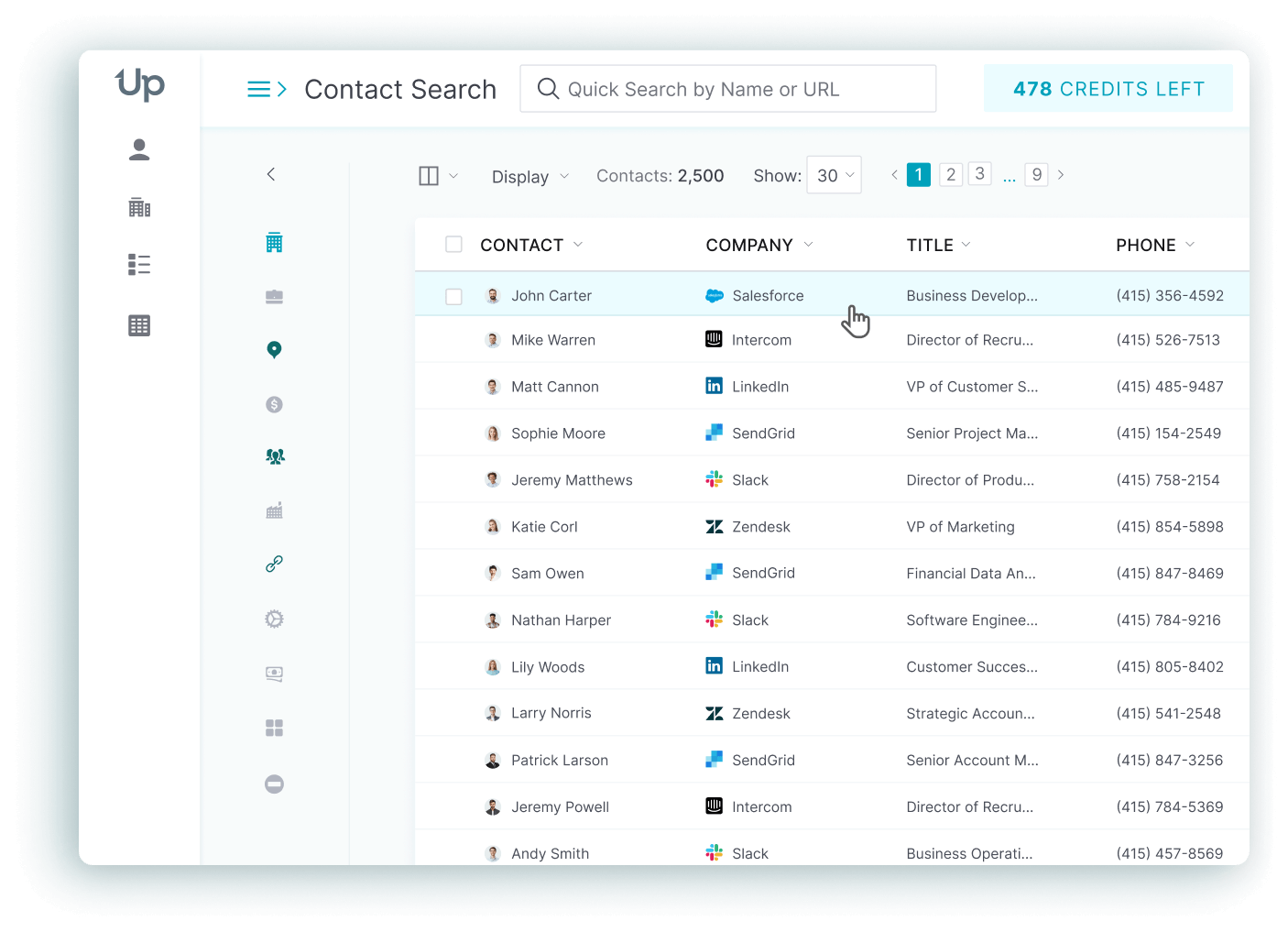
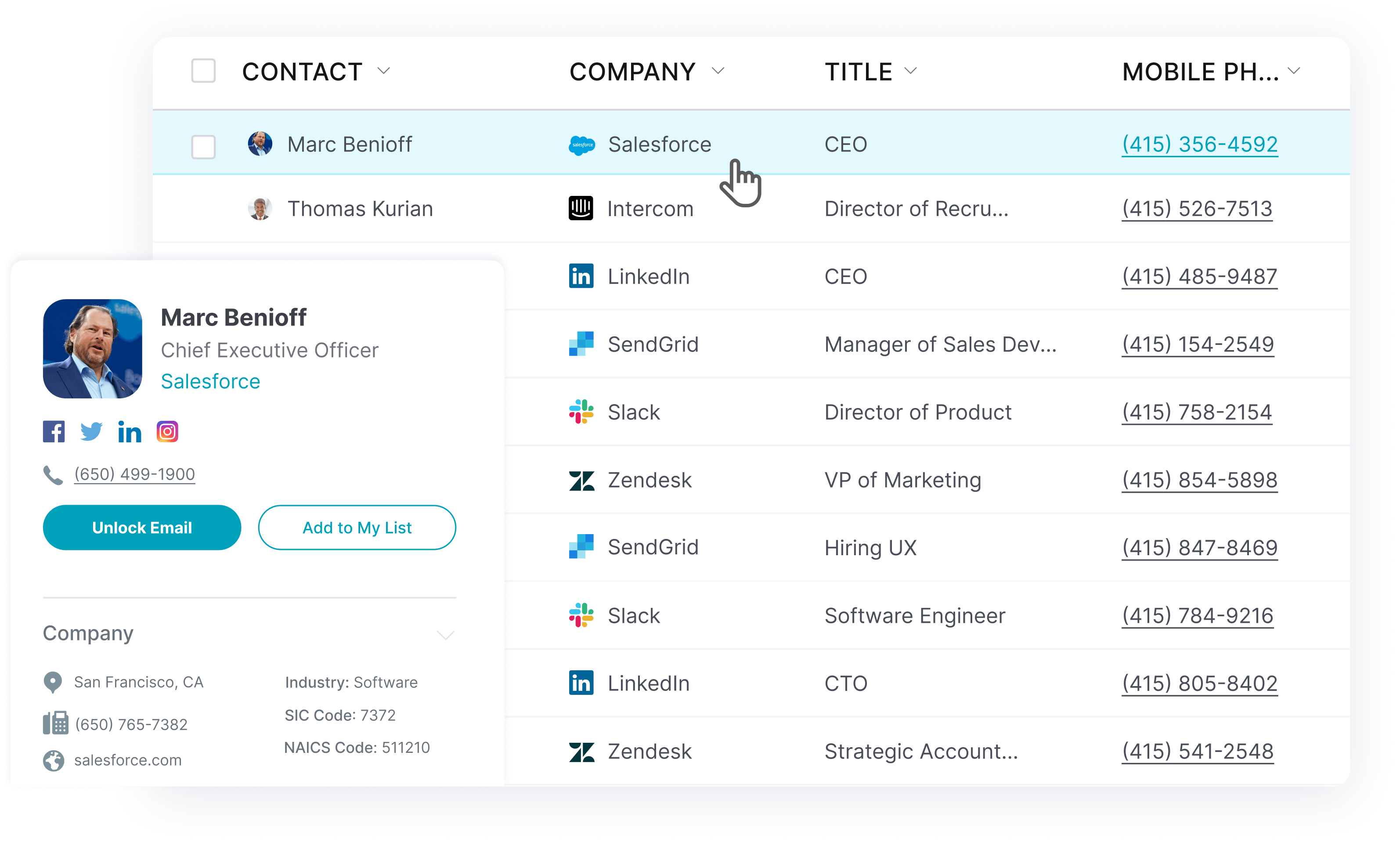
UpLead is a B2B lead generation platform built for attorneys who serve corporate clients. If your practice focuses on corporate law, real estate transactions, intellectual property, or employment law, UpLead gives you access to over 200 million verified B2B contacts and profiles for 16 million companies.
Use UpLead’s 50+ search filters to build laser-targeted lists. For example, a corporate lawyer can filter for all tech startups in Austin that just received Series A funding to offer incorporation or IP services. Filter by company size, job title, location, industry and technologies used. This level of precision is rare in legal lead generation tools.
UpLead verifies all emails in real time before download. It backs this with a 95% accuracy guarantee. You only pay for valid contacts. Pricing starts at $74/month for 170 credits on the annual Essentials plan, $149/month for 400 credits on the Plus plan, and custom pricing for the Professional plan. A 7-day free trial with 5 credits is available.
Already have a list? Use UpLead’s enrichment feature to append 50+ data fields to your existing contacts. This makes segmentation and personalized outreach easier. Or search for Attorney Email Lists here.
Try UpLead today and see if it’s a good fit for you.

4LegalLeads
4LegalLeads operates on a pure pay per lead model with no long term contracts. All leads are exclusive and delivered in real time. You fund an account upfront and only pay when you receive a valid lead.
Cost per lead varies by practice area: Auto Accident Injury ($450-$1,500), Criminal Defense ($125-$300), Bankruptcy ($75), Civil Lawsuit ($20), and Business Law ($30). The platform offers a 5-day return window for invalid or duplicate leads.
This model works well for firms that want flexibility and control over lead volume without being locked into monthly minimums.
Martindale-Nolo
Martindale-Nolo is part of the Martindale-Avvo legal marketing network. It attracts over 25 million consumers monthly. Nolo uses a content-driven strategy and generates leads through high-authority websites like Nolo.com, alllaw.com, and criminaldefenselawyer.com.
Leads are generated when users fill contact forms on content pages. The network covers 55+ practice areas. Estimated costs range from $20-$40 for divorce or estate planning leads to $50-$100 for DUI leads. Leads are sold to a maximum of four firms.
The content-first approach means leads often come from users who have already educated themselves. This can improve conversion rates.
FindLaw
FindLaw is a Thomson Reuters subsidiary. It offers comprehensive digital marketing services. Unlike simple pay per lead providers, FindLaw operates as a full-service agency with bundled monthly packages that range from $250 to $5,000+.
The network includes FindLaw.com, SuperLawyers.com, LawInfo.com, and Abogado.com. FindLaw uses PPC campaigns that direct traffic to custom landing pages. Services require long term contracts.
One concern: clients may not own the website or content after the contract ends. Clarify ownership terms before signing.
Avvo
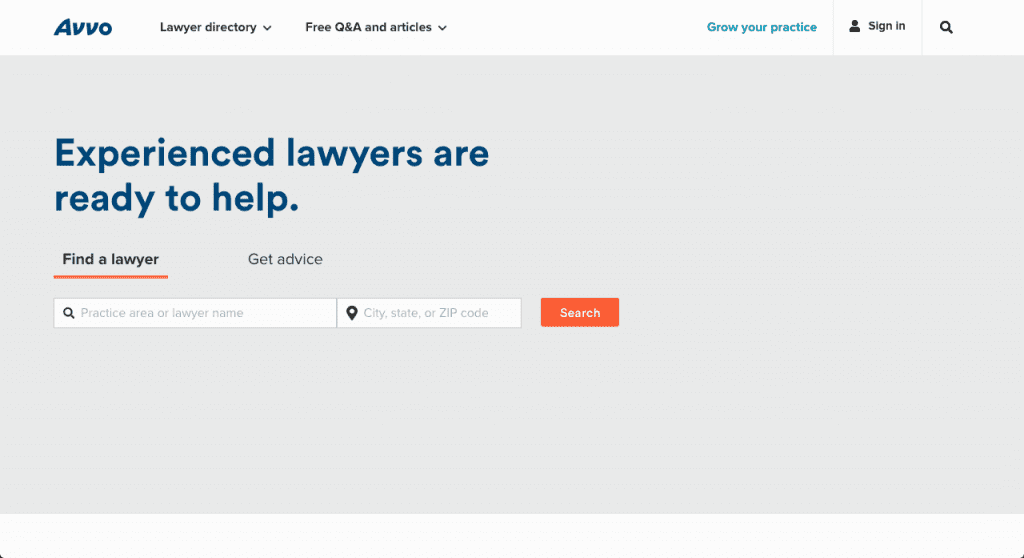
Avvo is a core component of the Martindale-Avvo network. The platform creates basic profiles for almost every licensed attorney in the US. It uses public data from state bar associations.
Avvo offers a free Q&A service where potential clients ask legal questions and attorneys provide answers as a form of free consultation. It also features a lawyer directory, client reviews, peer endorsements and an Avvo Rating system (1.0-10.0 scale).
Attorneys can claim and enhance profiles for free. Paid options include Avvo Premium (starts around $49/month) and Avvo Ads (around $100/month). The Complete Profile Plus package offers maximum exposure across all four network sites.
The platform has faced criticism for its limited rating system and for signing lawyers up without consent. Once added, getting deleted is not an option. These downsides often lead attorneys to look for more open and personalized solutions.
Scorpion
Scorpion is a full-service digital marketing agency with proprietary AI tools. The platform operates on a retainer-based model that starts at $5,000+ monthly.
Scorpion’s AI suite includes Ranking AI (SEO), Advertising AI (PPC), Leads AI (lead tracking), and Scorpion Connect (24/7 AI receptionist). On June 25, 2025, Scorpion announced an exclusive strategic partnership with Clio. This integration allows Scorpion leads to flow into Clio Grow for full-funnel ROI tracking.
This is a premium solution for firms that want a done-for-you marketing system with advanced analytics.
LegalMatch
LegalMatch operates as a subscription-based matching platform. Clients post their cases and attorneys review and decide whether to respond. This creates competition among multiple attorneys for each case.
Membership starts at $455/month with customized pricing based on practice areas and locations. LegalMatch covers wide practice areas like Family Law, Employment, and Criminal Defense. A free guest pass is available to evaluate the service before membership.
The competitive model means conversion rates depend on how fast you respond and the quality of your pitch.
Unbundled Attorney

Unbundled Attorney specializes in leads for unbundled or limited-scope legal representation. The platform focuses on clients who seek a la carte legal services rather than full representation.
The platform operates on a pay per lead basis with no long term contracts or signup fees. Price per exclusive lead ranges from $75 to $195 based on practice area. Primary practice areas include Family Law (divorce, custody), Bankruptcy, Estate Planning, Immigration and Criminal Defense.
Unbundled Attorney pre-educates potential clients on the unbundled model and costs to filter for serious inquiries. However, reviews are mixed about lead quality. Some clients still have difficulty paying for legal services even after pre-education.
Legal Leads Group
Legal Leads Group is an attorney-owned agency. It offers flexible ROI-focused options like month-to-month contracts and pay-per-case fees. The company was founded by retired personal injury lawyers.
The platform is strongest in Personal Injury but also serves Workers’ Compensation, Criminal Defense, Family Law, Estate Planning, Employment Law, Immigration and Lemon Law. Legal Leads Group uses a proprietary Rocket Leads Platform with a 24/7 in-house intake team that can sign retainers on your behalf.
A 30-day free trial is available. The company is a Clio Partner, which simplifies integration with your existing tech stack.
Service Direct
Service Direct is a pay-per-call lead generation marketplace. It has operated since 2006. The platform generates over 2 million phone call leads per month across all service categories in the US.
Service Direct focuses on live phone calls. The platform operates as a competitive marketplace where attorneys set their own Cost Per Lead. The more you pay, the more Service Direct advertises to generate call volume for your firm.
Service Direct offers hyper-local targeting by zip code and no term contracts. You only pay for valid leads. Spam calls and wrong numbers are excluded. For personal injury attorneys, CPL ranges from $75 to $2,200 per valid lead.
This model works well for firms with strong phone intake processes who can convert in-the-moment calls.
Best Case Leads
Best Case Leads was founded in 2015 and specializes in exclusive, real-time leads with focus on Mass Torts. The company serves over 500 law firms across the US and has been recognized on the Inc. 5000 list for six consecutive years.
Best Case Leads offers both Pay-Per-Lead (delivered via text, email, or CRM) and Live Calls models. The platform’s comprehensive signed retainer program handles intake, qualification, and client signing according to your firm’s criteria. It delivers complete client packages at fixed prices.
Best Case Leads also provides qualified claimants for plaintiff mass torts and class actions nationwide. This makes it a strong choice for firms that handle large-scale litigation.
Walker Advertising (Los Defensores)
Walker Advertising has operated since 1984 and provides pre-qualified leads through its flagship brand Los Defensores and 1-800-THE-LAW2. The company has a strong focus on the Spanish-speaking Latino community.
Walker Advertising uses a comprehensive mix of traditional (TV, radio) and digital (paid search, SEO, social media) advertising. Leads are vetted by a 24/7 bilingual in-house contact center before delivery to partner law firms.
The platform offers subscription-based or pay per lead models for exclusive, pre-qualified leads in Personal Injury, Workers’ Compensation, and Employment Law. Los Defensores has four decades of brand recognition in the Hispanic market. This can provide a competitive advantage in certain geographies.
LawRank
LawRank is a full-service digital marketing agency that specializes in the legal sector. Unlike pay per lead providers, LawRank focuses on SEO to generate organic leads as a sustainable alternative.
LawRank specializes in SEO for competitive practice areas like personal injury and criminal defense. Services include on-site optimization, content creation, high-quality link building and local SEO with Google Business Profile management.
The company uses a custom pricing model with project investments that range from $23,000 to over $120,000. LawRank was co-founded by a UCLA School of Law graduate and offers market exclusivity for clients.
This is a long-term investment for firms that want to own their lead generation channel rather than rent it.
How to Choose a Legal Lead Generation Company: A Checklist
Use this checklist to evaluate any legal lead generation company before you sign a contract:
Lead Quality and Verification: Ensure leads are pre-screened, verified, and delivered in real time. Ask what information is collected during intake and how the provider filters out unqualified prospects.
Exclusivity Policy: Understand whether leads are exclusive or shared. Exclusive leads offer higher conversion but cost more. Shared leads require faster follow-up but can deliver solid ROI if you have a strong intake process.
Pricing Structure and ROI: Evaluate pay per lead, subscription, or case-matching models. Calculate your expected ROI based on your average case value and conversion rate. Ask for transparent pricing with no hidden fees.
Lead Return or Credit Policy: Clarify the policy for unqualified, invalid, or duplicate leads. A clear return or credit policy protects your investment.
Ethical Compliance: Verify that the provider adheres to ABA and state bar regulations. Ask how they generate leads and ensure their marketing practices comply with attorney advertising rules.
Customization and Flexibility: Check whether you can customize lead criteria (practice area, location, case value) and adjust lead flow based on your capacity.
Transparency and Reporting: Look for analytics that track lead source, conversion rates, and cost per acquisition. This data helps you optimize your investment.
Customer Support and Reputation: Investigate the level of support provided. Seek testimonials from other attorneys in your practice area. Check reviews on independent platforms.
What Are the Ethical Rules for Buying Legal Leads?
Buying legal leads is ethical and allowed under ABA Model Rules, but you must follow specific guidelines to stay compliant.
ABA Model Rule 7.2 allows lawyers to pay reasonable costs of advertisements or communications. This includes internet-based client leads. However, the lead generator must not state, imply, or create a reasonable impression that it is recommending the lawyer. The lead must be presented as a paid advertisement, not an endorsement.
ABA Model Rule 1.5(e) forbids lawyers from sharing legal fees with non-lawyers. Payments to lead generators must be for the marketing service itself (flat fee per lead or subscription fee), not a share of the case’s outcome. You cannot pay a percentage of your contingency fee to a lead provider.
ABA Formal Opinion 501 (2022) clarifies that lawyers are responsible for third-party marketing actions. You cannot use lead generators for prohibited solicitation. If the lead generator uses deceptive tactics or makes false claims, you can be held responsible.
What You Can Do: Pay flat fees per lead. Pay subscription fees for access to a lead platform. Treat lead purchases as advertising costs. Ensure all marketing materials are transparent about the paid nature of the advertisement.
What You Cannot Do: Share legal fees with non-lawyers. Pay for recommendations or endorsements disguised as organic referrals. Allow lead generators to make misleading claims about your legal services. Pay a percentage of case outcomes to lead providers.
How to Generate Your Own Legal Leads for Free (6 Key Strategies)
Buying leads delivers immediate results, but building your own lead generation system creates long-term stability. Here are six proven strategies to generate legal leads without paying per lead:
1. Master Law Firm SEO and Local SEO
Search engine optimization generates organic leads by ranking your website for high-intent search queries like “personal injury lawyer near me” or “divorce attorney in Austin.”
Start with local SEO. Claim and optimize your Google Business Profile. Ensure your NAP (Name, Address, Phone) is consistent across all directories. Collect client reviews on Google and respond to them.
For on-page SEO, target practice-area-specific keywords with dedicated service pages. Create content that answers common legal questions in your niche. Build high-quality backlinks from local news sites, legal directories, and industry publications.
SEO takes 6-12 months to show results, but once you rank, you own the channel. You’re not paying per click or per lead.
2. Build Authority with Content Marketing
Content marketing positions you as an authority in your practice area. Publish blog posts, guides, and FAQs that answer the questions your ideal clients are searching for.
Focus on bottom-of-funnel content that targets high-intent queries. For example, a bankruptcy attorney might write “How to File Chapter 7 Bankruptcy in Texas: A Step-by-Step Guide.” This content attracts users who are ready to hire.
Repurpose content into videos, infographics, and social media posts to maximize reach. Use internal links to guide visitors from educational content to your contact form.
3. Develop a Professional Referral Network
Referrals are the highest-converting lead source because they come with built-in trust. Build a strategic referral network with two groups: other attorneys and adjacent legal professionals.
Attorney-to-Attorney Referrals: Connect with lawyers in complementary practice areas. A corporate lawyer can refer clients who need estate planning. A criminal defense attorney can refer clients who need family law services. Be a giver first. Refer cases to other attorneys before you ask for referrals. Network at bar association events and legal conferences. Formalize agreements with clear terms about referral fees (if applicable) and maintain relationships through regular check-ins.
Referrals from Other Professionals: Identify legal professionals who serve your ideal client. Accountants, financial advisors, and real estate agents encounter clients who need legal help. Demonstrate your competence through case studies or co-hosted webinars. Educate your network about what types of cases you handle. Reciprocate by referring your clients to trusted professionals in their fields.
Ethical Rules for Referral Fees: ABA Model Rule 1.5(e) allows referral fees between attorneys only if you perform proportional services or assume joint responsibility, the client provides written agreement, and the total fee remains reasonable. Pure referral fees without work are prohibited. Referrals from non-lawyers cannot involve direct payment. These must be structured as marketing or advertising fees, not fee-splitting.
4. Leverage Social Media and Online Communities
Social media allows you to position your firm in front of potential clients and build relationships before they need legal help.
LinkedIn for B2B: If you serve corporate clients, LinkedIn is your primary channel. Optimize your profile with a clear value proposition and credentials. Publish content via LinkedIn Pulse on topics like contract negotiation or employment law updates. Join industry groups where your ideal clients gather. Use Sales Navigator to identify and connect with corporate counsel, CEOs, and HR directors.
Facebook and Instagram for B2C: If you serve individuals, Facebook and Instagram offer powerful targeting. Run ads based on life events like “newly engaged” for family law or geographic location for personal injury. Use video testimonials and clear calls-to-action. Share client success stories (with permission) to build social proof.
Quora for Expertise: Quora’s Legal Advice section lets you answer questions and position yourself as an expert. Build a strong profile with your credentials. Find relevant questions with Quora’s search. Provide genuine value without offering direct legal advice. Include a soft call-to-action that directs users to your own website for personalized legal help. Once you develop a reputation, users will request your input on new questions. This creates passive lead generation.
5. Run Targeted Pay-Per-Click (PPC) Campaigns
PPC advertising on Google Ads delivers immediate visibility for high-intent searches. You pay only when someone clicks your ad.
Target bottom-of-funnel keywords like “hire DUI lawyer Los Angeles” or “best divorce attorney near me.” Use geo-targeting to focus on your service area. Create dedicated landing pages for each practice area with clear calls-to-action.
PPC is expensive in competitive practice areas (personal injury CPCs can exceed $100), but it delivers leads while you wait for SEO to mature. Track cost per acquisition and conversion rates to ensure positive ROI.
6. Claim and Optimize Online Directory Profiles
Legal directories like Avvo, Justia, and Lawyers.com offer free profiles that can generate organic leads. Claim your profiles and optimize them with complete information, professional photos, and client reviews.
Many directories rank well in Google for practice-area-specific searches. An optimized profile can capture leads without additional advertising spend.
The Financials of Lead Generation
How Much Does a Legal Lead Cost?
Legal lead costs vary by practice area, exclusivity, location, and lead source. Here are current market ranges for 2026:
Personal Injury: $100-$500 per lead. High-value cases like car accidents can range from $450 to $1,500 for exclusive leads.
Mass Torts: $300-$3,000+ per lead. Camp Lejeune leads cost $1,300-$3,000. Roundup leads average around $1,400. These leads represent high-value cases and justify the premium.
Family Law: $40-$300 per lead. Divorce and custody leads fall in the $50-$150 range.
Criminal Defense: $50-$300 per lead. DUI leads often cost $50-$100. More serious charges command higher prices.
Bankruptcy: $40-$150 per lead. Chapter 7 bankruptcy leads average around $75.
Estate Planning: $20-$100 per lead. These are lower-value cases with lower lead costs.
Industry benchmarks suggest the average cost per lead for legal services ranges from $500 to $800. Costs increase for exclusive leads, major metropolitan areas, and leads from premium sources with higher conversion rates.
What Are the Key Metrics to Measure Lead Generation Success?
Tracking the right metrics helps you measure the financial effectiveness of your lead generation efforts and optimize your investment. Here are the most important KPIs for law firms:
Return on Investment (ROI): ROI measures the profitability of your marketing campaigns. Formula: ROI = [(Revenue from New Clients from Campaign – Marketing Campaign Cost) / Marketing Campaign Cost] x 100. For example, if you spend $5,000 on leads and generate $20,000 in revenue, your ROI is 300%.
Cost Per Lead (CPL): CPL measures how much you pay to acquire a single lead. Formula: CPL = Total Marketing Campaign Cost / Total Number of Leads Generated. If you spend $2,000 and generate 20 leads, your CPL is $100. Track CPL by source to identify your most cost-efficient channels.
Conversion Rate: Conversion rate measures the percentage of leads that become paying clients. Formula: Conversion Rate = (Number of Conversions / Total Number of Leads) x 100. If you convert 5 out of 20 leads, your conversion rate is 25%. A higher conversion rate means your intake process is effective and your leads are well-qualified.
Client Acquisition Cost (CAC): CAC measures the total cost to acquire a new client. This includes marketing, sales, and intake costs. Formula: CAC = (Total Sales & Marketing Costs for a Period) / Number of New Clients Acquired in that Period. Recent data suggests law firm CAC ranges from $500 to $2,000 per client based on practice area.
Lifetime Value (LTV): LTV estimates the total revenue a client will generate over the course of your relationship. Formula: LTV = (Average Annual Client Value × Average Client Relationship Duration) – CAC. The ideal LTV:CAC ratio is 3:1 or higher. If your CAC is $1,000 and your LTV is $5,000, you have a healthy 5:1 ratio.
Track these metrics in a CRM or analytics dashboard. Review them monthly to identify trends and optimize your lead generation strategy.
The Lead Management Process
How Do You Qualify a Legal Lead?
Not all leads are created equal. Qualifying leads helps you focus time and resources on prospects most likely to convert. Here’s a simple qualification framework:
Case Fit: Does the case fall within your practice area and expertise? If you specialize in personal injury, a business dispute lead is not qualified.
Case Value: Does the potential case value justify the time and resources required? Set minimum thresholds based on your firm’s economics.
Urgency: Is the prospect ready to hire now, or are they just gathering information? Leads with immediate urgency convert faster.
Budget: Can the prospect afford your legal services? For flat-fee or hourly work, confirm they understand and can meet your pricing.
Location: Are you licensed to practice in the jurisdiction where the case will be handled?
Use a lead scoring system in your CRM to rank leads based on these criteria. Prioritize follow-up on high-scoring leads.
What Is the Role of a CRM in Managing Legal Leads?
A CRM (Customer Relationship Management) system is the primary tool for implementing a qualification and nurturing process. Over 78% of law firms use CRM software to manage leads and clients.
CRMs capture leads from various sources (website forms, lead providers, referrals), track progression through sales pipelines, facilitate automated marketing campaigns and provide analytics on lead sources and conversion rates.
Leading Legal CRMs:
Clio Grow: Specializes in client intake with customizable forms, automated scheduling, and Google Local Services Ads integration. Clio Grow integrates with Clio Manage for end-to-end case management.
Lawmatics: An end-to-end platform with customizable pipelines, automated workflows, and email campaigns. Lawmatics is built for law firms and offers deep integration with legal practice management software.
Law Ruler: A comprehensive suite with intake forms, drip campaigns, call tracking, e-signature capabilities, and AI integration. Law Ruler focuses on lead attribution and ROI tracking.
A CRM helps you respond faster, nurture leads over time, and measure which sources deliver the best ROI. If you’re serious about scaling your lead generation efforts, a CRM is non-negotiable.
FAQ on Legal Leads
Here are the answers to some common questions about legal leads:
Legal leads refer to users in need of a law firm or attorney. With lead generation and marketing solutions, these legal or attorney leads can be generated in multiple ways, both passively and proactively.
Costs vary by practice area. Personal Injury leads cost $100-$500, Mass Torts $300-$3,000+, Family Law $40-$300, Criminal Defense $50-$300, and Bankruptcy $40-$150. Industry benchmarks suggest average cost per lead for legal services ranges from $500 to $800. Costs increase for exclusive leads, major cities, and premium sources.
The fastest way to generate legal leads is by using lead generation companies like UpLead, 4LegalLeads, or Martindale-Nolo. For free lead generation, use SEO, content marketing, social media, referral networks, PPC campaigns, and online directory profiles to build a sustainable client pipeline.
Conclusion
You now have a complete roadmap to break the feast-or-famine cycle. Use the 13 legal lead generation companies for immediate results when you need to fill your pipeline fast. Implement the 6 free strategies to build a sustainable client acquisition system that you own.
The firms that win combine both approaches. They buy leads to maintain consistent flow while they invest in SEO, content creation, and referral networks to reduce long-term acquisition costs. Track your metrics (ROI, CPL, conversion rate, CAC and LTV) to optimize your investment and scale what works.
If you want to generate high-quality B2B legal leads faster, try UpLead. With over 200 million verified contacts, 95% data accuracy, and real-time email verification, you can build targeted lists of corporate clients who need your legal services.
Try UpLead today and see if it’s the right fit for you.