

Are your sales efforts spread too thin, chasing countless low-value leads while high-value deals slip through the cracks?
Many B2B companies struggle with long sales cycles and low conversion rates because they cast too wide a net. Targeted Account Selling (TAS) provides a proven, strategic framework to reverse this trend by concentrating efforts on select high-potential accounts, shortening sales cycles, increasing deal size and building lasting customer relationships.
What Is Targeted Account Selling?
TAS is a B2B sales methodology and targeted sales approach that shifts focus from a high-volume, broad approach to a concentrated effort on a select group of high-value accounts through research and personalization.
Instead of casting a wide net, TAS prioritizes quality over quantity by identifying specific organizations that perfectly fit a company’s Ideal Customer Profile (ICP).
This strategy involves in-depth research to understand the target’s unique business challenges, goals and decision-making processes. The target account selling methodology is a structured, strategic process designed to identify and nurture high-value accounts.
Sales and marketing teams collaborate to create hyper-personalized outreach and tailored solutions that address the specific pain points of key stakeholders within the account.
While often used in conjunction with Account-Based Marketing (ABM), TAS is a sales-led methodology focused on the entire sales process, from initial engagement to closing and retention. Target account selling offers a more personalized and effective way to engage key accounts compared to traditional sales models.
ABM is a marketing-led strategy to create awareness and engagement. The goal of TAS is to increase win rates, deal size and customer lifetime value for the most important accounts.
Target account selling requires a focused, strategic approach involving research, goal-setting, and collaboration, and works best in complex sales environments with multiple decision-makers and large deal values.
What Are the Key Benefits of Target Account Selling?
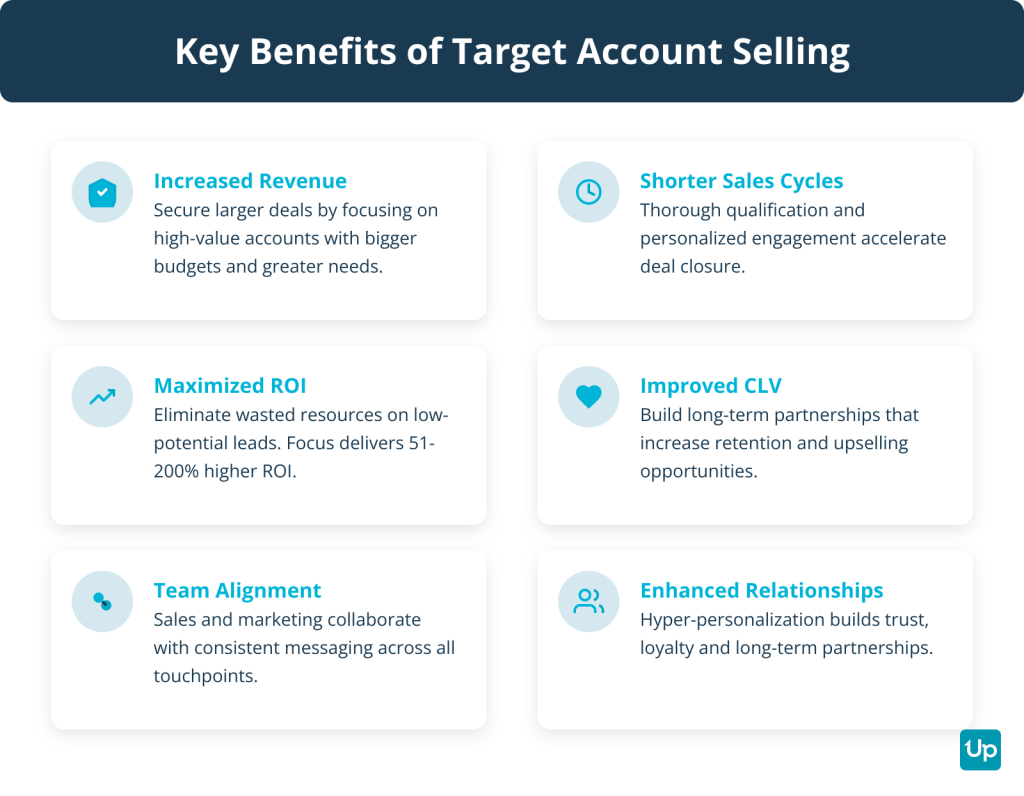
The key benefits of TAS are increased revenue, shorter sales cycles, maximized ROI, improved customer lifetime value, stronger sales and marketing alignment, and enhanced customer relationships. TAS drives revenue growth by enabling personalized solutions and dedicated account management for enterprise clients.
By focusing resources on the most promising opportunities, TAS delivers measurable advantages across multiple dimensions. A targeted sales approach provides a competitive advantage, helping to shorten sales cycles by addressing the unique needs of each account.
TAS also helps build long-term relationships with key accounts, fostering greater customer retention and loyalty.
Increased Revenue and Profitability
By concentrating on high-value accounts with larger budgets and a greater need for solutions, sales teams can secure larger deals and maximize revenue.
This focus on the most substantial opportunities boosts profitability.
Shorter Sales Cycles
Although TAS requires significant upfront research, this initial work qualifies the prospect thoroughly.
This ensures the company is a good fit, which accelerates the sales process as engagement is relevant and personalized, leading to quicker deal closure.
Maximized ROI and Resource Efficiency
TAS eliminates wasted time and resources on low-potential or unqualified leads.
Sales teams can focus their energy on activities most likely to generate results, streamlining workflows and enhancing collaboration between departments.
A 2024 Forrester report found that ABM programs can deliver an ROI that is 51% to 200% higher than other marketing efforts.
ITSMA research shows 87% of marketers agree ABM delivers a superior ROI. The focus on high-value accounts also translates to larger deals, with one study noting a 171% increase in average deal size for companies using ABM.
Improved Customer Lifetime Value (CLV)
The methodology focuses on finding prospects looking for long-term partnerships.
By nurturing these deep relationships with key accounts, businesses increase customer retention and create more opportunities for upselling and cross-selling, enhancing CLV.
Stronger Sales and Marketing Alignment
Successful TAS implementation requires sales and marketing to work in close collaboration.
This data-driven partnership ensures consistent messaging and a seamless transition from marketing-generated awareness to sales-led engagement, improving overall effectiveness.
Enhanced Customer Relationships and Satisfaction
The hyper-personalized nature of TAS demonstrates a deep understanding of a client’s unique challenges and goals.
This fosters trust, loyalty and a better customer experience, which can lead to long-term partnerships and a stronger brand reputation.
When Should You Use Target Account Selling?
You should use TAS when your business involves high customer lifetime value, complex and long sales cycles, high-ticket items or enterprise sales, competitive markets and a finite addressable market. TAS is especially effective when the deal value is high and the focus is on targeting high value accounts.
TAS is not applicable to all situations and delivers the best results under specific business conditions. Identifying potential target accounts with significant revenue potential is a key step in determining if TAS is the right approach.
High Customer Lifetime Value (CLV)
TAS requires a significant investment in research and personalization.
This effort is justified when accounts have the potential for substantial long-term revenue through large initial contracts, subscriptions, upsells or repeat business. If your best customers are long-term partners, TAS is a strong fit.
Complex and Long Sales Cycles
When closing a deal involves multiple decision-makers, buying committees and a sales cycle that spans months or even years, TAS provides the necessary focus. TAS is particularly well-suited for complex sales environments involving multiple stakeholders and extended decision-making processes.
It helps sales teams build consensus, manage relationships with various stakeholders and maintain momentum over the long haul by tailoring messages to each decision-maker.
High-Ticket Items or Enterprise Sales
The methodology is ideal for selling expensive products, services or large enterprise-level solutions.
The significant revenue from a single deal warrants the deep, resource-intensive approach of identifying and nurturing a select few high-potential accounts.
Competitive Markets
In a crowded marketplace, a personalized TAS approach can be a key differentiator.
By understanding a prospect’s goals and pain points, you can demonstrate superior value compared to competitors using a less targeted strategy, leading to higher win rates.
Finite Addressable Market
When there is a limited number of potential customers for your product, a spray and pray approach is inefficient.
TAS allows you to penetrate the market more effectively by concentrating resources on the most qualified accounts that perfectly match your ICP.
How Does the Target Account Selling Process Work?
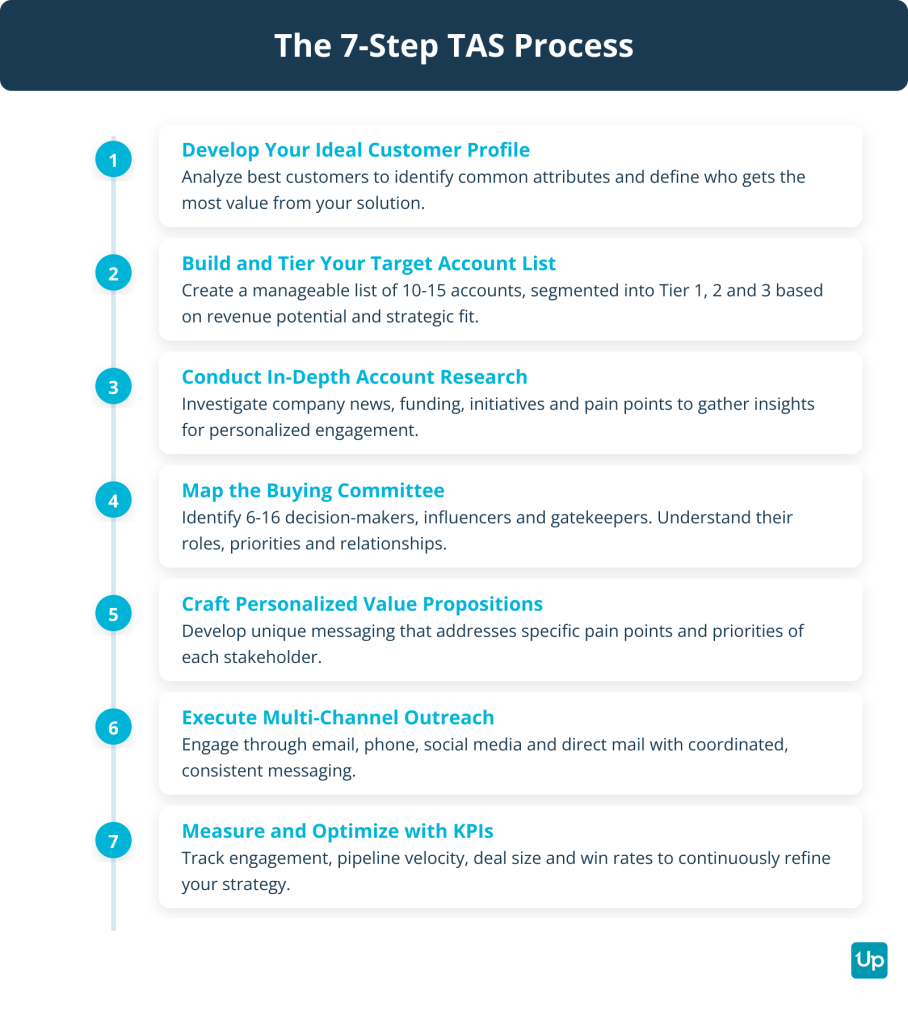
The TAS process works through seven strategic steps: developing your ICP, building and tiering your target account list, conducting in-depth account and stakeholder research, mapping the buying committee and their motivations, crafting personalized value propositions and messaging, executing a coordinated multi-channel outreach and measuring and optimizing with TAS-specific KPIs. Target account selling strategies involve account targeting, audience research early in the process, and building a robust sales funnel to engage high-value prospects.
This methodology provides a framework for focusing sales efforts on high-value accounts. Creating an Ideal Customer Profile (ICP) is crucial for identifying high-value accounts, and the TAS process requires thorough research and analysis to select the right accounts to pursue.
Step 1: Develop Your Ideal Customer Profile
The foundation of TAS is a precise definition of the type of company that gets the most value from your product.
This involves analyzing your best current customers to identify common attributes. Creating an Ideal Customer Profile (ICP) allows sales teams to prioritize accounts that best align with the company’s offerings and maximize sales outcomes by focusing on potential target accounts. A well-defined ICP ensures that sales and marketing teams are aligned and focused on the accounts with the highest potential.
Quantitative Analysis
Start by analyzing your best current customers to identify common attributes.
Key metrics to focus on include customers with the highest Customer Lifetime Value (LTV), Annual Contract Value (ACV) and best Lifetime Gross Profit (LTGP) to Customer Acquisition Cost (CAC) ratio. Look for customers with shorter sales cycles and high win rates.
Collect data on company size (revenue, employee count), industry or vertical, geographic location and growth stage.
Analyze the technology stack your best customers use, such as specific CRM or marketing automation platforms.
Qualitative Feedback
Talk to your most successful clients to understand their challenges, goals, decision-making processes and the ROI they get from your product.
Gather insights from frontline teams who know which customers are easiest to sell to, renew consistently and have the fewest support issues.
Define Your Anti-ICP
An Anti-ICP defines the type of customer you do not want to attract.
These are customers who often churn, have a low LTV, high support costs or are never satisfied. Look for common traits among customers who were difficult to onboard, required excessive support or churned quickly.
An anti-persona is not just the obvious non-fit but a profile that looks similar to your ICP but lacks a critical attribute, making them a poor fit.
The goal is to avoid wasting marketing and sales resources on prospects who are unlikely to become successful, profitable customers.
Step 2: Build and Tier Your Target Account List
Once the ICP is defined, the next step is to build a target account list.
Use resources like industry reports, business directories and social media platforms to find companies that match your ICP. It is recommended to start with a manageable list of 10-15 accounts to ensure focused effort.
After identifying potential accounts, segment them into tiers based on criteria like revenue potential, strategic fit and alignment with business objectives. Sales teams should allocate personalized sales resources—such as tailored tools, messages, and strategies—to each tier according to their importance and potential value, ensuring a hyper-personalized approach for high-priority accounts.
Tier 1 (High-Priority / 1:1 Personalization)
These are the highest-value accounts that are a perfect match for your ICP.
They have the highest revenue potential and strategic value. This is a small, exclusive list of accounts.
These accounts receive a white-glove or high-touch approach. This includes personalized 1:1 marketing campaigns, custom content, dedicated sales reps and direct executive outreach.
The goal is to build deep relationships.
Tier 2 (Medium-Priority / 1:Few Personalization)
These accounts are a strong fit for the ICP but may have a lower revenue potential or are not as critical as Tier 1.
This is a larger group than Tier 1. This tier receives a 1-to-few approach.
Outreach is lightly personalized, often segmented by industry, pain point or use case.
It combines some personalization with scaled engagement, such as targeted display ads and industry-specific webinars.
Tier 3 (Lower-Priority / 1:Many Personalization)
This is the largest group of accounts.
They meet some ICP criteria but may be smaller, have lower immediate potential or have not yet shown strong buying intent. These accounts receive a broad 1-to-many approach.
They are nurtured through automated, non-personalized marketing programs like general email campaigns, social media engagement and blog content until they show stronger buying signals and potentially move up to a higher tier.
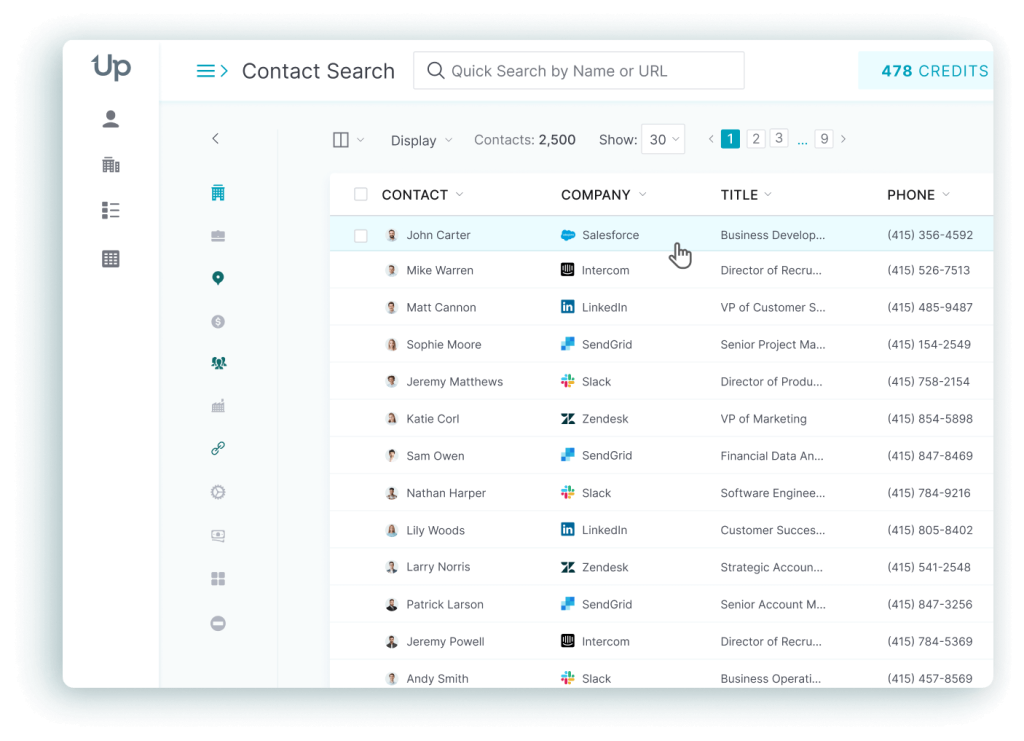
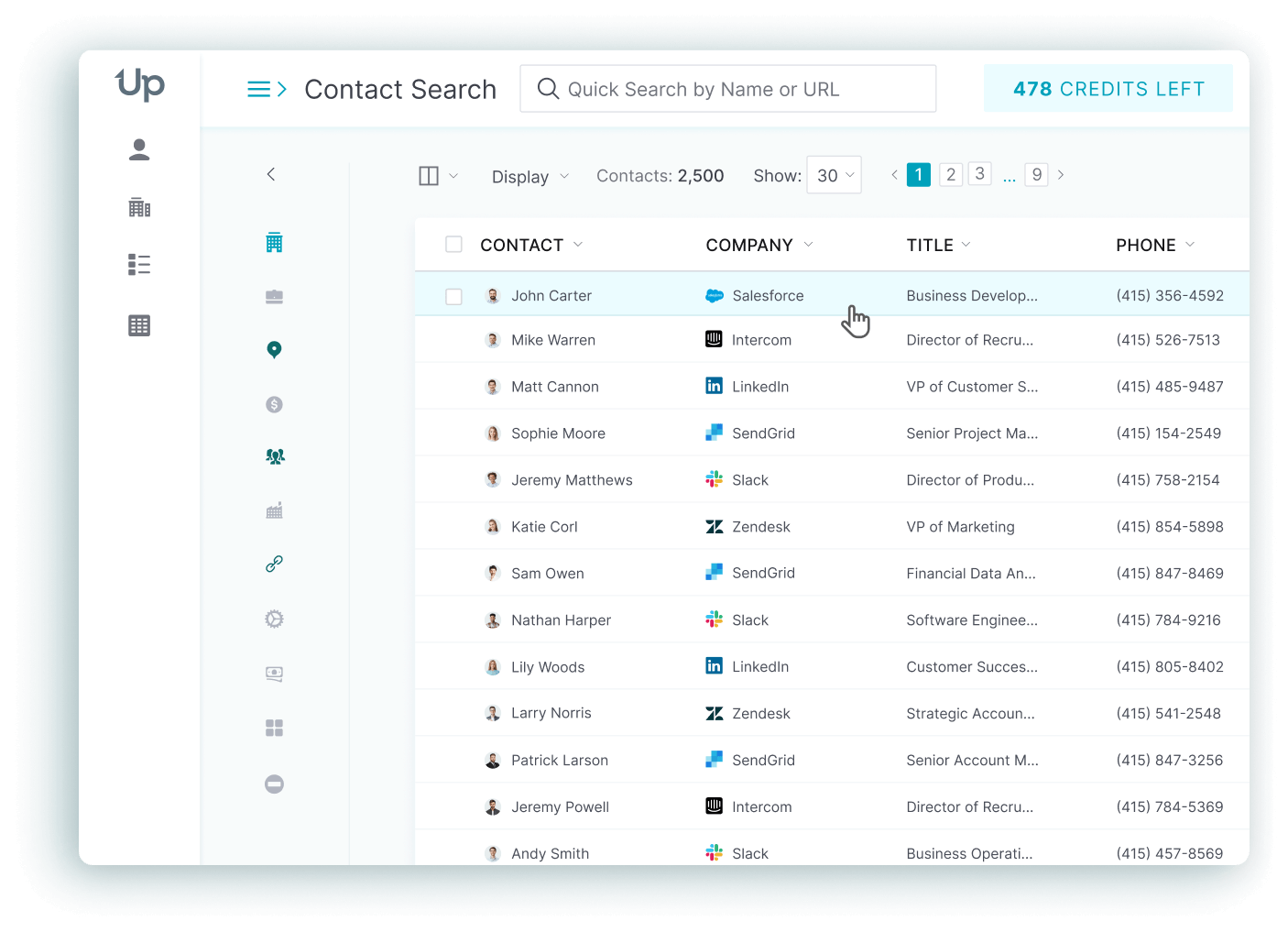
Many tools are available for prospect identification, including UpLead, which allows you to search using firmographic, geographic and technographic data to get access to the accounts that best fit your ICP.
These tools can also help you identify the people inside each account and provide their contact details to load into your CRM or marketing automation platform.

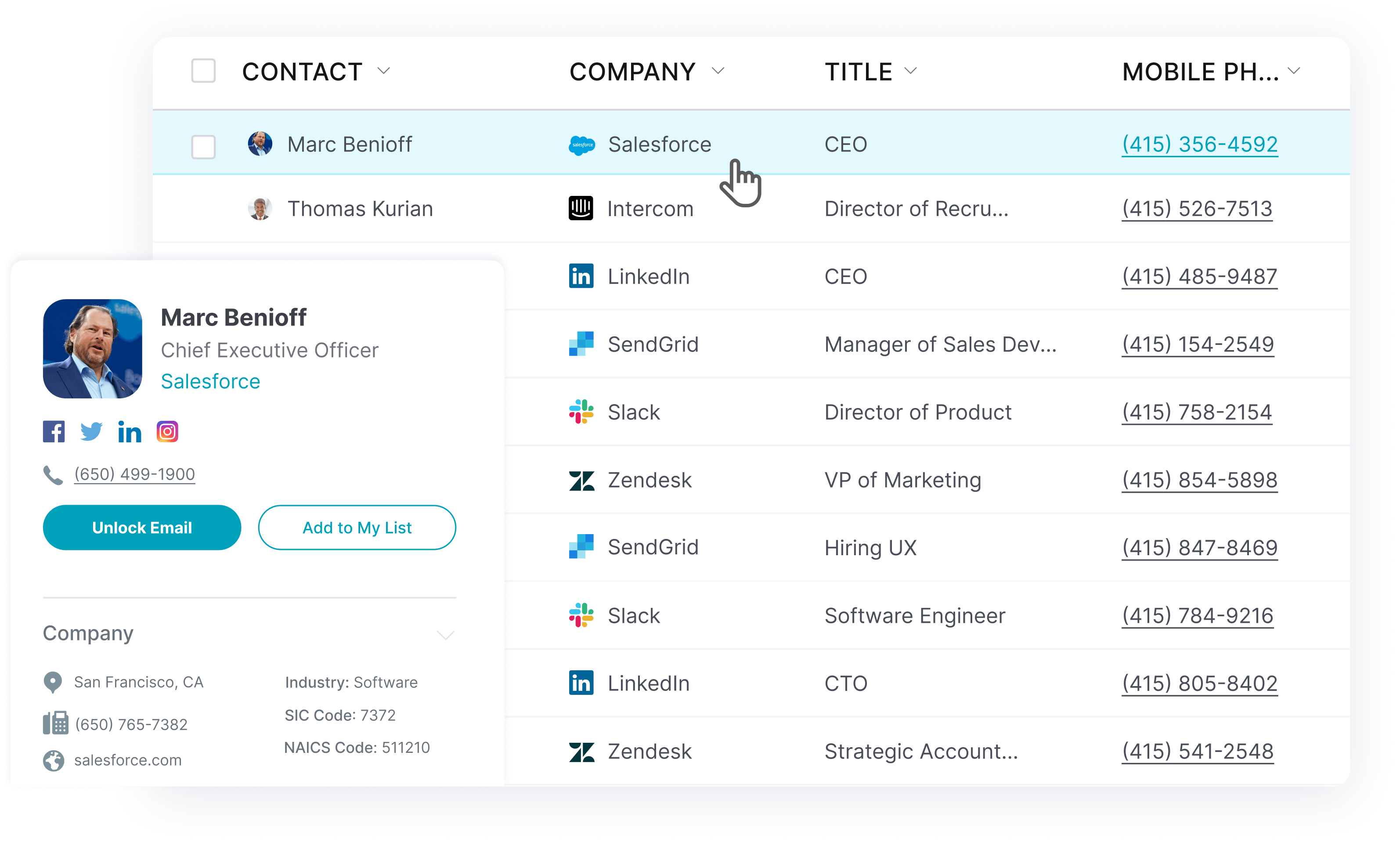
It should be noted that while it is possible to contact these people with this information, in some jurisdictions like Canada, it is not legal to use electronic messages to contact someone who is not already a customer or who has not already opted in to receive content from you.
If you are unsure about the legality in your target country, seek appropriate legal expertise. It is important to use a service such as Webbula to clean your list, verify that the email addresses are legitimate and ensure that there are no spam traps or other impediments that could hamper your ability to send emails in the future.
Step 3: Conduct In-Depth Account and Stakeholder Research
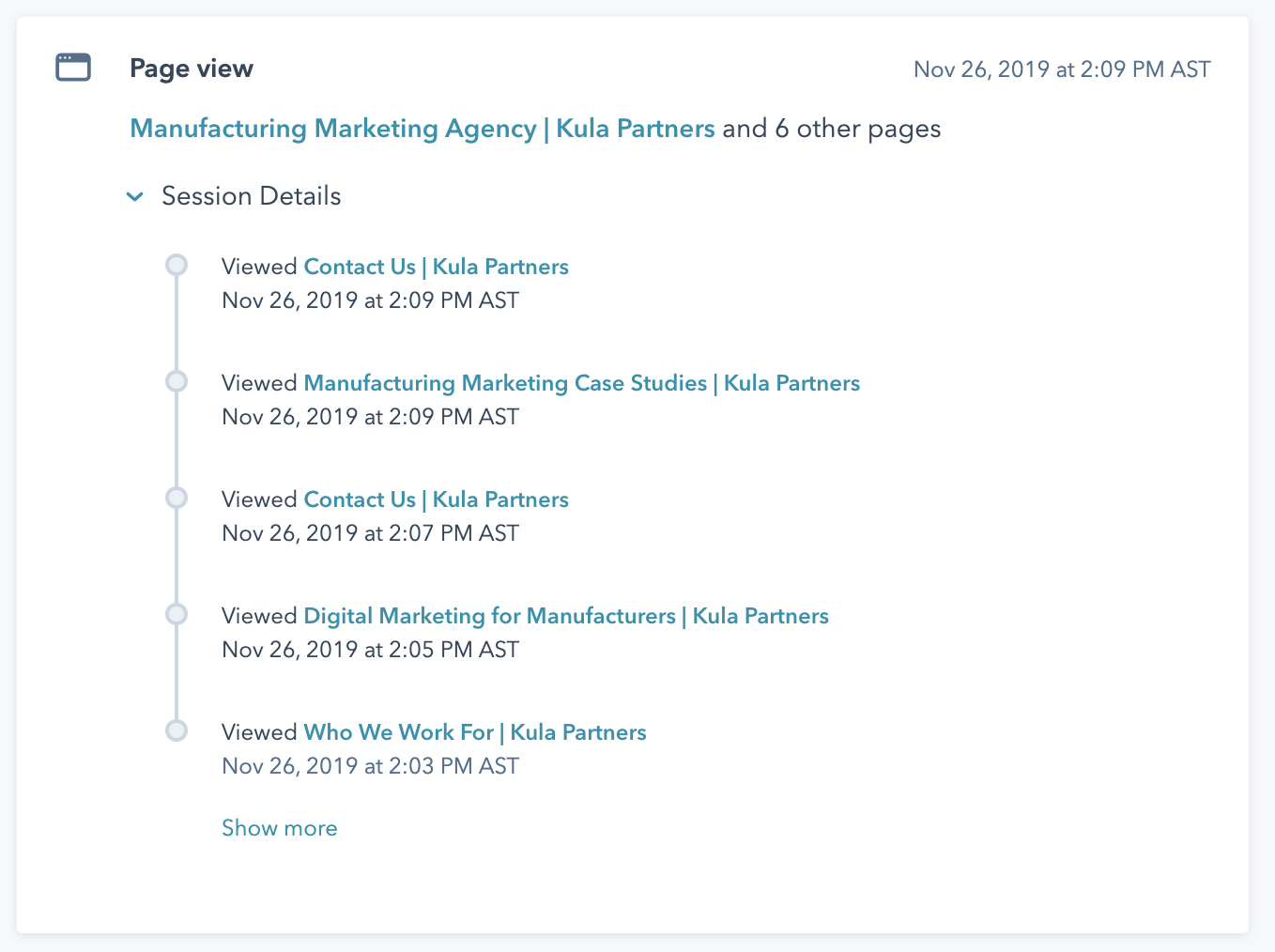
Thorough research is critical for understanding the specific needs, challenges and goals of each target account. Business intelligence tools can support the research process by providing valuable data and insights on target accounts.
This goes beyond surface-level data. Investigate recent company news, funding rounds, new initiatives and even what competitors they work with.
The goal is to gather deep insights that will allow for personalized engagement.
This research phase is crucial for tailoring your value proposition effectively. TAS requires sales teams to conduct in-depth research on each target account to tailor their sales strategies effectively.
Step 4: Map the Buying Committee and Their Motivations
Enterprise sales involve multiple stakeholders.
Recent 2024 research from Gartner indicates a typical buying group for a complex B2B solution involves 6 to 10 decision-makers, with some groups expanding to as many as 16 people. Forrester’s 2024 data corroborates this, finding an average of 13 people are involved in any given purchase decision, often spanning multiple departments.
It is essential to identify all key decision-makers, influencers, economic buyers and potential gatekeepers within the target account.
Create an account map that details each person’s role, title, influence level, priorities and challenges. Understanding the internal political landscape and the relationships between stakeholders is key to navigating the complex sales process successfully.
For example, in a complex sale for a packaging manufacturer selling flexible, resealable plastic bags to a pet food company, all of the following departments are likely to be involved in the deal:
- Procurement and/or finance
- Marketing and brand compliance
- Operations
- Logistics
Within these groups, there may be many individuals, each with their own role in purchasing.
A sale like this could be worth millions of dollars and last several years. As such, it could encompass influencers such as a brand manager from the marketing department and the CFO.
What a target account strategy needs to do is to understand the needs of each member of the buying team and where they fit into the overall buyer journey.
Step 5: Craft Personalized Value Propositions and Messaging
Generic sales pitches are ineffective in TAS. Personalized communications are essential in TAS, enabling sales teams to engage each account in a relevant and timely manner.
Using the research from the previous steps, develop a unique value proposition for each target account. Your messaging should be personalized and speak to the specific pain points and strategic priorities of the account and its key stakeholders.
Collaborate with marketing to create custom content, presentations and demos that resonate with the account’s specific context. Sales teams should personalize their communications to each target account to enhance engagement and conversion rates.
Step 6: Execute a Coordinated Multi-Channel Outreach
Engage with target accounts through a multi-channel outreach strategy, using channels like email, phone calls, social media and direct mail. Effective sales campaigns require coordinated sales and marketing efforts, with the marketing team playing a key role in supporting personalized outreach and helping to identify and profile target accounts.
Sales and marketing teams must be aligned to ensure consistent messaging across all touchpoints. The outreach should be a coordinated effort, often as part of an ABM program, to build relationships and trust with the various stakeholders you have identified.
You can use several techniques to become visible to your target accounts.
Using a more traditional technique, like press releases in the trade publications read by your targets, is a great way to gain credibility and make the market aware of your products and solutions.
To become more visible to your prospects, you can employ account-based advertising tools like Terminus or DemandBase to target your accounts with display ads introducing them to your product.
This technique allows you to create specific ads for each target account and the stakeholders within each. These account-based advertising platforms, known as engagement data, also enable you to see which accounts have interacted with your ads.
Many surface intent data so you can see when searches or other buying signals are coming from those accounts.
Intent data lets you know when an account is searching for phrases and keywords related to your product categories. Armed with this information, your marketing and sales teams can begin to reach out to these target accounts or continue to nurture them with custom content on your site.
It is also possible to leverage on-site personalization so that when someone clicks through to the site, they see an experience tailored just for them.
Using these techniques to target optimal accounts and then surrounding them with a halo of content and valuable information is the first step.
The intent and engagement data should indicate to your sales team that they can engage a warmed-up prospect who is more likely to be receptive to a conversation. The buyer journey should be mapped out before you begin the targeted outreach so that sales know their exact triggers to contact the client and how they will continue to nurture that lead to a close. In TAS, the sales and marketing teams collaborate to guide each decision-maker through their buying process until the sale is closed.
Step 7: Measure and Optimize With TAS-Specific KPIs
TAS is a dynamic process that requires continuous measurement and adaptation.
Track key performance indicators (KPIs) to measure the success of your strategy. Important metrics include account engagement, pipeline velocity, deal size, win rates, and meeting-to-opportunity conversion rate, which measures the quality of initial conversations in TAS.
Measuring the ROI of Target Account Selling initiatives can be challenging, making it important to track relevant KPIs.
Review your progress against your goals, analyze what is working and what is not, and use these insights to refine your ICP, target account list, and engagement strategies over time. Sales teams should execute, test, and refine their sales strategies based on customer feedback and data analysis.
What Are the Best Practices for Target Account Selling?
The best practices for a successful target account selling (TAS) strategy are ensuring strong sales and marketing alignment, prioritizing data quality and hygiene, focusing on personalization at scale, enabling the sales team, starting with a pilot program, and leveraging technology strategically. To implement target account selling successfully, organizations should align sales and marketing efforts and follow best practices that emphasize high-quality account targeting and customized outreach.
These practices help organizations maximize the effectiveness of their TAS implementation. TAS is often implemented alongside ABM to create a cohesive strategy for engaging high-value accounts throughout the buyer’s journey.
Ensure Strong Sales and Marketing Alignment
This is the most critical element for success.
Both teams must collaborate on defining the ICP, selecting target accounts and developing messaging. This alignment ensures a seamless customer journey with consistent messaging.
Shared goals, joint planning and a continuous feedback loop are essential.
Marketing should focus on creating sales enablement content like case studies and tailored pitch decks and running targeted campaigns, while sales provides frontline feedback on lead quality and customer pain points.
Prioritize Data Quality and Hygiene
A successful TAS program relies on accurate, up-to-date data.
Poor data hygiene can lead to mis-targeting and wasted effort. It is crucial to have a single source of truth, often a well-maintained CRM, that both sales and marketing teams use for data-driven segmentation and decision-making.
This data foundation is key for identifying the right accounts and personalizing outreach effectively.
Focus on Personalization at Scale
TAS moves away from generic, high-volume outreach.
The goal is to create personalized experiences for each target account. This involves tailoring messaging, content and value propositions to the specific pain points and business goals of each account.
Leveraging technology like sales engagement and ABM platforms can help automate and scale personalization efforts without losing the human touch.
Enable the Sales Team
Equip your sales team with the necessary skills, tools and resources to execute the TAS strategy. Sales professionals play a critical role in executing Targeted Account Selling by conducting thorough account research, personalizing outreach, and building relationships with key decision-makers.
This includes training on research skills, consultative selling techniques and how to use the tech stack effectively. Providing Account Playbooks with specific messaging and strategies for different accounts can be effective.
Continuous coaching and development are necessary to ensure the team can build the deep relationships required by TAS.
Start With a Pilot Program
Rather than a full-scale rollout, begin with a pilot program focused on a small, manageable number of target accounts.
This allows the organization to test and refine its processes, messaging and alignment in a controlled environment. A successful pilot provides a proof of concept, builds momentum and generates valuable learnings that can be applied to a broader implementation.
Leverage Technology Strategically
While TAS is relationship-focused, technology is a critical enabler.
Use CRM systems for data management, data analytics tools for account identification, sales engagement platforms for personalized outreach and ABM software to coordinate campaigns. Forrester notes that modern Account-Based Selling (ABS) technologies leverage AI to provide insights and guidance, making account planning more dynamic and effective.
What Tools Support Target Account Selling?
The tools that support a TAS strategy are B2B data and intent data providers, Customer Relationship Management (CRM) platforms, sales engagement platforms and ABM and advertising platforms.
Effective account targeting relies on leveraging both business intelligence tools and personal and professional networks to identify high-value accounts. These specialized software tools enable teams to identify, engage and close high-value accounts efficiently.
B2B Data and Intent Data Providers
These platforms are foundational for identifying best-fit accounts and recognizing buying signals.
They provide firmographic data (company size, industry, revenue), contact details and intent data, which tracks online research activity to identify companies looking for solutions.
Examples include ZoomInfo (offers access to over 130 million contacts and 95 million companies, filterable by over 300 attributes, with pricing starting around $14,995 per year for entry-level packages), Cognism (a comprehensive sales intelligence platform known for GDPR-compliant B2B data, including phone-verified mobile numbers and buyer intent data, with custom pricing based on annual platform fees plus per-user licenses), UpLead (a more affordable alternative to larger platforms, offering over 180 million business contacts with 50+ filters and 95%+ email verification accuracy, with monthly plans starting at $99 for 170 credits) and Bombora (specializes in Company Surge intent data by monitoring content consumption across over 5,000 B2B websites, tracking billions of monthly interactions to identify companies researching relevant topics).
Customer Relationship Management (CRM) Platforms
A CRM is the central hub for managing all account data, tracking interactions and monitoring pipeline progress.
For TAS, it is crucial for maintaining a unified view of each target account.
Examples include Salesforce Sales Cloud (a leading enterprise-grade CRM that offers extensive customization for managing complex sales cycles, with new Account Plans feature for strategic account planning available in Enterprise editions and above) and HubSpot Sales Hub (an all-in-one platform that combines CRM functionality with specific ABM/TAS features like Target Accounts Home dashboard, Account Overview and AI-powered account recommendations in Professional and Enterprise tiers).
Sales Engagement Platforms
These tools help sales reps execute and automate multi-channel outreach campaigns (email, phone, social media) to engage multiple stakeholders within target accounts effectively and at scale.
Examples include Salesloft (an AI-powered Revenue Orchestration Platform with Cadences for multi-channel outreach, Conversations for call analysis and AI-driven Rhythm engine for prioritizing tasks) and Outreach (a leading Sales Engagement Platform with over 6,000 customers, featuring Sequences for automated multi-touch workflows and Smart Account Plans introduced in May 2024 for centralizing account strategy and execution, with pricing starting around $100 per user/month).
Account-Based Marketing (ABM) and Advertising Platforms
ABM platforms align marketing and sales efforts by enabling targeted advertising and personalized content delivery to specific accounts.
Examples include Demandbase One (a comprehensive AI-powered ABM and Go-To-Market solution that unifies sales and marketing teams, using both first-party and third-party intent data with over 650,000 keywords for detecting buying signals), RollWorks (an ABM platform, a division of NextRoll, that uses proprietary data, machine learning and integrations like Bombora for intent data to identify high-fit target accounts and execute cross-channel advertising campaigns across display, social and video channels) and Terminus (an ABM platform designed for multi-channel engagement through its Engagement Hub, including Advertising Experiences, Chat Experiences, Email Experiences and Web Experiences).
What Are Common Challenges in Target Account Selling?
The common challenges in TAS are high resource intensity, long and complex sales cycles, risk of narrow focus and missed opportunities and heavy reliance on data accuracy.
Recognizing and addressing these obstacles is key to successful implementation.
Challenge: High Resource Intensity
TAS demands a significant investment of time and resources.
Sales teams must conduct in-depth research, create personalized outreach and build deep relationships, which can strain team capacity and increase the risk of burnout.
Solution: Prioritize and leverage technology. Use a well-defined ICP and data analytics to focus only on accounts with the highest revenue potential and strategic fit.
Employ sales automation and engagement tools to streamline repetitive tasks like data entry and initial outreach, freeing up reps to focus on high-value activities like strategic conversations and relationship building.
Challenge: Long and Complex Sales Cycles
Selling to large enterprise accounts often involves navigating complex buying committees with multiple stakeholders, which can lengthen the sales cycle.
Aligning messaging and gaining consensus among various decision-makers requires patience and persistence.
Solution: Focus on multi-stakeholder engagement and value creation at every touchpoint. Map out the key decision-makers and influencers within the account early on.
Develop tailored value propositions that address the specific pain points and priorities of each stakeholder. Collaborate closely with marketing to create and share valuable content (e.g., case studies, ROI reports, webinars) that builds trust and demonstrates a deep understanding of the account’s business.
Challenge: Risk of Narrow Focus and Missed Opportunities
Concentrating on a small list of target accounts can lead to a narrow market view, causing teams to miss out on emerging opportunities or other promising prospects that do not fit the initial criteria.
Solution: Implement a balanced and dynamic approach to account management. While focusing on the primary target list, allocate a portion of the team’s time to exploring new prospects and reassessing the target account list.
Market conditions and company priorities can shift, so the list should be a living document, not a static one. This ensures the pipeline stays healthy while still allowing for deep focus on key accounts.
Challenge: Heavy Reliance on Data Accuracy
The effectiveness of TAS is dependent on the quality of the data used for account selection and personalization.
Outdated or inaccurate data on company firmographics, contacts or buying signals can lead to wasted effort and misaligned messaging.
Solution: Invest in high-quality data sources and establish a process for regular data hygiene. Utilize reputable B2B data providers that offer real-time verification and enrichment.
Integrate your CRM with data platforms to automatically cleanse and update records, ensuring your sales team is always working with the most current and accurate information available.
What Are the Differences Between TAS, ABM and ABS?
The differences between TAS, ABM and ABS lie in their focus, leadership and scope. Target account sales (TAS) focuses on identifying and engaging high value leads and critical accounts through a structured, multi-touch approach.
While often used in similar contexts, these three approaches have distinct meanings and functions. Both TAS and ABM utilize multi-touch approaches to engage high-value accounts, but their primary focus and leadership differ. Understanding their differences is key to building an effective go-to-market strategy.
Account-Based Marketing (ABM)
ABM is a strategic, marketing-led approach that focuses resources on a defined set of high-value target accounts.
Instead of casting a wide net, marketing and sales teams collaborate to create personalized campaigns designed to engage specific accounts, treating them as a market of one.
The goal is to build awareness, generate demand and nurture relationships within these key accounts using tailored content, ads and events.
ABM is about creating the initial engagement and warming up accounts for the sales team.
Account-Based Selling (ABS)
ABS is a broader, sales-led strategic approach or philosophy.
It involves targeting a select group of high-value accounts and treating each as an individual market. The focus is on deep research, relationship-building with key decision-makers and personalized outreach to close deals.
ABS is the overarching strategy of focusing sales efforts on specific accounts, often working in tandem with marketing’s ABM efforts to convert interest into revenue.
It is a long-term, relationship-focused approach rather than a transactional one.
Target Account Selling (TAS)
TAS is a specific, structured sales methodology or process, not just a philosophy.
Developed in the 1980s, TAS provides a repeatable framework for sales teams to manage and win large, complex deals. It involves systematic steps like account selection, opportunity analysis, mapping stakeholders and political structures within an organization and developing tailored value propositions.
While ABM creates the opportunity and ABS defines the strategic focus, TAS provides the tactical, step-by-step playbook for the sales team to execute and close the deal within that target account.
It is more focused on the direct sales process and actions required to win, whereas ABM’s focus is on the alignment between sales and marketing.
What Are Examples of Target Account Selling in Action?
Examples of TAS in action include Amazon Web Services (AWS) and Adobe.
While specific companies rarely state they use the TAS methodology by name, their strategic account management practices often embody its core principles. The focus is on deep partnership, customized solutions and maximizing value from a select list of high-potential accounts. Customer success teams play a vital role in supporting targeted account selling by maintaining long-term relationships and maximizing value for high-value accounts.
Amazon Web Services (AWS)
AWS exemplifies TAS principles through its AWS Enterprise Support plan.
For high-value enterprise customers, AWS assigns a designated Technical Account Manager (TAM) who acts as a trusted advisor and the customer’s primary technical point of contact, providing architectural guidance, proactive planning and coordinating access to AWS subject matter experts.
The TAM works alongside Solutions Architects, who focus on designing technical solutions, and Enterprise Account Managers, who define the sales strategy and manage the overall business relationship.
This structure ensures that large customers receive dedicated, specialized support across technical, strategic and operational domains to help them achieve their business objectives on the cloud, which is a clear real-world application of TAS.
Adobe
Adobe employs an ABM and ABS model for its enterprise customers, particularly for the Adobe Experience Cloud.
This strategy involves the alignment of sales and marketing teams to target high-value accounts, creating personalized, account-based experiences using unified data and AI, orchestrating omnichannel journeys (email, web, social, ads) to engage entire buying committees and using dedicated Enterprise Account Executives.
These executives are responsible for managing relationships with strategic clients, driving new revenue, developing account plans and collaborating with a matrix of internal teams (marketing, product, legal, finance) to deliver a unified customer experience.
The goal is to act as a trusted advisor, understand customer needs and align Adobe’s solutions to their strategic objectives. This approach is designed for complex B2B enterprise sales where multiple stakeholders are involved.
Conclusion: Focus on the Best to Win Bigger Deals
Results are possible when marketing and sales teams work together using an account-based marketing approach, especially in a B2B environment.
Phononic, a manufacturer of solid-state heating and cooling solutions, has been using this technique with customized, interactive content, and they have driven substantial growth quickly.
Whether you choose to call it target account selling or account-based marketing, it is clear that this strategic approach has the potential to leverage everything B2B sales and marketing teams have learned in the past decade and turn it into a profitable, trackable, ROI-driven integrated methodology that delivers real results.