

Your sales pipeline is unpredictable and your sales team is burning out on sales prospecting techniques that no longer connect with modern buyers. You’re fighting against low response rates, ghosting prospects and an endless cycle of unqualified meetings while your revenue goals seem further away than ever.
This guide breaks down 13 modern, actionable B2B prospecting strategies for 2025. From using AI and ABM to building multi-channel cadences that work, you’ll learn how to fill your sales pipeline with high-quality, ready-to-buy prospects.
Hot tip: In a hurry? Find hot leads searching for a service like yours right now. Use the intent data of UpLead. 🔥 Try it free here.
What is B2B Prospecting?
B2B prospecting is the proactive process of identifying, researching and reaching out to potential business customers who fit your ideal client profile.
Unlike lead generation, which casts a wide net to attract interest, B2B prospecting involves targeted, one-to-one outreach to qualify specific accounts and decision makers.
When you do it right, B2B prospecting speeds up your sales process by connecting you with prospects who have the authority, budget and need for your solution.
What Is the Difference Between B2B Prospecting and Lead Generation?
B2B prospecting and lead generation are two distinct but complementary activities in the sales process.
Lead generation is a marketing-led, one-to-many activity focused on attracting potential customers at the top of the sales funnel through content marketing, paid advertising and inbound tactics.
B2B prospecting, on the other hand, is a sales-led, one-to-one activity that occurs further down the funnel, involving direct outreach to qualify and engage specific prospects.
| Aspect | Lead Generation | B2B Prospecting |
|---|---|---|
| Owner | Marketing Team | Sales Team |
| Approach | One-to-many | One-to-one |
| Goal | Attract interest | Qualify and engage |
| Stage | Top of funnel | Mid to bottom funnel |
| Methods | Content, ads, SEO | Cold calls, emails, social selling |
Understanding this distinction helps align your sales and marketing teams, ensuring each team focuses on their strengths while supporting the overall revenue generation process.
How to Leverage AI and Automation in B2B Prospecting
Artificial intelligence and automation have transformed B2B prospecting from a manual, time-intensive process into a data-driven, scalable operation.
Modern sales teams use AI to identify high-value prospects, personalize outreach at scale and optimize their prospecting strategies based on real-time performance data.
Four Key Ways AI Enhances B2B Prospecting
Predictive Lead Scoring:
AI analyzes historical data patterns to identify prospects most likely to convert. By examining factors like company growth, technology usage and behavioral signals, AI assigns scores that help sales teams prioritize their outreach efforts on the highest-value opportunities.
Automated List Building:
Instead of searching for prospects by hand, AI tools can identify companies that match your ideal customer profile using firmographic, technographic and intent data. This ensures your prospecting lists are fresh and targeted.
Hyper-Personalization at Scale:
AI can generate personalized email snippets based on a prospect’s recent LinkedIn activity, company news or industry trends. This allows sales teams to send hundreds of personalized messages without spending hours on research for each individual prospect.
Performance Analysis:
AI analyzes your sales calls, emails and messaging to identify patterns in what works. It can suggest optimal send times, subject lines and messaging approaches based on your specific audience and industry.
13 Actionable B2B Prospecting Strategies for 2025
Modern B2B prospecting requires a strategic combination of research, technology and personalized outreach. These 13 proven sales prospecting strategies will help you build a consistent sales pipeline of qualified prospects and speed up your sales process.
1. Start with a Data-Driven Ideal Customer Profile
Your ideal customer profile (ICP) serves as the foundation for all prospecting efforts. A good ICP goes beyond basic demographics to include firmographic data, technographic insights and behavioral patterns of your best customers.
How to Build Your ICP:
- Analyze your current customer base to identify common characteristics
- Document company size ranges (employee count and revenue)
- Identify specific industries and sub-sectors where you win most often
- Map the technology stack your best customers use
- Define growth stage indicators (funding rounds, expansion signals)
- Document decision-making processes and typical buying committees
This data-driven approach ensures you target prospects with the highest likelihood of conversion and helps you craft messaging that resonates with their specific challenges and goals.
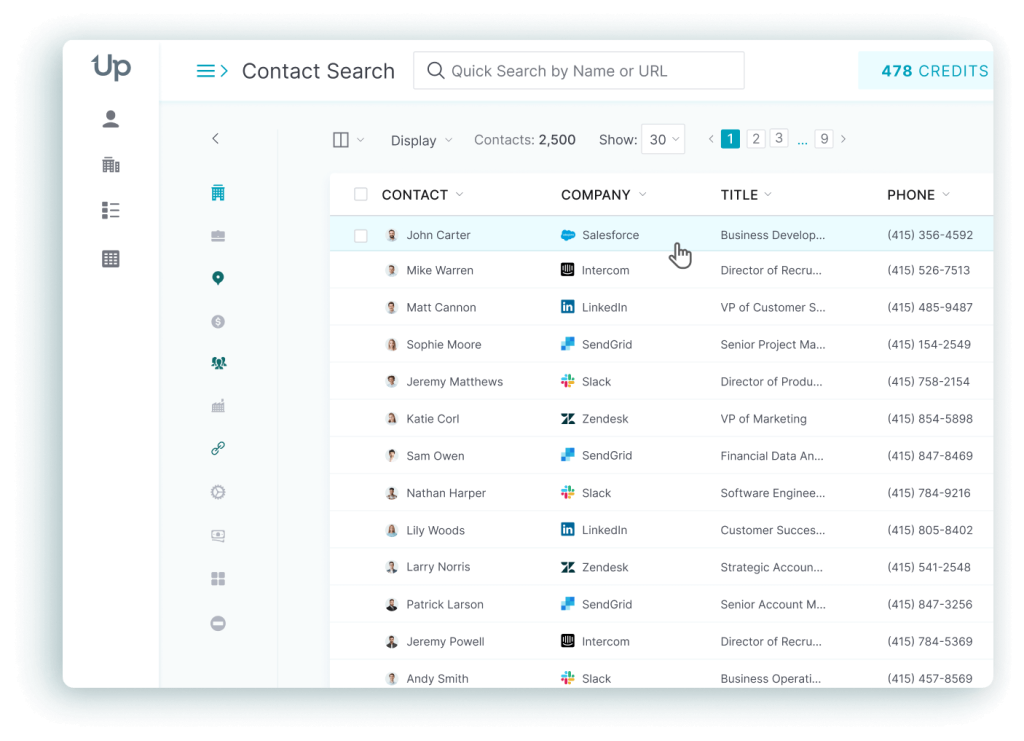
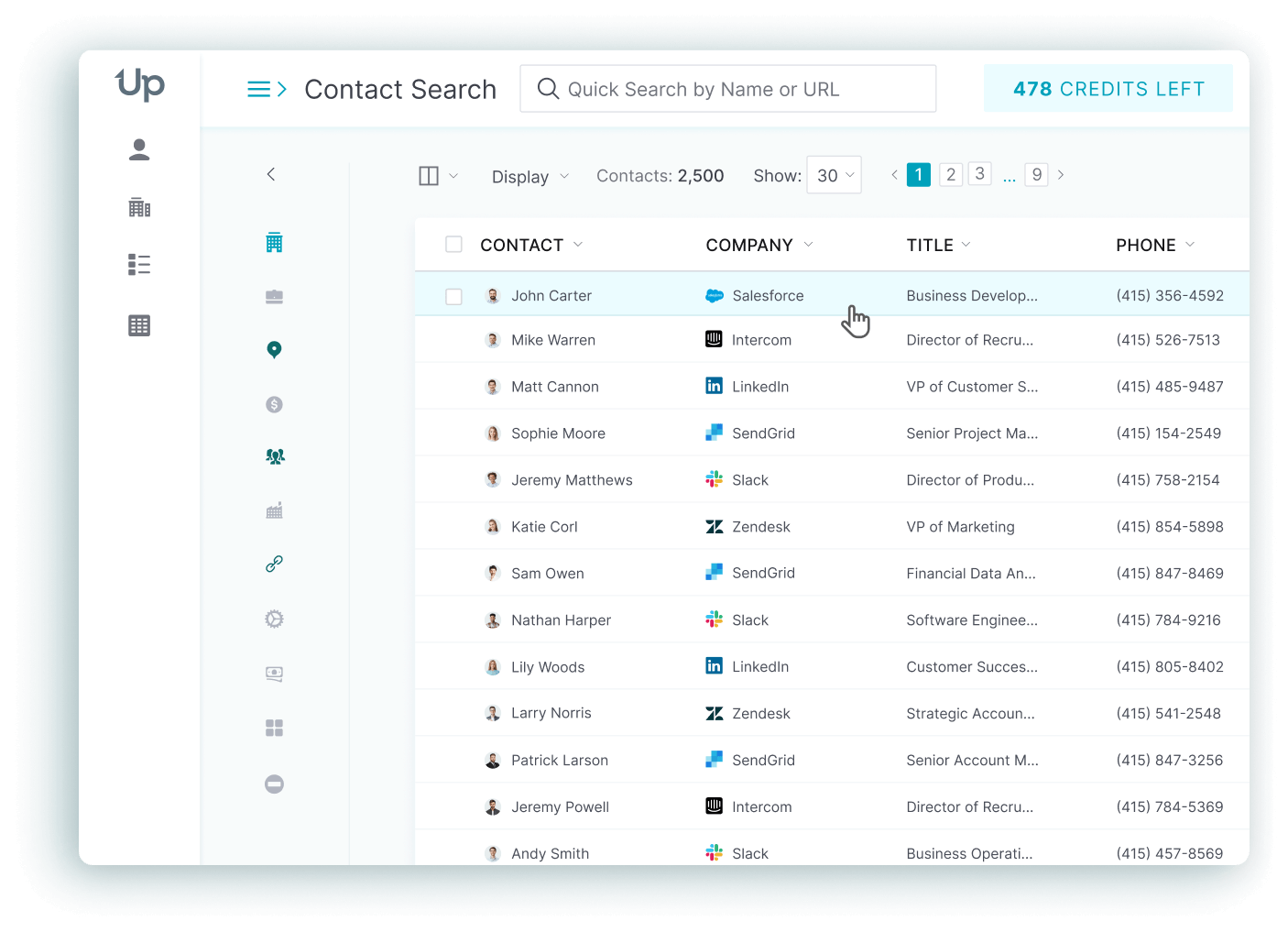
2. Build a High-Intent Prospect List with UpLead
Building a good prospect list requires more than just finding companies that fit your ICP. Intent data reveals which potential customers are researching solutions like yours, allowing you to prioritize outreach to companies showing buying signals.
Step-by-Step Process Using UpLead:
Step 1: Define Your ICP Criteria
Log into UpLead and set your search filters based on your ICP. Select industry, company size, location, revenue range and technology stack. Be specific but not so narrow that you eliminate viable prospects.
Step 2: Layer on Intent Data
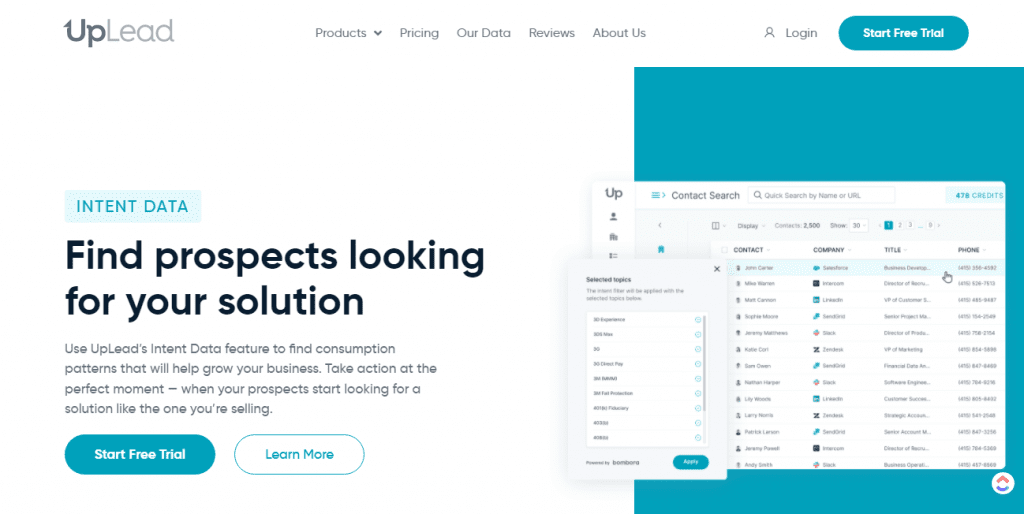
Activate UpLead’s intent data filters to identify companies researching solutions in your category. This reveals prospects who are in-market right now, not just a good fit on paper.
Step 3: Identify Decision Makers
Within your target accounts, use job title and seniority filters to find the specific decision makers and influencers. For complex B2B sales, identify multiple stakeholders including economic buyers, technical evaluators and end users.
Step 4: Verify Contact Information
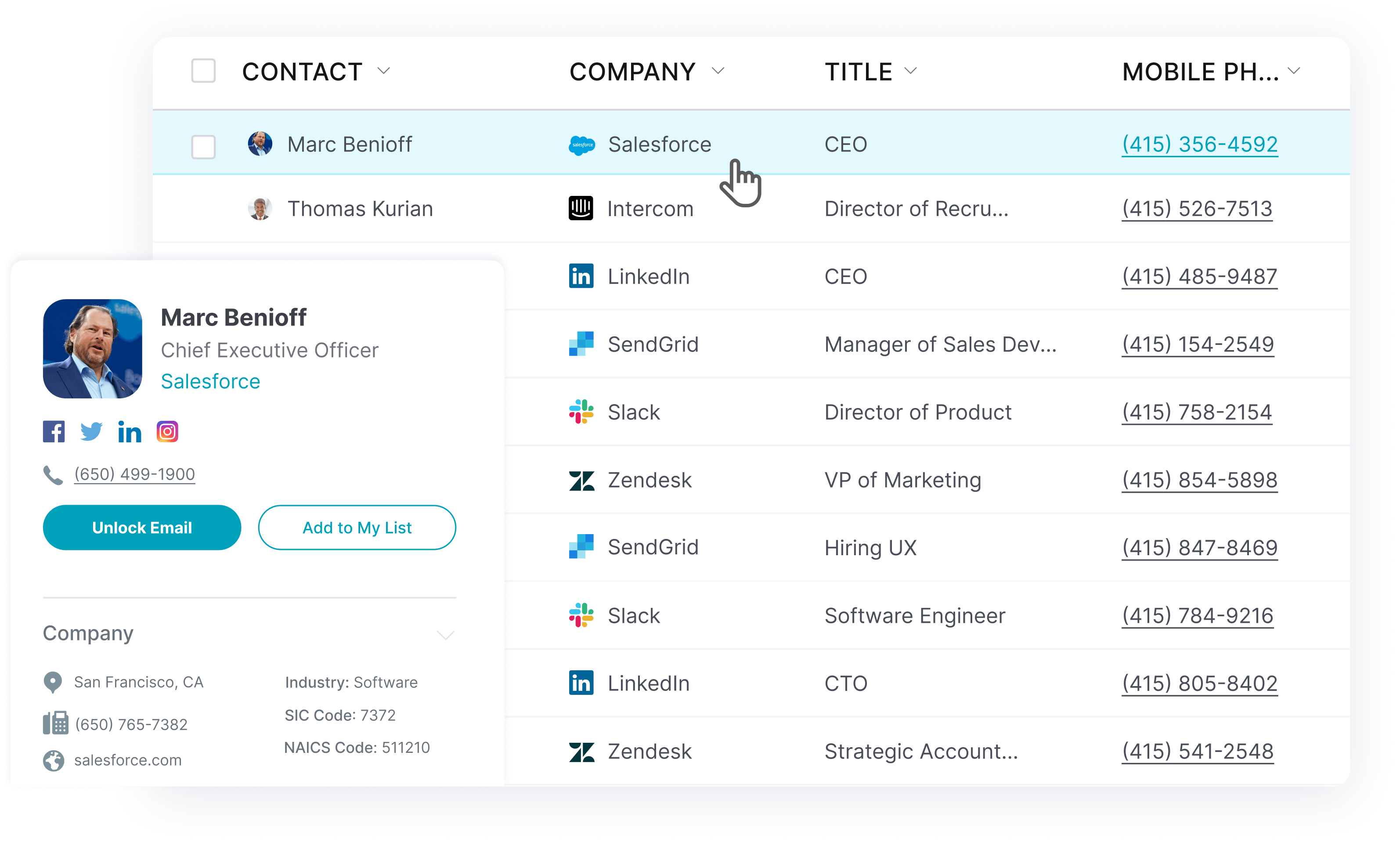
UpLead’s 95% accuracy guarantee means you’re getting verified email addresses and direct dial phone numbers. Export your list knowing you won’t waste time on bounced emails or disconnected numbers.
Step 5: Segment for Personalization
Organize your prospect list into segments based on industry, company size or specific pain points. This allows you to craft targeted messaging for each segment rather than generic outreach.
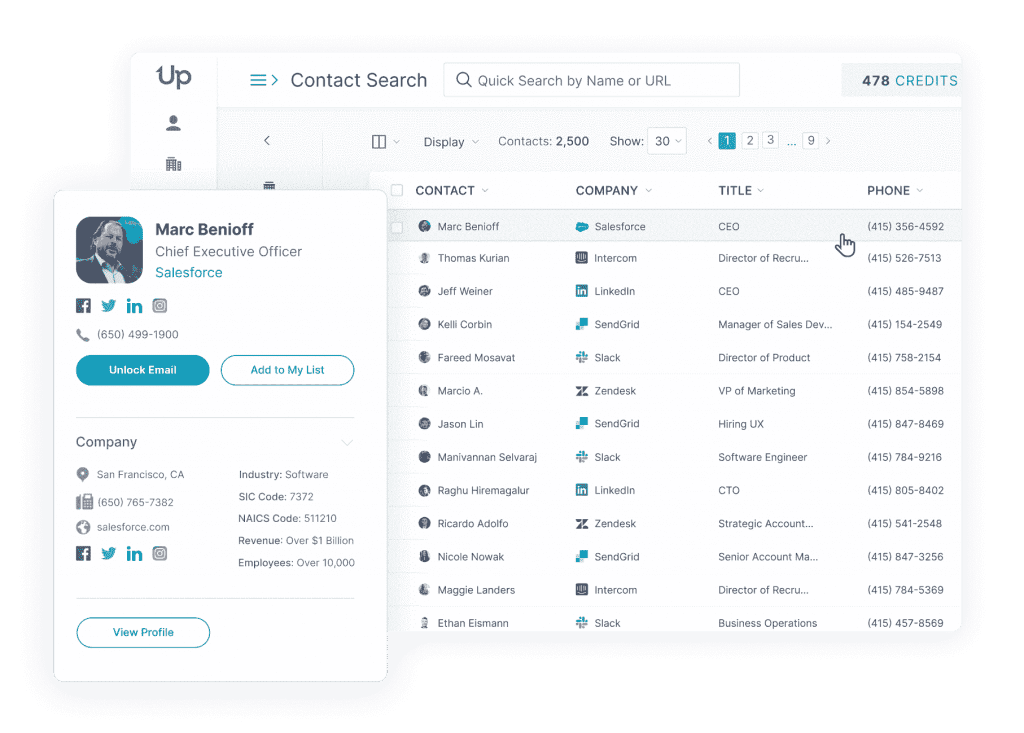
UpLead is not an enrichment tool but a comprehensive B2B data provider that gives you access to 160 million verified contacts with intent data built in. This means you’re not just finding contact information—you’re identifying prospects who are searching for solutions like yours right now.
3. Personalized Cold Emailing That Gets Replies
Good cold emailing combines personalization with clear value propositions to break through inbox noise.
The 5-Step Cold Email Framework:
Step 1: Research Your Prospect (5 minutes per prospect)
Before writing a single word, spend five minutes researching your prospect. Check their LinkedIn profile for recent posts or job changes. Review their company website for news, blog posts or case studies. Look for funding announcements, expansion plans or leadership changes. This research provides specific hooks for personalization.
Step 2: Write a Personalized Subject Line
Your subject line determines whether your email gets opened. Reference something specific: “Saw your post about [topic]” or “Question about [company’s] expansion into [market]”. Avoid generic subjects like “Quick question” or anything that sounds like a mass email.
Step 3: Open with Relevant Context
Your first sentence should reference your research. Mention their recent LinkedIn post, company news or a mutual connection. This signals that your email is personalized, not a mass blast.
Step 4: Connect Their Challenge to Your Solution
Don’t pitch your product features. Instead, reference a specific challenge their company faces based on your research, then mention how you’ve helped similar companies solve that exact problem. Include one concrete result or metric.
Step 5: End with a Low-Friction CTA
Don’t ask for a 30-minute demo. Instead, ask a specific question that requires a simple yes/no response, or offer two specific time slots for a 15-minute conversation. Make it easy to say yes.
Template: The Anatomy of a High-Reply Email
Bad, Generic Email:
“Hi [Name], I hope this email finds you well. We help companies like yours improve their sales process. Would you be interested in a quick call to learn more about our solution?”
Good, Personalized Email:
“Hi [Name], I noticed [Company] expanded into the European market. Congratulations on the growth! I work with other fast-scaling SaaS companies who’ve faced similar challenges with managing sales processes across multiple regions. Would you be open to a 15-minute conversation about how [Similar Company] reduced their sales cycle by 30% during their expansion?”
The personalized version works because it shows genuine research, references specific company context, provides relevant social proof and offers a concrete benefit with a low-commitment ask.
Technical Setup for Deliverability:
- Use a professional email service provider with proper authentication (SPF, DKIM, DMARC)
- Warm up new email domains (start with 10-20 emails per day, increase slowly)
- Keep your email list clean—remove bounces right away
- Test your emails with spam checkers before sending
- Avoid spam trigger words like “free,” “guarantee,” or excessive punctuation
4. Strategic Cold Calling
Cold calling remains effective when you prepare properly and time it right.
The Pre-Call Research Checklist:
- Review the prospect’s LinkedIn profile and recent activity
- Check company news and recent announcements
- Identify specific challenges their role faces
- Prepare 2-3 relevant questions about their current situation
- Have a specific case study ready that matches their industry
Optimal Calling Times:
- Best days: Tuesday, Wednesday, Thursday
- Best times: 10:00-11:30 AM and 2:00-3:30 PM in prospect’s timezone
- Avoid: Monday mornings (catching up), Friday afternoons (winding down)
The Cold Call Framework:
Opening (First 10 seconds): State your name, company and the specific reason you’re calling. “Hi [Name], this is [Your Name] from [Company]. I’m calling because I noticed [specific observation about their company]. Do you have 2 minutes?”
Permission (Next 5 seconds): Ask if now is a good time. If no, schedule a specific callback time. Respecting their time builds credibility.
Value Statement (15 seconds): Explain how you’ve helped similar companies solve a specific problem they face. Use concrete numbers: “We helped [Similar Company] reduce [specific metric] by [percentage].”
Discovery Questions (2-3 minutes): Ask open-ended questions about their current situation, challenges and goals. Listen more than you talk. Take notes on specific pain points they mention.
Next Steps (30 seconds): Don’t try to close a deal on the first call. Instead, schedule a follow-up meeting with a specific agenda: “Based on what you’ve shared, I’d like to show you how we addressed [their challenge] for [similar company]. Are you available Tuesday at 2 PM for a 20-minute conversation?”
Handling Common Objections:
“Not interested”: “I understand. Can I ask what you’re doing now to address [specific challenge]?”
“Send me information”: “I’d be happy to. To make sure I send relevant information, can I ask you two quick questions about [specific aspect]?”
“We’re already working with someone”: “That’s great. How long have you been working with them? Are there any gaps in what they provide?”
5. Social Selling on LinkedIn
LinkedIn social selling involves building relationships with prospects through valuable content sharing, thoughtful engagement and strategic networking.
The 30-Day LinkedIn Social Selling Plan:
Week 1: Optimize Your Profile
- Update your headline to focus on the value you provide, not just your title
- Rewrite your About section to address your target audience’s challenges
- Add relevant case studies and results to your Featured section
- Request recommendations from satisfied customers
Week 2: Build Your Network
- Connect with 10-15 ideal prospects daily with personalized connection requests
- Join 5-10 LinkedIn groups where your target audience is active
- Follow companies in your target account list
- Engage with content from prospects (like, comment thoughtfully)
Week 3: Share Valuable Content
- Post 3-5 times per week with industry insights, not sales pitches
- Share relevant articles with your perspective added
- Create original posts addressing common challenges your prospects face
- Use relevant hashtags (3-5 per post) to increase visibility
Week 4: Start Conversations
- Comment on prospects’ posts (not generic “Great post!”)
- Send personalized messages to connections who engage with your content
- Congratulate prospects on work anniversaries, promotions or company news
- Share relevant resources without asking for anything in return
LinkedIn Sales Navigator Best Practices:
- Save your ideal prospect searches to receive daily alerts on new matches
- Use lead and account lists to organize prospects by campaign or priority
- Set up alerts for job changes, company news and shared content
- Use TeamLink to find warm introductions through colleagues
- Track engagement with your InMail messages to optimize messaging
6. Implement a Multi-Channel Prospecting Cadence
A multi-channel cadence combines email, phone and social media touchpoints in a coordinated sequence to maximize engagement opportunities.
Research shows that prospects need multiple touchpoints before responding, making systematic follow-up essential for sales success.
The Complete 12-Day Multi-Channel Cadence:
Day 1: Initial Email + LinkedIn Connection
Send a personalized email referencing specific research about their company. At the same time, send a LinkedIn connection request with a personalized note (not a sales pitch). Keep both messages focused on providing value, not asking for a meeting yet.
Day 3: LinkedIn Message (if connected)
If they accepted your connection request, send a brief message thanking them and sharing a relevant resource (article, case study, industry report) that addresses a challenge their company faces. No ask yet—just value.
Day 5: Phone Call + Voicemail
Make your first call attempt. If you reach voicemail, leave a brief message (under 30 seconds) referencing your previous email and one specific way you’ve helped similar companies. Provide your phone number twice, slowly.
Day 7: Follow-up Email (Same Thread)
Reply to your original email thread with additional value. Share a specific insight, statistic or case study relevant to their industry. Include a soft call-to-action: “Would it make sense to have a brief conversation about this?”
Day 9: Second Phone Call
Make another call attempt at a different time of day. If you reach voicemail, reference your previous attempts and mention you’ll send a final email with some resources they might find valuable.
Day 10: Engage with LinkedIn Content
Find a recent post from your prospect on LinkedIn and leave a thoughtful comment (not just “Great post!”). Add your own perspective or ask a genuine question about their content.
Day 12: Final “Break-up” Email
Send a final email acknowledging that now might not be the right time. Offer to send occasional relevant resources without any pressure. This “permission to close the file” approach often generates responses from prospects who were interested but busy.
Cadence Optimization Tips:
- Track response rates by channel to identify what works best for your audience
- Adjust timing based on your prospect’s timezone and industry norms
- Test different messaging approaches with A/B testing
- Pause the cadence right away if a prospect responds on any channel
- Personalize each touchpoint—never send generic template messages
7. Leverage Personalized Video Prospecting
Video prospecting breaks through the noise of text-based outreach by adding a personal touch that builds trust and demonstrates genuine interest.
When to Use Video in Your Prospecting:
Scenario 1: First-Touch Introduction
Record a 30-45 second video introducing yourself and explaining why you’re reaching out to them. Reference something specific about their company or recent news. Include the video thumbnail in your email with a clear play button.
Scenario 2: Complex Value Proposition
When your solution requires visual explanation, use screen sharing to walk through a specific example of how you’ve solved a problem similar to theirs. Keep it under 2 minutes and focus on their challenge, not your product features.
Scenario 3: Follow-up After Meetings
After a discovery call or demo, send a personalized video summarizing key points discussed, next steps and specific answers to questions they raised. This reinforces your attentiveness and keeps momentum going.
Video Prospecting Best Practices:
- Keep videos under 60 seconds for cold outreach, under 2 minutes for follow-ups
- Use the prospect’s name in the first 5 seconds
- Ensure good lighting and clear audio (invest in a basic microphone)
- Include a custom thumbnail with your face and the prospect’s company logo
- Add captions for prospects who watch without sound
- Include a clear call-to-action at the end
- Use tools like Loom or Vidyard that provide view analytics
8. Adopt a Strategic Account-Based Marketing Approach
Account based marketing (ABM) focuses your prospecting efforts on high-value target accounts with coordinated, multi-stakeholder campaigns.
Instead of broad outreach, ABM involves deep research into specific companies, mapping their decision-making process and creating tailored content for different stakeholders within each account.
The 6-Step ABM Implementation Process:
Step 1: Identify Target Accounts
Select 10-50 high-value accounts that match your ICP. Consider factors like revenue potential, strategic fit, likelihood to close and expansion opportunities. Quality matters more than quantity in ABM.
Step 2: Research and Map Stakeholders
Identify all decision makers and influencers within each target account. Map their roles, priorities and relationships. Typical B2B buying committees include economic buyers, technical evaluators, end users and champions.
Step 3: Develop Account-Specific Insights
Research each account deeply. Understand their business model, competitive pressures, recent initiatives, technology stack and specific challenges. Create an account profile that your entire team can reference.
Step 4: Create Personalized Content
Develop content tailored to each account and stakeholder. This might include custom landing pages, personalized case studies, industry-specific ROI calculators or account-specific presentations. Coordinate with marketing to create these assets.
Step 5: Execute Multi-Channel Campaigns
Launch coordinated outreach across multiple channels. Combine direct sales outreach with targeted advertising, personalized direct mail and social media engagement. Ensure all touchpoints reference account-specific insights.
Step 6: Measure and Optimize
Track engagement at the account level, not just individual contacts. Monitor which stakeholders are engaging, what content resonates and how accounts progress through your sales process. Adjust your approach based on these insights.
9. Provide Value with Content Marketing
Content marketing supports prospecting by establishing credibility and providing valuable resources that prospects can discover.
Content Types That Support Prospecting:
Educational Blog Posts: Create in-depth guides addressing specific challenges your prospects face. Optimize for search terms your prospects use when researching solutions. Reference these posts in your outreach when they’re relevant to a prospect’s situation.
Industry Reports and Original Research: Conduct surveys or analyze industry data to create original research reports. These high-value assets give you a reason to reach out to prospects and position you as a thought leader.
Case Studies with Specific Results: Document how you’ve helped customers similar to your prospects. Include specific metrics, challenges faced and solutions implemented. Use these in outreach to prospects facing similar situations.
Video Content and Webinars: Create educational video content that prospects can consume on-demand. Host webinars on topics relevant to your target audience and use registration as a lead generation tool.
How to Use Content in Prospecting Outreach:
- Reference specific blog posts that address challenges you’ve identified in your research
- Share industry reports with prospects as a value-add before asking for anything
- Use case studies as social proof when reaching out to similar companies
- Invite prospects to relevant webinars as a low-commitment first engagement
- Create content upgrades (checklists, templates) that require email opt-in
10. Run Targeted Paid Advertising Campaigns
Paid advertising amplifies your prospecting efforts by keeping your brand visible to target accounts across multiple touchpoints.
LinkedIn Ads for B2B Prospecting:
Sponsored Content: Promote your best educational content to decision makers at target accounts. Use LinkedIn’s targeting to reach specific job titles, industries and company sizes. Focus on value-driven content, not direct sales messages.
Sponsored InMail: Send personalized messages to prospects’ LinkedIn inboxes. These have higher open rates than email but are more expensive. Use for high-value prospects and include clear, compelling offers.
Account-Based Advertising: Upload your target account list to LinkedIn and serve ads to employees at those companies. Coordinate messaging with your direct outreach efforts.
Google Ads for Intent-Based Prospecting:
- Target search terms prospects use when researching solutions
- Create landing pages specific to each search intent
- Use remarketing to stay visible to prospects who visited your site
- Bid on competitor terms to capture prospects evaluating alternatives
Retargeting Campaigns:
- Install tracking pixels on your website to build retargeting audiences
- Create specific audiences based on pages visited (pricing, case studies, etc.)
- Serve different ads based on which content prospects engaged with
- Coordinate retargeting with your direct outreach cadences
11. Systematize Customer Referrals
Customer referrals provide warm introductions to prospects who have a connection to your business through satisfied customers.
Building a Referral System That Works:
Step 1: Identify Your Best Referral Sources
Analyze which customers have already provided referrals. Look for patterns in industry, company size or customer satisfaction scores. These are your referral champions who should be prioritized in your referral program.
Step 2: Create the Perfect Timing
Ask for referrals at natural moments of high satisfaction: after successful project completion, following positive feedback or when customers share wins they’ve achieved using your solution. Don’t wait for annual reviews—strike when enthusiasm is high.
Step 3: Make It Easy
Provide customers with simple tools: pre-written email templates they can customize, a simple referral form or a unique referral link. The easier you make it, the more referrals you’ll receive.
Step 4: Offer Meaningful Incentives
Consider offering incentives for successful referrals: account credits, gift cards, donations to charities of their choice or exclusive access to new features. Ensure incentives comply with your customers’ corporate policies.
Step 5: Close the Loop
Update customers on the status of their referrals. Thank them right away when they provide a referral, update them when you make contact and let them know the outcome. This encourages future referrals.
12. Network at Industry Events
Industry events, both virtual and in-person, provide opportunities to build relationships with prospects in a more natural, consultative environment.
Maximizing Event ROI:
Before the Event:
- Review the attendee list and identify target prospects
- Reach out to key prospects before the event to schedule meetings
- Prepare conversation starters focused on industry trends, not sales pitches
- Set specific goals (number of conversations, meetings scheduled)
During the Event:
- Focus on building genuine relationships, not collecting business cards
- Ask thoughtful questions about their business challenges
- Take notes on conversations to personalize follow-up
- Offer to make introductions to other attendees who could help them
After the Event:
- Follow up within 24-48 hours while you’re still memorable
- Reference specific conversation points in your follow-up
- Provide promised resources or introductions right away
- Connect on LinkedIn with a personalized note
13. Align Sales and Marketing Teams
Sales and marketing teams alignment ensures consistent messaging and coordinated efforts across all prospect touchpoints.
Creating True Sales and Marketing Alignment:
Establish Shared Definitions:
- Define what constitutes a Marketing Qualified Lead (MQL) vs Sales Qualified Lead (SQL)
- Create a shared ideal customer profile both teams use for targeting
- Agree on lead scoring criteria and handoff processes
- Document the buyer’s journey and each team’s role at each stage
Implement Regular Communication:
- Hold weekly sales and marketing alignment meetings
- Share prospect feedback from sales calls with marketing
- Review content performance and identify gaps together
- Celebrate wins together and analyze losses as a team
Create Feedback Loops:
- Sales provides feedback on lead quality and messaging effectiveness
- Marketing shares content performance and campaign results
- Both teams collaborate on ideal customer profile refinements
- Joint analysis of won and lost deals to improve targeting
The 10+ Best B2B Prospecting Tools for 2025
The right sales prospecting tools can improve your prospecting efficiency and effectiveness. Here are the top B2B prospecting tools organized by category to help you build a comprehensive prospecting stack.
B2B Data Providers
UpLead: UpLead is a comprehensive B2B data provider (not an enrichment tool) that gives you direct access to 160 million verified B2B contacts with 95% accuracy guarantee. Unlike enrichment tools that only fill in missing data, UpLead provides complete contact and company information from the start, including intent data to identify high-value prospects searching for solutions like yours. This means you can build targeted prospect lists from scratch and identify buying signals without needing existing contact data to enrich.
ZoomInfo: With over 235 million B2B professional profiles and processing 1.5 billion data points daily, ZoomInfo provides company and contact data.
Apollo.io: Combines prospecting, engagement and analytics in one platform with over 275 million contacts and advanced search filters.
Sales Engagement and Cadence Tools
- Outreach: Automates multi-channel prospecting cadences with advanced analytics and A/B testing capabilities for optimization.
- Salesloft: Provides cadence automation, call recording and detailed analytics to improve prospecting effectiveness.
- HubSpot Sales: Offers free and paid tools for email tracking, meeting scheduling and basic CRM functionality.
Specialty Prospecting Tools
- LinkedIn Sales Navigator: Advanced LinkedIn search and messaging capabilities for social selling and building relationships.
- Crystal: Provides personality insights to help personalize communication styles for individual prospects.
- Loom: Video messaging platform for creating personalized video outreach that increases engagement rates.
- Calendly: Simplifies meeting scheduling by allowing prospects to book time on your calendar.
- Mixmax: Email productivity tool with templates, scheduling and tracking features for sales teams.
- Seamless.ai: Real-time contact finder that integrates with popular CRM systems for immediate prospecting.
How to Measure Prospecting Success: 7 Key KPIs
Tracking the right metrics helps you optimize your prospecting efforts and demonstrate ROI. Focus on these seven key performance indicators to measure and improve your B2B sales prospecting success.
1. Number of Qualified Opportunities Generated:
Track the total number of qualified prospects that enter your sales pipeline each month. This measures the volume output of your prospecting efforts.
2. Lead-to-Opportunity Conversion Rate:
Calculate the percentage of initial prospects that become qualified opportunities. Formula: (Qualified Opportunities ÷ Total Prospects Contacted) × 100.
3. Appointment Setting Rate:
Measure how many prospects agree to meetings or demos. Formula: (Meetings Scheduled ÷ Total Outreach Attempts) × 100.
4. Sales Cycle Length:
Track the average time from first contact to closed deal. Shorter sales cycles indicate more effective prospecting and qualification.
5. Win Rate:
Calculate the percentage of qualified opportunities that result in closed deals. Formula: (Deals Won ÷ Total Opportunities) × 100.
6. Average Deal Size:
Monitor the average revenue per deal from prospected accounts compared to inbound leads to assess prospect quality.
7. Pipeline Value:
Track the total potential revenue in your sales pipeline from prospecting activities to forecast future performance and resource needs.
What Are Common B2B Prospecting Challenges in 2025?
Modern B2B prospecting faces several key challenges that require strategic solutions. Understanding these obstacles and how to overcome them is essential for maintaining an effective prospecting program.
Challenge: Low Response Rates
Many sales professionals struggle with declining response rates as prospects become overwhelmed with sales outreach.
Solution: Implement hyper-personalization strategies and multi-channel cadences that provide genuine value. Research prospects and reference specific company challenges or achievements to demonstrate authentic interest.
Challenge: Poor Quality Data
Outdated or inaccurate contact information wastes time and damages sender reputation.
Solution: Use reputable B2B data providers with high accuracy guarantees like UpLead’s 95% accuracy rate and implement regular data verification processes to maintain list quality.
Challenge: Engaging Multiple Stakeholders
B2B sales purchases involve multiple decision makers with different priorities and communication preferences.
Solution: Adopt an account based marketing approach that maps stakeholder roles and creates tailored messaging for each persona within target accounts.
Challenge: Sales and Marketing Misalignment
Disconnected teams create inconsistent prospect experiences and missed opportunities.
Solution: Establish shared definitions for qualified leads, implement regular communication between teams and create unified ideal customer profiles that both teams use for targeting.
Why High-Quality Data is Crucial for B2B Prospecting
High-quality data forms the foundation of successful B2B prospecting by enabling precise targeting and personalized outreach.
Accurate contact information, comprehensive company profiles and intent data help you identify potential clients who are researching solutions, allowing you to focus your efforts on the highest-value opportunities.
Poor data quality leads to wasted time, damaged sender reputation and missed revenue opportunities.
UpLead is a comprehensive B2B data provider that provides access to over 160 million verified B2B contacts with a 95% accuracy guarantee, ensuring your prospecting efforts reach the right people at the right companies.
With advanced filtering options and intent data capabilities, UpLead helps you build targeted prospect lists that drive higher engagement rates and better conversion outcomes.

UpLead is the Ultimate B2B Prospecting Tool
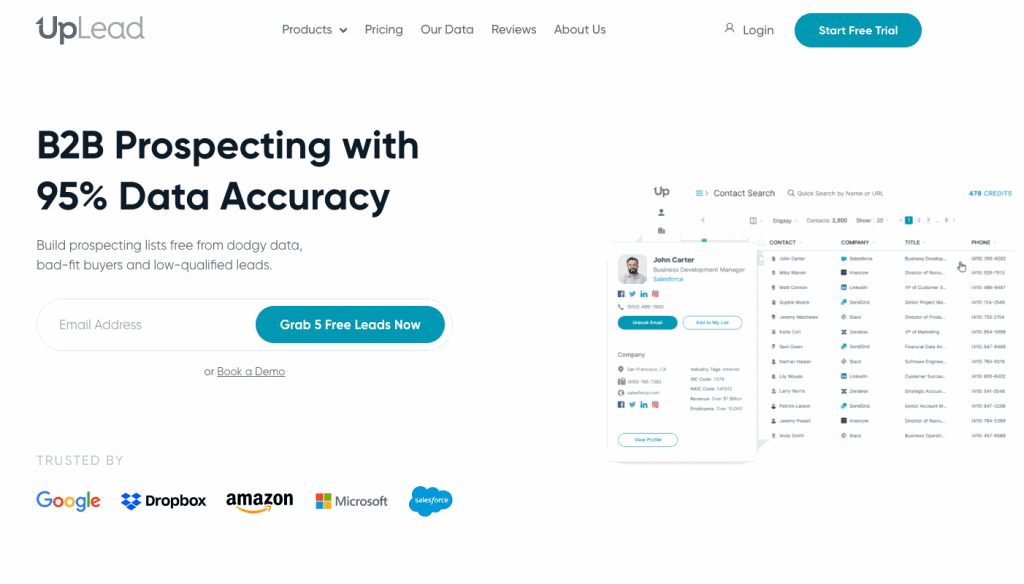
UpLead is a comprehensive B2B data provider that enables your sales development representatives to search through 160 million verified contacts using powerful filters and criteria to find prospects with 95% data accuracy.
Unlike enrichment tools that only fill in missing information on existing contacts, UpLead provides complete, verified contact and company data from the start, transforming your prospecting process from hours to minutes.
You’ll enhance your team’s effectiveness by using the expansive contact database and automated solutions that save time on tedious research tasks.
Implementing UpLead in your sales prospecting strategy provides these key benefits:
- Robust data verification process ensuring the most accurate prospect data
- Filter by technographic data points to identify which technology stack your prospects use
- Access to over 160 million contacts and 16 million companies worldwide
- Intent data to identify potential leads researching solutions like yours
Try UpLead today to refine your sales prospecting technique and capture leads you know you can convert.
B2B Prospecting FAQs
Below are answers to the most asked questions about B2B prospecting.
Use a combination of sales intelligence tools like UpLead to access verified contact databases, leverage intent data to identify companies actively researching solutions and implement multi-channel outreach including personalized emails, strategic cold calling and LinkedIn social selling to engage qualified prospects.
The primary sources include customer referrals from satisfied customers, inbound leads from content marketing and SEO, prospects found through sales intelligence tools, social media connections on LinkedIn, networking at industry events and targeted paid advertising campaigns that reach decision makers at companies matching your ideal customer profile.
The optimal prospecting times are Tuesday through Thursday between 10 AM and 2 PM in your prospect’s time zone. Avoid Mondays when people are catching up from the weekend and Fridays when they’re preparing for the week ahead. For email outreach, Tuesday and Wednesday mornings see the highest open and response rates.
Stop Doing B2B Prospecting Blindly
Successful B2B prospecting requires a strategic, data-driven approach that combines modern technology with personalized outreach.
The 13 sales strategies outlined in this guide provide a comprehensive framework for building a consistent pipeline of qualified prospects in 2025. From using AI and intent data to implementing multi-channel cadences and video prospecting, these sales prospecting methods help you connect with potential buyers who are ready to buy.
The key to prospecting success lies in understanding your ideal customer profile, using high-quality data to identify the right prospects and providing genuine value throughout your outreach efforts.
By aligning your sales and marketing teams, measuring the right KPIs and optimizing your approach based on performance data, you can build a prospecting strategy that delivers results.
Find hot leads searching for a service like yours right now. Use the intent data of UpLead. 🔥 Try it free here.