


Smartphones and social media, layered on top of the internet, have radically changed how businesses market their products and services. The result has been a shift away from traditional broadcast and print channels toward digital marketing.
Companies now have numerous ways to reach their target audience. They can use social media marketing on platforms from Facebook and LinkedIn to TikTok and Instagram. Businesses can also run paid advertising campaigns on Google or programmatic display ads.
Despite all the changes technology brings, many traditional marketing strategies continue to deliver a strong return on investment. Several industries still heavily use telemarketing to sell B2B products and services. Some examples include businesses in healthcare, SaaS (software-as-a-service) and financial services.
In a digital-first world, your ideal customers are bombarded with emails and ads. Cutting through the noise to have a real conversation and build a predictable sales pipeline feels almost impossible. Your best sales reps are bogged down with prospecting instead of closing, and relying on passive inbound leads is slow and unpredictable. Every day you wait, your competitors are having direct conversations with your future customers.
This guide is your 2026 playbook for B2B telemarketing. It walks through building a script that converts, staying inside TCPA and TSR rules, and pairing ROI tracking with AI to get an edge on the call.
What Is B2B Telemarketing?
Business-to-Business (B2B) telemarketing is a marketing strategy companies use to sell their products and services to another business over the phone. B2B telemarketing is a cost-effective method to generate leads, build brand awareness and gain valuable insights into your target audience.
The purpose of the call can vary. It could be a cold call to generate leads, a follow-up call to nurture and qualify a prospective customer or an outreach for market research. Telemarketing is a broad term; it’s not limited to just cold outreach.
Any business or company can stand to benefit from B2B telemarketing. It’s most commonly used in financial services and healthcare, plus SaaS. An in-house team can run B2B telemarketing; however, some companies outsource the task to a call center. Outsourcing can save money and time, along with internal resources.
B2B telemarketing is cost-effective. It builds trust and connects your best salespeople with key decision-makers. With your best sales representatives on the line, you’ll be able to qualify leads faster and close more deals.
B2B telemarketing can be used to sell several types of products and services. It’s particularly effective for more expensive products with longer sales cycles. When developing a telemarketing process, it’s important to consider the complexity of the purchasing decision. Ask yourself how many key decision-makers are involved and make sure your team is ready to cater to each business.
What Is the Difference Between B2B Telemarketing and Telesales?
B2B telemarketing and telesales are two distinct functions within a sales strategy, though many people use the terms interchangeably.
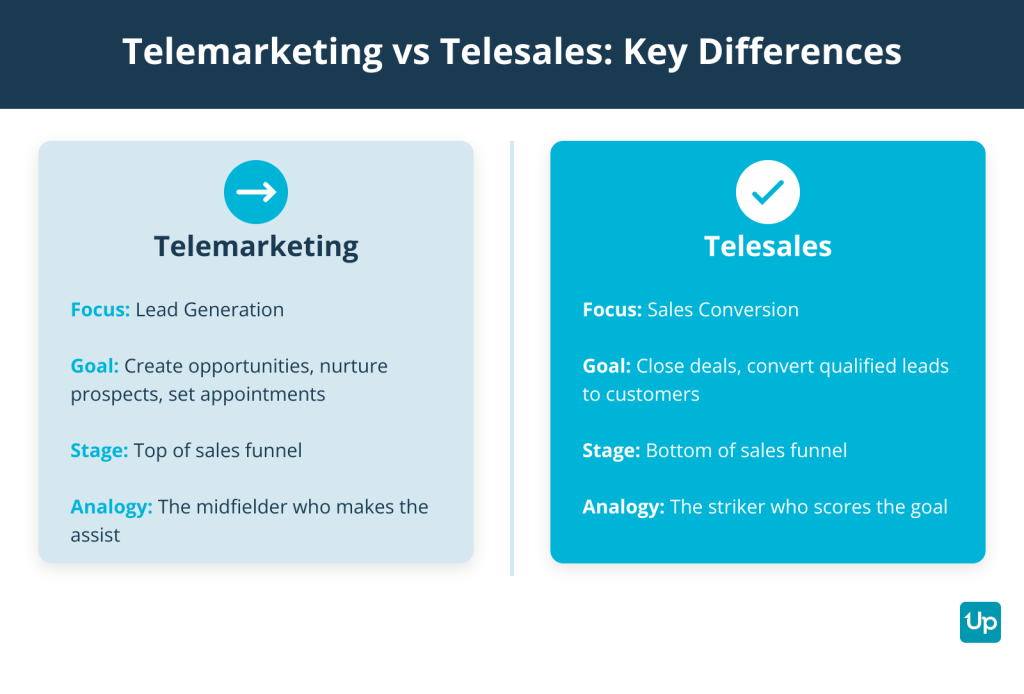
B2B telemarketing focuses on lead generation and demand generation, plus information gathering. Its purpose is not to make an immediate sale. Instead it identifies and nurtures potential customers; creates brand awareness; conducts market research; and sets appointments for the sales team. It operates at the top of the sales funnel, acting as the initial touchpoint and filtering out unqualified leads.
B2B telesales focuses on closing sales directly over the phone. It is a pure sales function focused on converting qualified leads into paying customers. It operates at the bottom of the sales funnel and focuses on the transaction itself.
The fundamental difference is their objective: telemarketing creates opportunities (lead generation), while telesales closes deals (sales conversion). An effective analogy is to think of a soccer team: Telemarketing is the midfielder who passes the ball and makes the assist, while telesales is the striker who takes the shot and scores the goal.
Why Is B2B Telemarketing Still a Powerful Strategy?
When implemented correctly, B2B telemarketing is a time-tested strategy that can lead to several positive business outcomes. This is true even though digital marketing has become the most widely used marketing approach. It still pays to pick up the phone and call.
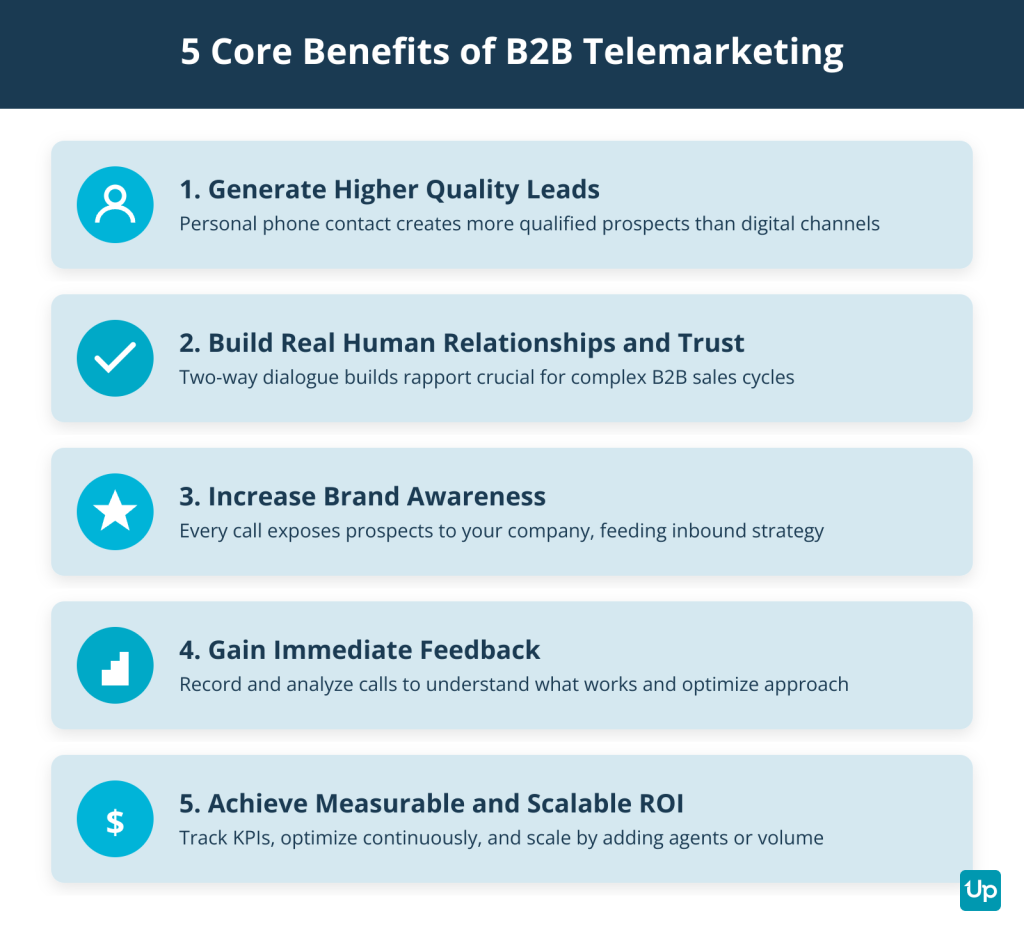
Here are five major benefits of B2B telemarketing:
Generate Higher Quality Leads
Qualified lead generation is the biggest and most obvious benefit of telemarketing for B2B companies. The strategy works by acquiring a list of prospects, which can be accomplished in several ways. The easiest is to use a lead generation tool like UpLead.
A telemarketer will call each individual or company with a targeted prospect list and generate qualified leads. These can then be passed along to a representative from the sales team to close the deal.
B2B telemarketing is great for qualified lead generation, even compared to digital marketing strategies like email marketing. Communicating over the phone is more personal than any other form of contact. This makes it an extremely effective prospecting method.
Build Real Human Relationships and Trust
In an increasingly automated B2B market, genuine human interaction is a significant competitive advantage. Telemarketing allows for dynamic, two-way dialogue where sales professionals can understand specific needs and answer questions in real time, which helps build trust.
Non-verbal cues like tone of voice convey empathy and sincerity, and both matter for building rapport. This human element is especially important for complex B2B sales cycles where multiple decision-makers need to feel confident in both the product and the people behind it.
Companies like Intelemark, with over 20 years of experience and now part of Global Empire Corporation, emphasize a quality-over-quantity approach using experienced, US-based agents for complex sales cycles.
Increase Brand Awareness
Another primary benefit of B2B telemarketing is brand awareness. Even if you don’t close a deal, you’ve made the lead aware of your company and its products and services. This exposure gets your business’s name out there and feeds into your inbound sales strategy.
Gain Immediate Feedback
Learning more about your target audience is essential to operating a business. To sell your product or service, you should understand your prospects on a fundamental level. B2B telemarketing is one of the best ways to get immediate feedback from your target audience.
One of the great things about B2B telemarketing is that it’s done over the phone. This means you can record calls and review them to learn what worked and what didn’t. Telemarketing technology also allows you to track and measure call data. This can include metrics such as call length and connect rate.
Achieve a Measurable and Scalable ROI
B2B telemarketing is highly measurable through KPIs like ROI (calculated as ((Revenue Generated – Campaign Cost) / Campaign Cost) * 100), Conversion Rate, Cost Per Lead, plus Lead Quality Score. This level of measurement allows you to optimize your campaigns continuously.
It’s also scalable by adding more agents, increasing call volume or refining target lists. Compared to other marketing and sales strategies, B2B telemarketing tends to be cost-effective while still delivering a strong return on investment. Many modern approaches to marketing involve more indirect methods that take longer to pay off.
Is B2B Telemarketing Still Effective in the Age of Digital Marketing?
Despite the rise of digital marketing, B2B telemarketing remains highly effective in 2026. Here’s why:
Cuts Through Digital Noise – B2B decision-makers face digital fatigue with attention spans just over 8 seconds. However, 57% of C-level executives prefer phone contact for complex purchases and 82% of buyers have accepted meetings from cold calls.
Builds Genuine Human Relationships – Phone conversations allow for real-time, two-way dialogue that builds the trust and rapport complex B2B sales cycles depend on.
Generates Immediate Feedback – Telemarketing provides instant response, so reps can qualify leads and handle objections while gathering market intelligence in real time.
Delivers Proven Results – Industry benchmarks in 2026 put the average B2B cold call success rate at roughly 2% to 3%, with top-performing teams reaching 6% or higher through better targeting and cleaner data. Cold calling still contributes a meaningful share of B2B pipeline even as digital channels dominate the marketing budget.
What Are the Main Types of B2B Telemarketing?
There are two main types of B2B telemarketing: outbound and inbound. Both are effective strategies for generating new leads and building brand awareness, while also surfacing immediate feedback from your target audience.
Below, we’ll cover the particulars of inbound and outbound telemarketing and explain how they differ from each other.
Outbound Telemarketing
Outbound telemarketing is when your company initiates an interaction by contacting a prospect. This type of telemarketing uses cold calling when you contact a prospect you’ve never interacted with.
Many sales reps shudder at the thought of cold calling. However, it’s still one of the most effective ways to reach key decision-makers. Outbound sales representatives need strong people skills to effectively engage cold prospects and sell them your products and services.
Let’s walk through an example so you can better understand how outbound telemarketing works. Let’s say you’re a key decision-maker at a manufacturing company. You receive a call from a technology company that sells a SaaS (software-as-a-service) product.
You discuss it with the sales representative. They explain what their product is and how it can help your business. The offer sparks your interest, so you talk about pricing and meet with other key decision-makers at your company to discuss adopting the product.
Your team agrees that it can benefit the company. You return the call to the sales rep, and your business becomes a paying customer.
Inbound Telemarketing
Inbound telemarketing is when a prospect initiates an interaction by contacting your company. This is typically a phone call, but contact can also be initiated via email or a social media message. These leads are already interested in learning more about your company’s products and services.
A telemarketer will communicate with the target prospect and nurture them until they’re engaged enough to become a sales-qualified lead. The telemarketer will then pass the lead along to a sales development representative. The sales representative aims to close the deal, turning the prospect into a paying customer.
Let’s review an example to help you understand what inbound marketing is. Let’s say you’re watching television and see an advertisement about a mobile plan. You are impressed with the pricing and offers, so you call the number on the screen.
An inbound telemarketer accepts your call. They provide you with additional information about the mobile plan. You like what you hear, so you tell the telemarketer you’re interested in making a purchase. The telemarketer will either sign you up for a plan or transfer you to a specialized sales representative who can discuss the plan in more detail and make the sale.
How to Create a Winning B2B Telemarketing Strategy
Many components contribute to a successful B2B telemarketing strategy. Below are eight essential steps to build a winning approach.
Step 1: Define Your Goals and a Clear Offer
Setting well-defined goals before beginning your B2B telemarketing strategy is important. Start by defining your total addressable market, or TAM for short. This is how big the market is for a specific product or service. It also makes sense to consider your competitors’ market share.
Next, detail what you hope to accomplish with your telemarketing efforts. Contemplate both short-term and long-term goals. Don’t forget to consider how the campaign will fit into your budget.
Step 2: Build a Precise Ideal Customer Profile
You should understand your audience fundamentally if you intend to sell them products and services. It’s important to create ideal customer profiles. Customer profiles help define the characteristics of your ideal customers and clients. They’re also referred to as buyer personas.
Client profiles include firmographic information about your target companies, such as annual revenue and headcount alongside geographic location. They can also include demographic data about key decision-makers within the companies.
Developing accurate buyer personas is an essential part of your sales process. It aligns your product and marketing materials, along with your sales collateral, closer to your target audience’s pain points. This kind of alignment helps create a customer relationship built on trust.
A B2B lead generation tool like UpLead can help you find your ideal target prospects. The platform offers an extensive B2B contact database with information on businesses and key decision-makers.
Step 3: Source a High-Quality, Compliant B2B Contact List
The first and most important step to B2B telemarketing is to target the right prospects. There is little point in calling someone who does not fit your ideal customer profile or buyer persona. Your target audience should be individuals or companies that have the potential to become paying customers.
If you want your B2B telemarketing efforts to succeed, you need to invest in high-quality prospects. There are several ways to uncover high-intent leads for your company. One of the best methods is to use a B2B lead generation tool like UpLead.

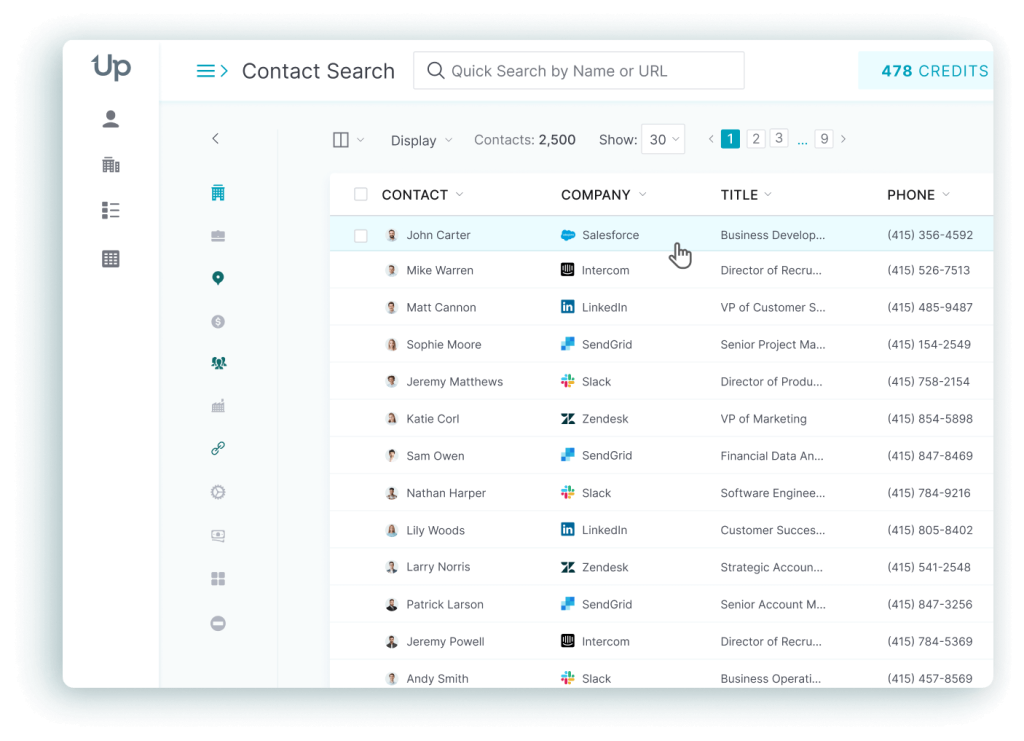
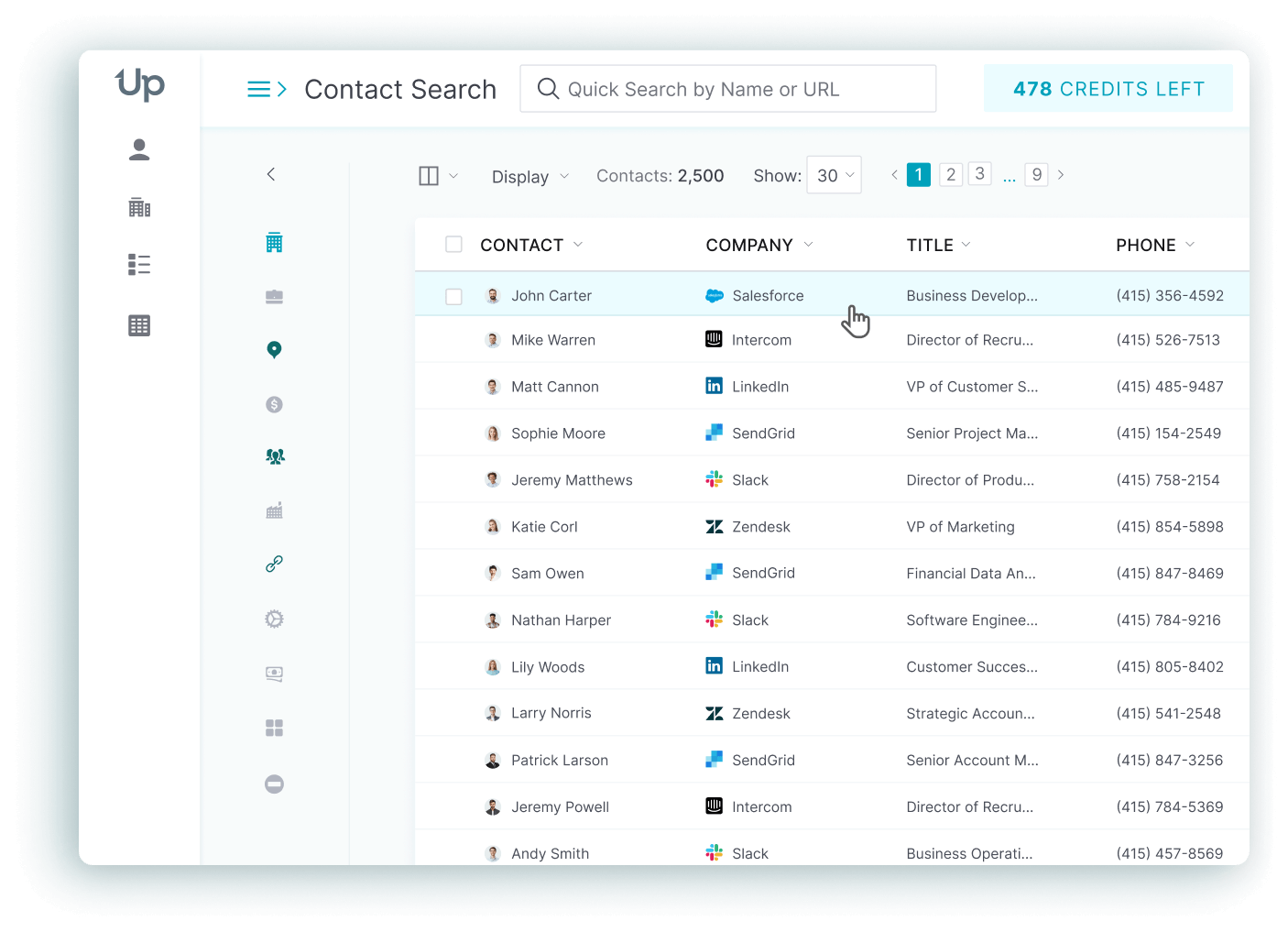
UpLead offers its customers access to an extensive B2B contact database. Over 200 million B2B contacts with email addresses, 16+ million company profiles, 16,000+ technologies tracked and much more. There are also mobile and direct dial phone numbers, and the database comes with a 95% data accuracy guarantee.
You can use over 50 search filters to explore the database and find your ideal prospects. UpLead allows you to search based on company size and annual revenue. You can also filter by decision-maker demographics and the technology stack a company uses.
Step 4: Craft a High-Converting B2B Telemarketing Script
A high-converting B2B telemarketing script is a flexible framework, not a robotic monologue. Your script should guide the conversation while allowing room for natural dialogue.
Six components matter most:
1. The Opener – Grab attention and establish credibility, then get permission to continue in the first 30 seconds using a permission-based opener like “Hi [Name], this is [Your Name] from [Company]. I know I’m catching you unexpectedly, but could I take 30 seconds to explain why I’m calling?”
2. The Value Proposition – State the benefit you offer in one or two sentences, focusing on outcomes rather than features, and answer the prospect’s unspoken question: what’s in it for me?
3. Qualifying Questions – Ask open-ended questions to understand needs and challenges, turning the call into a dialogue.
4. The Pitch – Present your solution as the answer to their specific pain points with social proof.
5. Objection Handling – Prepare respectful responses to common objections like “Just send me an email.”
6. The Call to Action – Secure a clear, low-friction next step like “Does it make sense to schedule a brief 15-minute call next week?”
A customized cold-calling script prepares your salespeople and telemarketers for a range of scenarios. It builds confidence and consistency, plus productivity. Scripts also reduce mistakes and make it easier to train new telemarketing agents.
Step 5: Know the Best Times to Call
The time your sales reps and telemarketers call prospects can strongly affect your connect and conversion rates. Call leads too early and you risk waking them or reaching a phone on silent. Call them too late and they may be busy running errands.
It’s generally good practice to call prospects during working hours, roughly 9 AM to 5 PM. The day of the week matters too. Few people want to answer business calls on the weekend, since most people spend that time with family and friends, plus hobbies.
Stick to the work week: Monday through Friday. If possible, call on Tuesday, Wednesday or Thursday. Monday can be too early, since people are often still tying up loose ends from the previous week, and Friday can be too late, since attention has already shifted to the weekend.
In short, weekdays between 9 AM and 5 PM tend to work best.
Step 6: Master Objection Handling Techniques
Your sales representatives and telemarketers should be experts in objection handling. Objections happen when a prospect explains why they don’t want to buy or raises a concern about your product or service. A skilled telemarketer can work through objections and ease concerns about the product, knowing what to say to keep the deal moving forward.
Use the LAER framework: Listen, Acknowledge, Explore, Respond. Here are common objections with proven responses:
| Objection | Response |
| “Just send me an email” | “I can certainly do that. So I can send the most relevant information and not waste your time, could I ask you two quick questions about how you’re currently handling [business area]?” |
| “I’m not interested” | “I understand. Many of our best customers said the exact same thing when we first reached out. They found that by spending just 15 minutes with us, they could [achieve specific benefit]. Would you be opposed to learning how they did it?” |
| “We don’t have the budget right now” | “I completely understand that budgets are tight. Most of our clients see a full return on their investment within a few months by [solving specific pain point]. If I could show you how this could actually save or generate money for you, would that be worth a brief conversation?” |
Step 7: Choose the Right Technology Stack
Most marketing and sales decisions today rely on data, and B2B telemarketing is no exception. Generating more leads and closing more deals gets easier with the right tools in place.
A modern B2B telemarketing tech stack usually covers a few key categories:
B2B Data and Lead Providers give you access to contact databases with filtering by industry and company size, plus location. Examples include ZoomInfo, an enterprise-level platform with an extensive global B2B database; Apollo.io, which combines a large contact database with sales engagement tools; and Cognism, which focuses on globally compliant data with verified mobile numbers.
Sales Engagement Platforms and Dialers automate outreach across multiple channels. Examples include Salesloft (sales engagement automation paired with conversation intelligence), Outreach (built for automating and optimizing sales cadences), HubSpot Sales Hub (an all-in-one CRM and sales platform with sequencing and call tracking) and Kixie (a multi-line power dialer with AI-powered local presence dialing and CRM integrations).
Conversation Intelligence tools use AI to record and transcribe sales calls, then analyze them for patterns. Examples include Gong (analyzes customer-facing interactions to surface revenue intelligence), Chorus by ZoomInfo (captures and analyzes sales conversations for deal-health insights) and Avoma (an AI meeting assistant that provides call analysis and coaching).
Customer Relationship Management (CRM) software acts as the central database. Examples include Salesforce Sales Cloud, a highly scalable enterprise CRM with extensive automation, and HubSpot CRM, a user-friendly option with a strong free tier for small and mid-sized businesses.
Many teams also add a cloud phone system or call center VoIP software to record and measure call performance, then track it over time.
Step 8: Integrate Telemarketing into an Omnichannel Approach
Treating telemarketing as a standalone activity rarely works well anymore. A modern omnichannel strategy pairs cold calling with other channels like email and social media to create a persistent, coordinated outreach effort.
This approach raises your odds of connecting by meeting prospects on their preferred platform, builds brand familiarity before calls are made and creates multiple touchpoints that reinforce your value proposition.
Sample 14-Day B2B Omnichannel Sequence:
- Day 1: LinkedIn connection request or profile view
- Day 3: Personalized email referencing a specific pain point
- Day 5: First call attempt referencing the email
- Day 7: LinkedIn engagement with their content
- Day 10: Follow-up email with a valuable resource like a case study
- Day 14: Final call or a polite break-up email
Add value at each step rather than just checking in, and keep messaging consistent but tailored to each channel. Omnichannel contact-center vendors such as Sobot package voice and chat, plus social messaging, into a single platform for teams that want this coordination built in rather than stitched together from separate tools.
What Are the Most Important B2B Telemarketing KPIs to Track?
With any business strategy, it’s essential to track and measure key performance indicators. Keeping an eye on important telemarketing metrics lets you know how successful your efforts are.
Metrics you should be tracking include:
Contact/Connect Rate – The percentage of calls that reach a live person. A good benchmark is 15-25%. Reaching a given prospect usually takes several attempts spread across a calling cadence, not a single dial.
Lead Conversion Rate – The percentage of contacted prospects who become qualified leads. A typical B2B range is 2-5%.
Cost Per Lead – Total campaign cost divided by the number of leads generated. This helps you measure efficiency.
Sales Cycle Length – The average time from first contact to closed deal. Most B2B deals still need several follow-up touches before they close, so track this alongside connect rate rather than on its own.
Return on Investment (ROI) – Calculated as ((Revenue Generated – Campaign Cost) / Campaign Cost) * 100.
Collect your data and build a weekly report. Put your B2B telemarketing strategy under regular review, since your key performance indicators show what’s working and what isn’t.
Use these metrics to guide your strategy. Keep looking for ways to optimize the process. Test and retest any change before assuming it helped. Weigh every improvement against your budget too, since a change only makes sense if your company can afford it.
What Are the US Laws and Regulations for B2B Telemarketing?
Disclaimer: This information is for informational purposes only and does not constitute legal advice. Consult a qualified legal professional to confirm compliance.
Key regulations include:
Telephone Consumer Protection Act (TCPA) – Applies to both B2C and B2B calls, particularly calls to mobile numbers. Prior express written consent is required for automated or prerecorded calls and texts to cell phones, with statutory damages of $500 per violation, rising to $1,500 per violation for willful violations. These damages are uncapped per call and can accumulate quickly in class-action lawsuits.
Telemarketing Sales Rule (TSR) – The FTC amended the TSR to extend its prohibition on false or misleading statements to B2B telemarketing calls, responding to a rise in B2B-targeted scams. B2B callers must not misrepresent who they are, what they’re selling or the terms of an offer.
National Do Not Call Registry – Built primarily for consumers, but its rules can still apply to B2B calls involving dual-use numbers. Businesses should scrub call lists against the National DNC registry at least every 31 days and maintain an internal DNC list.
State Laws – Florida, Oklahoma, Maryland and Connecticut have each enacted their own “mini-TCPA” laws with private rights of action. More than a dozen other states, including Washington and Texas, now run similar telemarketing statutes with their own consent and penalty rules.
Because these rules shift as new state laws and FTC guidance arrive, confirm current requirements with legal counsel before launching a new campaign rather than relying on any single source, including this one.
How Much Does B2B Telemarketing Cost?
Understanding the true cost of B2B telemarketing matters for budget planning. There are two main approaches: outsourced services and in-house teams.
Outsourced B2B Telemarketing Costs:
Professional telemarketing services typically run $20 to $60 per hour, with most businesses paying $35 to $60 per hour for experienced agents. Campaign complexity and agent experience, plus list quality, all move that number.
Alternative pricing models include:
- Monthly retainers: $4,000 to $10,000 per month
- Pay-per-lead: $50 to $300 or more
- Pay-per-appointment: $150 to $450 or more per appointment
Agencies price these engagements in different ways. Some publish tiered packages that scale from email and LinkedIn outreach up to full multichannel campaigns, often in the $6,000 to $12,500 per month range. Others sell fractional sales-executive plans priced by target output, such as a set number of monthly meetings booked from a defined pool of prospects. Treat any published figures as a planning reference and confirm current pricing directly with a vendor before budgeting. Packages and minimums change often.
In-House Costs:
An SDR’s base salary typically runs $55,000 to $60,000 a year, plus $20,000 to $25,000 in potential commission, for on-target earnings near $85,000. Add technology costs of $18,000 to $36,000 a year and data and list costs of $12,000 to $24,000 a year. Recruiting, training and infrastructure come on top of that.
Total estimated annual cost for one SDR: roughly $138,000 to $183,000 in-house, versus $83,200 and up for an outsourced equivalent.
AI Alternative: AI calling tools have added a lower-cost tier below both options, with entry plans starting around $30 a month for a few hundred minutes and unlimited plans in the few-hundred-dollars-a-month range. Confirm current plan details directly with a vendor, since AI calling pricing changes often.
How Is AI Changing B2B Telemarketing?
AI is reshaping B2B telemarketing mainly by cutting the manual work around each call and sharpening what reps say once they’re on it.
Generative AI for Personalization – Tools analyze customer data to draft personalized outreach copy for each stage of the funnel. Outreach, for example, uses generative AI to draft follow-up email copy based on a prospect’s past conversations.
AI Co-Pilots and Real-Time Coaching – These tools act as live assistants during sales calls, surfacing talking points and objection responses as the call happens. Microsoft Copilot for Sales adds meeting insights inside the CRM, and Dialpad offers live coaching prompts during calls.
Conversation Intelligence – Platforms like Gong record and transcribe sales calls at scale, then surface the topics discussed, the customer’s sentiment and any competitor mentions.
Predictive Lead Scoring – These tools analyze historical and behavioral data to flag which leads are most likely to convert, similar to HubSpot’s “Likelihood to Close” score or Salesforce Einstein Lead Scoring.
AI-Powered Calling Platforms – Some platforms, like Kixie, add AI call summaries and sentiment analysis to a traditional dialer. Others, like Callin.io, go further and run AI voice agents that can handle inbound and outbound calls on their own using large language models.
Use UpLead to Build Your B2B Telemarketing Engine
The success of your B2B telemarketing strategy will largely depend on the quality of your leads. There’s little point in cold-calling companies and key decision-makers who have no real potential to become paying customers.
One of the best ways to find high-intent prospects is to use a B2B lead generation tool like UpLead.
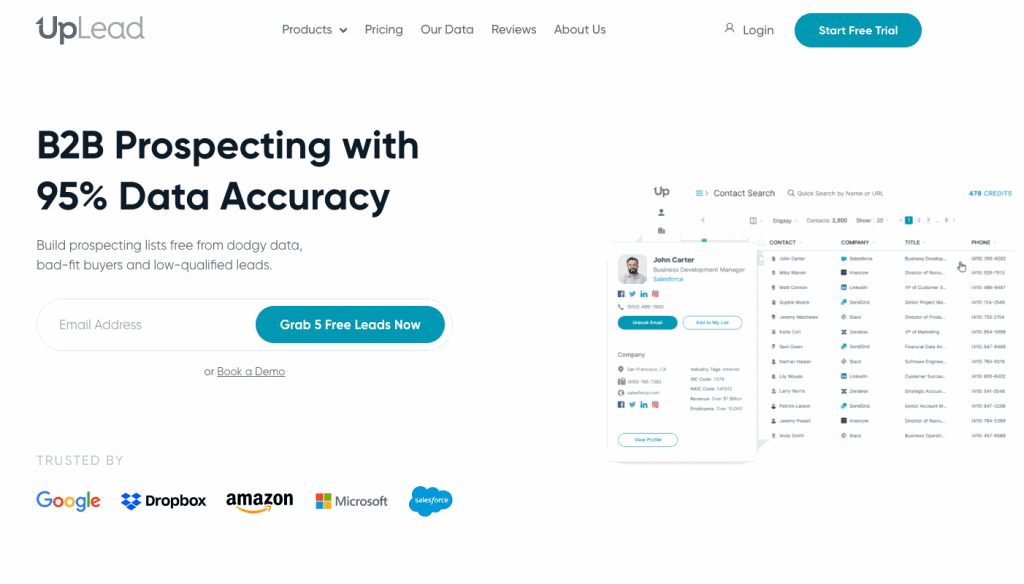
UpLead is a cloud-based B2B lead generation platform that makes prospecting simple. It gives you access to a large B2B contact database you can quickly filter down to your best leads.
The UpLead database features over 200 million B2B contacts with email addresses. Many of these contacts also have mobile and direct dial phone numbers. There are also 16+ million company profiles. UpLead’s database carries a 95% data accuracy guarantee.
UpLead has a full set of filters for exploring the contact database, including demographic and firmographic options, plus technographic filters, across more than 50 search filters in total.
For example, you can search based on company size and annual revenue. You can layer on geographic location and the technology stack used too. UpLead tracks over 16,000 different technologies. You can also find key decision-makers using the platform’s organizational charts.
If you’re planning a B2B telemarketing campaign and want to start with high-quality leads, consider using UpLead today.
Frequently Asked Questions About B2B Telemarketing
Is telemarketing for B2B or B2C?
Telemarketing is used for both B2B and B2C, and the two share a similar approach aimed at different buyers. Business-to-consumer telemarketing is built to appeal to individual consumers, while business-to-business telemarketing is often a more complex process, since several decision-makers may be involved in a single purchase.
What are the types of telemarketing?
There are two general types of telemarketing: outbound and inbound. Outbound telemarketing starts with a targeted prospect list that your reps or telemarketers call through, while inbound telemarketing starts when a prospect calls you after seeing your website or an advertisement and wanting their questions answered.
What are the three main types of B2B sales?
There are three main types of B2B sales: supply, wholesale and service or software.
What is the average B2B cold call success rate?
Industry benchmarks put the average B2B cold call success rate at roughly 2% to 3% in 2026, with top-performing teams reaching 6% or higher through better list quality and targeting.
How many call attempts does it take to reach a prospect?
Reaching a given prospect typically takes several attempts spread across a calling cadence, and most B2B deals still need multiple follow-up touches across channels before they close.
The Future of B2B Telemarketing Is Human-Centric and Tech-Powered
The marketing playbook has shifted a great deal over the last two decades. Smartphones and connected devices have changed how companies promote their products and services. Search ads and display ads now dominate B2B marketing budgets. Social media marketing and email marketing round out the mix for most teams.
Traditional broadcast and print channels have become less of a priority. Even so, for certain B2B industries, telemarketing still delivers a strong return on investment. For many companies, it remains one of the best ways to reach key decision-makers and fill a sales pipeline with high-quality leads.
This guide covered what you need to know about B2B telemarketing in 2026. Used well, this method can generate leads and build brand awareness, while giving you direct feedback from your target audience. It remains one of the more cost-effective strategies available today.
The teams that win going forward will blend genuine human connection with smart technology, pairing AI-powered conversation intelligence with omnichannel sequences that meet buyers where they are. Start building your B2B telemarketing strategy today.