


Cold calling has been a cornerstone of sales for decades, but does it still work in 2025? With 48% of sales reps afraid of making cold calls and cold calling success rates as low as 2.3%, many question if this strategy is worth it. But here is the truth: cold calling is not dead. Uninformed cold calling is. When executed with modern data, psychological principles and proven frameworks, top performers achieve cold calling success rates of 6.7% or higher.
I am Will Cannon, Founder and CEO of UpLead, and I have built a $30M+ business using cold calling as a core strategy. From my early days selling warranties at Sears to living in my mortgage company’s office making cold calls all day, to scaling UpLead’s sales team, the phone has been my most powerful revenue driver. This guide shares the exact frameworks, cold calling scripts and cold calling strategies that turned cold calls into millions in pipeline.
📌 Reminder: These cold calling techniques only work if you have accurate, up-to-date leads. When you target the right people experiencing pain points you can solve, your chances of meaningful conversations skyrocket. Try UpLead and find 5 high-quality prospects (and their mobile numbers) for free!
Does Cold Calling Still Work?
Yes, cold calling still works in 2025, but only when executed with precision and strategy. The days of dialing random phone numbers and hoping for the best are over. Modern cold calling requires high-quality data, psychological understanding and a systematic approach to succeed.
Based on Cognism’s ‘State of Cold Calling 2025’ report analyzing over 204,000 cold calls, the industry standard for cold calling success rate (call-to-meeting booked) is 2.3%. However, this represents a drop from the 4.82% reported in 2024, which Cognism attributes to increased competition on the phone channel.
The encouraging news is that top-performing sales teams achieve cold calling success rates of 6.7% using high-quality data and proven cold calling techniques. Additionally, 57% of C level executives prefer to be contacted by phone, and 69% of buyers accept phone calls from new salespeople.
The key difference between successful cold calling and unsuccessful cold calling lies in preparation and execution. While average sales reps struggle with 2.3% success rates, top performers using proven frameworks and accurate data achieve rates of 6.7% or higher. The phone remains a powerful sales tool when used strategically. 42.1% of respondents in a recent study said their phone is the most effective sales tool for connecting with prospects.
Is Cold Calling Dead?
No, cold calling is not dead. But the way most people do it is.
The perception that cold calling dead stems from outdated approaches. Many sales teams still use generic cold calling scripts, poor-quality data and high-volume tactics that no longer work. This leads to low conversion rates, frustrated prospective customers and burned-out cold callers.
The rise of cold emails and digital marketing channels created the illusion that phone-based outreach is obsolete. However, while email inboxes are saturated and messages land in the spam folder, the phone remains a direct line to decision makers. Cold calling remains effective when done right.
Modern buyers have higher expectations. They expect personalized, value-driven conversations. This shift requires sales professionals to evolve from product-focused pitches to solution-based consultations. Cold calling still works when you focus on building relationships rather than pushing products.
The reason cold calling gets a bad reputation is simple: most people do it wrong. They use bad data, weak openers and no system. When you fix those three things, cold calling works. The numbers prove it.
Why Most People Fail at Cold Calling?
After making thousands of cold calls across multiple businesses, I have identified three main reasons reps fail:
1. Bad Data
Wrong numbers, outdated contacts and guessing who to call will kill your connect rate before you start. At UpLead, we provide 95% data accuracy with verified mobile direct dials because I know firsthand how bad data destroys sales momentum.
2. Weak Openers
If your first 10 seconds sound like every other sales call, you are done. Cold calling expert Giulio Segantini teaches that 80% of cold calls fail before the opener is over. The opener’s job is not to pitch. It is to earn permission to keep talking.
3. No System
Calling “when you have time” with no structure, no follow up cadence and no clear talk track makes cold calling feel random. You need a repeatable framework that works every time.
Cold Calling by the Numbers: What the 2025 Statistics Reveal
Understanding cold calling success rates helps you set realistic expectations. Based on Cognism’s analysis of over 204,000 cold calls, the industry standard for cold call success rate is 2.3%. This represents a drop from 2024, which experts attribute to increased competition.
The encouraging news is that top-performing sales teams achieve cold calling success of 6.7% using high-quality data and proven cold calling techniques. Additionally, 57% of C level executives prefer phone contact, and 69% of buyers accept calls from new sales reps.
Regarding persistence, traditional research suggests it takes an average of 8 touchpoints to get one appointment. However, Cognism’s 2025 analysis shows that 93% of all conversations occur by the third call attempt. By the fifth call, over 98% of all conversations have already occurred. This is a numbers game, but not all calls are equal.
Cold Calling Performance by Industry
Success rates vary by industry. For SaaS companies, the average call-to-conversation rate is 5-10%, with appointment-to-opportunity rates at 38%. In consulting, 82% of buyers are open to meetings from proactive outreach, with case studies showing 7.2% connect rates. Understanding these benchmarks helps sales professionals set realistic goals for their cold calling efforts.
What Are the Legal Rules for Cold Calling in the US?
Understanding cold calling legality is crucial for any sales team. The Telephone Consumer Protection Act (TCPA) requires ‘prior express written consent’ for marketing calls to cell phones using autodialers or prerecorded voice messages. Key compliance requirements include respecting the National Do Not Call Registry with list scrubbing every 31 days and calling only between 8 a.m. and 9 p.m. in the recipient’s local time.
The Telemarketing Sales Rule (TSR) enforced by the Federal Trade Commission requires prompt disclosure of seller identity and call purpose. B2B calls have more flexibility, but TCPA rules for cell phones still apply. Violations can result in penalties of $500-$1,500 per call, making compliance essential for effective cold calling.
The Psychology of a Great Cold Call: Why Human Connection Still Wins
Modern cold calling works through key psychological principles that create genuine human connections. The most powerful technique is the “pattern interrupt,” which breaks the prospect’s automatic “no” reflex with unexpected openings. Gong’s analysis of 90,380 recorded cold calls found that the opening line “How have you been?” had a 6.6x higher cold calling success rate (10.01% vs 1.5% baseline) in booking follow-up meetings.
This works because it scrambles the prospect’s brain and makes them pause instead of giving a default rejection. Other psychological principles include reciprocity through offering immediate value like industry insights, building trust through calm and confident tone and establishing credibility through social proof by mentioning well-known clients or mutual connections. This human touch separates successful cold calling from ineffective cold outreach.
Cold Calling vs. Warm Calling: What’s the Difference?
Cold calling involves contacting potential customers who have had no prior interaction with your brand and have not expressed interest in your products or services. The primary goal is to introduce the company, qualify the prospect and schedule a follow-up meeting.
Warm calling targets prospects who have already had some form of contact with your business or have shown prior interest, such as downloading content, attending a webinar or filling out a contact form. According to Cognism’s 2025 research, warm calling can increase success rates from a baseline of 2.3% to over 30% due to pre-existing lead awareness and trust.
The key difference lies in the prospect’s familiarity with your brand. Warm calls benefit from established context, while cold calls must create that context from scratch. Both have their place in a comprehensive marketing strategy, but understanding when to use each approach is crucial for cold calling success.
The Modern Cold Calling Stack: Tools That Make Every Call Count
When people struggle with cold calling, it is often not because they cannot sell. It is because their system is broken. Maybe they are calling the wrong people, getting flagged as spam or losing track of follow-ups.
The best cold caller in the world will lose to an average sales rep with a world-class setup. That is why at UpLead, we built our cold calling engine around three things: (1) Clean, accurate data, (2) Smart phone number strategy, (3) Seamless workflows that eliminate friction.
1. Data: The Foundation of Everything
I did not start UpLead because I wanted to build another SaaS tool. I built it because I was tired of bad data. For over a decade, I ran a marketing agency and bought data from every provider on the market. The quality was so poor that we shipped phone lists to the Philippines just to verify which ones worked. We would start with 10,000 contacts and end up with 4,000 usable ones.
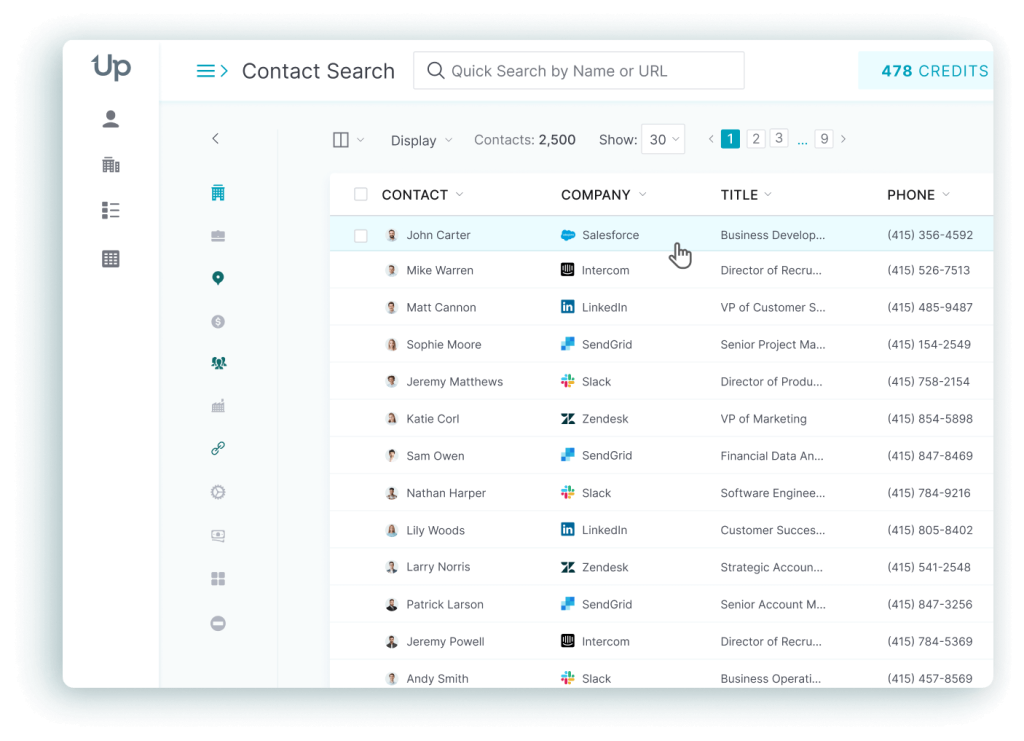
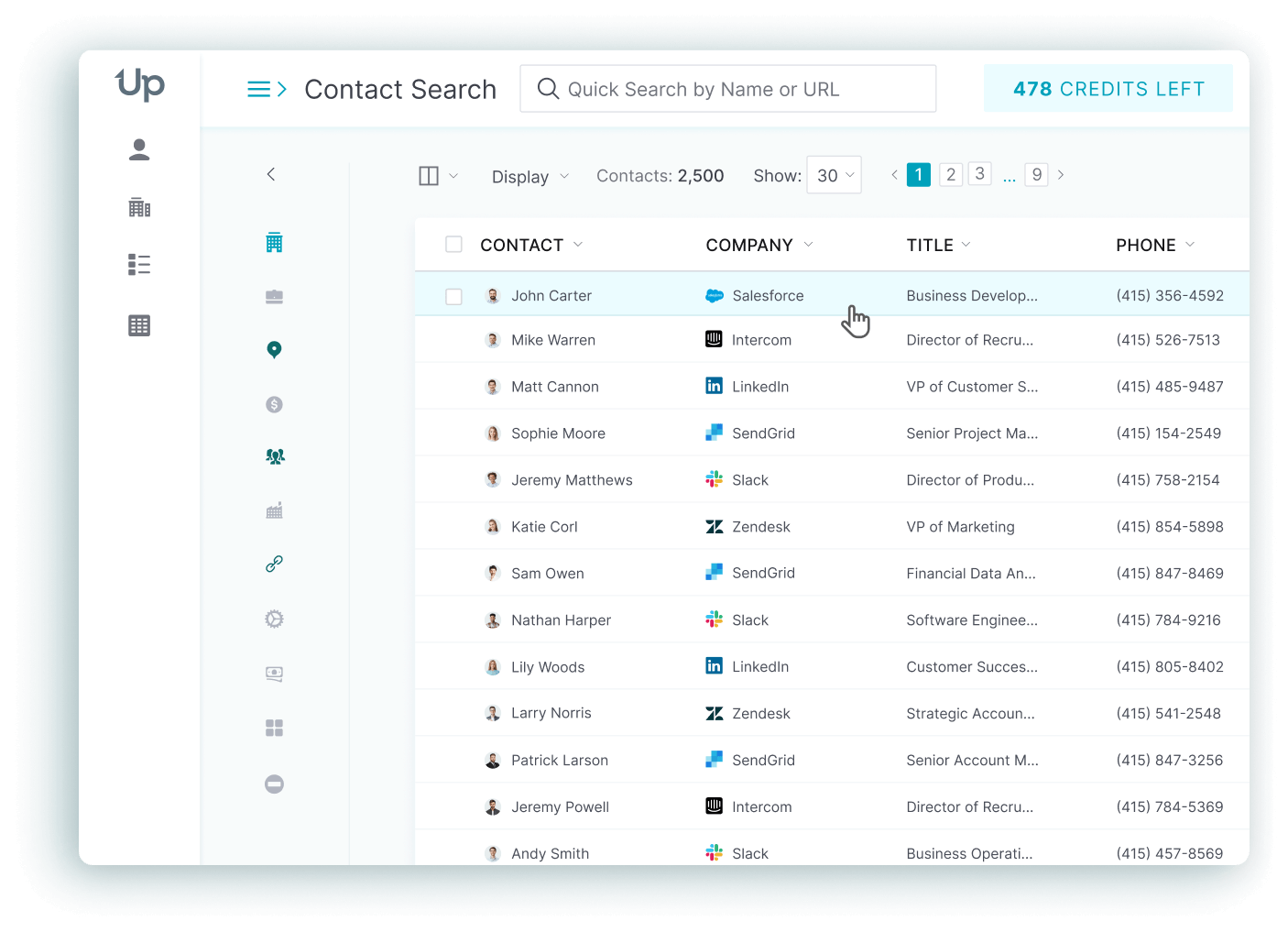
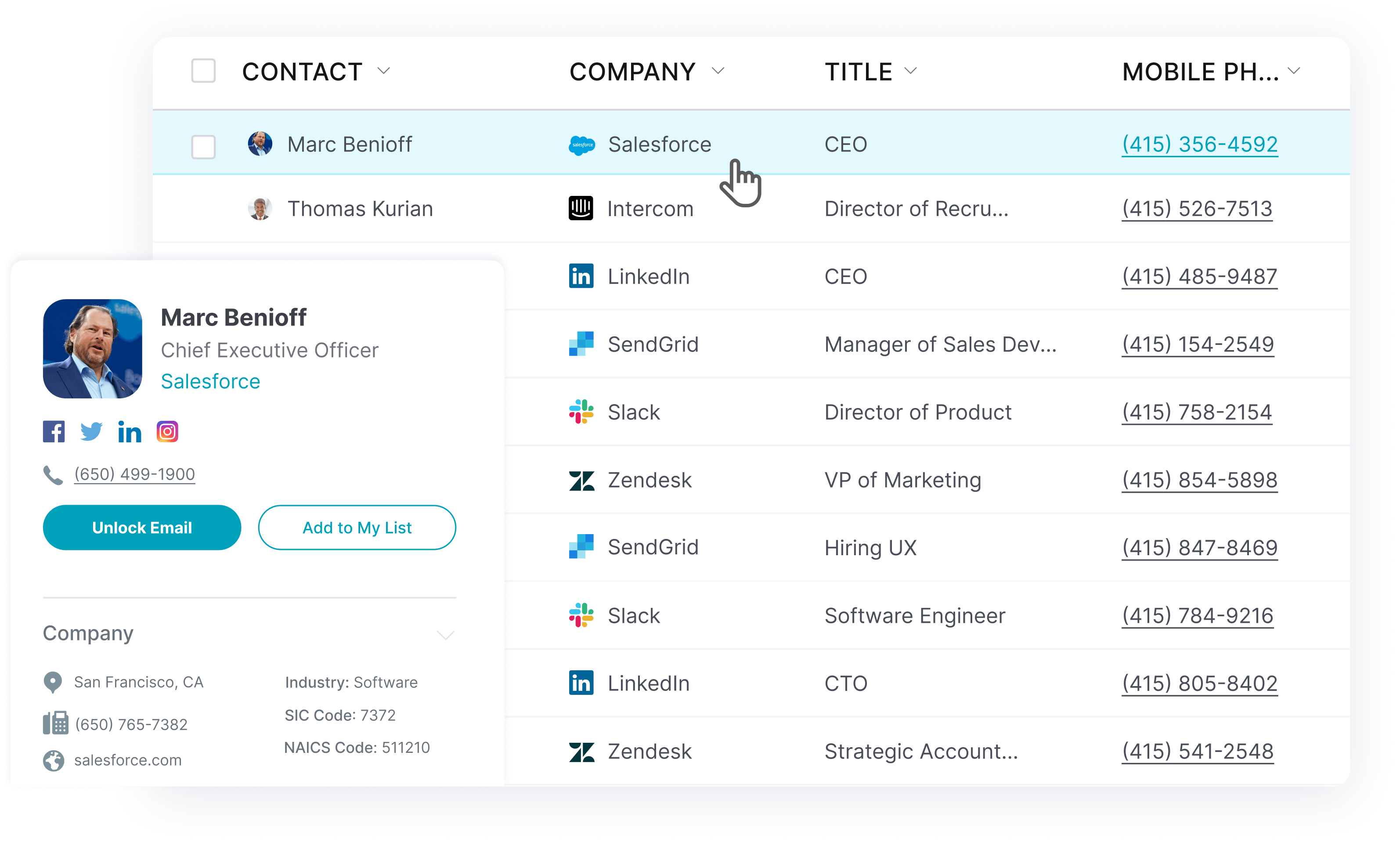
When I launched UpLead, my goal was simple: Give sales teams the accurate, mobile-direct dials and verified emails they need, instantly. Today, every cold calling campaign we run starts with UpLead’s verified mobile numbers and emails: 95% data accuracy, mobile direct dials so you are not stuck in gatekeeper jail, real-time email verification and intent data so you are calling when companies are researching a solution.
2. Number Strategy: Getting Answered More Often
The milliseconds between a phone ringing and someone answering are all about trust. If your number looks suspicious, you are dead before you say “hello.” Here is how we beat the spam filters: Local presence dialing (matches your caller ID to the prospect’s area code), number rotation (spread call volume across multiple numbers so none get flagged), call limits (no more than 75 calls per number per day) and dedicated callback numbers.
We run this entire strategy through a parallel dialer. We use Salesfinity. Why parallel dialers beat click-to-call: Call multiple numbers at the same time, only connecting when someone picks up, built-in number rotation and spam prevention and more conversations per hour without more effort. This approach helps you avoid unknown numbers filters that many consumers use to screen calls.
3. Workflows That Remove the Guesswork
A great cold calling setup is not just about making cold calls. It is about what happens before and after. Here is our workflow inside the CRM: Lead enters the system (from an UpLead search or an inbound lead), auto-task created for the assigned sales rep to call within 24 hours, dispositions logged (Connected, Call back later, Not interested, No answer, Left voicemail) and automated next steps trigger based on disposition.
Most cold calling failures happen before the first word is spoken. They are the result of bad call lists, spam-flagged numbers or inconsistent follow-up. When you combine verified, targeted mobile-direct dials from UpLead, a parallel dialer like Salesfinity to manage calls and CRM workflows that run on autopilot, you give yourself the highest possible chance of cold calling success before the prospect even picks up.
The Perfect Cold Call Structure: My 5-Step Framework
Most sales reps treat cold calls like a pitch contest. They cram as much information into the first 20 seconds as possible, hoping something sticks. That is not selling. That is rushing.
The real goal of a cold call is not to close a deal on the spot. It is to start a conversation that leads to the next step. After making thousands of calls across Sears, my mortgage company and now UpLead, I have found that every successful cold call follows the same 5-step structure.
Step 1: The Opener (30-60 seconds)
Objective: Interrupt their day without triggering their defenses.
You have 7-10 seconds to convince someone you are worth listening to. That is it. The best openers acknowledge the interruption (“You were not expecting my call…”), ask for permission (“Mind if I tell you why I am calling?”) and use their name and something specific about them or their company.
Example:
“Hi Sarah, this is Will from UpLead. You were not expecting my call. Mind if I take 30 seconds to explain why I am calling, and then you can decide if we continue?”
Why it works: It is polite, confident and puts them in control. Giulio Segantini calls this “earning the right to talk”. If they say yes, you have already won the first micro-commitment.
Step 2: The Hook (30-60 seconds)
Objective: Show them you have done your homework and make it relevant to their world.
This is not about pitching features. It is about context. Reference something that proves this is not a random dial: a recent funding round, a new job posting, a tech tool they use (from your UpLead filters) or industry news that impacts them.
Example:
“I noticed you are hiring three new SDRs. Usually when I see that, it means generating leads is a big priority. Is that fair to say?”
Why it works: You are not asking “How is business?” You are making an observation and getting them to agree. That agreement is momentum.
Step 3: Discovery (60-120 seconds)
Objective: Get them talking about problems you can solve.
The temptation here is to pitch. Resist it. Instead, ask 1-3 targeted questions, listen for pain points, inefficiencies or goals and use follow-ups to go deeper.
Example:
“Out of curiosity, how does your sales team currently find verified contact info for outbound?”
Why it works: You are leading them to talk about an area you can help with, without forcing your solution yet.
Step 4: The Value Bridge (60-90 seconds)
Objective: Connect their problem to your solution.
This is where you earn the meeting. Reference what they just told you, share a relevant result from a similar company and make it about outcomes, not features.
Example:
“You mentioned your reps spend hours researching and still get high bounce rates. CloudCorp was in the same spot. They cut research time by 40% and improved connect rates just by switching to UpLead’s verified mobile numbers.”
Why it works: It ties their pain to a proven, specific result and gives them a clear reason to keep talking.
Step 5: The Close (30-60 seconds)
Objective: Secure a clear next step.
Do not ask vague questions like “Want to learn more?” Instead, offer a short, specific meeting (“15 minutes to see exactly how it works”), suggest a day/time and confirm on the spot.
Example:
“Rather than throwing more info at you now, why do not I show you exactly how we would do this for [Company]? Does Tuesday at 2pm work for a 15-minute walkthrough?”
Why it works: You are removing decision friction. They do not have to “think about it,” they just have to pick a slot.
Openers That Earn Attention: Permission-Based vs. Non-Permission-Based
The first 10 seconds of a cold call are make-or-break. How you open the conversation sets the tone for everything that follows.
Before we get into cold calling scripts, one critical point: Your tone can make or break the exact same opener. If you sound rushed, unsure or like you are reading, even the best line will flop. If you sound confident, calm and interested, the same line can spark an engaging conversation. Think of tone as the multiplier on your words.
Permission-Based Openers (Lower resistance, make the prospect feel in control)
1. The Transparent Approach
“Hi [Name], this is [Your Name] from UpLead. You were not expecting my call. Mind if I tell you why I am calling?”
2. The Time-Conscious Approach
“Hi [Name], this is [Your Name] from UpLead. You are probably busy. I will be brief. The reason I am calling is [specific reason]. Worth a quick conversation?”
3. The Collaborative Approach (Giulio-style)
“Hi [Name], this is [Your Name] from UpLead. I know this is out of the blue. If you give me 30 seconds, I will explain why I am calling and then you can decide if we continue. Fair enough?”
Non-Permission-Based Openers (Faster, more disruptive, create curiosity)
1. The “If I Told You” Twist (Giulio-style)
“If I told you this was a cold call, would you hang up on me right now?”
Why it works: Disarms with honesty and humor, forces a micro-yes.
2. Negative Framing (Giulio-style)
“You might tell me the complete opposite, but I have seen companies like yours struggle with [challenge]. Curious if that is even remotely on your radar?”
Why it works: Lowers resistance by admitting you could be wrong.
3. The Insight-Led Approach
“Hi [Name], this is [Your Name] from UpLead. I noticed [industry/company trend] and it could be relevant to [Company].”
Why it works: Shows research and relevance right away.
Pro Tip: Track opener performance over 2-3 weeks. Measure not just pickup rates, but opener acceptance (how many agree to keep talking) and meeting booked rate. These cold calling tips will help you fine tune your approach.
Objection Handling That Works: From “Not Interested” to “Let’s Talk”
Cold calling is not a debate club. Your job is not to win an argument. It is to keep the conversation alive long enough to earn the right to a deeper discussion.
Here is the truth: How you sound matters more than what you say. If your tone is defensive, rushed or desperate, even the best rebuttal will fail. If your tone is calm, curious and confident, you can turn knee-jerk rejections into curiosity. This is where effective cold call techniques shine.
The 3 Frameworks We Use
1. Jeb Blount’s Triple A
Acknowledge: Show you heard them (“I get that…”)
Ask: Clarify or pivot (“Out of curiosity…?”)
Advance: Suggest a small next step (“Why do not we…?”)
2. Giulio Segantini’s Style
Disarm with honesty (“You might hate me for saying this…”)
Use pattern interrupts to break scripts in the prospect’s head
Lead with curiosity, not confrontation
3. The “Actually… That’s Why I Called” Pivot
One line that flips resistance into curiosity fast. Keeps you in control, builds confidence, reframes their objection as the reason for your call.
The 5 Most Common Objections and How to Handle Them
1. “I’m not interested.”
Permission-Based (Soft):
“Fair enough, most people I call are not when we first speak. If it is okay, could I take 30 seconds to tell you why I reached out, and you can decide if it is relevant?”
Giulio-Style (Bold):
“I would be worried if you were interested without knowing what I do. Can I give you the 20-second version so you can decide?”
Actually… Pivot:
“Actually, that is why I called. Figured you would not be interested yet, but thought you might be curious how [similar persona] are achieving [positive business outcome].”
2. “Send me an email.”
Permission-Based:
“Happy to. Just so I do not send something generic, can I ask you two quick questions to make sure it is relevant?”
Actually… Pivot:
“Actually, that is why I called. Figured sending a cold email would create more questions than answers. Thought you may be curious how [similar persona] are achieving [positive business outcome].”
3. “We’re already working with someone.”
Permission-Based:
“That makes sense. Most companies we work with had something in place before switching. Out of curiosity, what do you like most about your current setup?”
Actually… Pivot:
“Actually, that is why I called. [Similar company] was using [competitor] and liked that we could [differentiator].”
4. “Now’s not a good time.”
Permission-Based:
“Understood. Before I let you go, would it be crazy to ask for 30 seconds so you can decide if we should talk later?”
Actually… Pivot:
“Actually, that is why I called. I know it is never the perfect time. Just wanted to share one quick thing other [personas] are doing to achieve [positive business outcome].”
5. “We don’t have budget.”
Permission-Based:
“That is fair. A lot of our clients started with us before they had budget carved out. Would you be open to hearing how they justified the spend?”
Actually… Pivot:
“Actually, that is why I called. Figured you would not have budget right now, but hoped to share how we are helping [similar persona] achieve [positive business outcome] so when you are ready you know what is out there.”
💡 Pro Tip: Log common objections in your CRM for a month, categorize them and track which rebuttals keep the conversation going vs. end the call. You will see which style works best for your market. This is one of the most valuable cold calling tips for improving your cold calling results.
Follow-Up That Closes Deals: The 3x3x3 Cadence
Follow up is critical for cold calling success. Research shows that 92% of salespeople give up after four “no’s,” while 80% of prospects need to hear “no” four times before they say “yes.” Additionally, 80% of sales require five follow-up calls before reaching their intended audience.
At UpLead, we use the 3x3x3 cadence: 3 calls, 3 emails, 3 LinkedIn touches over a strategic timeframe. Each follow up should add value through industry insights, relevant case studies or helpful resources. This multi-channel approach keeps you top-of-mind while providing multiple touchpoints for engagement.
What to send after the call:
- Meeting confirmation with agenda in the description
- Value-add content (case study, industry report, relevant insight)
- Break-up email templates (for prospects who have gone dark)
SOAR note-taking framework for CRM:
- Situation: What is their current state?
- Objective: What do they want to achieve?
- Action: What did you recommend?
- Result: What is the next step?
Track, analyze and revise your strategy based on cold calling results. Monitor key points like connection rates, conversation rates and meeting-booking rates. Use this data to identify what works and adjust your approach. This systematic follow-up process is essential for successful cold calling.

The Call Review & Optimization Process: How We Got Better Every Week
When I say cold calling was a big part of building a $30M business, I do not mean we just dialed more. I mean we got better every single week.
Back in my mortgage days, we were living in our office, calling nonstop with no fancy tech and no clean data. Fast forward to today: we have clean, verified data at our fingertips with UpLead, parallel dialers, CRM tracking and call recording tools. But the single biggest driver of improvement is the same: a disciplined call review process.
The Review Framework (We use this weekly)
1. Choose 3-5 Calls to Review Each Week
Pick a mix: wins, losses and “almost” calls. Focus on calls under 5 minutes. That is where most cold calls live.
2. Score Each Call on These 5 Criteria
- Opener delivery (tone, pacing, permission-based or not)
- Relevance (was the sales pitch tailored to their role/industry?)
- Objection handling (did they acknowledge, ask, advance?)
- Next step clarity (did they close for the meeting?)
- Energy match (did they adapt to the prospect’s tone and pace?)
3. Identify 1-2 Micro-Wins and 1-2 Fixes
Do not overwhelm yourself or your team. Change too much at once, and nothing sticks.
4. Re-Run the Call
Have the sales rep re-deliver the opener or objection response, this time incorporating the fixes.
Cold calling is not “set it and forget it.” Every week, your market changes, your tone evolves and your openers need refreshing. The review process keeps you sharp and compounds over time. This is how you turn cold calling today into more deals tomorrow.
Scaling Cold Calling: From Founder-Led to Team-Wide Revenue Machine
When I first started, scaling cold calls meant adding more hours to my day. In my mortgage days, that meant living in the office, phone in hand from morning till night. Today, scaling is a different game. We have gone from one sales person dialing to a full process that any sales rep can plug into, powered by tech, clean data and a team that knows exactly what to do.
Lever 1: Tech – Making Every Call Count
Cold calling at scale is not about making more calls. It is about wasting less time between calls and maximizing connect rate.
Our go-to tech stack:
- Data Source: UpLead (verified emails, mobile direct dials, buyer intent)
- Dialer: Salesfinity (parallel dialing, call pacing, local presence)
- CRM: HubSpot or Salesforce (track activity, log objections, manage follow-ups)
- Call Recording: Gong or Aircall (review, score and coach)
Lever 2: Data – The Foundation of Everything
If you scale with bad data, you scale the wrong conversations. That is why data quality is the first bottleneck you remove.
Before UpLead, I spent years buying data from every provider I could, and the quality was brutal. We would send lists to the Philippines just to verify numbers and still throw out a big chunk. It was expensive, slow and killed momentum. That frustration is exactly why we built UpLead, so you can get clean, verified leads with mobile numbers instantly.
Lever 3: Team – From Lone Wolf to Sales Force
Once the tech and data are dialed in, the next step is people. How we build scalable cold calling teams: Start with 1-2 A-players who can execute without heavy hand-holding, give them a proven playbook (like the one you are reading), layer in coaching and call reviews so skills compound and document processes so onboarding the next sales rep takes days, not months.
Scaling Checklist: Before you hire your 5th rep, ask: Is our tech stack locked in and being used fully? Is our data quality high? Do we have a repeatable cold calling script and objection handling process? Are we tracking and reviewing calls weekly? If the answer to any of those is “no,” fix it before adding headcount. Otherwise you are scaling inefficiency.
What Are the Best Alternatives to Cold Calling?
While cold calling remains effective, modern sales teams benefit from understanding alternative prospecting methods. Social selling through LinkedIn generates 80% of B2B leads for many companies, allowing sales reps to build professional brands and engage prospects through valuable content sharing.
Personalized video prospecting using tools like Vidyard and Loom increases email reply rates by 26% and click-through rates by 4x. These short, customized videos create personal connections at scale while standing out in crowded inboxes.
Community engagement in industry-specific Slack groups, forums and LinkedIn communities allows sales professionals to provide value and build relationships before making any sales approach. This method creates warm relationships that often lead to inbound inquiries.
Intent-driven outreach using platforms like Vieu leverages AI to identify prospects researching solutions, while referral programs generate high-quality new leads through satisfied customer introductions. Companies like Salesbread specialize in personalized LinkedIn and email outreach, guaranteeing clients one lead per day or 20+ sales-qualified leads per month. These alternatives complement cold calling in a comprehensive cold outreach strategy.
Use UpLead to Build Your Foundation for Cold Calling Success
Cold calling success starts with accurate, up-to-date contact data. UpLead provides access to over 160 million verified business contacts with 95% data accuracy backed by real-time email verification. This ensures your sales team reaches the right decision makers instead of wasting time on outdated or incorrect information.
UpLead’s advanced filtering capabilities allow you to target prospects based on over 50 criteria including job titles, company size, industry, technologies used and funding status. This precision targeting helps you identify prospects who are most likely to express interest in your solution, improving your cold calling success rates.
The platform also provides valuable context for your calls, including recent company news, social media profiles and technographic data. This information enables the personalized, research-based conversations that separate successful cold calls from generic pitches. With UpLead’s Chrome extension, you can even capture leads from LinkedIn for immediate outreach. This is how you use cold calling effectively in a new era of sales.
Take your cold calling strategy to the next level with robust, accurate lead data. Try UpLead today and discover why top-performing sales teams choose data quality as their competitive advantage. When you target the right person at inconvenient times becomes convenient times, and cold calling works.
Cold Calling Example: Salesforce Uses Cold Calls as a Foundation of its Go-To-Market Strategy
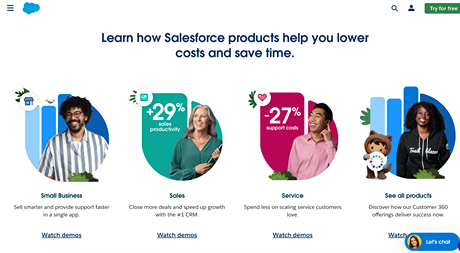
Salesforce’s stand-out growth strategy used cold calls, which earned the company $100 million in revenues. This unique strategy involved leveraging C-level referrals down to the end user. Once the lead was generated, Account Executives were tasked with closing the deal and were crucial to this model’s success. Out of this go-to-market structure emerged a transformational new way for fast-growing organizations like Salesforce to scale their customer base and reach peak profitability. This proves does cold calling work? Yes, when done right.
Frequently Asked Questions
Below are answers to the most asked questions about cold calling effectiveness in 2025.
Based on Cognism’s analysis of over 204,000 cold calls, the average success rate is 2.3% for call-to-meeting conversions. However, top-performing teams using high-quality data and proven frameworks achieve success rates of 6.7% or higher. The key is proper preparation, accurate contact data and strategic execution rather than volume-based approaches.
Yes, cold calling still works in 2025 when executed strategically. While average success rates are around 2.3%, top performers achieve 6.7% success rates using modern techniques. The key is moving away from “spray and pray” tactics to data-driven, personalized approaches that focus on solving prospect problems rather than pushing products.
Cold calling is legal in the US but requires compliance with TCPA and TSR regulations. You must respect the National Do Not Call Registry, obtain consent for autodialed calls to cell phones, call only between 8 a.m. and 9 p.m. local time and provide accurate caller ID. B2B calls have more flexibility, but violations can result in $500-$1,500 per call penalties.
According to 2025 data, the best times for cold calling are Wednesday and Thursday between 10:00-11:30 AM and 3:00-4:30 PM in the prospect’s local time. These windows align with when decision-makers are most likely to be available and receptive to business conversations.
The Final Verdict: Is Cold Calling Worth It in 2025?
Cold calling remains a viable and effective sales strategy in 2025, but success requires a modern approach. The data is clear: while average cold calling success rates hover around 2.3%, top performers using strategic frameworks, high-quality data and psychological principles achieve rates of 6.7% or higher. Does cold calling still work? Yes, when you do it right.
The key to cold calling success lies in preparation, personalization and persistence. Sales teams that invest in accurate contact data, conduct thorough research and follow proven frameworks outperform those using outdated tactics. When combined with proper legal compliance and the right technology stack, cold calling becomes a powerful tool for building relationships and driving revenue. This is how many cold calls turn into closed deals.
I have lived this journey from sleeping in my office making calls on bad lists to building a $30M+ business with a systematic cold calling process. The frameworks in this guide are the same ones my sales team uses every day to generate millions in pipeline. They work. But only if you commit to doing them right. Cold calling pros know that targeted prospecting beats the boiler room approach every time.
Remember, these cold calling strategies only work when you have access to accurate, up-to-date leads. Quality data is the foundation of every successful cold calling campaign, enabling you to reach the right people at the right time with the right message. When you combine clean data with effective cold calling techniques, you create a system that delivers consistent cold calling results.
📌 Reminder: Again, these techniques will only work if you have accurate, up-to-date leads. When you target the right people who are experiencing a pain point you can solve, your chances of having meaningful conversations will rise up. Try UpLead and find 5 high-quality prospects (and their mobile numbers) for free!