


Your marketing team hits its MQL targets, but the sales team still complains. They say the leads are low quality and waste their time on prospects who aren’t ready to buy. Studies show sales reps ignore as many as 50% of marketing leads, and only 9.1% of sales professionals believe the leads they receive are very high quality.
This disconnect is more than frustrating. It’s expensive. Misalignment between sales and marketing costs businesses an estimated $1 trillion annually in lost productivity and wasted marketing spend. It creates friction between teams, leaves 60-70% of B2B content unused, and lets up to 79% of marketing leads slip away without converting. All that budget and effort end in a strained sales team, a high customer acquisition cost and missed revenue goals.
What if you could stop chasing quantity and start delivering leads with proven buying intent? Purchase intent data cuts through the noise. It identifies accounts that are actively researching solutions like yours right now, so your team can focus on prospects who are already in the market. Aligning sales and marketing around those signals can lift conversion rates by up to 67% and drive higher marketing ROI.
📌 Reminder:
- According to HockeyStack, it takes an average of 71 touchpoints to generate an MQL, with cold leads requiring 20-50 touches versus 5-12 for warm leads.
- A Gartner survey conducted in late 2024 found that 61% of B2B buyers prefer a rep-free buying experience, and 73% actively avoid suppliers who send irrelevant outreach.
- A 2024 6sense report shows B2B buyers complete roughly 70% of their journey before engaging a vendor, and 81% have already chosen a preferred vendor by first contact.
Quick Links:
- What is Purchase Intent in a B2B Context?
- Why Is Purchase Intent Crucial for Modern B2B Sales and Marketing?
- B2B vs. B2C Purchase Intent: 5 Key Differences You Must Know
- The 4 Types of B2B Purchase Intent and Their Stages
- Active, Passive and Awareness-Based Intent Signals
- Key Factors That Influence B2B Purchase Intent
- How to Gather and Measure Purchase Intent Data
- 6 Actionable Strategies to Capitalize on Purchase Intent
- Common Challenges in Purchase Intent Analysis
- FAQs About Purchase Intent
- Activating Purchase Intent: From Data to Revenue
What is Purchase Intent in a B2B Context?
Purchase intent is the probability that a buyer will purchase a product or service, evaluated with predictive models trained on historical and behavioral data. In a B2B context, purchase intent represents the likelihood that a target account will buy from your company based on observable engagement signals across its buying committee.
It helps to separate two terms that often get confused. Purchase intent is the metric, the predicted likelihood of a purchase. Intent data is the input, the raw signals (page visits, content downloads, third-party research activity) that feed the model. You can’t have one without the other.
You need data on previous buyer behavior to evaluate purchase intent. Quantitative models combine demographics, customer engagement, buyer behavior and even webinar attendance to forecast which accounts are close to a buying decision. The model output usually surfaces as an intent score, an account-fit score, or a topic-surge alert.
You collect that data by tracking online activities: webinars, downloads, website traffic, paid-ad clicks, email opens and product-page revisits. B2B marketers should also review demographic information, the keywords prospects use, engagement rates and behavioral patterns across accounts. Good analytics turns those breadcrumbs into a marketing strategy that meets each account where it actually is in the funnel.
Why Is Purchase Intent Crucial for Modern B2B Sales and Marketing?
Purchase intent is crucial because it tells your team which accounts are ready to engage, which are still researching and which are not in the market at all. That visibility shifts spend toward in-market accounts and pulls deal velocity forward.
B2B organizations that leverage intent data report a 50% increase in qualified leads. They can achieve up to a 208% higher marketing revenue contribution by aligning sales and marketing around intent signals. Here are the core benefits.
- Hyper-efficient prioritization. Intent data lets sales and marketing teams focus resources on accounts that are actively researching solutions. You analyze the strength of signals like content downloads or pricing-page visits, then prioritize leads most likely to convert. That maximizes efficiency and avoids wasted effort on cold prospects.
- Increased deal velocity. You identify prospects early in their buying journey, often before they contact a vendor. Sales reps can engage them sooner with context-aware conversations from the first touch, and deals move from opportunity to close faster.
- Meaningful personalization at scale. Intent data exposes specific interests, pain points and research topics. Teams can tailor messaging, content and offers to each buyer’s immediate needs and deliver hyper-personalized experiences across thousands of accounts on autopilot.
- Significant competitive advantage. With intent data, you identify and engage potential buyers before competitors even know they’re in the market. You also see when prospects research rival solutions, which lets you time outreach and position your offering with sharper context.
- Higher marketing ROI. You focus marketing spend and sales effort on in-market accounts. That reduces wasted resources, lowers customer acquisition cost and lifts conversion. About 50% of sales leaders use intent data to improve account prioritization, and 55% report higher lead conversions after rolling it out.
What Are the Key Differences Between B2B and B2C Purchase Intent?
The key differences between B2B and B2C purchase intent lie in the buyer unit, sales cycle, motivation, signal source and risk profile. The table below summarizes how the two settings diverge so you can adapt your strategy without flattening one into the other.
| Dimension | B2C purchase intent | B2B purchase intent |
|---|---|---|
| Buyer unit | Individual or small informal group | Buying committee of 6-11 stakeholders |
| Sales cycle | Minutes to days, often impulsive | Weeks to months, multi-stage approval |
| Driving motivation | Emotion, status, personal satisfaction | ROI, efficiency, business outcome |
| Signal source | One person’s individual actions | Aggregated activity across an account |
| Risk profile | Personal and financial, low scale | Financial, operational and career impact |
Buyer unit: individual vs. buying committee
B2C buyers are individuals or small informal groups making personal purchases. B2B purchases are made by a formal buying committee of 6 to 11 or more stakeholders pulled from different departments and seniority levels, including users, technical evaluators and financial approvers.
Sales cycle length: short and simple vs. long and complex
B2C sales cycles are short, sometimes impulsive and complete in minutes or hours. B2B sales cycles are longer and more complex, often spanning several months because of internal reviews, multiple approval layers, budget constraints and risk assessments. Forrester reports that 86% of B2B purchases experience delays at some point.
Driving motivation: emotional need vs. rational ROI
B2C decisions are influenced by emotional factors: desire, brand perception, social status and personal satisfaction. B2B decisions are driven by rational and logical factors. Buyers must justify choices with metrics like ROI, efficiency gains, cost savings and business objectives.
Signal source: individual actions vs. account-level activity
B2C intent signals are individual. They come from one user’s direct actions, like clicking an ad or visiting a pricing page. B2B intent signals are aggregated at the account level. They are inferred from the collective online activity of multiple individuals inside the same company.
Risk profile: low personal risk vs. high career and financial risk
B2C risk is personal and financial at a small scale. B2B risk is higher and multi-faceted. It involves financial, operational and career consequences. A poor B2B purchasing decision can hit company-wide productivity, burn substantial budget and damage professional reputations.
What Are the 4 Types of B2B Purchase Intent?
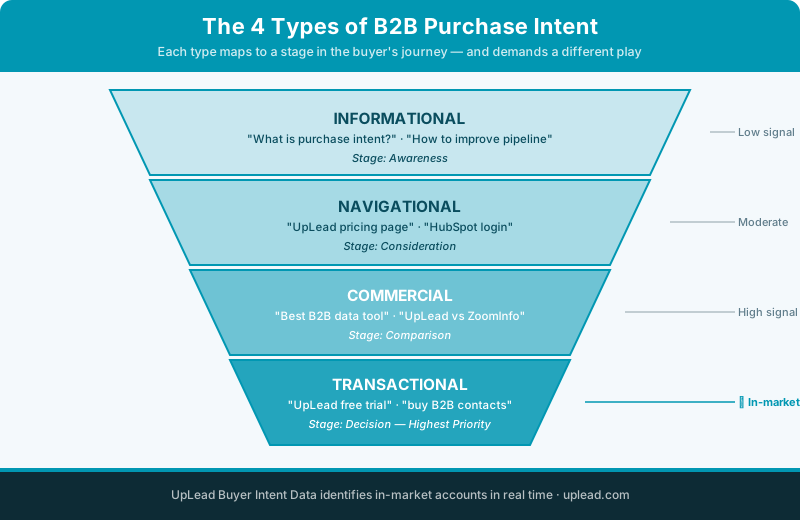
The 4 types of B2B purchase intent are informational, navigational, commercial and transactional. Each one corresponds to a stage in the buyer’s journey and demands a different marketing response.
Informational intent: the awareness stage
Informational intent shows up when a user wants to understand a problem, topic, or question. It aligns with the awareness stage of the B2B buyer’s journey. The user isn’t considering specific solutions yet. They’re trying to educate themselves about a pain point. Examples include searches for “what is account-based marketing,” “how to improve sales pipeline,” “benefits of CRM software,” or “content organization best practices.”
Navigational intent: the consideration stage
Navigational intent means the user wants to find a specific website or page. They already know the brand or vendor they’re looking for. Examples include searches for “Salesforce login,” “UpLead pricing page,” “HubSpot blog,” or “IBM website.”
Commercial intent: the comparison stage
Commercial intent means the user is comparing different solutions or vendors against a defined problem. It aligns with the consideration stage of the buyer’s journey. Examples include “best CRM for small business,” “UpLead vs ZoomInfo,” “Salesforce alternatives,” “project management software reviews,” or “enterprise security platform comparison.”
Transactional intent: the decision stage
Transactional intent means the user is ready to take a specific action, whether that’s making a purchase, signing up for a trial, or requesting a demo. It aligns with the decision stage of the B2B buyer’s journey. Examples include “UpLead free trial,” “buy Salesforce license,” “schedule a CRM demo,” or “enterprise project management software pricing.”
What Are Active, Passive and Awareness-Based Intent Signals?
Active, passive and awareness-based intent signals describe how strong and how recent a buyer’s interest is. The four-type taxonomy above tells you what a prospect is searching for. This second lens tells you how loudly they’re signaling. Use both together when scoring accounts.
Active intent: the in-market account
Active intent describes accounts that are visibly evaluating vendors right now. Multiple stakeholders from the same company visit pricing pages, download comparisons, attend webinars, or request demos in a short window. Active signals are the highest-priority leads for sales and deserve immediate, personalized outreach.
Passive intent: the steady researcher
Passive intent describes accounts that are quietly researching the category without yet engaging your brand. They read industry reports, follow analyst content, or subscribe to thought-leadership newsletters. Passive signals belong in marketing nurture programs and account-based advertising. Don’t push them into sales calls too early.
Awareness-based intent: the problem-aware account
Awareness-based intent describes accounts that are aware of a problem but haven’t started serious vendor research. They consume educational content, search “how to” queries, and skim definitions. Treat them with educational nurture, not pricing pages. The goal is to be the brand they remember when active research begins.
What Are the Key Factors That Influence B2B Purchase Intent?
The key factors that influence B2B purchase intent are buying-committee dynamics, budget constraints, tech-stack integration, vendor reputation, data-driven decision making and total cost of ownership. You need to understand each one to anticipate and address buyer concerns before they harden into objections.
Buying committee and multiple stakeholders
Unlike B2C, B2B decisions are rarely made by one person. A buying committee is typical and can include 6 to 13 or more individuals across roles like users, influencers, deciders and gatekeepers. Each role weighs a different set of priorities.
Budget constraints and return on investment
B2B purchases are significant investments, which makes ROI a critical factor. Decision-makers need a clear, data-backed value proposition that shows how the product or service will save money, raise efficiency, or generate revenue. Many buyers expect to see a positive ROI within three months of a software purchase.
Tech stack and integration capabilities
B2B buyers require solutions that integrate with their existing systems. Poor technology integration is considered a major threat to B2B eCommerce success. Can the solution connect with leading platforms like Salesforce? Salesforce holds a 20.7% share of the global CRM market as of 2024. What about HubSpot? HubSpot serves over 238,000 customers in more than 135 countries.
Vendor reputation and trust
B2B purchases involve long-term partnerships and significant cost. Trust is paramount. Buyers rely on social proof: peer recommendations, case studies and testimonials from platforms like G2 and Capterra. G2 is used by over 100 million professionals annually, and Capterra (part of Gartner Digital Markets) hosts more than 2 million verified reviews. Vendor expertise and third-party validation back up your claims.
Data-driven decision making
Modern B2B buyers use data, analytics and AI-driven insights to make purchasing decisions. They don’t rely solely on relationships or intuition. Vendors must provide data-backed proof of value and performance to be considered.
Total cost of ownership and pricing
Beyond the initial purchase price, B2B buyers evaluate the total cost of ownership. That includes implementation, maintenance, training and potential downtime. They also weigh pricing transparency and the availability of flexible options like free trials or discounts.
How Can You Gather and Measure Purchase Intent Data?
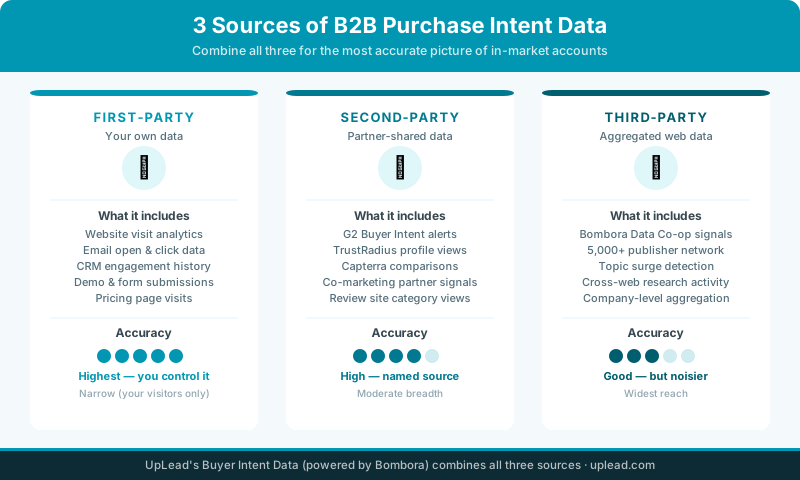
You gather purchase intent data from three source types (first-party, second-party and third-party) and measure it with behavioral analytics, lead scoring and survey scales. Each source class fills a different blind spot, so a mature program uses all three rather than picking one.
First-party intent data: your internal goldmine
First-party intent data is gathered through your own website traffic, engagement activities and sales and marketing efforts. It comes from direct interactions with leads and customers. Examples include visitor comments, email open rates, form fills and social-media engagement. Tracking tools, CRM systems, email-marketing software and website analytics collect this data.
Google Analytics is a rich source of first-party intent data. You can track visitors’ journeys from your landing page and answer questions like: What link do they click next? What pulls them to a product page? What can you do to keep visitors from clicking away?
First-party data is critical for analyzing how leads behave when they interact with your brand. Their participation increases their likelihood to buy, and the data tells you why and how well your marketing is working.
Second-party intent data: partner-shared signals
Second-party intent data is another organization’s first-party data, shared with you through a direct agreement. The most common sources are review platforms (G2, TrustRadius, Capterra), co-marketing partners and consortium-style data co-ops. The signals are stronger than third-party because the source is named and the relationship is direct, but the audience is narrower than first-party because it lives outside your owned properties.
A typical second-party signal is a G2 Buyer Intent alert telling you a target account is comparing your category page against a competitor’s listing. That single notification often outperforms dozens of generic third-party topic surges because the buyer is already on a vendor-evaluation page.
Third-party intent data: the wider market view
Third-party intent data comes from outside providers that aggregate signals across thousands of publishers and websites. It tells you which accounts are researching your category across the wider web, even when they’ve never visited your site.
Third-party data saves time. It frees your marketing team to focus on the harder analysis work, because much of the audience-scoring work is already done. You’ll already know which kinds of companies are in the market for your product, so you can accelerate lead generation and shape outreach around real research behavior.
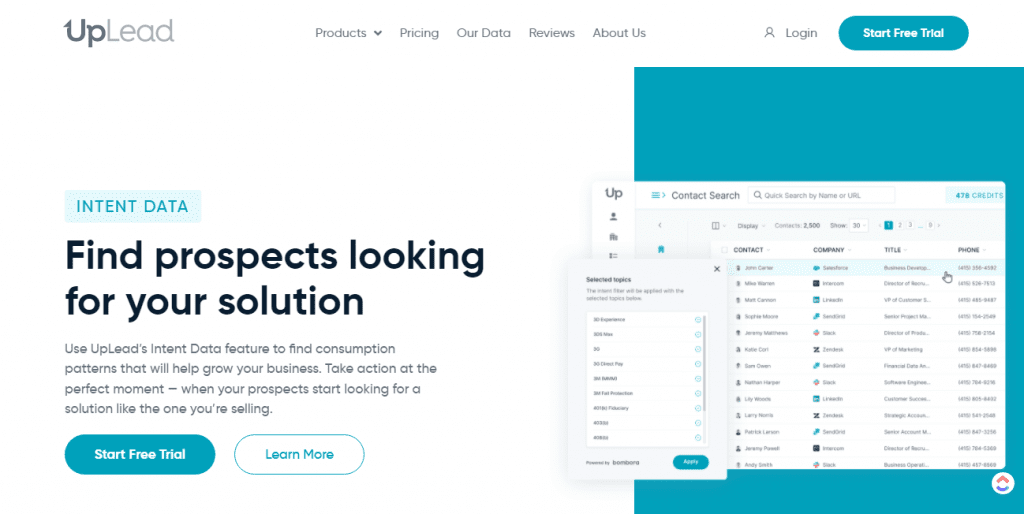
UpLead’s Intent Data feature helps you generate lists of engaged accounts. You can segment and prioritize them, then approach them at the right moment with the right message. The point is to learn what potential customers want to know before purchasing and feed that back into your campaigns.
How can you measure purchase intent?
You can measure purchase intent through behavioral analytics, lead scoring and survey scales. High-intent behavioral signals include visiting pricing pages, requesting demos, downloading product comparisons and multiple stakeholders from one company engaging with content in the same window. Low-intent signals include general blog reads or social-media clicks. A robust lead-scoring model combines these behavioral signals with firmographic data to determine sales-readiness.
Behavioral analytics tracks the digital breadcrumbs prospects leave across the internet. You watch their actions to identify the ones that signal buying intent. Lead scoring is the methodology that ranks prospects against your value criteria, assigning points based on a combination of profile fit and observed behavior.
Marketers also use survey scales when behavioral data isn’t enough. Two scales dominate: Likert and Juster. The Likert scale uses 5 points, where 5 means “will purchase” and 1 means “definitely will not purchase.” The Juster scale uses 11 points to capture finer gradations of intent. Each number on the Juster scale represents a distinct probability, which is why it’s often preferred for predictive consumer research.
Top B2B intent data platforms and tools
The leading B2B intent data platforms each take a slightly different angle on the problem. Some lean toward broad third-party topic surge data, others toward second-party review-site signals and a few combine multiple sources inside an account-based platform.
Bombora: A leading B2B intent data provider with a proprietary Data Co-op of more than 5,000 publisher websites. It offers Company Surge data that flags businesses showing increased research activity on specific topics.
6sense: A Revenue AI platform that unifies data, channels and teams. It uses AI to identify which accounts are ready to buy and analyzes more than 1 trillion signals monthly.
Demandbase: The vendor behind Demandbase One, a unified go-to-market platform built around account-based experience. It combines ABM, advertising, sales intelligence and intent data inside a single workspace.
ZoomInfo: A B2B intelligence platform that pairs a verified contact database with real-time intent signals. SalesOS and MarketingOS are its flagship suites, with enterprise pricing that starts in the five-figure range per year.
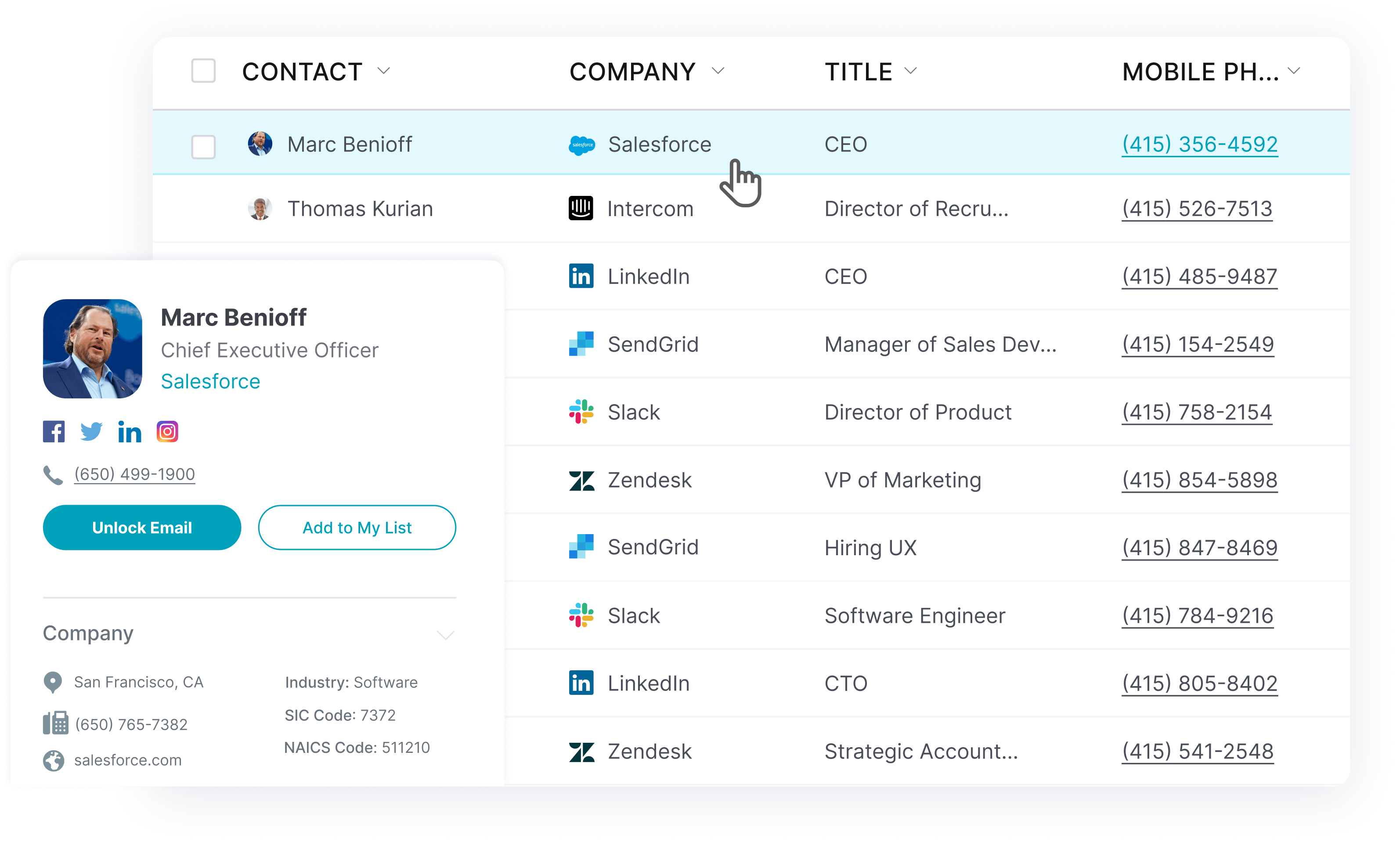
UpLead: UpLead is a B2B data provider and sales intelligence platform founded in 2017. It offers a database of over 200 million verified B2B contacts and 19 million global company profiles. The core value proposition is a 95% data accuracy guarantee, supported by real-time email verification at the moment of download. Its Buyer Intent Data feature is powered by Bombora and identifies companies that actively research topics relevant to your product. UpLead’s pricing is credit-based with a 7-day free trial (5 credits), an Essentials plan at $99/month ($74/mo billed annually) for 170 credits, a Plus plan at $199/month ($149/mo billed annually) for 400 credits, and a Professional plan with custom pricing that includes Buyer Intent Data and API access.
G2 Buyer Intent: Surfaces second-party signals from buyers actively researching your category on G2. You see which companies viewed your product, your category, or competitor profiles, which makes it one of the closest signals to active vendor evaluation.
HubSpot Breeze Intelligence: HubSpot’s intent and enrichment layer (built on the former Clearbit). It enriches existing CRM records with firmographics and adds buying-intent signals so revenue teams can prioritize accounts inside the same workflow they already use.
TechTarget Priority Engine: A purchase intent platform for technology vendors, built on TechTarget’s network of B2B technology publishers. It surfaces accounts with active research behavior on enterprise tech topics, which makes it useful for IT-focused sellers.

What Are 6 Actionable Strategies to Capitalize on Purchase Intent?
The 6 actionable strategies to capitalize on purchase intent are enhancing account-based marketing, mapping intent signals to your sales funnel, optimizing programmatic advertising, targeting high-intent keywords, refining predictive lead scoring and personalizing content marketing. Each strategy below is tagged by team owner so it’s clear who runs the play — and includes a concrete UpLead example.
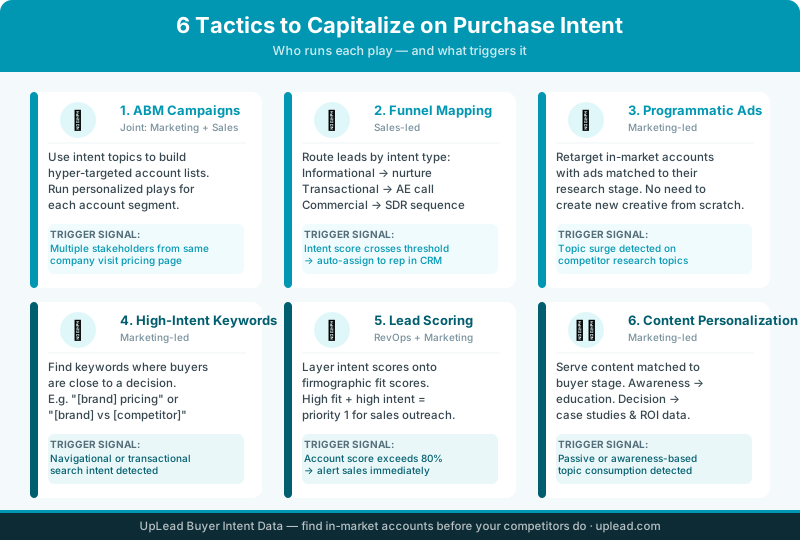
1. Enhance account-based marketing (Joint: Marketing + Sales)
Use purchase intent topics to build the account list that feeds your ABM program, instead of guessing who belongs in it. Companies actively researching topics relevant to your product self-select into your target universe in real time.
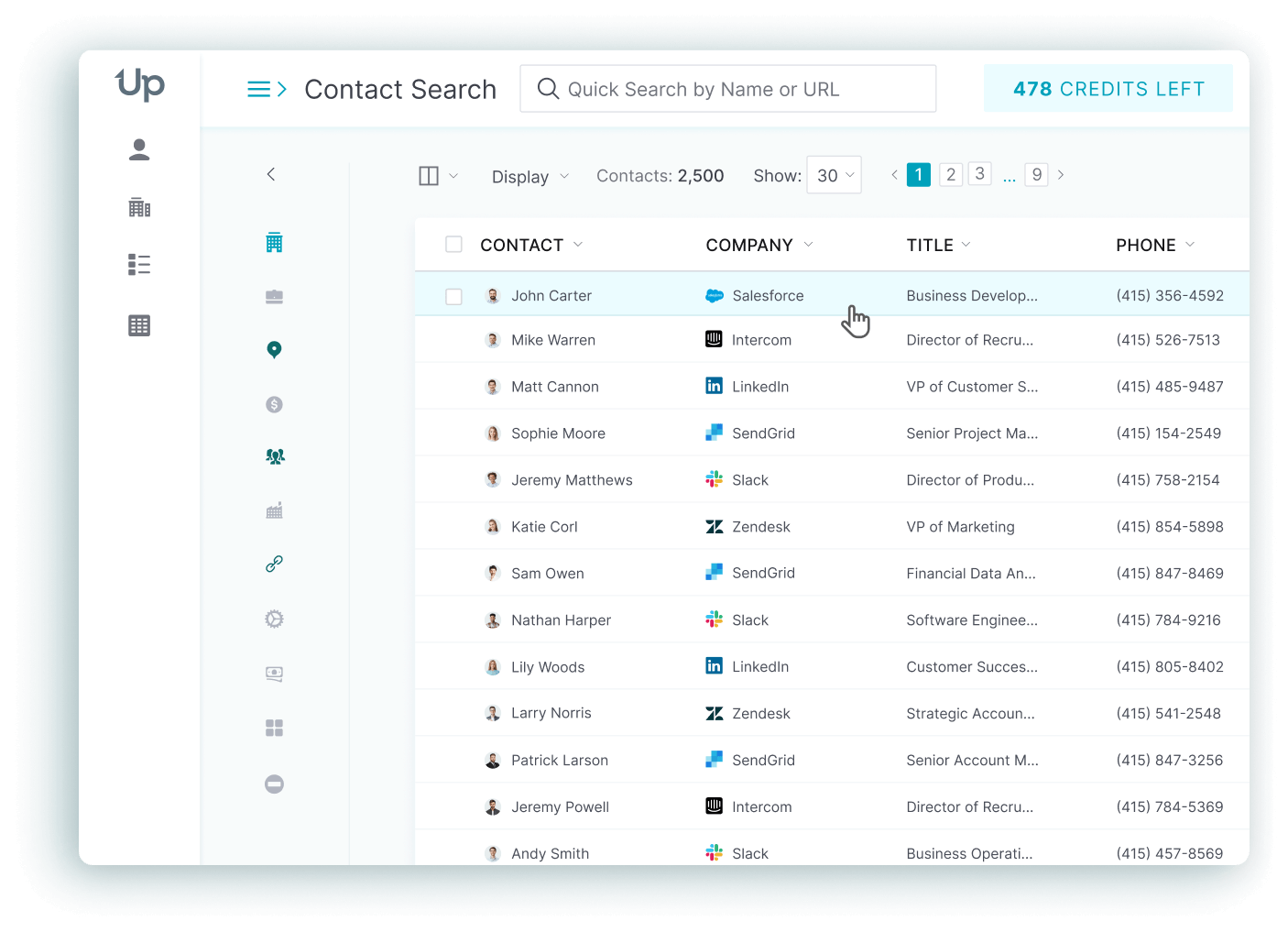
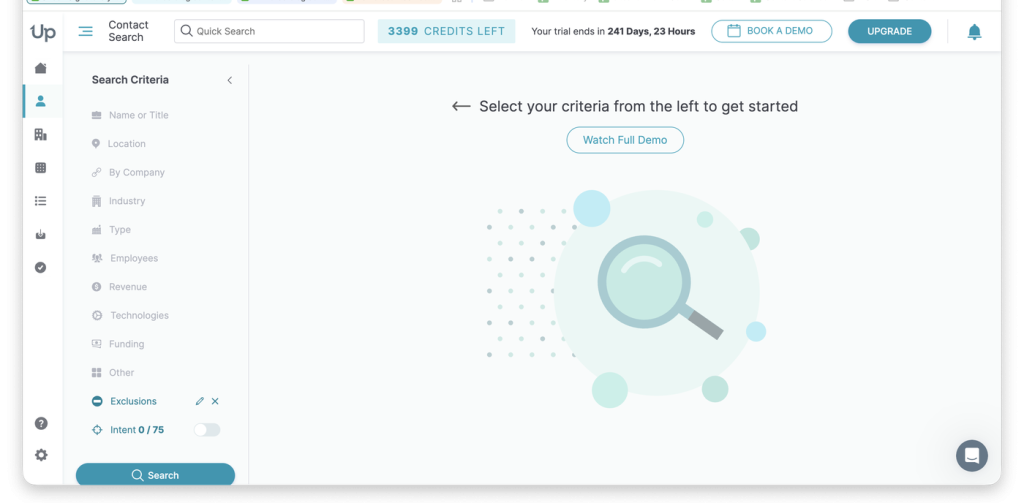
In UpLead: Toggle on the Intent filter in Contact Search, pick the Bombora topics your buyers research (e.g. “CRM Software,” “Sales Automation”), then layer in firmographic filters and export. Your ABM list now runs on live buying signals, not last quarter’s ICP guess.
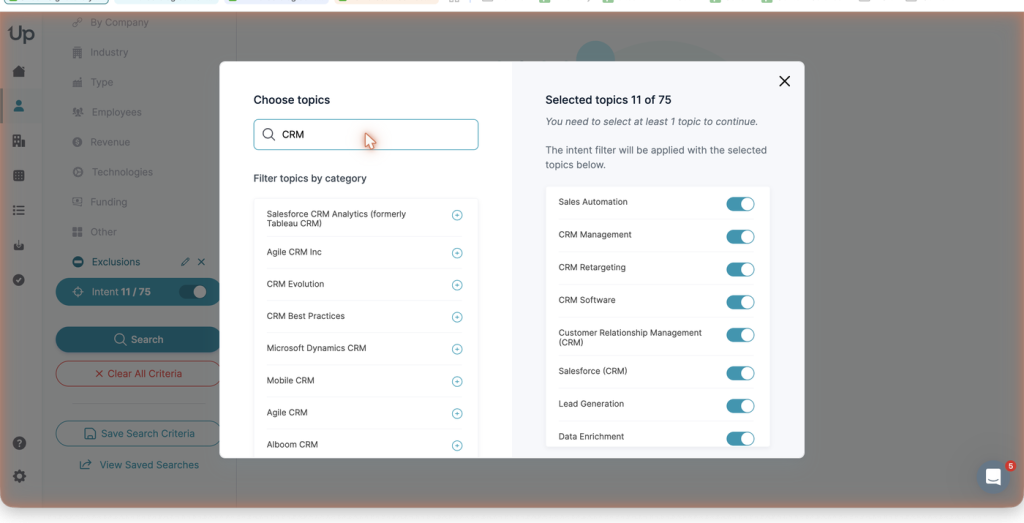
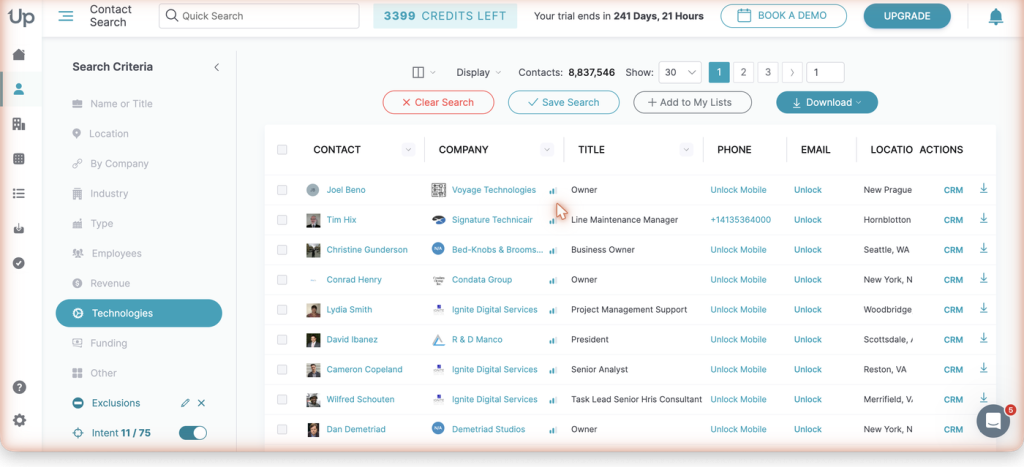
Intent-driven ABM shortens cycles because you’re not warming up cold accounts — you’re entering conversations buyers already started. Organizations that align ABM and intent data report up to 208% higher marketing revenue contribution.
2. Map intent signals to your sales funnel (Sales-led)
Not every high-intent account is ready for a sales call. Routing the wrong stage to the wrong play wastes rep time and annoys buyers. Map each intent type to a specific funnel action so the right team takes over at the right moment.
How to run this play in Salesforce or HubSpot: Create three enrollment triggers based on intent score tier. Low surge → enroll in a 5-email educational sequence. Sustained multi-topic surge → assign to SDR for a personalized sequence. Pricing-page visit within 7 days of a high-surge signal → skip SDR and route directly to an AE with a same-day SLA. Build each as an automated workflow so routing happens without a human decision at every step.
The result: informational-intent accounts get education, commercial-intent accounts get comparison content, and transactional-intent accounts get a human on the phone within 24 hours.
3. Optimize programmatic advertising (Marketing-led)
Generic display ads waste budget on the 95% of the market that isn’t buying today. Intent data lets you focus ad spend on the 5% that is, and serve creative that matches their exact stage.
How to run this play in LinkedIn Campaign Manager: Upload your in-market account list as a Matched Audience. Split it into two ad sets: low-surge accounts see thought-leadership creative (“How 500 Sales Teams Cut Their Prospecting Time”); high-surge accounts with recent pricing-page visits see a direct comparison ad with a free-trial CTA. Set a weekly audience refresh so you’re always bidding on current signal, not a stale list from last month.
Intent-based advertising typically reduces cost per qualified click by 30-50% compared to broad targeting because impression waste drops dramatically when you only bid on in-market accounts.
4. Target high-intent keywords (Marketing-led)
High-intent keywords signal a buyer close to the decision. They’re shorter cycles, higher close rates and more revenue per content dollar than awareness-stage organic traffic. The challenge is identifying which queries your buyers actually use when they’re ready to act.
How to find them with Ahrefs or SEMrush: Filter keywords by intent type. Set the filter to “Transactional” and “Navigational,” then look for patterns: “[competitor] pricing,” “[competitor] alternative,” “best [category] software,” “[category] free trial.” Sort by traffic potential and keyword difficulty to find the gaps where ranking is achievable. Build a dedicated landing page for each cluster — transactional queries get a free-trial CTA above the fold; navigational queries get a side-by-side comparison table.
5. Refine predictive lead scoring (Joint: RevOps + Marketing)
Most lead-scoring models rely on firmographic fit and first-party engagement alone. That misses the 70% of the buyer journey that happens outside your site. Adding third-party intent signals to your scoring model dramatically improves prioritization accuracy.
In UpLead: Use the Buyer Intent filter alongside firmographic filters (industry, employee count, tech stack) to build a pre-scored export. Accounts that match your ICP and show a topic surge are your 80+ tier — hand those to sales immediately. Everything else stays in nurture until the signal strengthens.
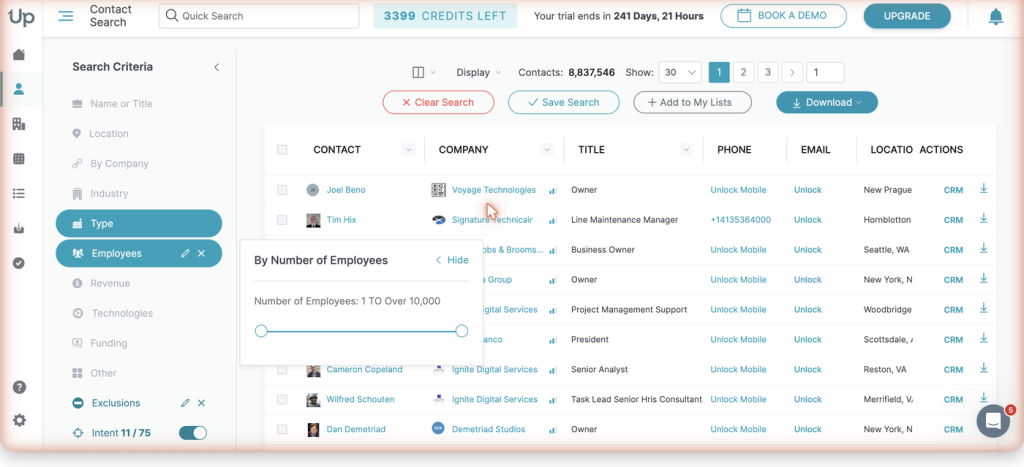
Teams using intent-enriched lead scoring report a 55% increase in lead-to-opportunity conversion rates because reps stop wasting calls on accounts that fit the ICP but aren’t in the market yet.
6. Personalize content marketing (Marketing-led)
Serving the wrong content at the wrong stage kills deals quietly. An account just becoming aware of a problem doesn’t want a case study. An account three weeks into active vendor research doesn’t want a definition post. Intent data tells you which stage each account is in so your content meets them there.
How to build the tracks in HubSpot or Marketo: Create three enrollment workflows keyed to intent tier. Early surge (awareness topics): enroll in a problem-education sequence — “why” posts, benchmark reports. Mid surge (evaluation topics): switch to ROI calculators, comparison guides and relevant case studies. Late surge (multi-signal, high frequency): send a short personal email from a rep with a direct calendar link — no more nurture content at this stage. Set each workflow to re-evaluate tier weekly so an account automatically graduates tracks as its intent signals intensify.
The more granularly you match content to intent stage, the faster you build the trust that drives conversion. According to Forrester, 77% of B2B buyers say their last purchase required a significant educational journey before they engaged a vendor.
What Are Common Challenges in Purchase Intent Analysis?
Common challenges in purchase intent analysis are data accuracy, privacy compliance, data integration and sales-marketing alignment. Understanding these pitfalls helps you build a more robust intent-data strategy.
Data accuracy and quality
Data accuracy is the primary issue. Third-party intent data can be outdated or incorrect, especially when sourced from providers who are incentivized to sell lists. That leads to data decay, where information loses relevance over time. Signals can also be misinterpreted. A researcher gathering information for a report can produce online behavior that looks like a buyer’s, which creates a false positive. The fix is to combine third-party data with first-party data (website interactions, CRM data) and zero-party data (survey responses) for a more holistic view.
Privacy and compliance
Navigating data-privacy regulations like GDPR and CCPA is a significant hurdle. These laws govern how personal data of EU and California residents is collected, processed and stored. Non-compliance can lead to severe fines, up to 4% of global annual revenue or €20 million for GDPR and up to $7,500 per violation for CCPA.
Data integration
Even with valuable data, many organizations struggle to integrate it into their existing tech stack. That includes CRM and Marketing Automation Platforms. Data silos, incompatible formats and interoperability limits can prevent teams from acting on insights fast, and the missed opportunities add up.
Sales and marketing alignment
Misalignment between sales and marketing is a significant issue. It causes leads to fall through the cracks and potential opportunities to slip away. The disconnect leads to wasted resources, inconsistent customer messaging and lost revenue. Demandbase notes that this can cost businesses 10% or more of annual revenue. It also breeds confusion, lost deals and reputational damage.
What Are FAQs About Purchase Intent?
Purchase intent is calculated by combining behavioral data (page visits, content downloads, demo requests), firmographic data (company size, industry, tech stack) and survey-scale responses (Likert or Juster) inside a predictive model. The model output is usually a numeric score or a tier (high, medium, low) that ranks how likely an account is to buy in the near term.
Purchase intent data is the set of behavioral and engagement signals that predict whether a target account is likely to buy. It includes website visits, content downloads, third-party research activity, review-site visits and email engagement, all aggregated at the account level for B2B use cases.
Purchase intent and buyer intent are used interchangeably in B2B marketing. Both describe the likelihood that a target account will purchase a product or service based on observable signals. Some vendors prefer “buyer intent” because it emphasizes the buyer’s perspective, but the underlying concept is the same.
Purchase intent is the predicted likelihood of a future purchase. Buying behavior is the record of past purchases. Intent looks forward and feeds prioritization. Behavior looks backward and feeds segmentation, retention and lookalike modeling.
Accuracy depends on the source and the recency of the signal. First-party data tends to be the most accurate because you control the collection. Second-party data (G2, TrustRadius) is strong because the source is named. Third-party topic data is broader but noisier, so blending all three sources gives the most reliable picture.
Activating Purchase Intent: From Data to Revenue
Customer demographics are only one dimension you should consider when building a sales strategy. Purchase intent is another, and it’s the one that often decides long-term success. Leveraging your target market’s buying intent streamlines marketing, generates better leads, lifts conversion rates and grows revenue.
UpLead can be your partner in harnessing the power of purchase intent. We help you get accurate intent data and translate it into campaigns that capture your target market fast.
📌 Reminder: According to HockeyStack, it takes an average of 71 touchpoints to generate an MQL, with cold leads requiring 20-50 touches versus 5-12 for warm leads. A Gartner survey from late 2024 found that 61% of B2B buyers prefer a rep-free buying experience, and 73% actively avoid suppliers who send irrelevant outreach. If you don’t have time to wait, target warmer leads. Try UpLead and get 5 free validated B2B emails first!